Artwork
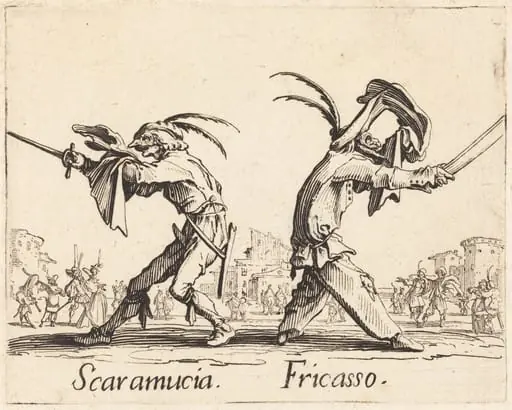
Scaramucia and Fricasso
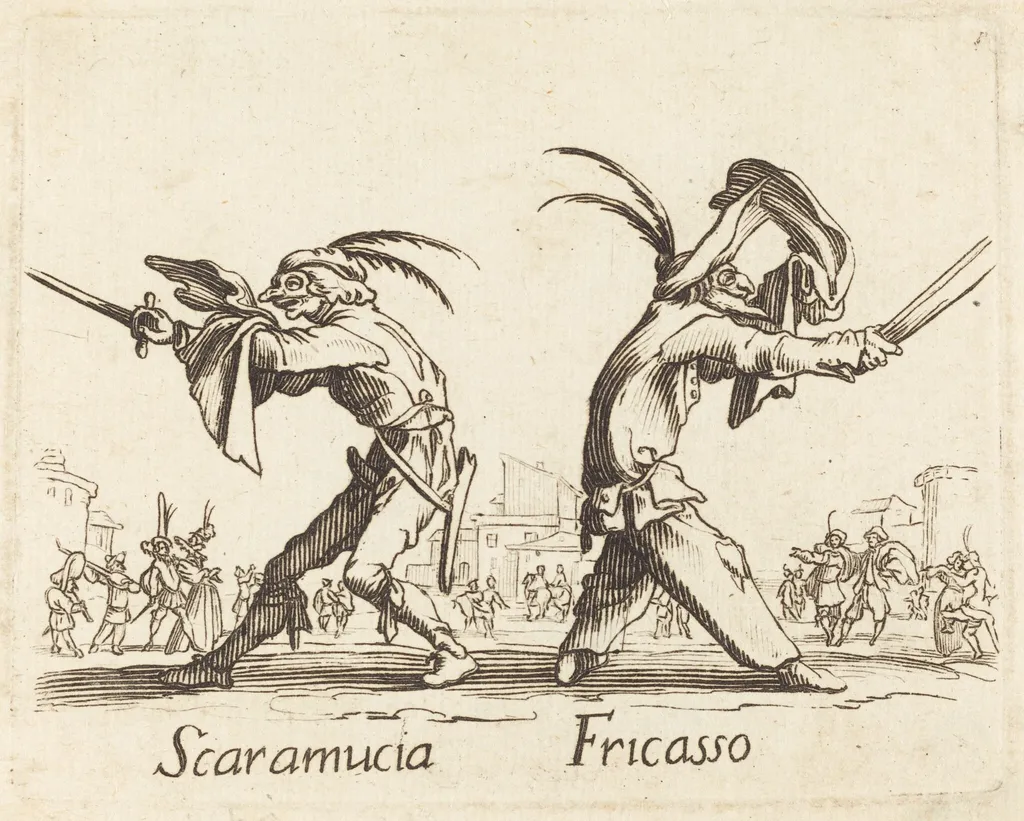
Scaramucia and Fricasso is an ink print by the Baroque artist French 17th Century. It dates from 1622 and is held in the collection of the National Gallery of Art.
About this work
Overview
The work titled Scaramucia and Fricasso is an etching executed on laid paper. It presents a lively tableau in which two men, dressed in 17th‑century costume, face one another with swords drawn, suggesting a duel. A crowd of onlookers occupies the background, creating a sense of public spectacle and tension.
Subject & Meaning
The central figures, one wearing a feathered hat, the other a cloak, embody the archetypal dueling opponents, a motif often linked to honor and conflict in early modern narratives. The surrounding spectators amplify the drama, implying that the encounter is a public event meant to be observed and judged.
Technique & Style
Rendered through the etching process, the image relies on incised lines and varying densities of ink to model light, shadow, and texture. The use of laid paper provides a subtle ribbed surface that interacts with the fine hatching, enhancing depth and contributing to the dynamic, Baroque‑influenced composition.
Artist & collection

Artist
Seventeenth-century French printmakers worked in burin and acid. See the Beggar Woman with Rosary (1622), etched on laid paper with her hands folded in prayer, or The Siege of La Rochelle (1628/1631), one sheet from a…