Artwork
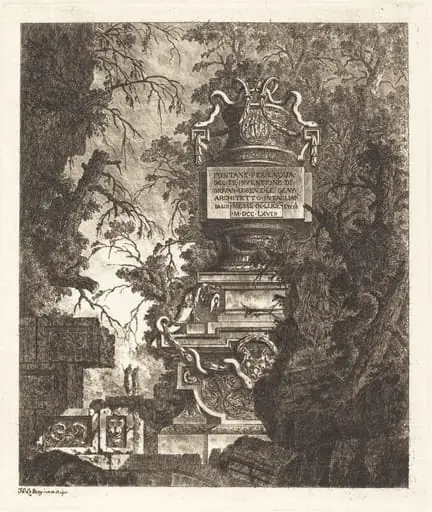
Title Page: Pedestal and a Pair of Dogs
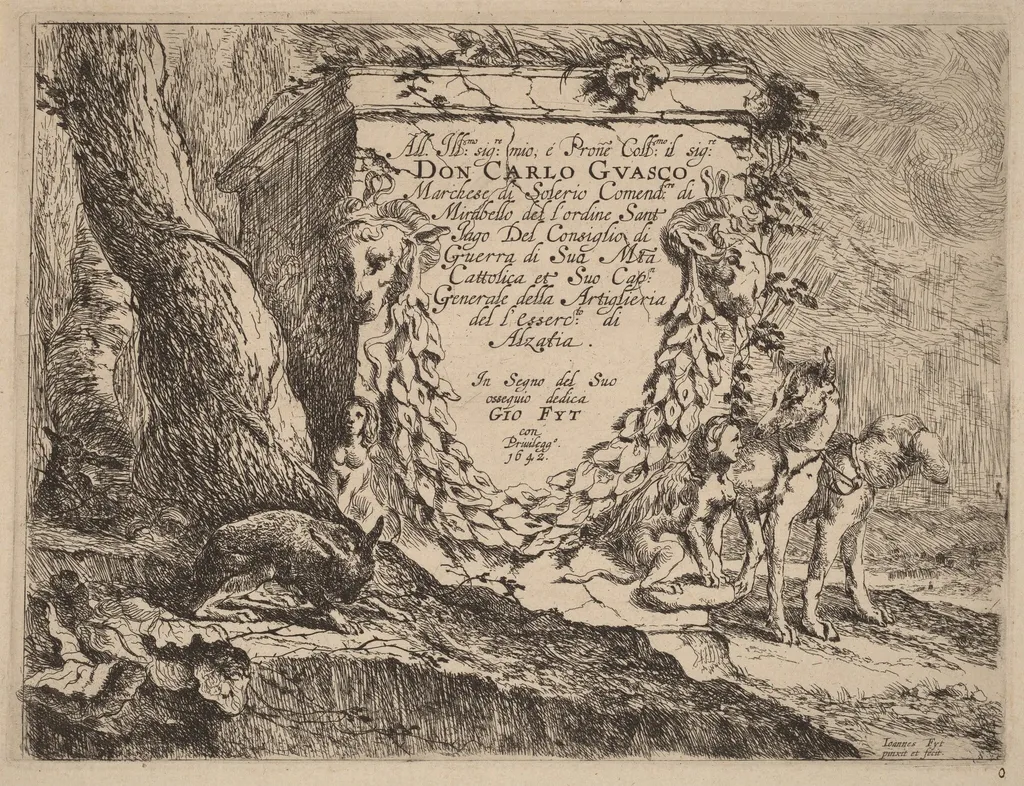
Title Page: Pedestal and a Pair of Dogs is an ink print by the Baroque artist Jan Fyt. It dates from 1642 and is held in the collection of the National Gallery of Art.
About this work
Overview
The composition prioritizes the engraved inscription above, which details Guasco’s titles, reflecting the custom of dedicating printed works to patrons.
This 1642 etching by Jan Fyt functions as a title page, combining pictorial and textual elements to honor Don Carlo Guasco. Rendered in black ink on laid paper, it presents a sculpted pedestal with two alert dogs, set against a sparse natural backdrop. The composition prioritizes the engraved inscription above, which details Guasco’s titles, reflecting the custom of dedicating printed works to patrons. Fyt’s role as both artist and printmaker is evident in the precision of line and spatial arrangement.
Subject & Meaning
The two dogs, poised on a stone pedestal, suggest loyalty and vigilance, qualities associated with nobility. Their placement beneath an elaborate dedicatory text frames them as symbols of service, reinforcing the honor bestowed upon Don Carlo Guasco. The rocky terrain and distant foliage provide context without distraction, directing attention to the interplay between the animals and the inscription. The image operates as both a visual tribute and a formal declaration of patronage.
Technique & Style
Fyt employed fine, controlled etching lines to define the texture of the dogs’ fur, the roughness of the pedestal, and the delicate script of the dedication. The contrast between the detailed foreground and the muted background demonstrates his command of tonal gradation. The use of laid paper, with its subtle chain lines, enhances the print’s tactile quality. The style reflects Flemish Baroque precision, favoring clarity and realism over dramatic flourish.
History & Provenance
Created in 1642, the etching was likely produced as part of a larger publication or album commissioned by or for Don Carlo Guasco, a figure of some standing in Habsburg circles. While the original context of its distribution is undocumented, such works were often circulated among aristocratic patrons as tokens of esteem. Fyt’s reputation as a specialist in animal and still-life imagery made him a natural choice for this type of commemorative print.
Context
In mid-17th-century Flanders, etchings like this served as hybrid objects, both artistic and documentary. They bridged the gap between fine art and printed communication, often used to celebrate patrons or accompany scholarly works. The integration of text and image was standard practice, particularly in works tied to noble households. Fyt’s contribution aligns with a broader tradition where animal subjects conveyed symbolic meaning within elite cultural circles.
Legacy
Though not widely reproduced or studied today, this etching exemplifies Fyt’s versatility beyond painting. It illustrates how artists of the period engaged with print culture as a medium for personal and political expression. The work remains a quiet testament to the role of patronage in shaping artistic output, preserving the names and status of individuals through carefully crafted visual language.
Own this work as a print
Artist & collection
Artist
Jan Fijt, Jan Fijt or Johannes Fijt (or Fyt) (19 August 1609 – 11 September 1661) was a Flemish Baroque painter, draughtsman and etcher.