Artwork
Portrait of the Family Hinlopen
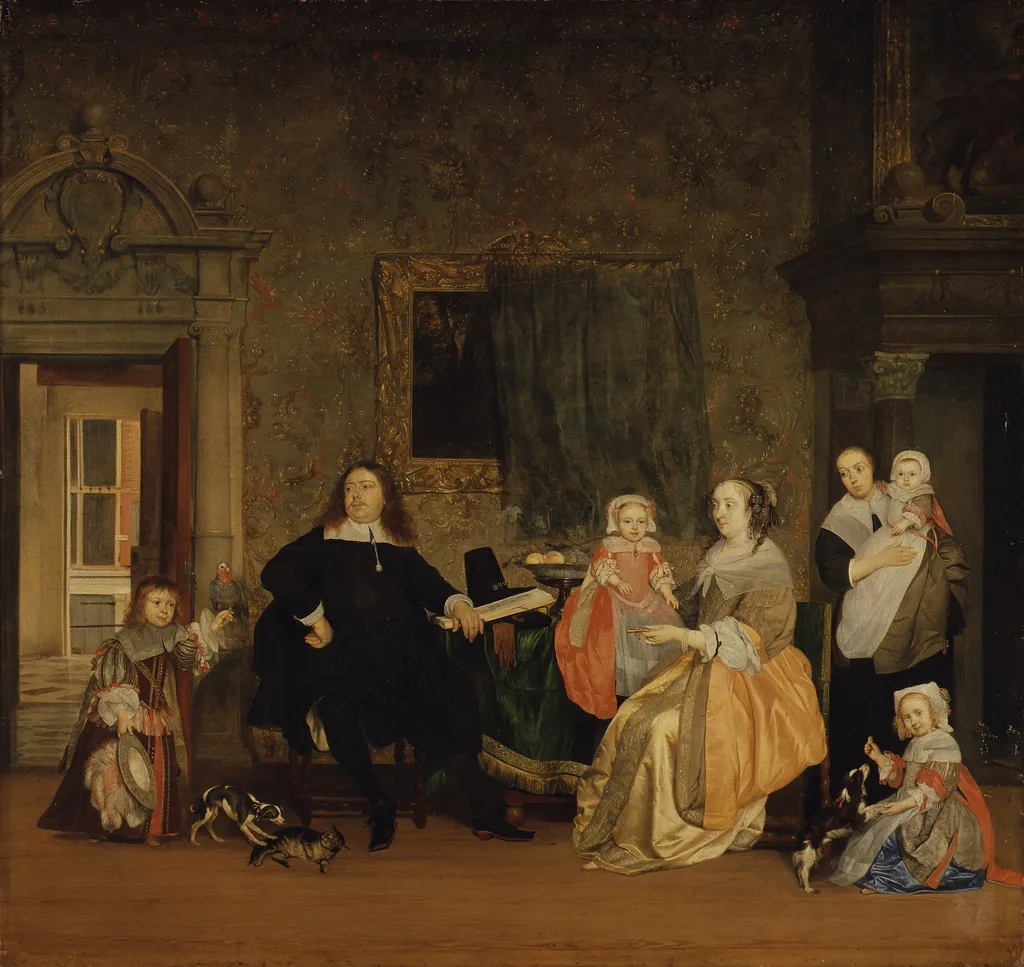
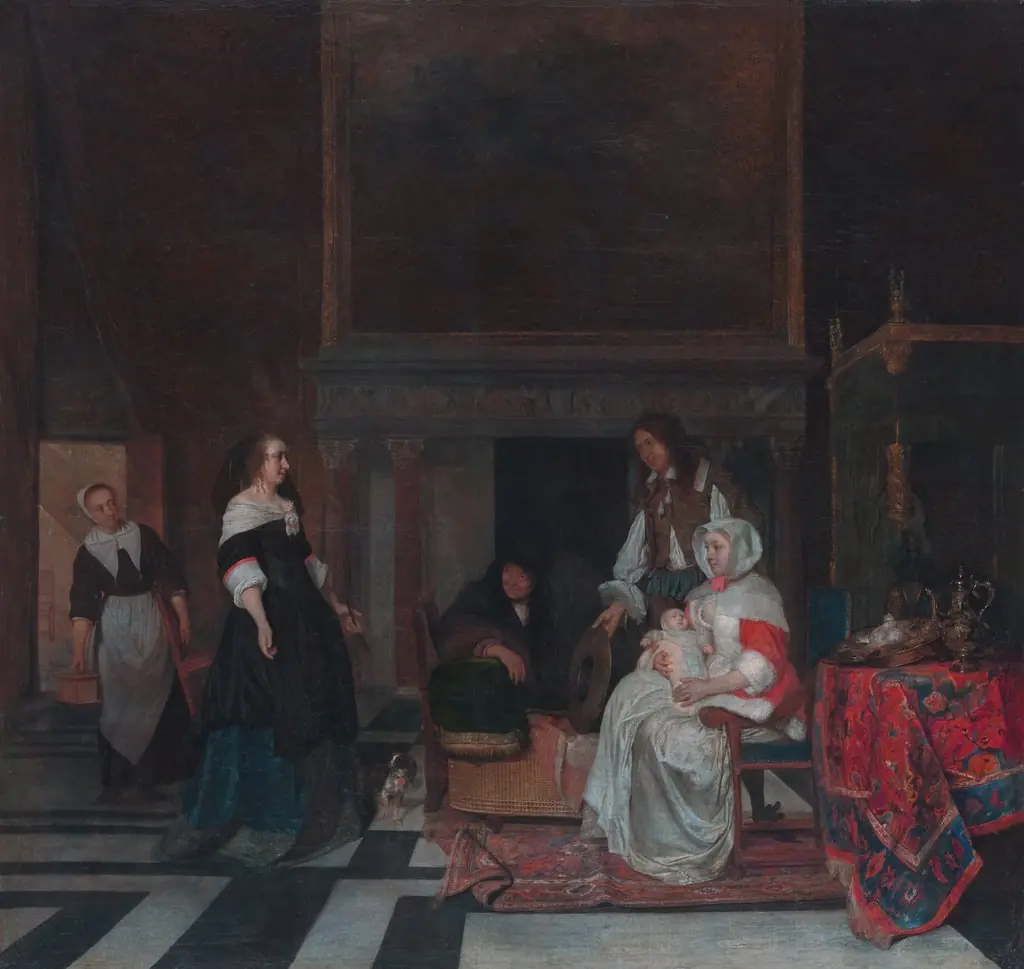
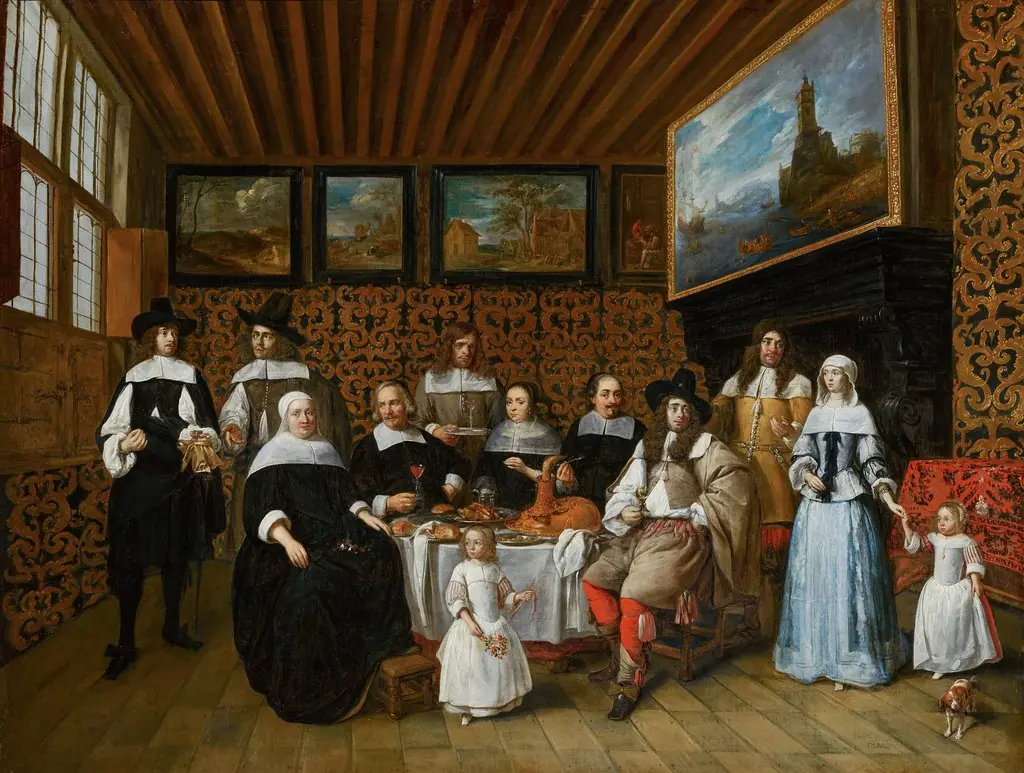
Portrait of the Family Hinlopen is an oil painting by the Dutch Golden Age artist Gabriel Metsu. It dates from 1663 and is held in the collection of the Gemäldegalerie Berlin. Gabriël Metsu’s group portrait, dated circa 1663, depicts a well‑dressed Dutch household in an interior setting.
About this work
This painting shows a Dutch family from the 1600s, dressed in fine clothes. The work is oil paint on canvas by Gabriel Metsu, dated around 1663. It sits in the Gemäldegalerie in Berlin.
Art historians still debate which family this actually is. Some say it’s the Hinlopens. Others think it’s the Valckeniers. Both were rich and powerful in Amsterdam then.
Check out Gabriel Metsu next.
Subject & Meaning
The work depicts Jan Jacobszoon Hinlopen, his wife Leonora Huydecoper, and their four children: Jacob, Johanna Maria, Sara, and Geertrui.
The work depicts Jan Jacobszoon Hinlopen, his wife Leonora Huydecoper, and their four children: Jacob, Johanna Maria, Sara, and Geertrui. Art historians increasingly accept this identification over the alternative theory of the Valckenier family, citing diary records and the sitter's resemblance to a known portrait by Bartholomeus van der Helst. The setting is likely the council chamber of the Amsterdam City Hall, suggested by the specific mantelpiece design attributed to Artus Quellinus the Elder and the high, light-filled atmosphere typical of that civic space.
A Cuban amazon parrot held by the young boy serves as a specific iconographic element, distinguishing the work from earlier misidentifications that mistook the bird for a falcon. The painting captures the family at a moment of prosperity shortly before tragedy struck, as Jan Hinlopen lost his youngest daughter, wife, and son to disease and miscarriage within months of the work's creation in 1663.
Technique & Style
Gabriël Metsu executed the Portrait of the Family Hinlopen around 1663 using oil paint on a canvas support. The work measures 72 cm in height and 79 cm in width, depicting the subjects within a domestic or civic interior that includes a fireplace mantel. While the specific architectural details and background paintings remain unrecognizable, the composition reflects the fashion of Amsterdam regents portraying their families in significant settings, possibly the mayors' room of the Amsterdam City Hall.
Art historical analysis has focused on the figure of a bird held by a boy; once mistaken for a falcon, it is now identified as a Cuban amazon parrot, a detail contributing to the painting's stylistic narrative. Despite the grandeur of the scene, the work was historically criticized by some scholars, such as Cornelis Hofstede de Groot in 1907, who described the atmosphere as boring.
History & Provenance
Portrait of the Family Hinlopen, painted by Gabriel Metsu in 1663, was created as a family portrait for Jan Jacob Hinlopen, a prominent Amsterdam burgomaster. The work was commissioned by Hinlopen to depict his household following the births of his children and the subsequent deaths of his wife Leonora, youngest daughter Geertrui, and son Jacob in 1663. After Hinlopen's death, the painting passed to his daughter Sara Hinlopen, who inherited it in February 1680.
It later entered the collection of the Geelvinck family through inheritance, eventually being sold by the Swiss Tschiffely family in 1832. The work was acquired by the Gemäldegalerie Berlin, where it remained in provenance until at least the late 19th century, when it was misattributed as depicting the family of Kaufmann Gelfing. Art historical debates over the sitter's identity, including confusion with the Valckenier family, emerged in the 19th and 20th centuries, but current scholarship increasingly recognizes the depicted family as the Hinlopen family, supported by archival records and comparisons with other portraits.
The Portrait of the Family Hinlopen is held in the Gemäldegalerie Berlin, where it is listed under inventory number 2260. It was acquired by the Gemäldegalerie in 1832 from the Swiss family Tschiffely, who had inherited it from Maria Petronella Geelvinck. The work was previously owned by the Geelvinck family, who were descendants of Sara Hinlopen.
The painting has been exhibited in Berlin since its acquisition and appears in the museum’s permanent collection displays.
Context
The painting has generated sustained scholarly debate over the identity of the sitters, reflecting the work's shifting place in art-historical literature. In 1907 the Dutch art historian Cornelis Hofstede de Groot described the parrot in the composition and dismissed the picture as langweilig ("boring"). Gerard Brom continued to identify the group as the Geelvinck family in 1957, reading the broad format and display of fine clothing as announcing the eighteenth century.
In 1976 Isabella van Eeghen reattributed the sitters to burgomaster Gillis Valckenier and redated the work to 1657, an argument largely based on her reading of the bird as a falcon; Bob Haak still referred to the Geelvinck family in 1984. Irene Groeneweg later identified the bird as a Cuban amazon parrot, undermining that reading, while Judith van Gent compared the figures to a Bartholomeus van der Helst portrait of the Hinlopens in Berlin and found corroboration in Jan J. Hinlopen's will. The Hinlopen attribution is now increasingly accepted, though the older Valckenier title persists in some literature.
The work also illuminates Metsu's wider practice as a Dutch Golden Age painter of intimate family scenes, situating a wealthy Amsterdam regents' group within the visual tradition of grand canal-house portraiture.
Legacy
The painting's reputation has fluctuated alongside shifting scholarly debates regarding its subject matter. For much of the nineteenth and early twentieth centuries, the work was misidentified as depicting the Geelvinck family or the merchant Gelfing. Prominent art historian Cornelis Hofstede de Groot dismissed the composition as boring in 1907, while Gerard Brom later characterized it as a precursor to eighteenth-century grandeur.
Although Isabella van Eeghen reattributed the scene to the family of Burgomaster Gillis Valckenier in 1976, subsequent research by Judith van Gent utilized archival wills and visual comparisons to restore the Hinlopen identification. Despite this correction, the erroneous Valckenier title persists in some literature and online resources. The work's legacy also includes a high-quality copy displayed at the Museum Geelvinck-Hinlopen Huis.
Overview
Gabriël Metsu’s group portrait, dated circa 1663, depicts a well‑dressed Dutch household in an interior setting. Executed in oil on canvas, the work measures roughly a typical size for domestic scenes of the period and is presently displayed in the Gemäldegalerie, Berlin. The composition presents several figures arranged around a central space, suggesting a familial gathering.
Own this work as a print
Artist & collection
Artist
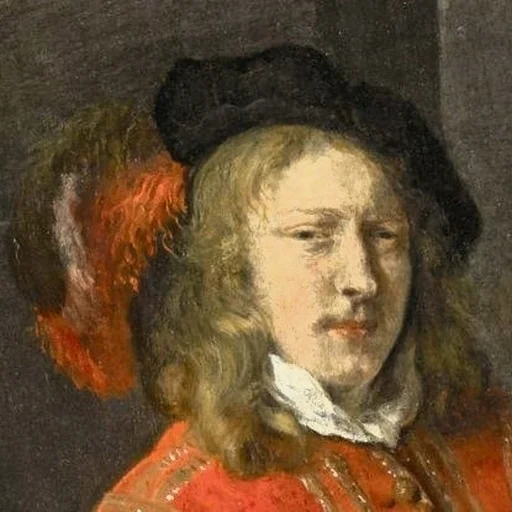
Gabriël Metsu (1629–1667) was a Dutch painter of history paintings, still lifes, portraits, and genre works.