Artwork
Family Portrait
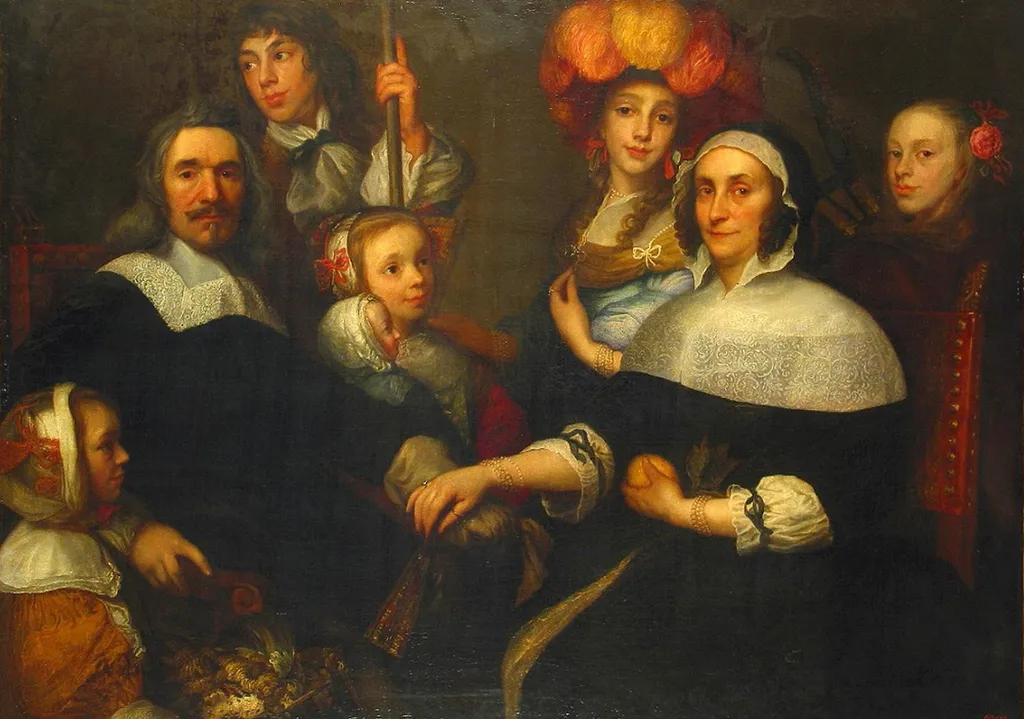
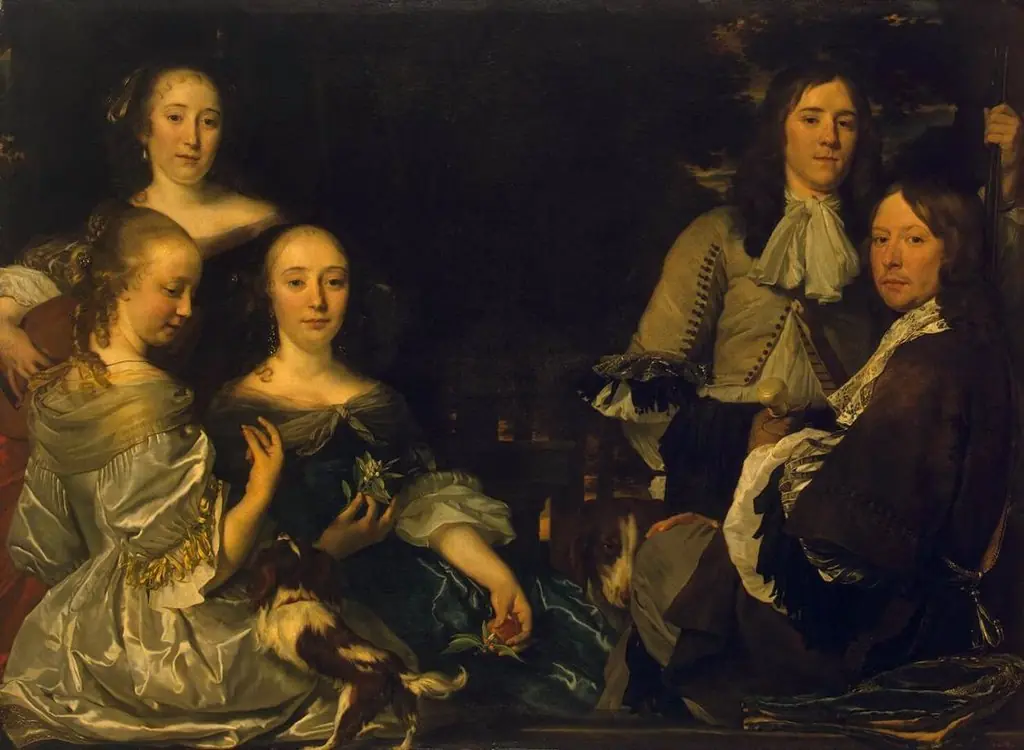
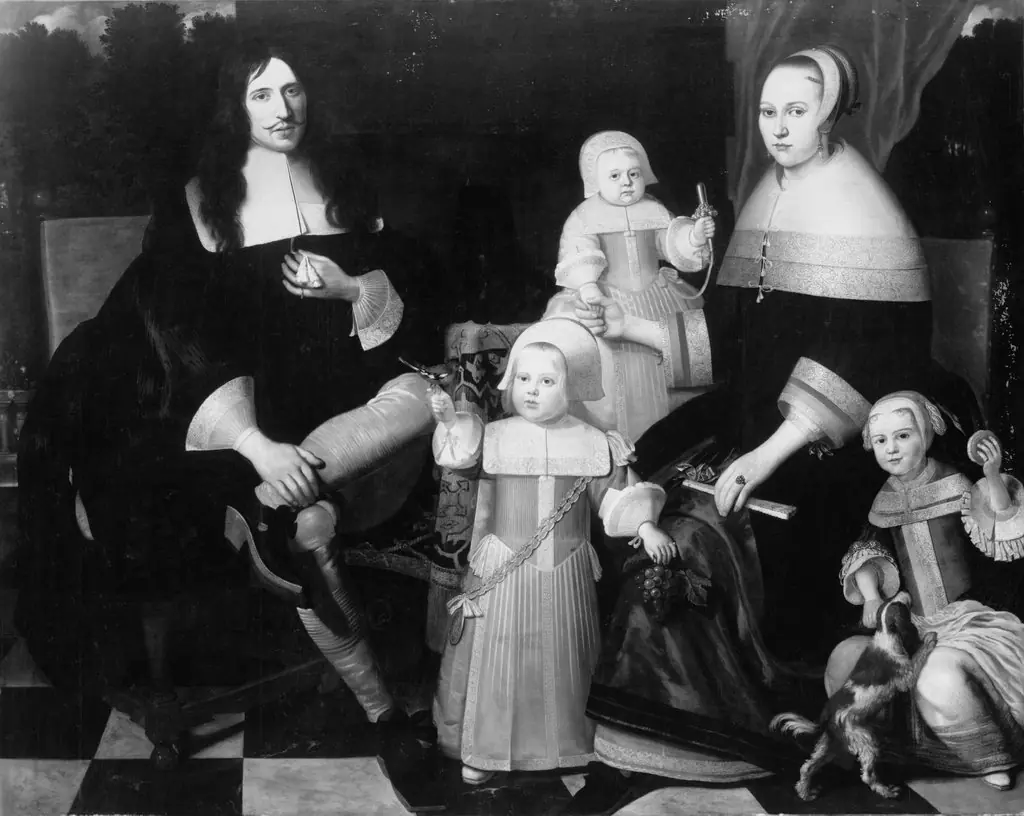
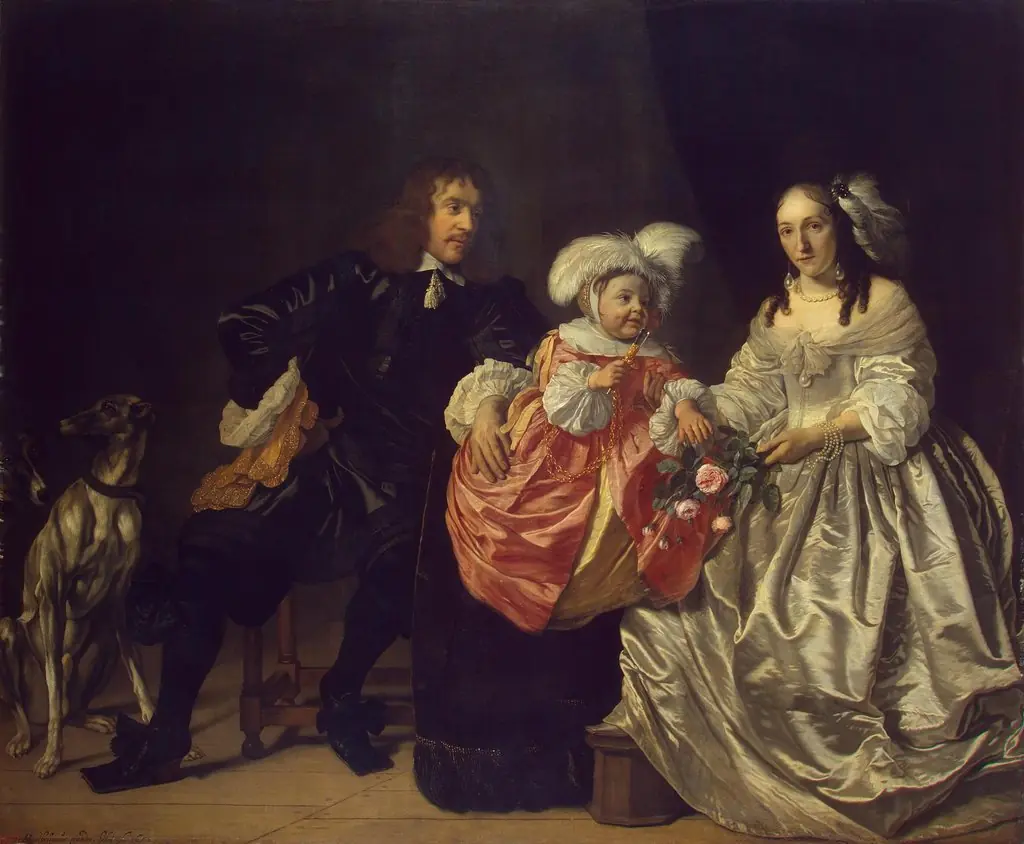
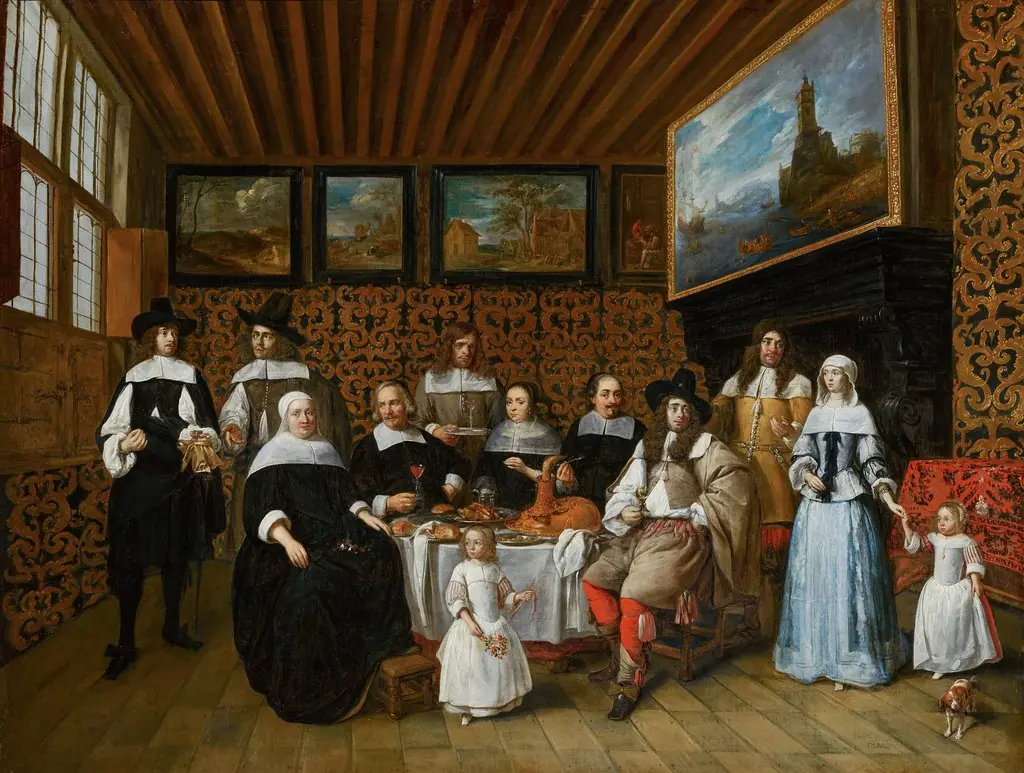
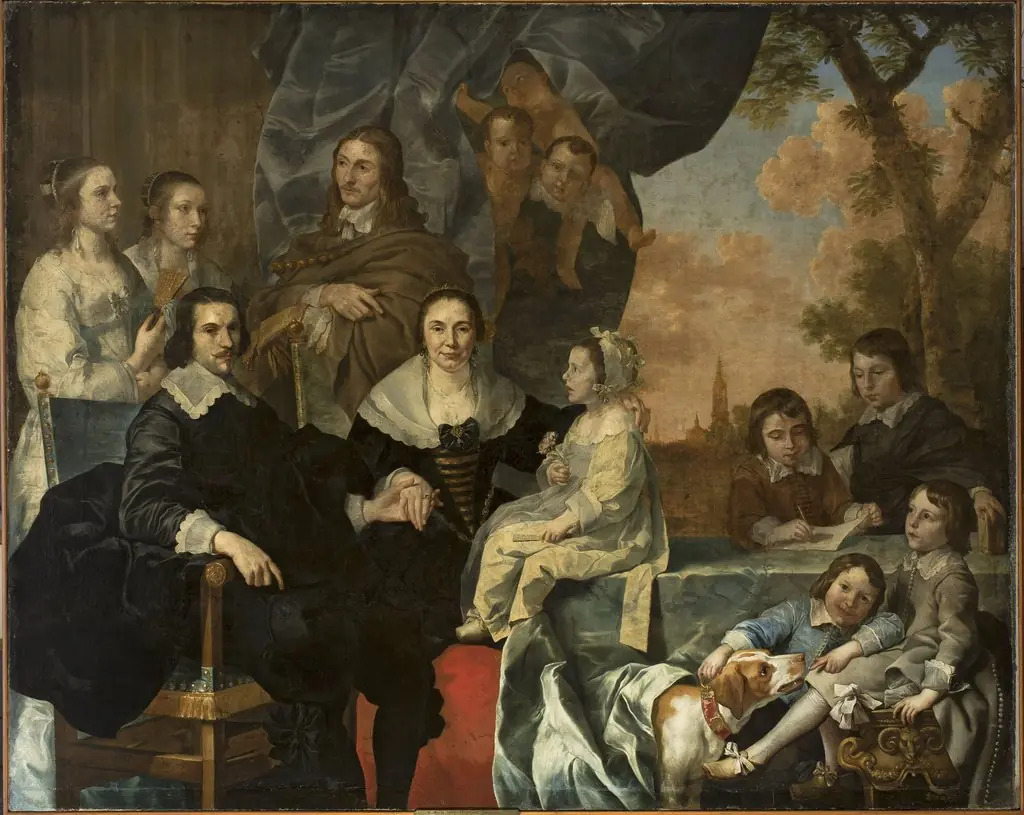
Family Portrait is an oil painting by the Dutch Golden Age artist Jürgen Ovens. It dates from 1650 and is held in the collection of the Hermitage Museum.
About this work
Overview
The artwork, which is also categorized under the genre of a family portrait, depicts a compact, pyramidal group of seven figures arranged in a dim interior.
Family Portrait is an oil on canvas painting by the German artist Jürgen Ovens, created in 1659. The artwork, which is also categorized under the genre of a family portrait, depicts a compact, pyramidal group of seven figures arranged in a dim interior. Traditionally identified as Colonel John Hutchinson and his family, the painting is noted for its fusion of Flemish compositional order with Rembrandtesque lighting and brushwork. The canvas measures 53 1/8 by 68 1/2 inches. It was executed during Ovens's period of activity in England and is currently held in the collection of the Hermitage Museum.
Subject & Meaning
The composition features a seated man with a mustache and pointed beard, wearing a black garment with a wide white lace collar, his left hand resting on a chair back. Beside him, a seated woman in a dark dress with an elaborate flat white lace collar holds an orange and a fan. Behind the man stands a youth gripping a tall staff, while a young girl with red ribbons leans against him. Behind the woman, a standing figure wears an extravagant hat with orange and red feathered lobes, and another figure with a red flower in the hair appears at the far right. A small child in profile, wearing a white head covering with red decoration and a brown dress, stands at the lower left near a basket of flowers. The sitters are traditionally identified as Colonel John Hutchinson, a Member of Parliament for Nottinghamshire who fought for the parliamentary army in the English Civil War and signed the death warrant of King Charles I, alongside his family. The opulent attire and careful arrangement reflect the wealth and status of the Baroque-era family.
Technique & Style
Executed in oil on canvas, the painting demonstrates a sophisticated handling of paint to differentiate textures. The palette is dominated by deep browns, blacks, and warm ochres, punctuated by bright white lace and a vivid orange hat. Light falls strongly from the left, illuminating the faces, collars, and hands while the background recedes into shadow. The brushwork features a smooth, polished finish in the faces and glistening velvet robes, contrasting with the thick, freely applied brushstrokes of the feathers in the boy's hat and the voluminous impasto of the hem of the lady's red skirt, a technique betraying the influence of Rembrandt. The composition is compact and pyramidal, pressing the figures close together against an undefined dark space in a manner rooted in Flemish tradition.
History & Provenance
Signed and dated center left as J. OVEN / F. 1659, the painting was likely executed shortly after Ovens moved back to Amsterdam in 1657 and subsequently traveled to England. The provenance traces from a private collection in the USA to an anonymous sale at Christie's, London, on July 5, 1918, where it was sold with a book of memoirs by Colonel Hutchinson. It passed through Agnews, London, to Mrs. Celia Tobin Clarke in San Francisco. It was sold at Sotheby's, New York, on May 17 to 18, 1972, acquired by Price, and later owned by Helen Arden Pierce. The Pierce estate sold it at Sotheby's, New York, on January 17, 1992, for $115,000. It was with Konrad Bernheimer in Munich by 1998 and acquired from him on April 30, 1998, by a later owner. The canvas has been lined onto a keyed wooden stretcher. Condition reports note scattered retouchings, particularly around the framing edges and on the Colonel's cloak, as well as an area covering an old tear on the dark red drapery below the child. The flesh tones and faces have only minimal inpainting, and the painting is considered to be in good and stable condition. It was exhibited at the Hall of the Legion of Honor in San Francisco in 1970.
Context
Jürgen Ovens trained in Amsterdam with Rembrandt and is thought to have spent time in Antwerp under Jan Lievens before returning to Amsterdam in 1657. While celebrated for his mythological and historical works, Ovens was also a talented portraitist. This family portrait, painted during his English period, exemplifies the idealized and ordered portrayal of a family group characteristic of the Flemish manner, while simultaneously displaying the textural and lighting influences of his Rembrandt training. Scholar Werner Sumowski links the portrait to a related drawing in the Pretenkabinet der Rijksuniversiteit in Leiden, inventory number AW108, and catalogues the painting in his surveys of Rembrandt pupils and their drawings.
Artist & collection
Artist
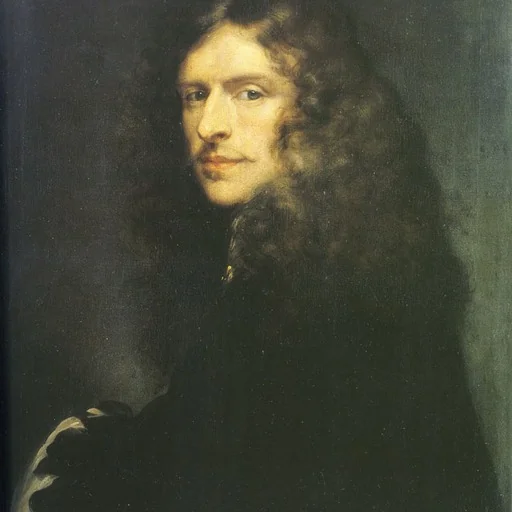
Jürgen Ovens (1623 – 9 December 1678), also known as Georg, or Jurriaen Ovens whilst in the Netherlands, was a portrait painter and art-dealer from North Frisia and, according to Arnold Houbraken, a pupil of Rembrandt.

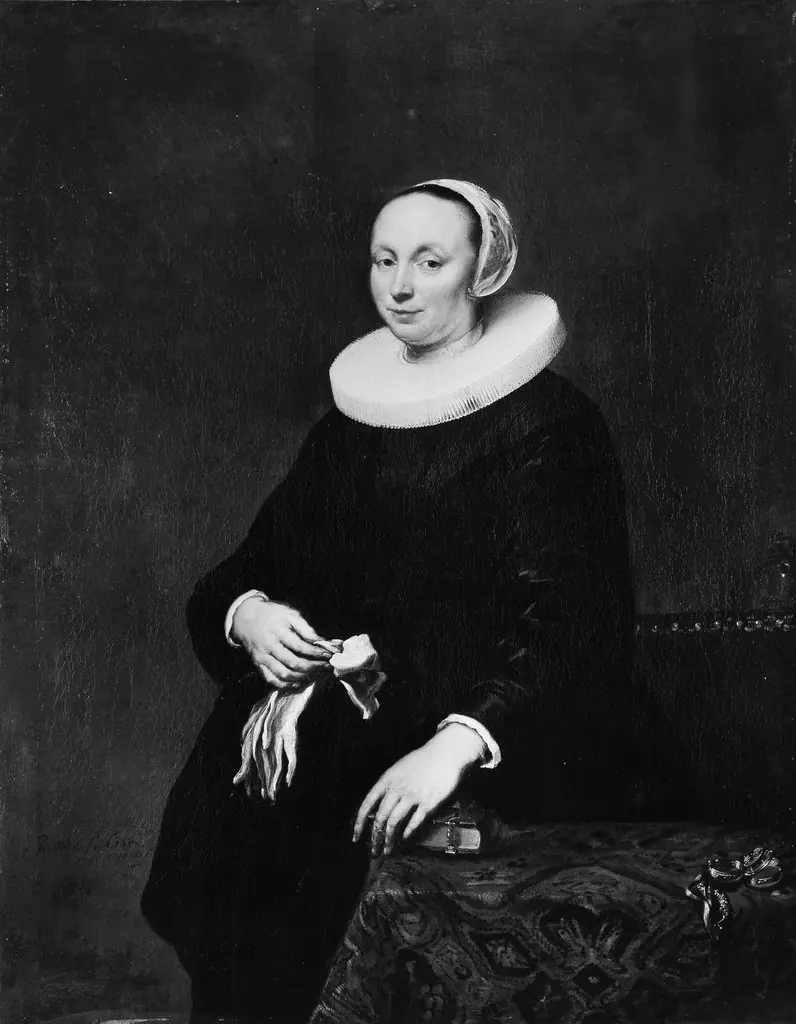 Portrait of a Woman
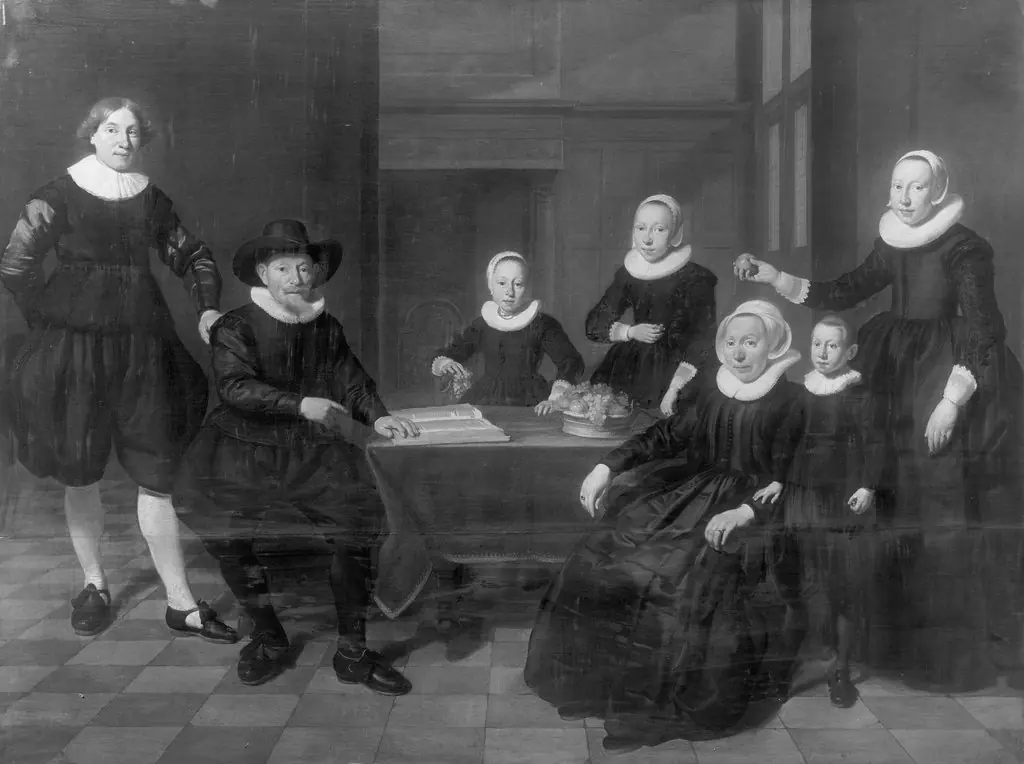
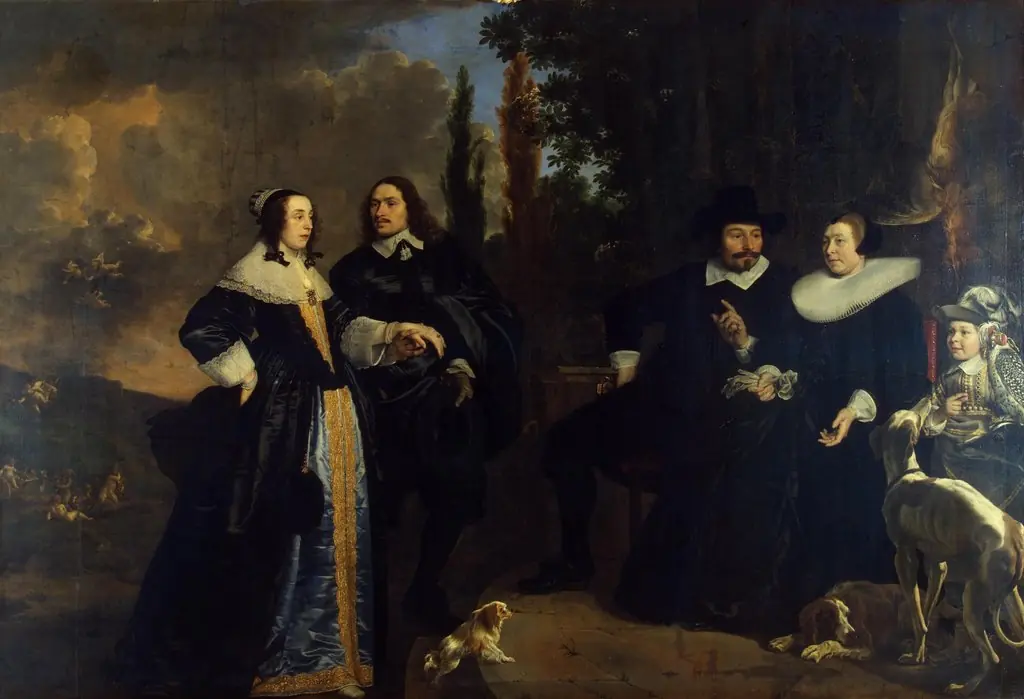
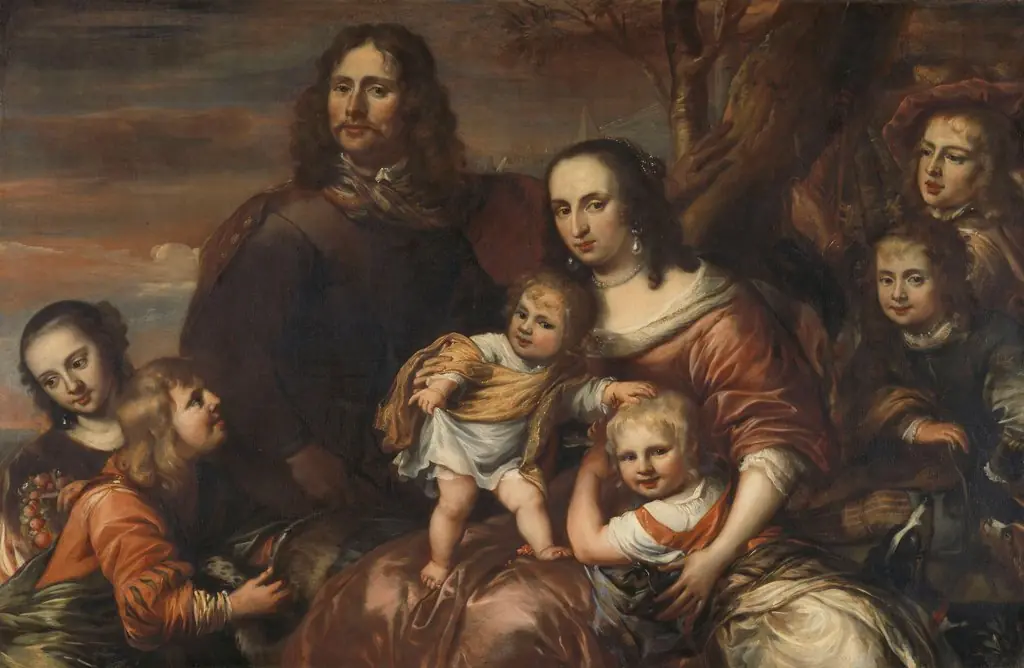 A couple with six children
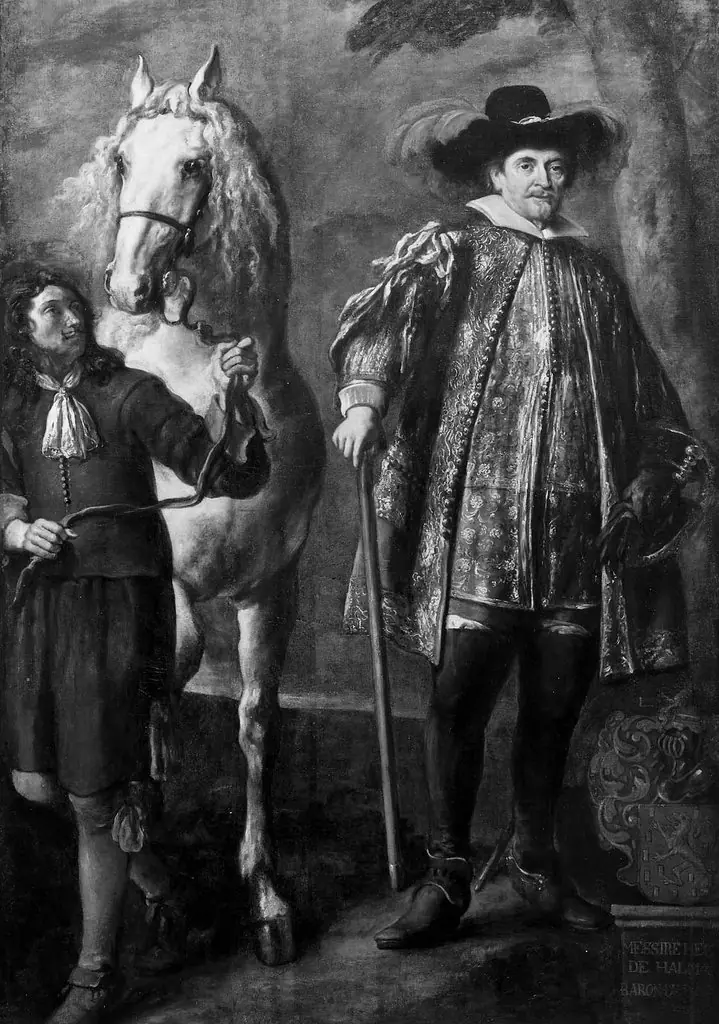 Hendrik van Halmale with his Horse and Groom
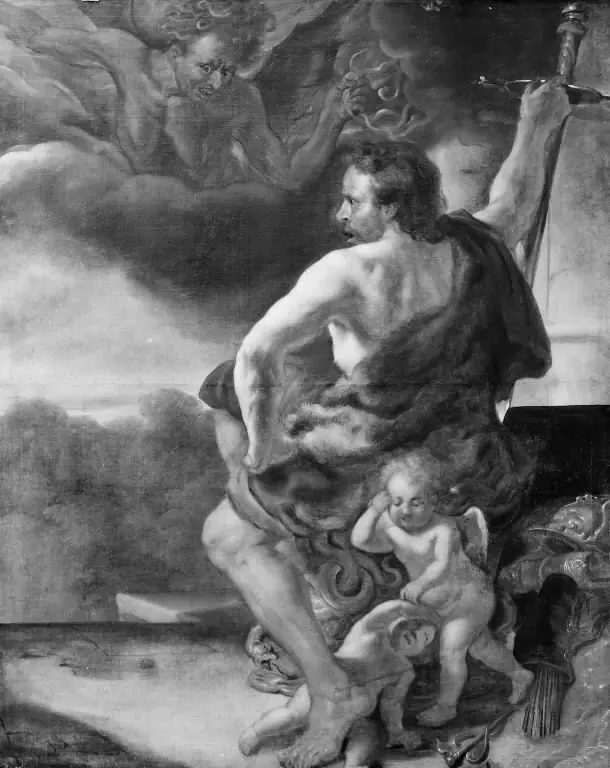 Hercules and Envy
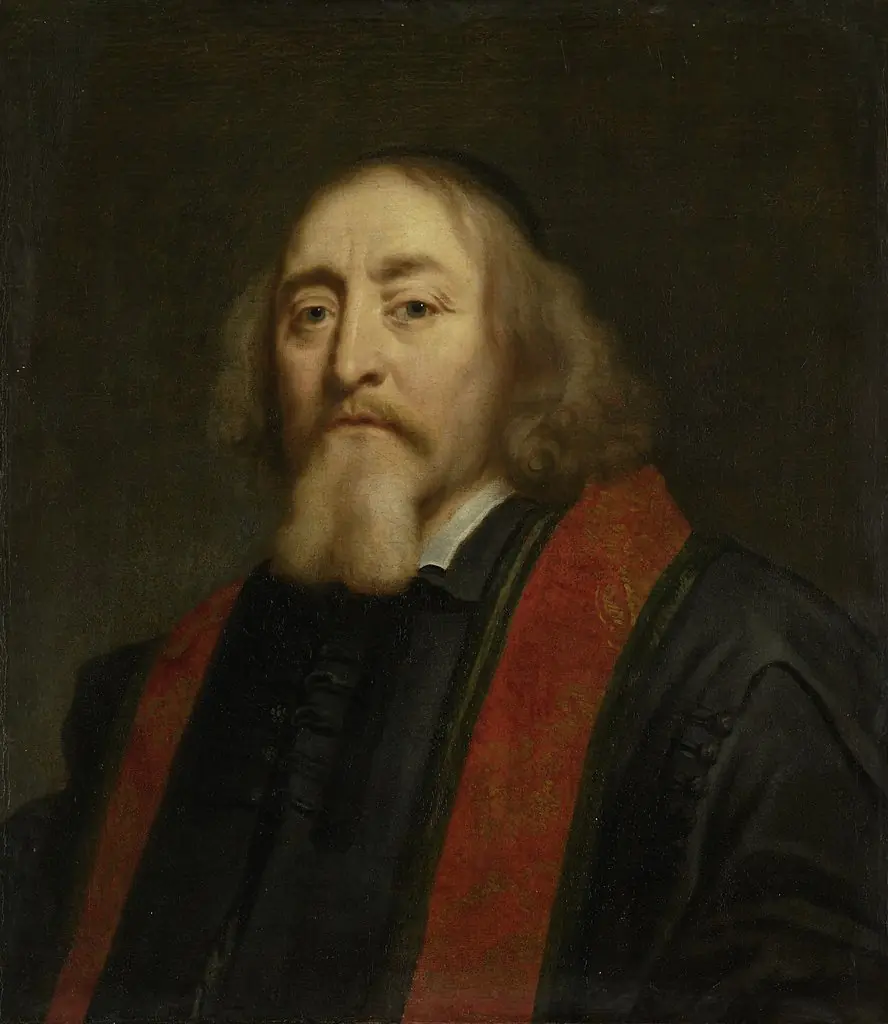 Jan Amos Comenius (Komensky) (1592-1670). Czech humanist and pedagogue. Exiled as a leader of the Moravian or Bohemian Brethren and settled in Amsterdam in 1656
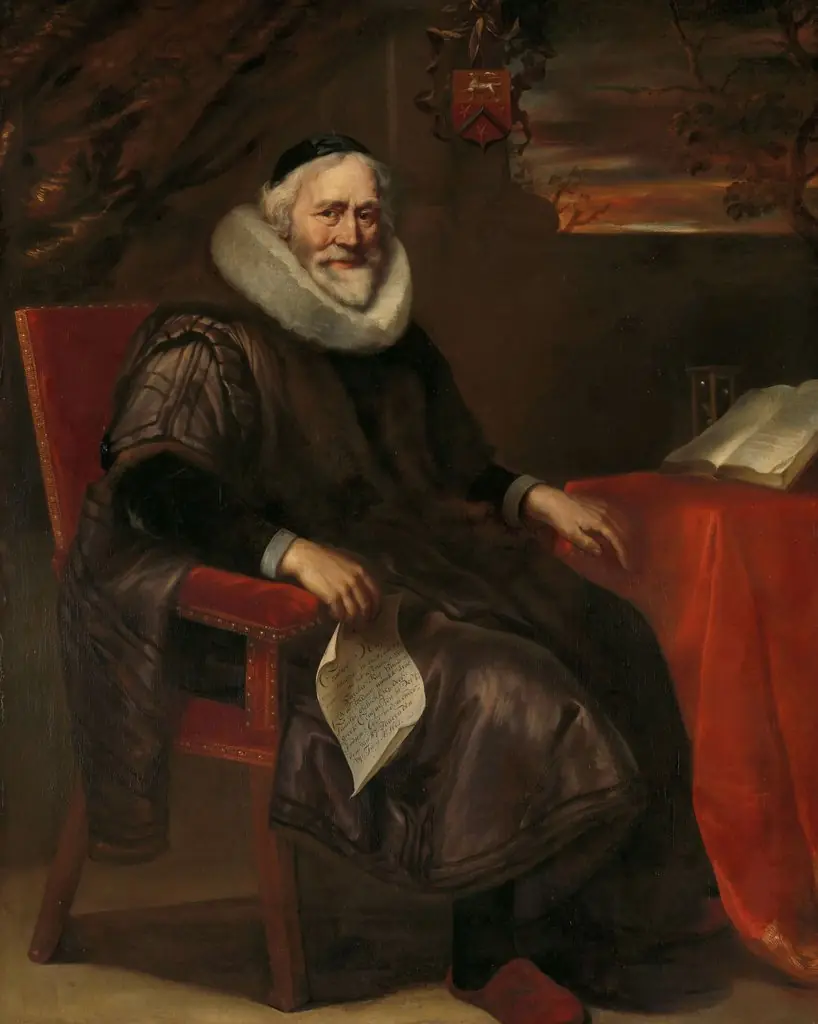 Cornelis Nuyts (1574-1661). Amsterdam merchant
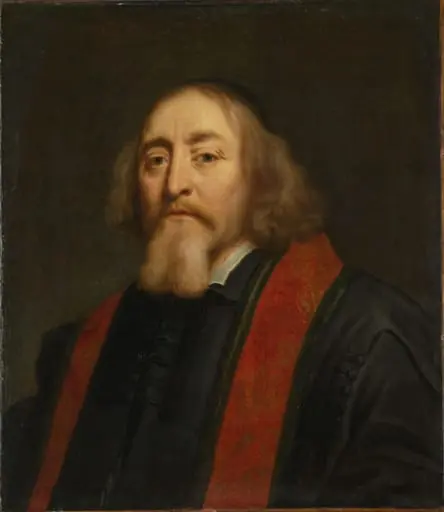 Portrait of Jan Amos Comenius
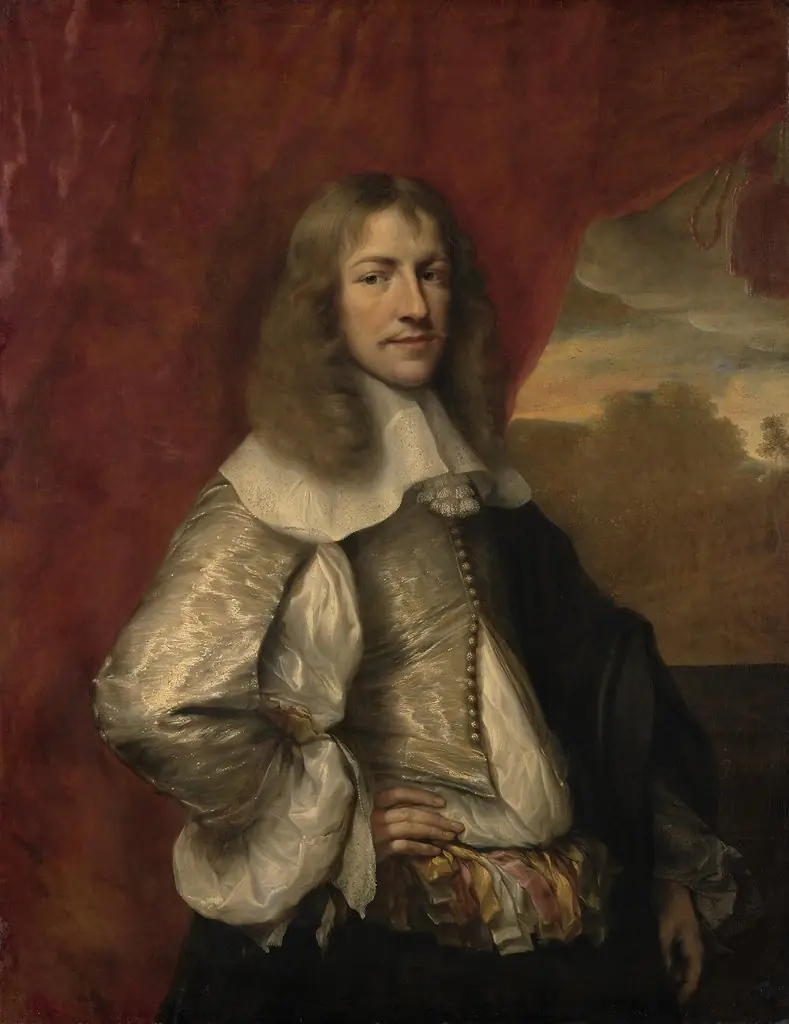 Portrait of Mr. Jan Bernd Schaep (1633-1666)