Artwork
The Sick Lady and the Weeping Maidservant
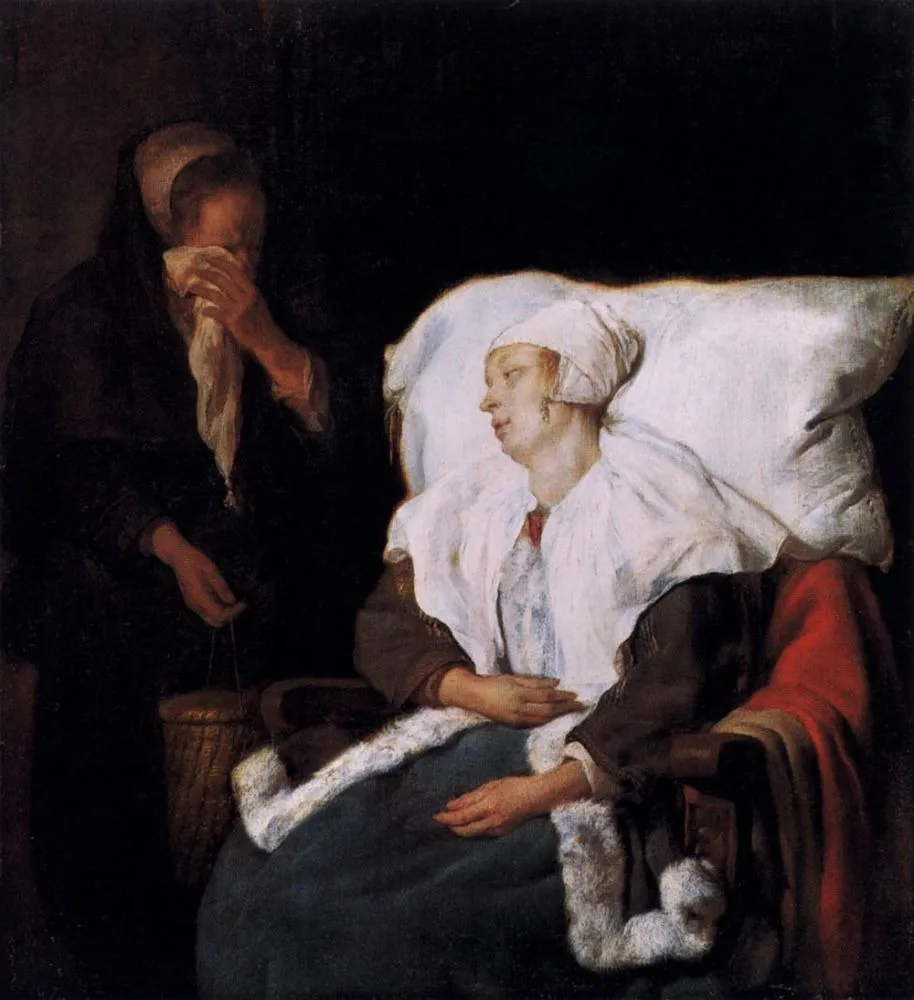
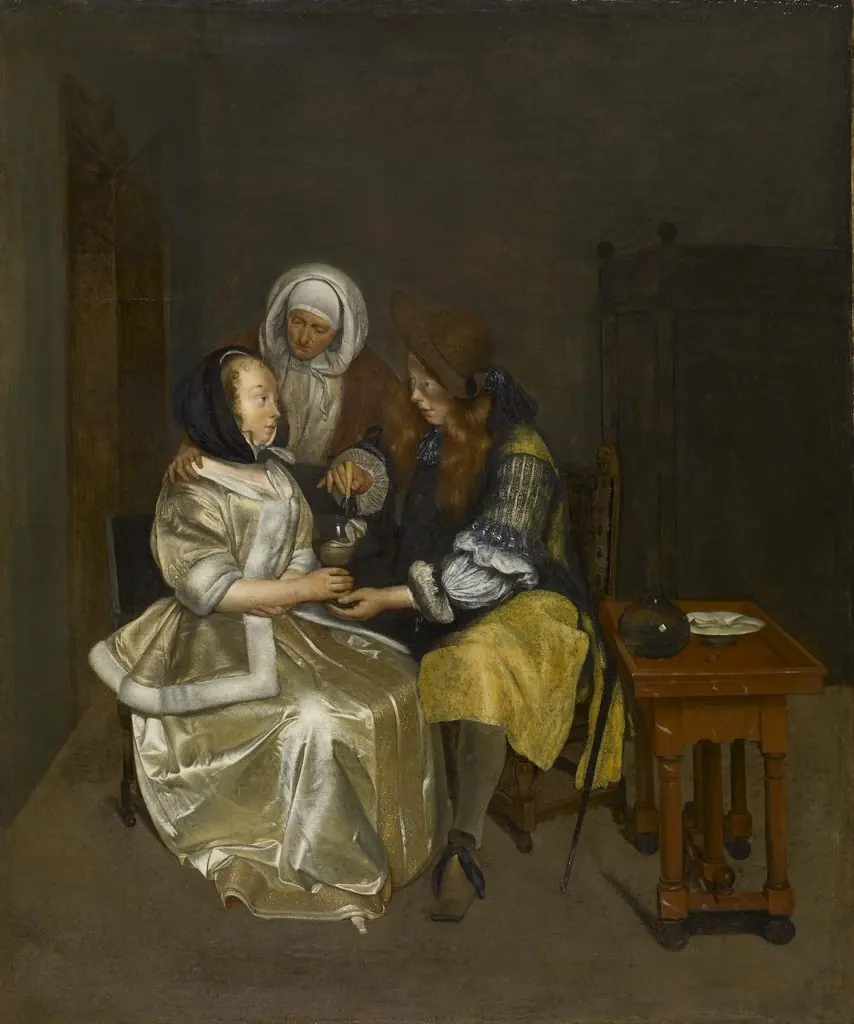
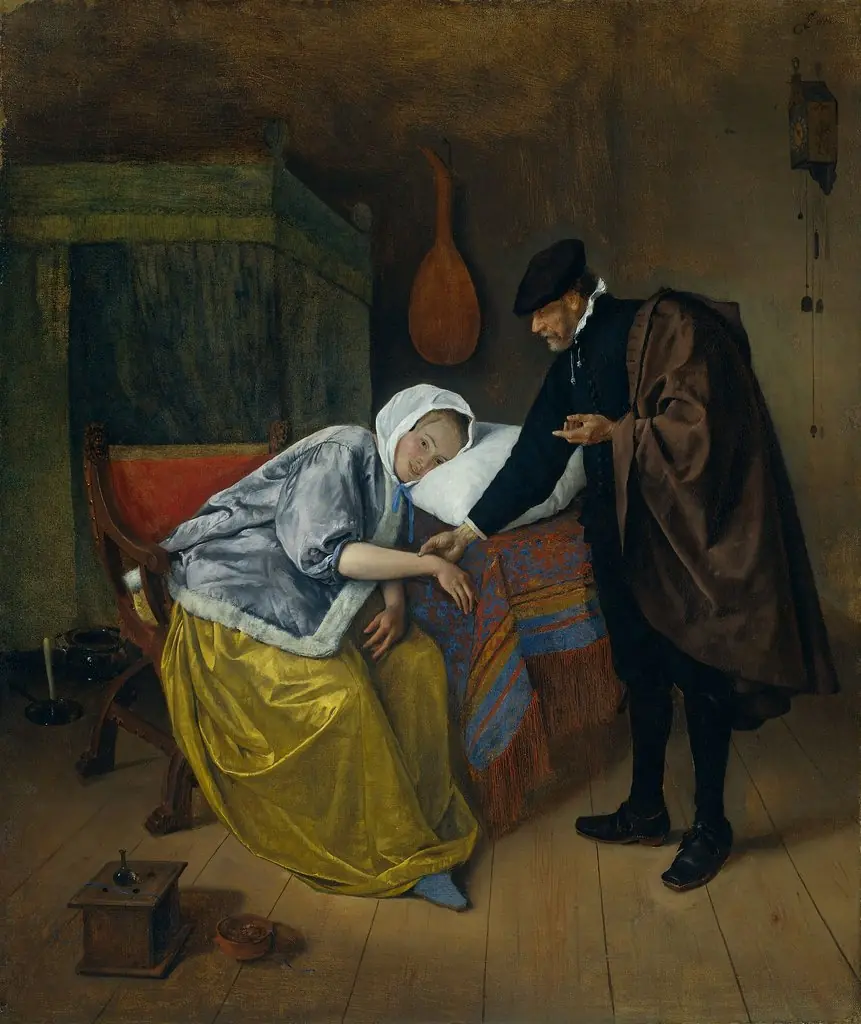
The Sick Lady and the Weeping Maidservant is an oil painting by the Dutch Golden Age artist Gabriel Metsu. It dates from 1658 and is held in the collection of the Gemäldegalerie Berlin.
About this work
Subject & Meaning
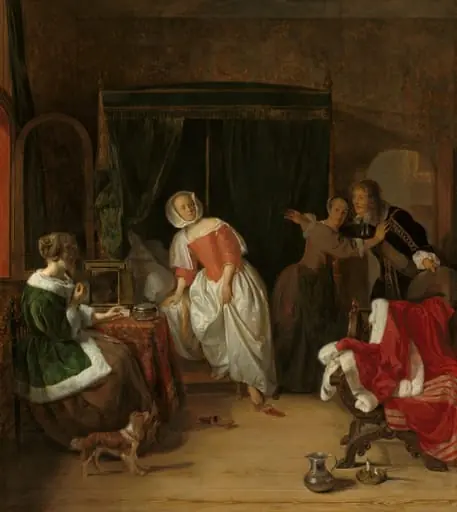
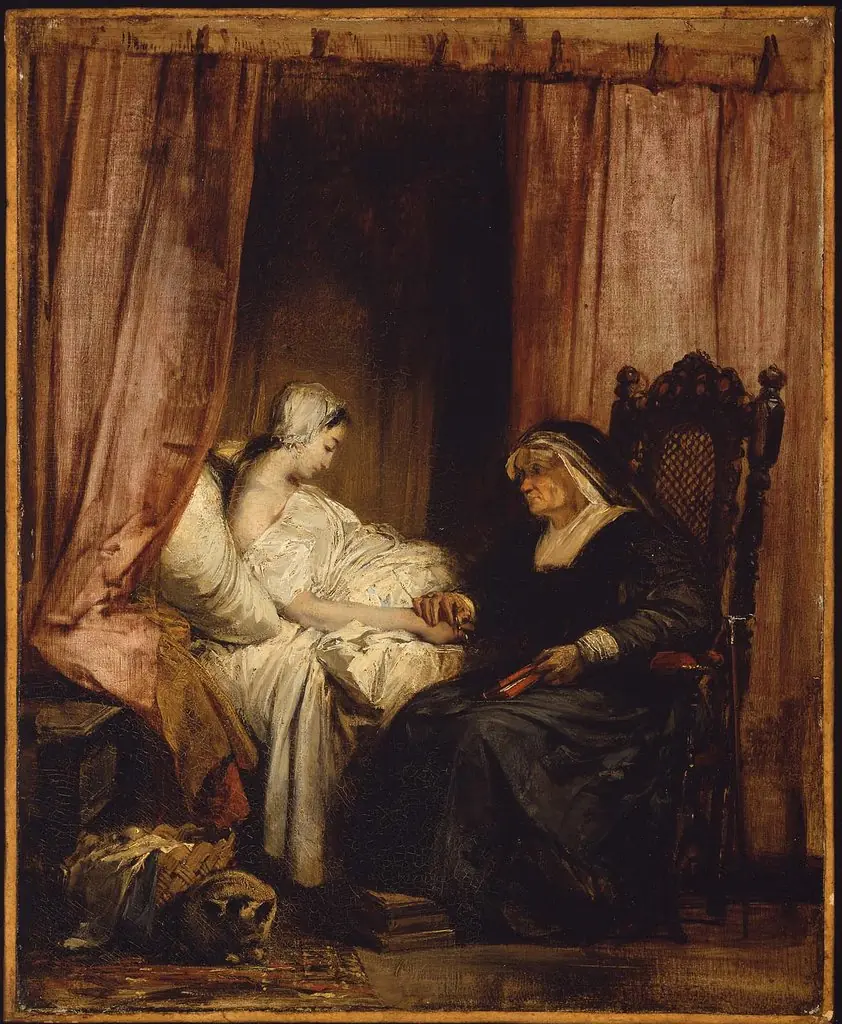
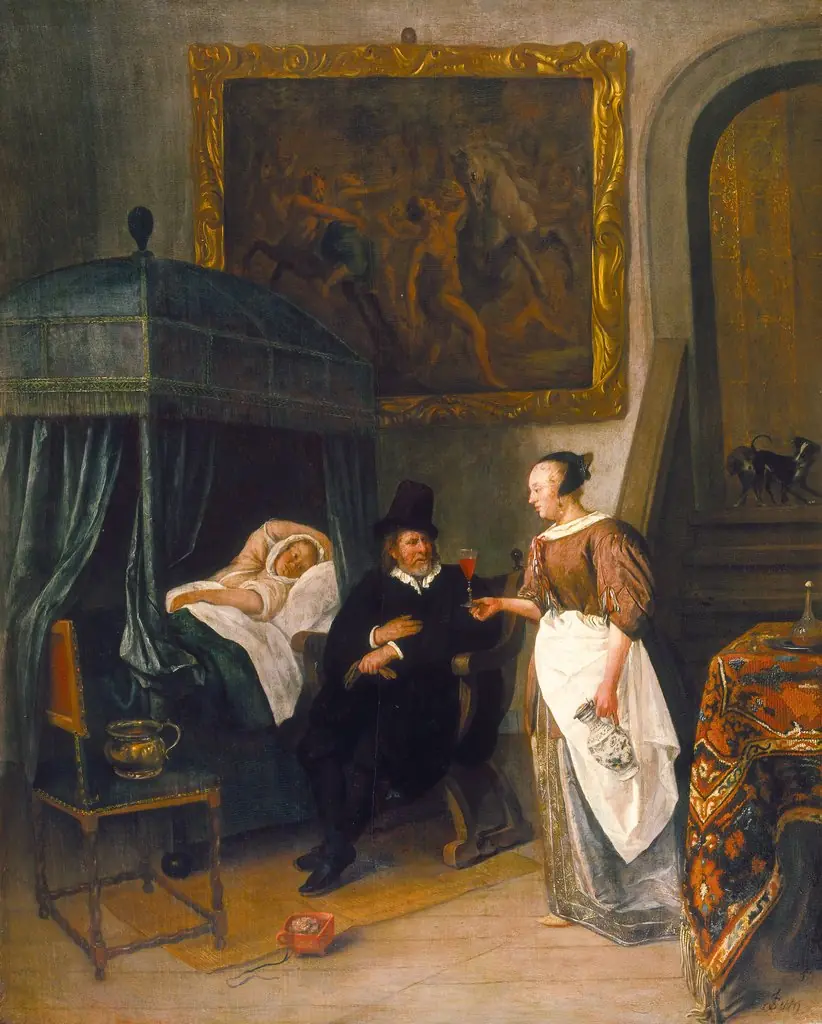
The painting presents a domestic genre scene centered on a woman confined to bed by illness, attended by a maidservant who weeps at her side.
The painting presents a domestic genre scene centered on a woman confined to bed by illness, attended by a maidservant who weeps at her side. The contrast between the ailing mistress and the grieving servant establishes the work's emotional core, with the depicted motif of crying underscoring the gravity of the woman's condition.
Rendered on a small panel, the intimate scale reinforces the focus on private, household suffering rather than grand narrative. Within the Dutch genre tradition to which Metsu belonged, such sickbed scenes functioned as meditations on mortality, the fragility of health, and the bonds of loyalty among women in the home, while also inviting viewers to contemplate virtue, compassion, and the precariousness of domestic harmony.
Technique & Style
Gabriel Metsu painted The Sick Lady and the Weeping Maidservant in 1658 using oil paint on a wooden panel, a technique typical of Dutch genre scenes of the mid-17th century. The compact composition emphasizes intimate narrative detail, with careful rendering of textures such as the fabric of the bed linens and the pallor of the central figure. Light falls softly across the room, highlighting the emotional tension between the ailing woman and her attendant, while the muted palette and precise brushwork convey a quiet, almost theatrical stillness. These stylistic choices underscore Metsu’s skill in combining realistic observation with a refined, composed visual language.
The work measures 30 cm in height and 26 cm in width, confirming its modest scale appropriate for a private interior scene.
History & Provenance
Gabriel Metsu created The Sick Lady and the Weeping Maidservant in 1658. Executed in oil on panel, the work measures 30 by 26 centimeters. The painting's ownership history includes possession by Eugène de Beauharnais.
It subsequently passed to Maximilian de Beauharnais, the 3rd Duke of Leuchtenberg, and formed part of the Leuchtenberg Gallery collection. The artwork is currently held in the collection of the Gemäldegalerie in Berlin.
The painting is held in the Gemäldegalerie Berlin, where it is inventoried as part of the museum’s holdings. It entered the collection via the Leuchtenberg Gallery, assembled by Maximilian de Beauharnais, 3rd Duke of Leuchtenberg, and previously owned by his father, Eugène de Beauharnais.
The work has not been recorded in major loan exhibitions in the available sources.
Overview
The Sick Lady and the Weeping Maidservant is a 1658 painting by Gabriel Metsu, a versatile Dutch Golden Age artist. This work exemplifies the narrative depth characteristic of Metsu's genre scenes.
Artist & collection
Artist
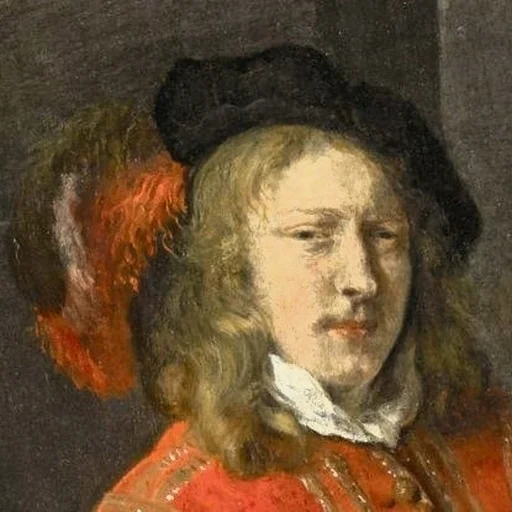
Gabriël Metsu (1629–1667) was a Dutch painter of history paintings, still lifes, portraits, and genre works.