Artwork
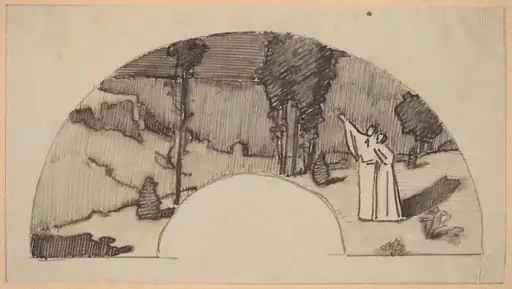
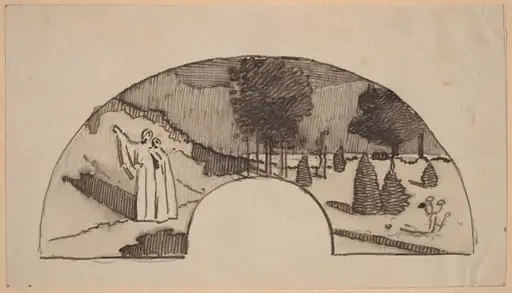
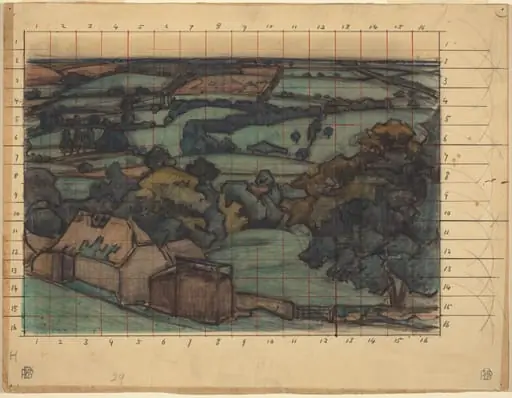
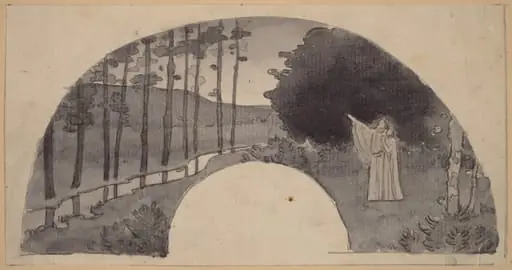
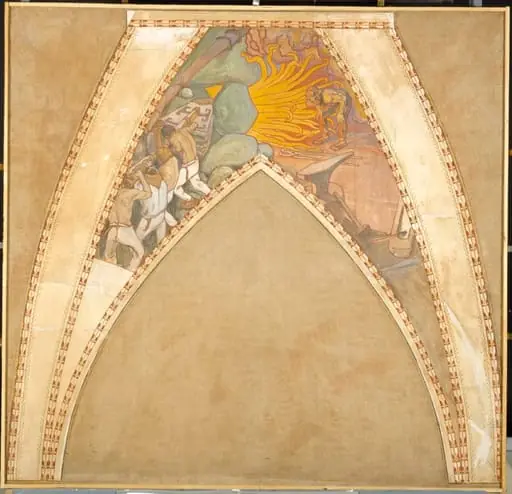
Pakanuus ja kristinusko, luonnos Suomen paviljongin kupolifreskoihin Pariisin vuoden 1900 maailmannäyttelyyn
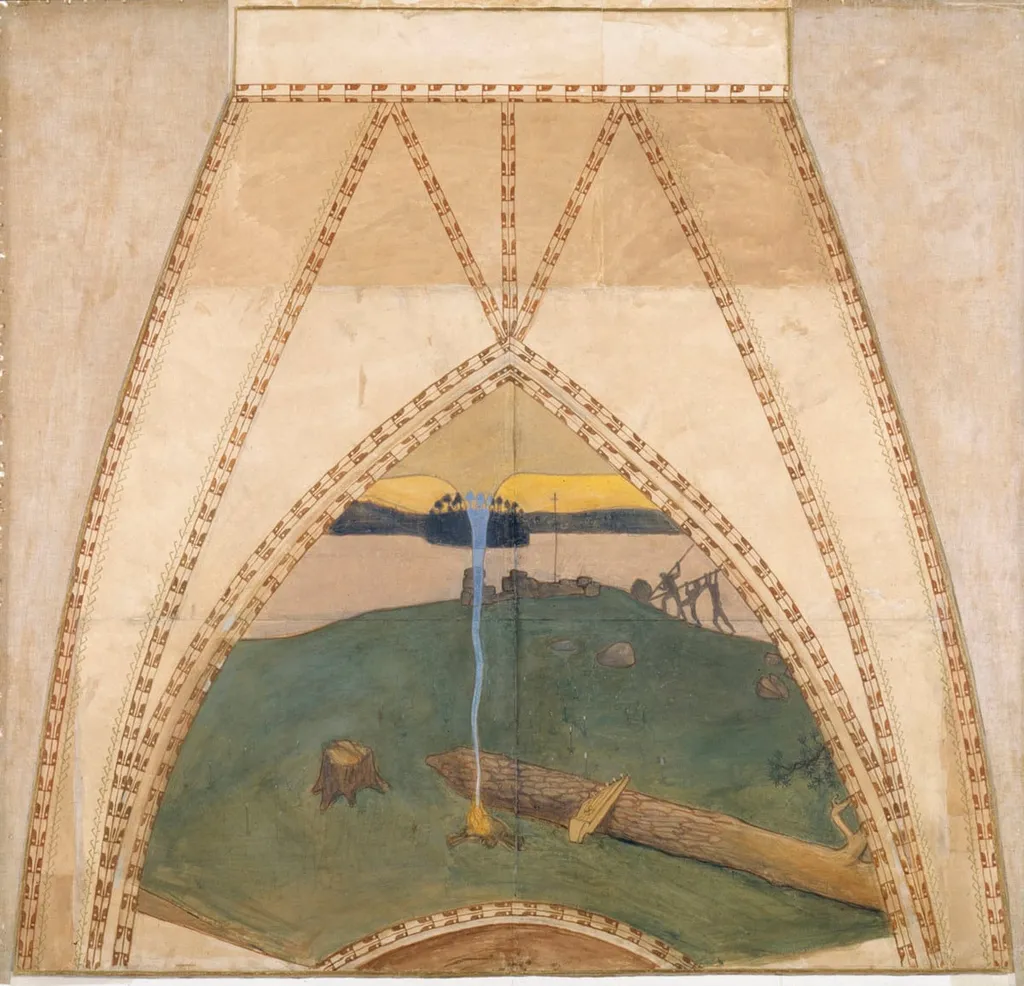
Pakanuus ja kristinusko, luonnos Suomen paviljongin kupolifreskoihin Pariisin vuoden 1900 maailmannäyttelyyn is an unspecified work on paper by the Art Nouveau artist Akseli Gallen-Kallela. It dates from 1895 and is held in the collection of the Finnish National Gallery.
About this work
A man in a long robe kneels by a stream. Watercolor glows in soft blues and golds. Trees frame him like a quiet stage.
This sketch was meant for a big dome. The artist planned a huge fresco for Paris in 1900. It shows old Finnish beliefs meeting new Christian ideas.
Look up Gallen-Kallela, Akseli if you like this soft, clear style.
Overview
The composition presents a solitary figure in a long robe kneeling beside a gently flowing stream, framed by a sparse arrangement of trees.
Created circa 1895 by Akseli Gallen‑Kallela, this watercolor serves as a preparatory study for a dome fresco that was to decorate the Finnish pavilion at the 1900 Paris Exposition. The composition presents a solitary figure in a long robe kneeling beside a gently flowing stream, framed by a sparse arrangement of trees. The work exemplifies the artist’s transition from realistic representation toward a more symbolic, national‑romantic visual language.
Subject & Meaning
The lone kneeling figure embodies the encounter between pre‑Christian Finnish belief systems and the incoming Christian faith, a theme recurrent in Gallen‑Kallela’s oeuvre. By situating the figure beside water, a traditional symbol of purification, and surrounding him with a tranquil natural setting, the sketch suggests a contemplative synthesis of ancient ritual and newer religious doctrine within the Finnish cultural narrative.
Technique & Style
Executed in watercolor, the study employs a limited palette of muted blues and warm golds, allowing the light to diffuse across the scene with a soft luminosity. The brushwork is restrained, emphasizing flat areas of colour over detailed modeling, a hallmark of the Art Nouveau influence that Gallen‑Kallela incorporated during his shift to a stylized, symbolic approach in the 1890s.
History & Provenance
The sketch was intended as a design for a large dome fresco to be installed in the Finnish pavilion at the 1900 World’s Fair in Paris, though the final fresco was never realized. The work remains in the artist’s archives, documenting his involvement in the international exhibition and his role in promoting a distinct Finnish visual identity on a global stage.
Artist & collection

Artist
Akseli Gallen-Kallela (born Axel Waldemar Gallén; 26 April 1865 – 7 March 1931) was a Finnish painter and a leading figure of Finnish romantic nationalism around the turn of the 20th century.