Artwork
The Lute Player
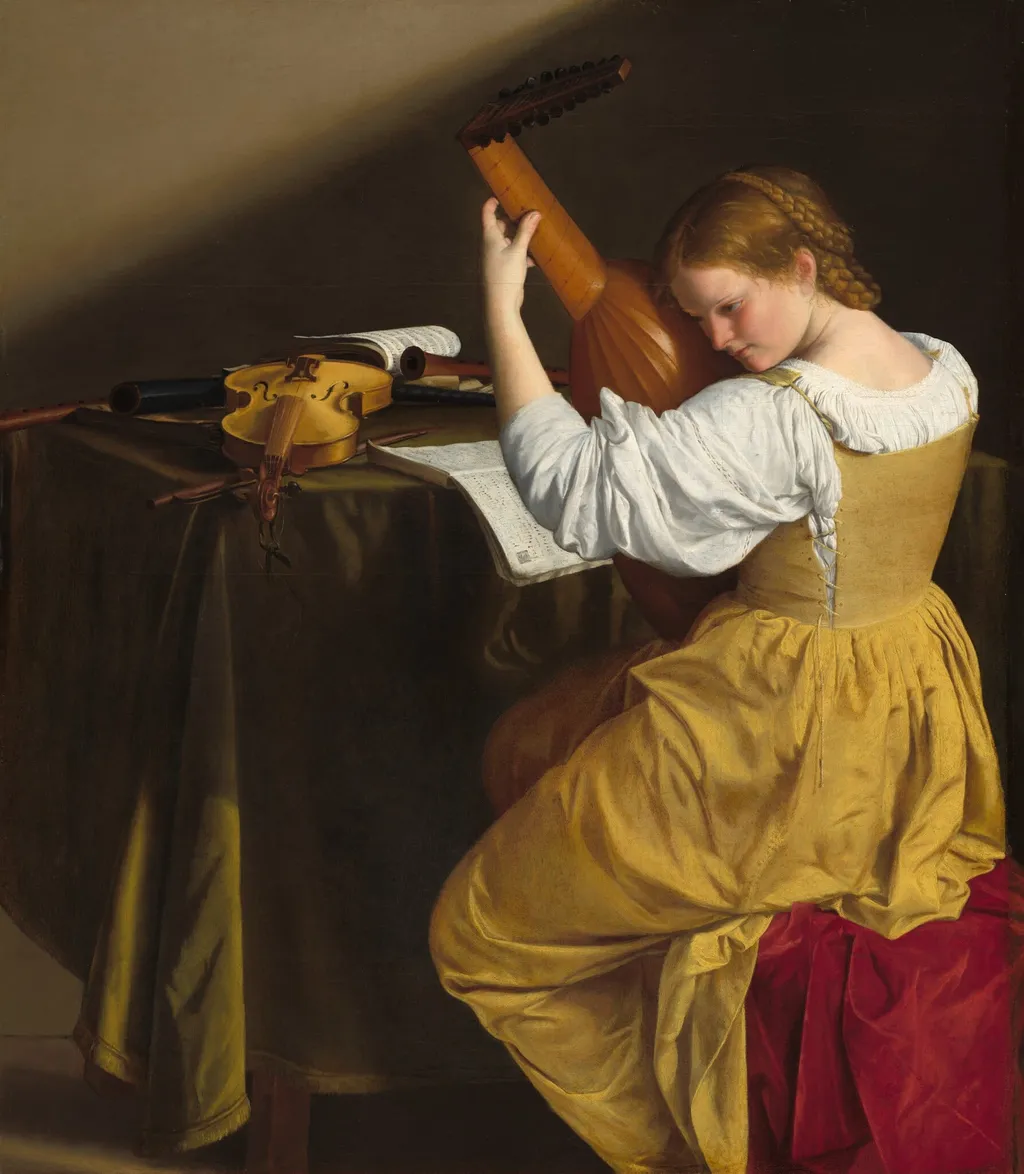
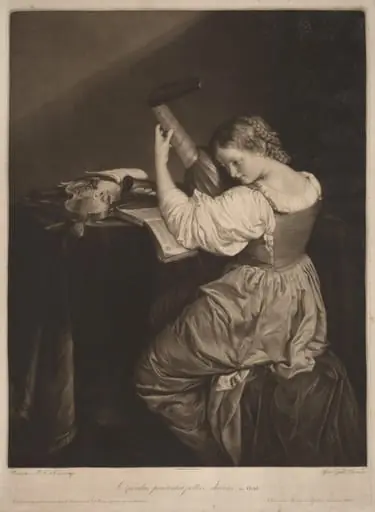
The Lute Player is an oil painting by the Baroque artist Orazio Gentileschi. It dates from 1616 and is held in the collection of the National Gallery of Art.
About this work
Subject & Meaning
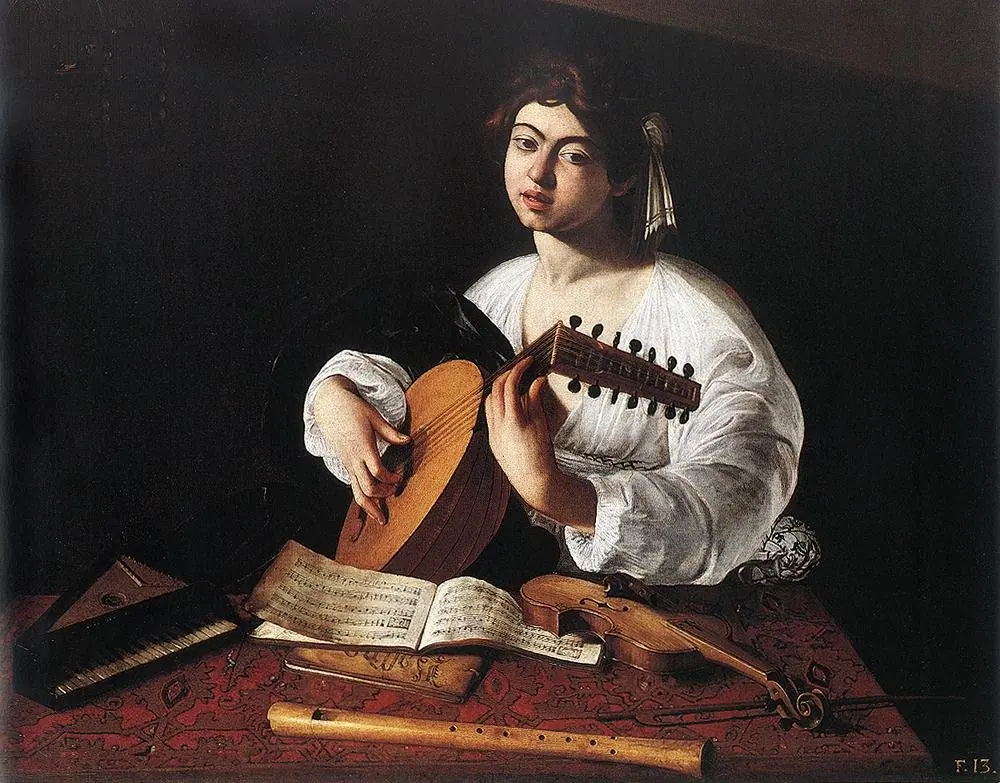
The painting depicts a young woman in a golden dress, shown from behind, concentrating on a nineteen-stringed lute as she listens intently to a note.
The painting depicts a young woman in a golden dress, shown from behind, concentrating on a nineteen-stringed lute as she listens intently to a note. She appears to be tuning the instrument in preparation for a concert, supported by the presence of recorders, a cornetto, a violin, and open songbooks arranged on the table before her. The work can be read as a genre scene or as a portrait, but contemporary allegorical conventions also allow it to be interpreted as an allegory of hearing or as a personification of Harmonia, the Greek goddess of harmony and concord.
The richly rendered fabrics reinforce the lyrical, sensual character of the figure. The composition additionally incorporates an optical illusion: the neck of the violin on the table always appears to point toward the viewer regardless of their position.
Technique & Style
The Lute Player is executed in oil on canvas. Gentileschi's handling emphasizes subtle tonal modulation and a delicate rendering of textiles, producing a richly detailed fabric surface that contrasts with the stark chiaroscuro inherited from Caravaggio. A notable formal device is the optical illusion that makes the violin's neck appear to point toward the viewer from any angle.
The composition combines genre realism with allegorical suggestion, using soft, subdued tones to convey the sitter's concentration on the instrument.
History & Provenance
The Lute Player was executed in oil on canvas around 1612–1616 by Orazio Gentileschi, who was active in Rome and influenced by Caravaggio's naturalistic style. The work entered the collection of Girolamo Cavazza, a wealthy Bolognese merchant, and was sold on 3 June 1697 to the agent Marcantonio Franceschini, who presented it to Prince Johann Adam Andreas of Liechtenstein; it remained in the Liechtenstein princely collection through successive owners, notably Prince Franz Josef II, until 1962 when it was acquired from the Zurich dealer Feilchenfeldt and entered the National Gallery of Art, Washington, D.C.
Context
The Lute Player occupies a pivotal position in Gentileschi's oeuvre as a lyrical genre scene that bridges Caravaggist naturalism and his own softened palette. Scholars note its allegorical resonance, linking the figure to Harmonia or the act of listening, while the composition's optical trick, with the violin's neck always pointing toward the viewer, underscores technical ingenuity. Influenced by Caravaggio's genre works, Gentileschi reinterprets the motif.
The painting's rich rendering of textiles and its blend of portraiture and genre reflect the artist's transition from strict Caravaggism to a more personal, lyrical approach within the broader Baroque context.
Legacy
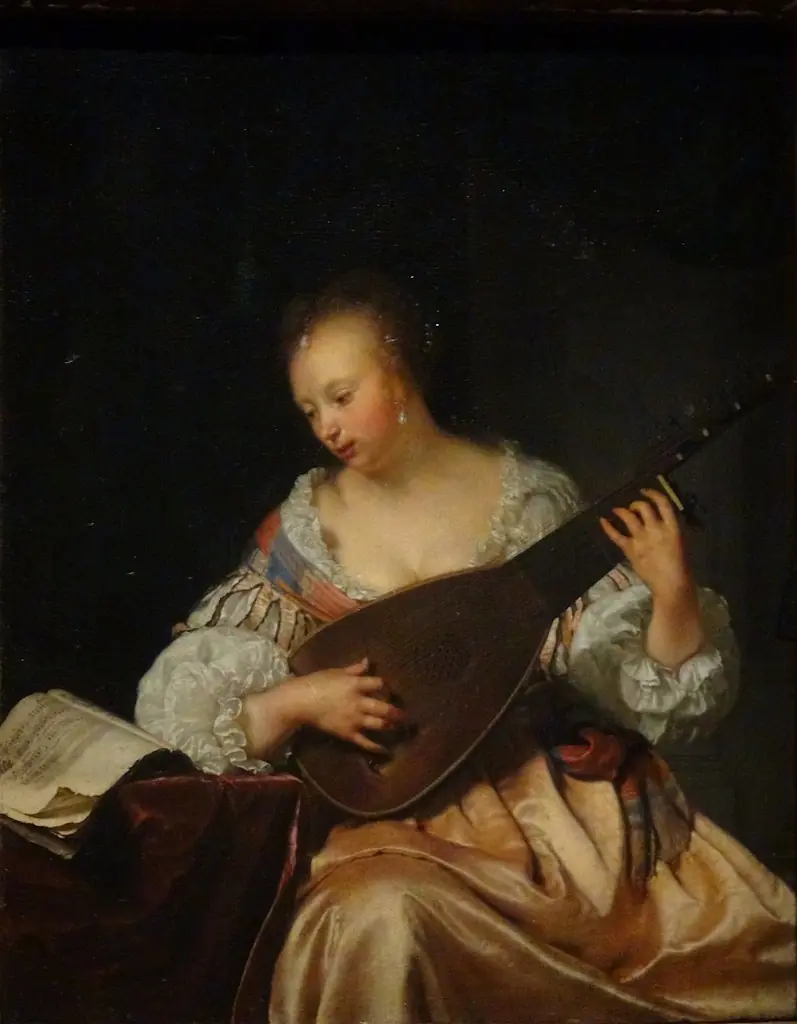
The Lute Player has been recognized as a key early work in Orazio Gentileschi's oeuvre that helped disseminate Caravaggesque naturalism into later genre painting. Art historians note that the composition inspired Giuseppe Crespi's Woman Playing a Lute (c. 1700–1705) and influenced subsequent depictions of musicians in Italian art. The painting's subtle handling of light, its allegorical association with harmony, and the optical effect of the violin's neck have been cited as exemplars of Gentileschi's synthesis of Caravaggio's realism with a more lyrical style. Its inclusion in the National Gallery of Art's collection since 1962 has reinforced its scholarly reputation.
Overview
Orazio Gentileschi, an Italian artist, created The Lute Player around 1612–1615. This oil on canvas painting depicts a solitary figure engrossed in music. The artwork exemplifies a focused approach to portraiture, capturing a moment of quiet concentration through its composition and lighting.
Own this work as a print
Artist & collection

Artist
Orazio Lomi Gentileschi (Italian pronunciation: ; 1563 – 7 February 1639) was an Italian painter.