Artwork
Danaë
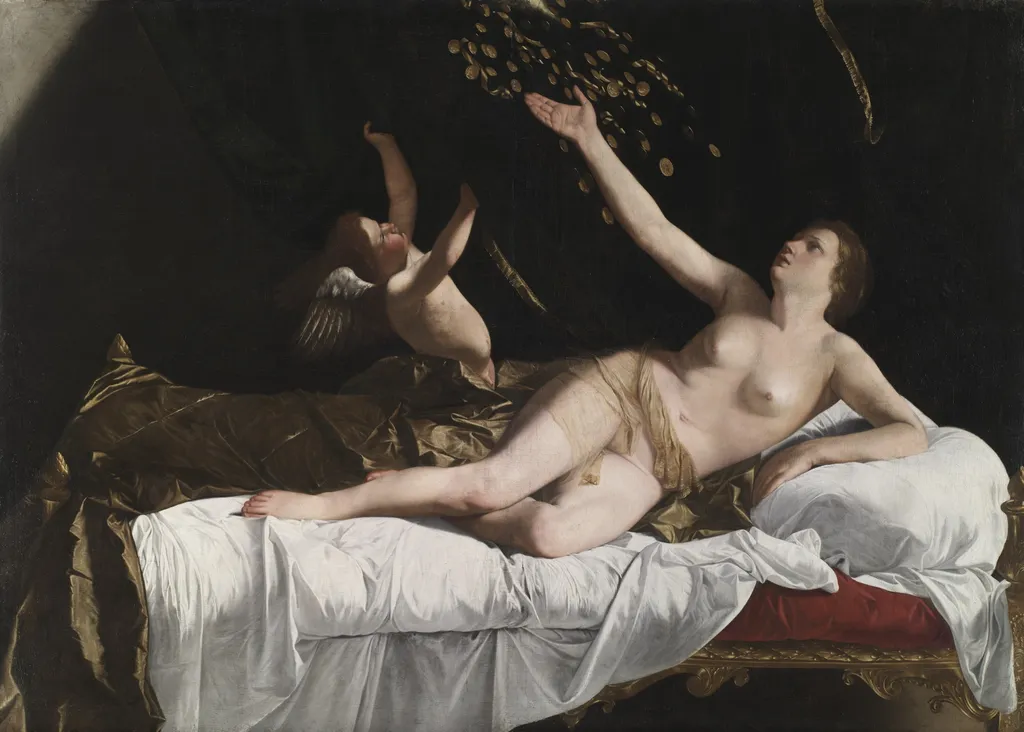
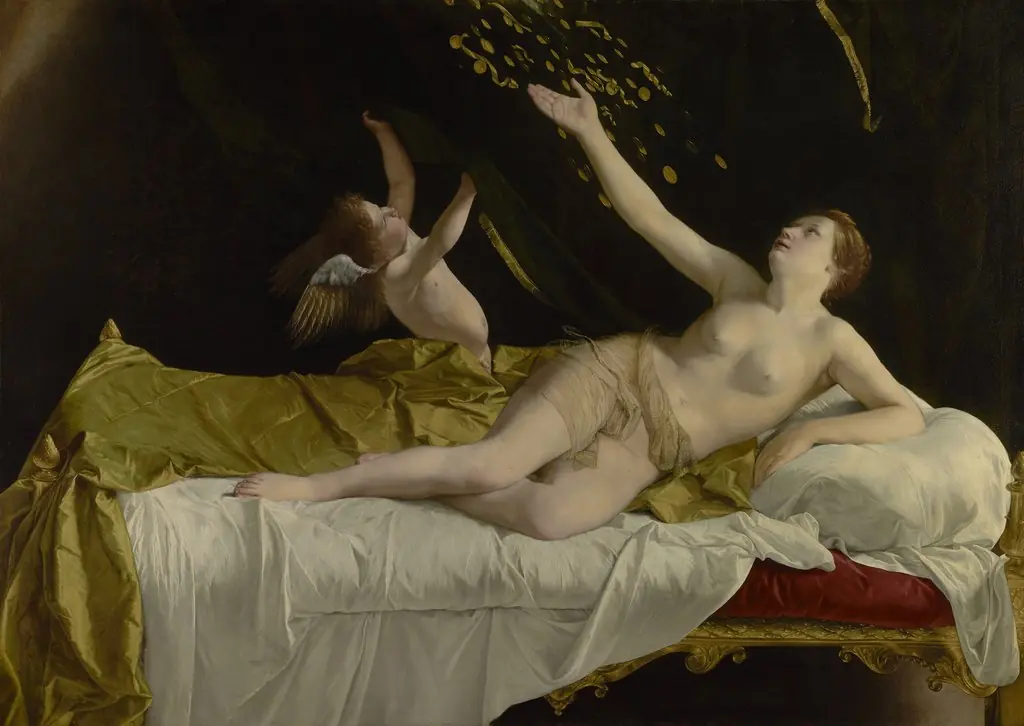
Danaë is an oil painting by the Early Baroque Italian artist Orazio Gentileschi. It dates from 1623 and is held in the collection of the Cleveland Museum of Art.
About this work
Subject & Meaning
The composition emphasizes sensuality and vulnerability, aligning with the European reception of the myth as an allegory of divine love and earthly seduction.
The subject of Orazio Gentileschi’s Danaë (1623) is drawn from classical mythology, depicting the princess Danaë as she receives Zeus’s golden shower in the form of a cascade of coins. The composition emphasizes sensuality and vulnerability, aligning with the European reception of the myth as an allegory of divine love and earthly seduction. Gentileschi’s rendering, executed in oil on canvas, reflects Caravaggisti techniques, using chiaroscuro to heighten the scene’s dramatic intimacy.
The work’s iconography, golden coins, the reclining nude, and the divine intervention, conveys themes of fate, fertility, and the transformative power of the gods, common in Baroque mythological painting.
Technique & Style
Orazio Gentileschi's Danaë (1623) is an oil painting executed on canvas, measuring 163.5 cm in height and 228.5 cm in width. Created in Italy, the work belongs to the mythological genre and depicts the titular figure. The painting is currently held in the collection of the Cleveland Museum of Art.
Stylistically, the piece is recognized within the context of Caravaggio and his European followers, as evidenced by its inclusion in the exhibition 'Bodies and Shadows: Caravaggio and his European followers'. The medium of oil paint on canvas allows for the detailed rendering characteristic of the artist's approach to mythological subjects during this period.
History & Provenance
Orazio Gentileschi executed the mythological painting Danaë in 1623 while working in Italy. Created using oil paint on canvas, the work measures 163.5 by 228.5 centimeters. The specific circumstances regarding its original commission or early ownership history are not detailed in the available records.
In the modern era, the painting entered the collection of the Cleveland Museum of Art, where it remains housed. The work has been featured in exhibitions such as Bodies and Shadows: Caravaggio and his European followers, highlighting its significance within the context of Caravaggio's European followers.
Danaë by Orazio Gentileschi, painted in 1623, is housed in the Cleveland Museum of Art, where it is part of the museum’s permanent collection and listed under the institution’s inventory as a work in the museum’s holdings. The painting was created in Italy and depicts the mythological figure Danaë. Its exhibition history includes a showing in the exhibition “Bodies and Shadows: Caravaggio and his European followers,” which highlighted the influence of Caravaggio on later artists.
The work is classified as a mythological oil painting on canvas, measuring approximately 163.5 cm in height and 228.5 cm in width.
Overview
Orazio Gentileschi's Danaë, an oil painting completed in 1623, exemplifies the early Italian Baroque movement. This work, now part of The Cleveland Museum of Art's collection, portrays the mythological figure Danaë. Gentileschi, an Italian painter born in Tuscany in 1563, was instrumental in developing a naturalistic style that diverged from the Mannerist conventions of his earlier training.
Context
Initially trained in Rome within the Mannerist tradition, Orazio Gentileschi's artistic approach underwent a significant transformation after 1600. He adopted the naturalistic principles championed by Caravaggio, moving towards a more direct and emotionally resonant depiction of subjects. Danaë reflects this stylistic evolution, showcasing his mastery of light and form in service of a compelling narrative.
Own this work as a print
Artist & collection

Artist
Orazio Lomi Gentileschi (Italian pronunciation: ; 1563 – 7 February 1639) was an Italian painter.