Artwork
The Lute Player
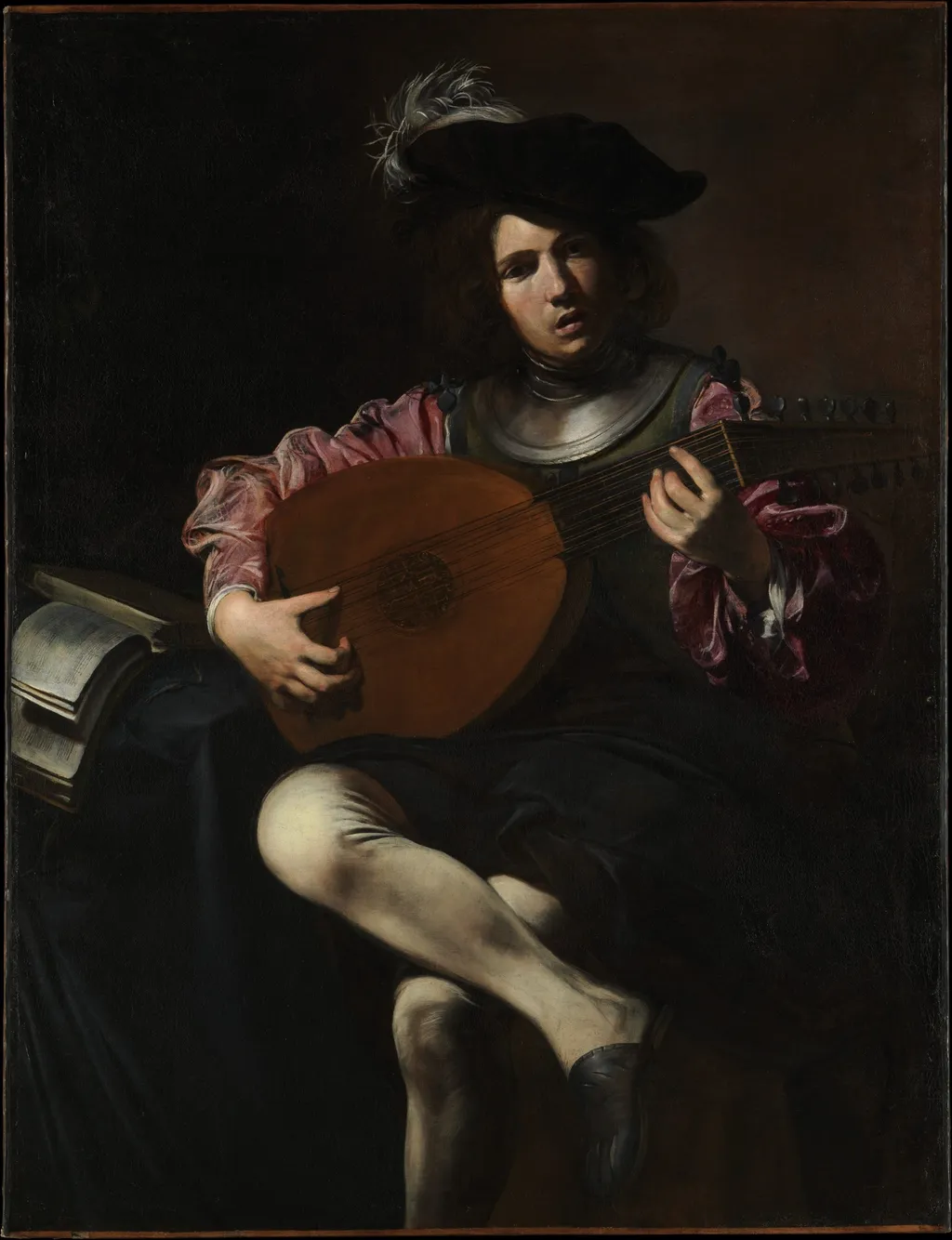
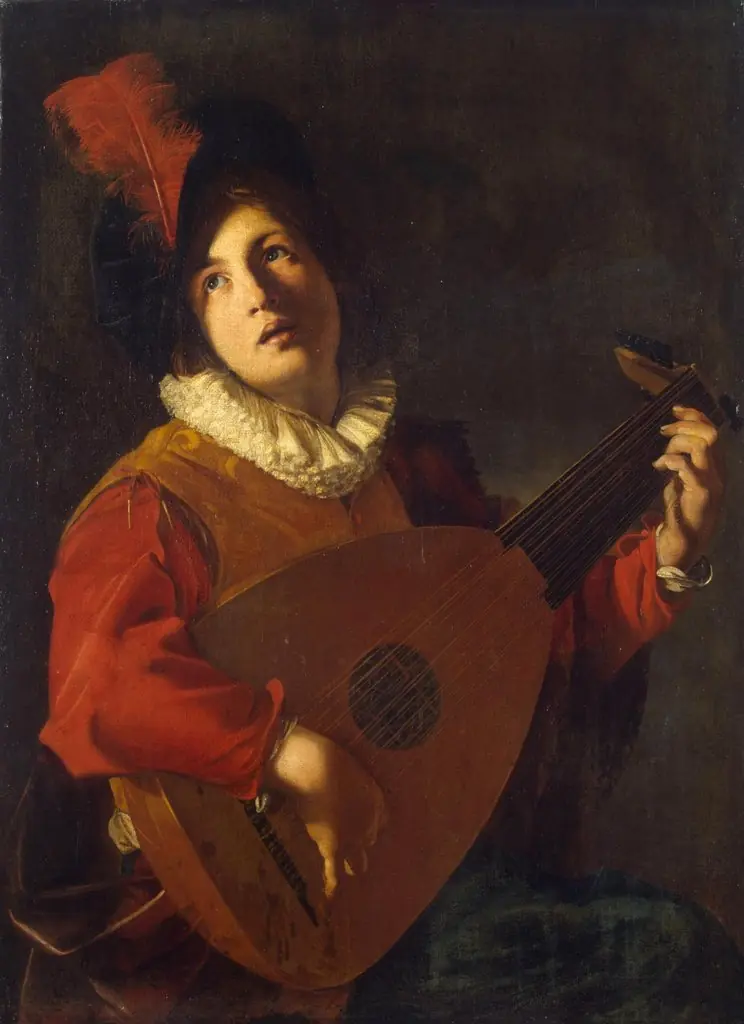
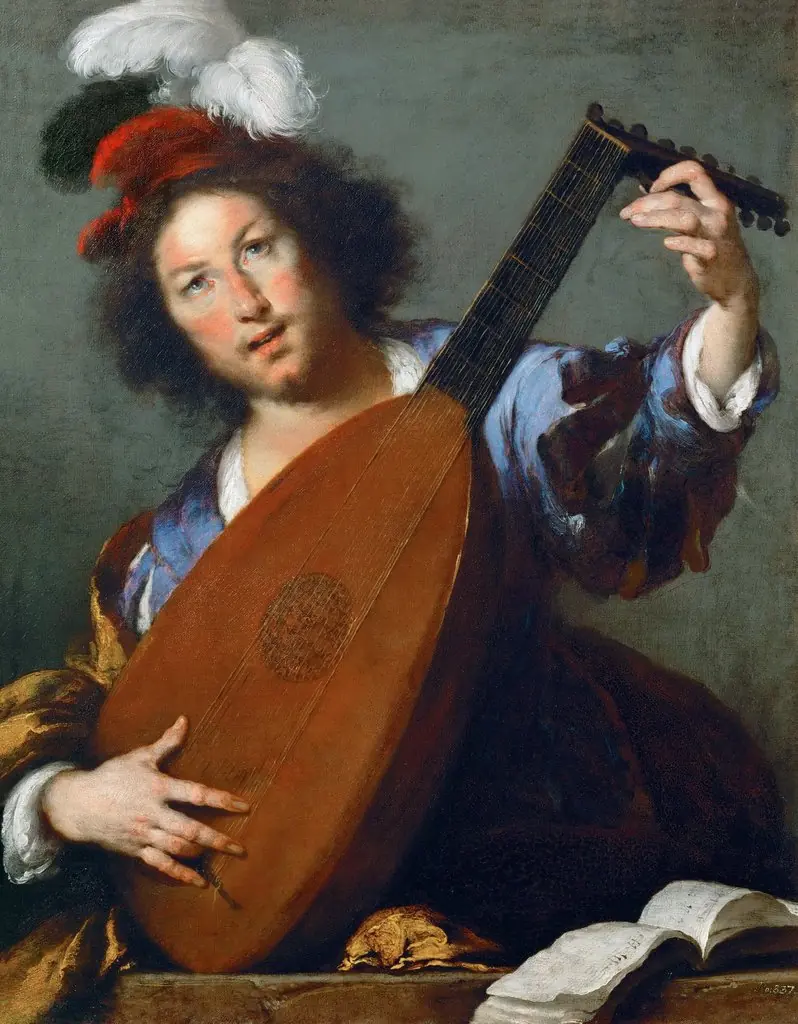
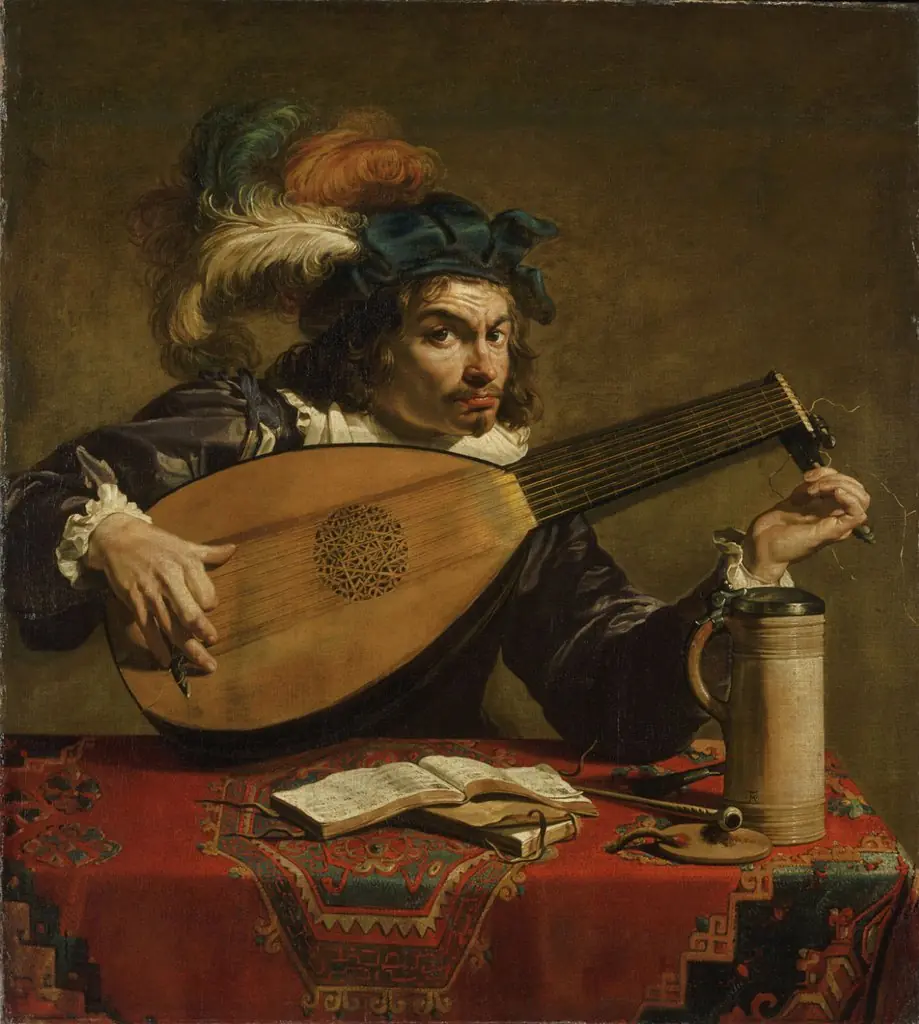
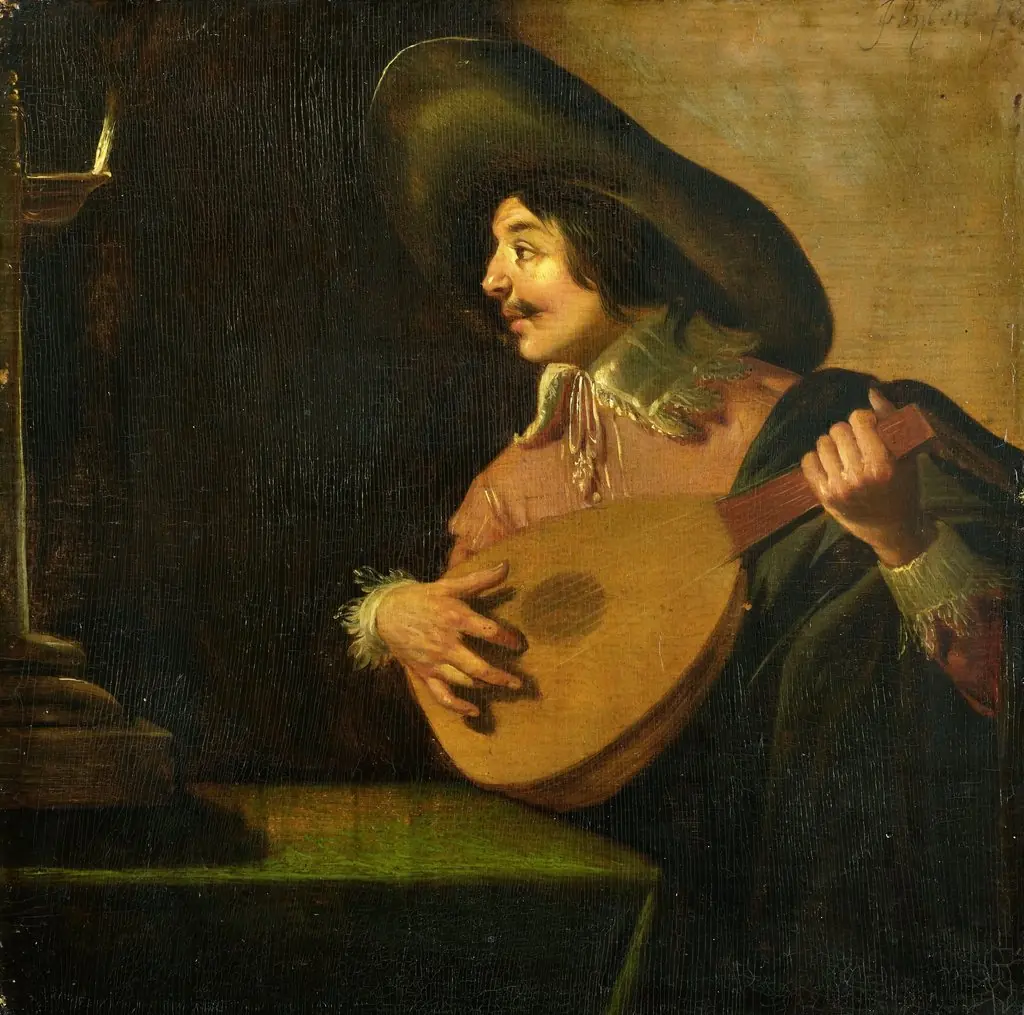
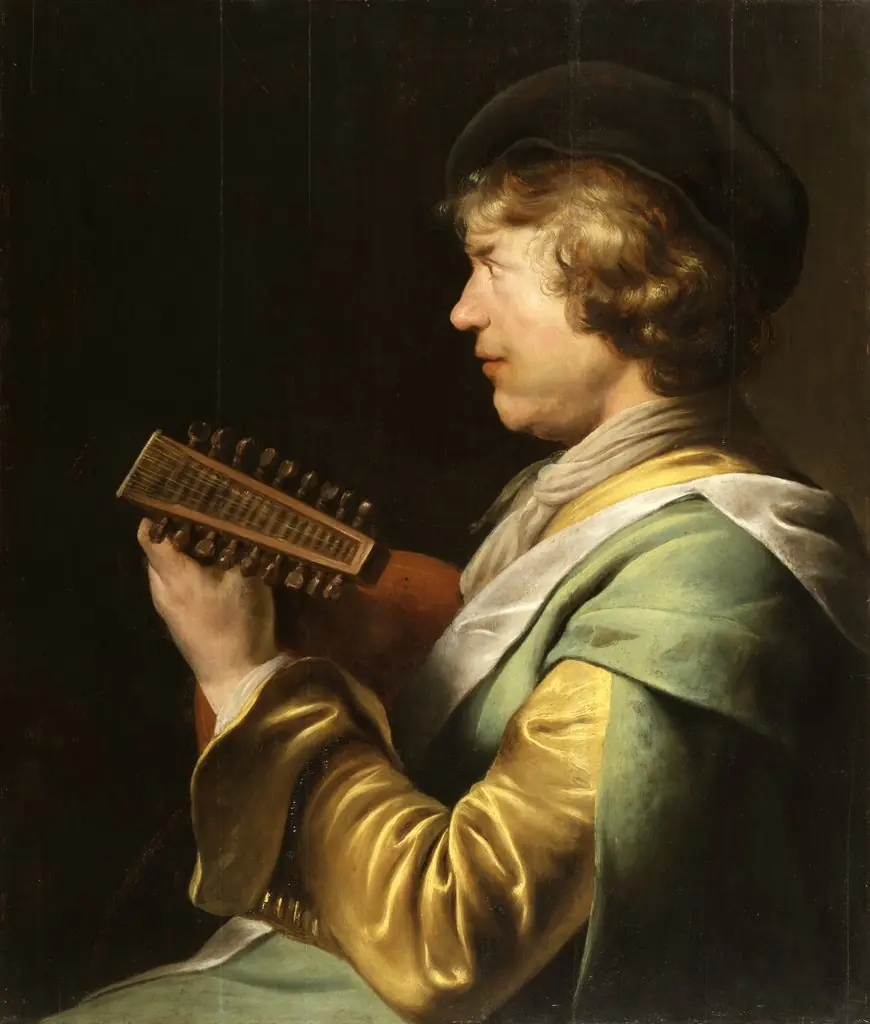
The Lute Player is an oil painting by the Early Baroque Italian artist Valentin de Boulogne. It dates from 1625 and is held in the collection of the Metropolitan Museum of Art.
About this work
Subject & Meaning
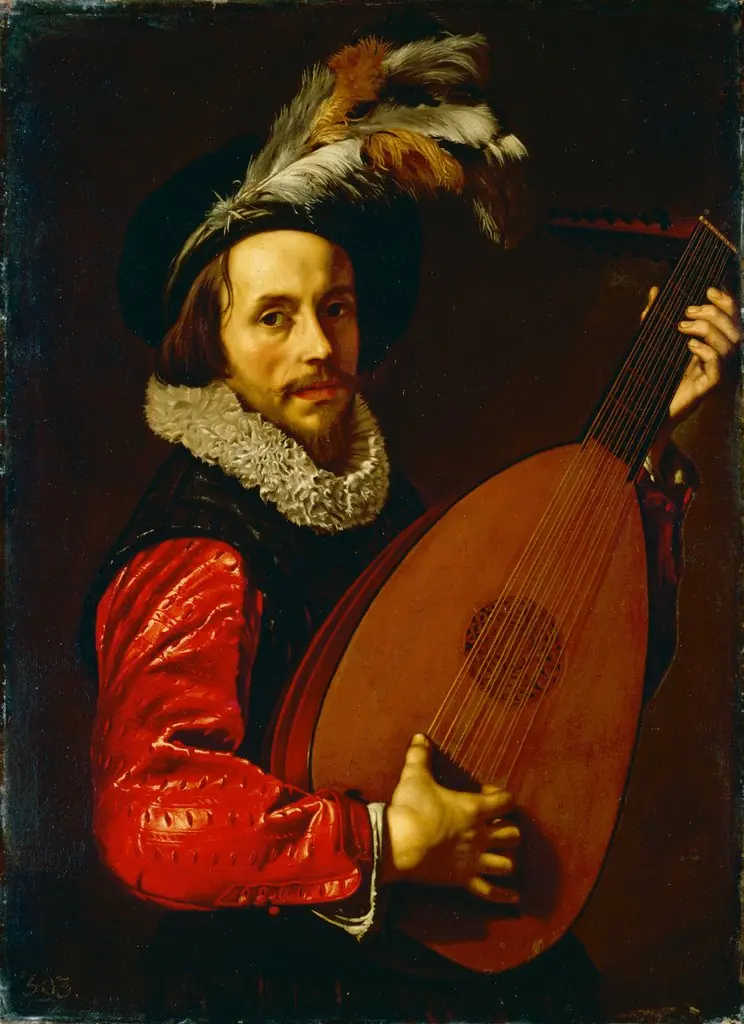
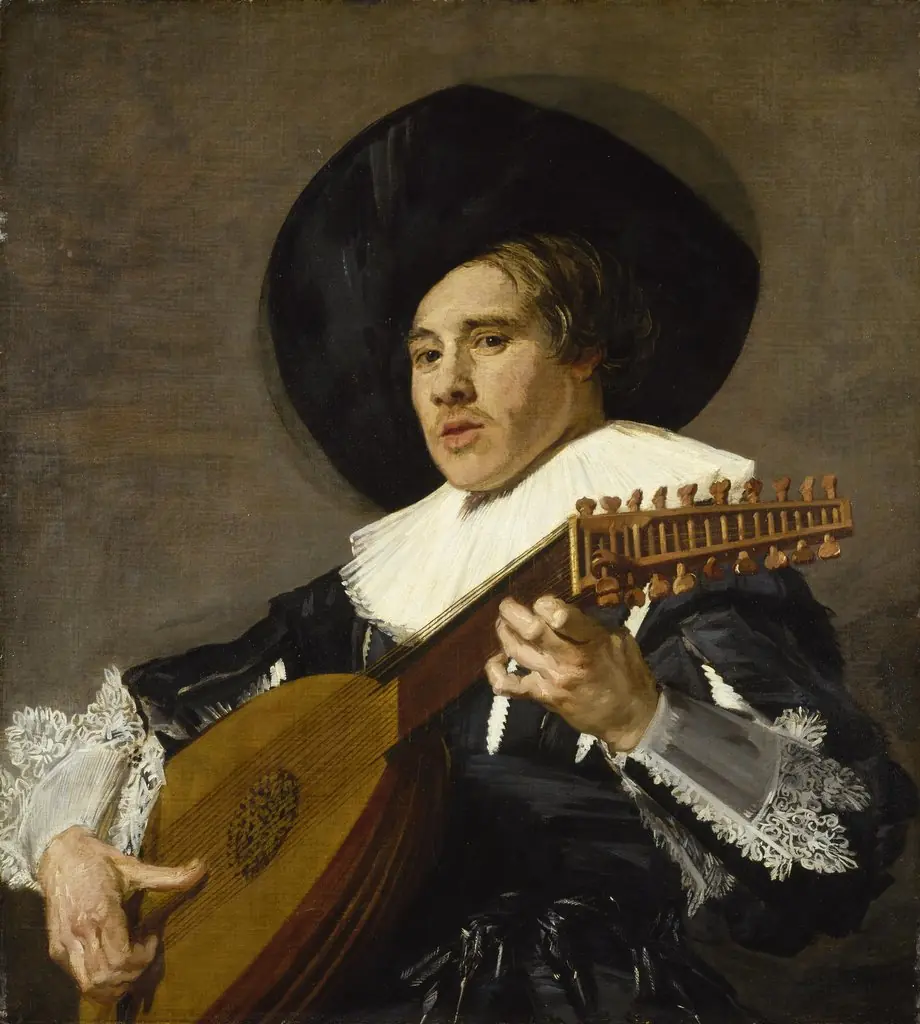
The painting depicts a young soldier, likely a Spanish mercenary, playing a lute while possibly singing a love madrigal.
The painting depicts a young soldier, likely a Spanish mercenary, playing a lute while possibly singing a love madrigal. The figure's status is indicated by his rich clothing and steel gorget. Uniquely isolated from the multi-figure musical ensembles typical of the artist's oeuvre, the subject may hold autobiographical significance; the work could reference Valentin de Boulogne's Roman nickname, 'Amador,' loosely translated from Spanish as 'lover boy.'
Technical details, such as the six-line musical staff showing tablature rather than standard notation and the specific method of bracing the instrument against a table to enhance volume, suggest the artist possessed practical musical knowledge. These elements combine to present the musician not merely as a generic genre figure, but potentially as a symbolic self-portrait of the artist as a lover and musician.
Technique & Style
The Lute Player is executed in oil on canvas, measuring 128.3 by 99.1 centimeters. The work belongs to the Caravaggesque school and is heavily influenced by tenebrism, the dramatic chiaroscuro style popularized by Caravaggio, de Boulogne's contemporary. The figure is rendered as a solitary lute player isolated from what would typically be a multi-figure musical ensemble.
Particular attention is given to musical detail: a six-line staff in the music book on the table indicates the player is reading from tablature rather than standard notation, with the lines representing the six paired strings of the lute. The instrument is braced against the edge of the table, a practical technique used both to steady the lute and to increase volume and resonance. These precise acoustic and notational observations suggest de Boulogne possessed direct musical knowledge alongside his painting practice.
History & Provenance
The Lute Player was painted by Valentin de Boulogne in Rome between 1625 and 1626, executed in oil on canvas. After its creation, the work was sold and entered the collection of Cardinal Jules Mazarin, the French political minister who owned nine (or, according to one account, eight) other paintings by de Boulogne. The painting subsequently passed out of Mazarin's holdings and was acquired by the Metropolitan Museum of Art in New York in 2008, where it remains today.
No commission is documented in the available sources, and the chain of custody between Mazarin's collection and the 2008 museum acquisition is not detailed.
Valentin de Boulogne's The Lute Player is currently held by the Metropolitan Museum of Art in New York, where it resides in the museum's permanent collection. The work, executed in oil on canvas between 1625 and 1626, measures 128.3 by 99.1 centimeters. Prior to its acquisition by the Met in 2008, the painting was part of the historic collection of Cardinal Jules Mazarin, a French minister who owned multiple works by the artist.
While the specific accession number is not detailed in the provided sources, the artwork's provenance traces from its creation in Rome directly to Mazarin before entering the New York institution's holdings. The painting remains on view as a significant example of the artist's tenebrist style within the museum's galleries.
Context
The Lute Player situates Valentin de Boulogne within the Caravaggist circle active in Rome during the 1620s, where he was among the most prominent followers of Caravaggio and a leading practitioner of tenebrism. Painted in Rome between 1625 and 1626, the work reflects his sustained engagement with the dramatic chiaroscuro popularized by his contemporary. The painting's title and central figure have been read as potentially self-referential, since de Boulogne's Roman nickname, "Amador" (loosely translated from Spanish as "lover boy"), may inform the image of the lute-playing soldier.
The work's early provenance through the collection of Cardinal Mazarin, who owned nine other paintings by the artist, underscores de Boulogne's standing among elite French patrons of his generation. A musical notation detail in the score on the table has further led some scholars to suggest that de Boulogne may himself have been a musician as well as a painter, in keeping with the broader profile of leading artists of the period.
Legacy
The Lute Player has come to symbolize the spread of Caravaggist tenebrism in early Baroque art, a influence noted by scholars examining Valentin de Boulogne’s adaptation of dramatic chiaroscuro. Its growing reputation stems from its inclusion in the Metropolitan Museum of Art, where it was acquired in 2008 and remains on public view. The work’s legacy is reinforced by its frequent citation in studies of French artists in Rome and its role as a reference point for discussions of musical iconography and self‑portraiture in the period.
Overview
Valentin de Boulogne, a French painter active in the early 17th century, created The Lute Player using oil on canvas. This work portrays a youthful soldier engaged in playing a lute. The painting exemplifies the artist's characteristic approach to figural representation and dramatic lighting, offering a glimpse into the period's artistic trends. It is presently housed at The Metropolitan Museum of Art.
Own this work as a print
Artist & collection
Artist
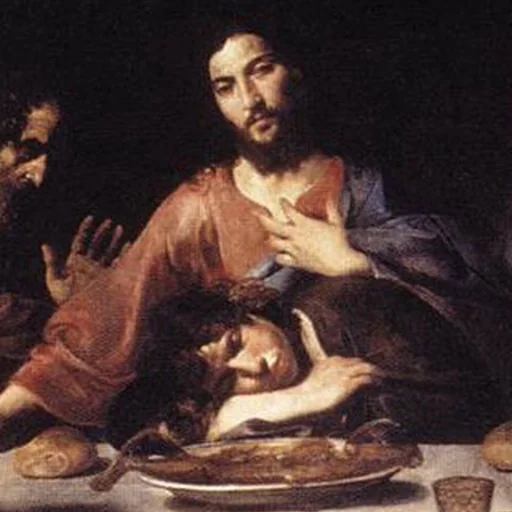
Valentin de Boulogne (before 3 January 1591 – 19 August 1632), sometimes referred to as Le Valentin, was a French painter in the tenebrist style.