Artwork
Chinese figures by an altar table
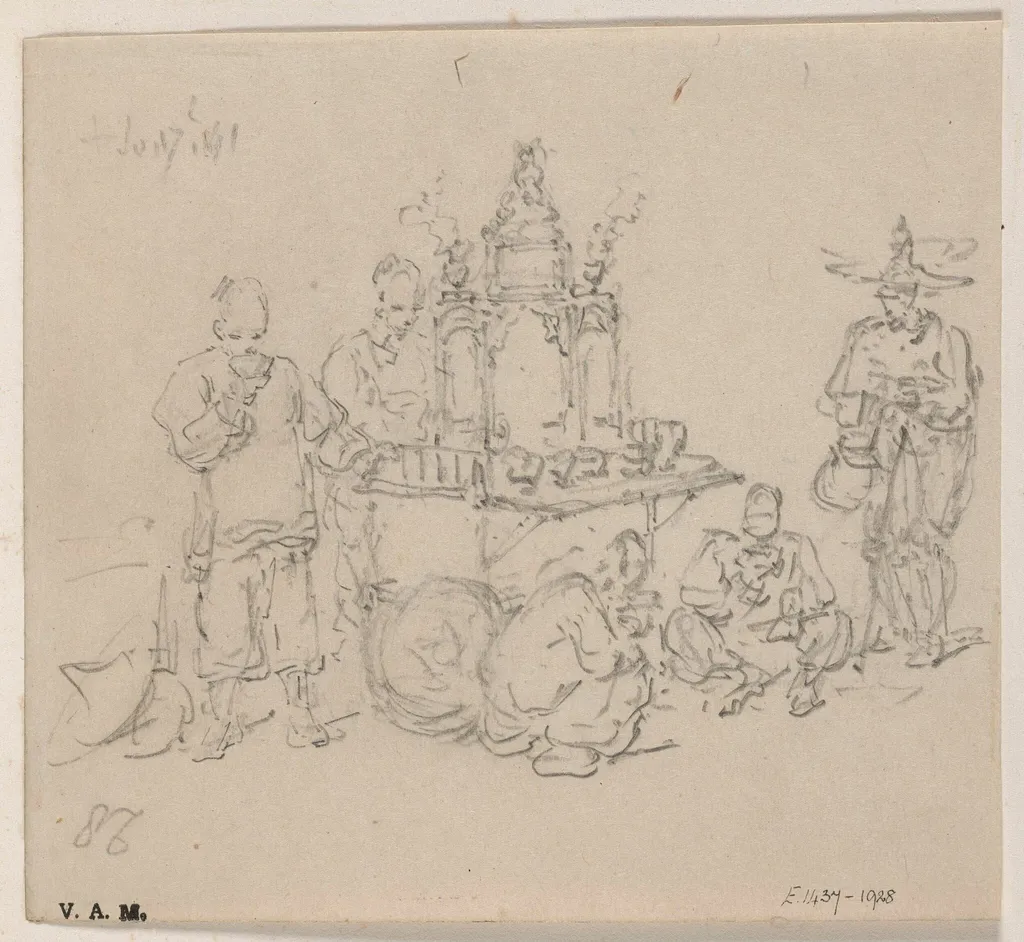
Chinese figures by an altar table is a drawing by the Romanticist artist George Chinnery. It dates from 12 and is held in the collection of the Victoria and Albert Museum.
About this work
This drawing shows five people gathered around a small altar outdoors. Two incense burners sit on a decorated stand between them. George Chinnery made it in 1841.
The scene feels quiet and still, like a moment caught in time. The altar and burners tell us it’s a place for small offerings or prayers.
Look up Romanticism to see how artists like Chinnery used emotion and detail in their work.
Overview
The figures are arranged symmetrically, facing the altar, with no overt action or interaction, suggesting a pause in ritual.
This 1841 drawing by George Chinnery depicts five individuals gathered around a modest outdoor altar. Rendered in pencil or ink, the composition captures a quiet, contemplative moment. The figures are arranged symmetrically, facing the altar, with no overt action or interaction, suggesting a pause in ritual.
Two small incense burners rest on an ornate stand, indicating the site’s devotional function. The scene’s stillness and attention to detail reflect Chinnery’s observational approach during his time in southern China.
Subject & Meaning
The figures, likely local worshippers, are engaged in a private act of veneration before a wayside altar. The presence of two incense burners implies a routine offering, perhaps for ancestors or local deities. The absence of ceremony or spectacle suggests everyday piety rather than festival observance.
Chinnery’s focus on this unassuming moment highlights the quiet persistence of spiritual practice in daily life, away from grand temples or public rituals.
Technique & Style
Chinnery employs fine, controlled lines to define forms with clarity and restraint. The figures are rendered with subtle shading, avoiding dramatic contrasts, which enhances the scene’s calm atmosphere. The altar stand is detailed with delicate patterns, suggesting craftsmanship without embellishment.
The composition is balanced and spatially coherent, with figures placed to guide the eye toward the central offering. The drawing’s precision reflects a topographical eye, characteristic of Chinnery’s observational drawings.
History & Provenance
Created in 1841 during Chinnery’s residence in Macau and Guangdong, the drawing belongs to a series of sketches documenting local customs and landscapes. It was likely made on-site, as part of his practice of recording everyday scenes. The work remained in private hands after his death, eventually entering institutional collections. Its survival offers rare visual evidence of vernacular religious practice in early 19th-century southern China.
Context
Chinnery worked in a period when Western artists in China were increasingly interested in documenting indigenous life beyond colonial or missionary narratives. This drawing aligns with broader 19th-century trends in ethnographic observation, though it avoids exoticism. The altar’s placement outdoors reflects common regional practices where shrines served neighborhood communities.
Chinnery’s depiction, devoid of commentary, offers a neutral record of a cultural habit largely unrecorded in written sources.
Legacy
The drawing contributes to a visual archive of Chinese daily life as seen through a foreign lens, preserving details otherwise lost to history. It stands as a quiet counterpoint to more theatrical or orientalist depictions of the era. Scholars value it for its authenticity and restraint, offering insight into the material culture and spiritual rhythms of southern Chinese communities.
Its modest scale and subject matter have ensured its endurance as a document of observation rather than spectacle.
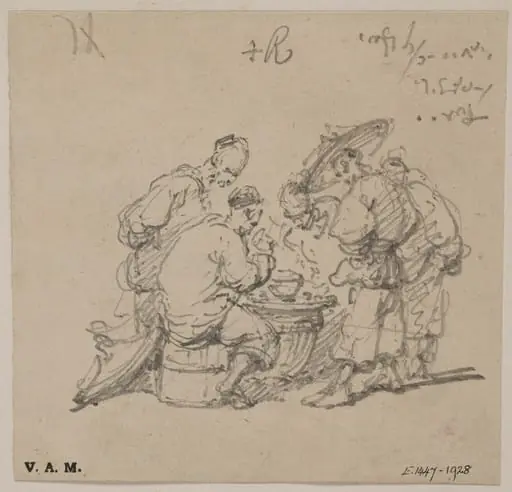
Own this work as a print
Artist & collection
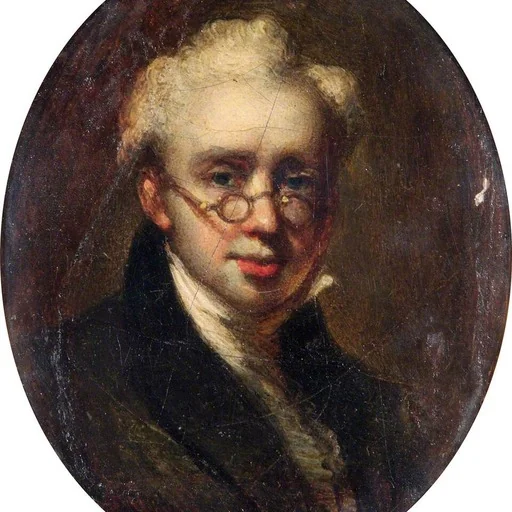
Artist
George Chinnery (Chinese: 錢納利; 5 January 1774 – 30 May 1852) was an English painter who spent most of his life in Asia, especially India and southern China.

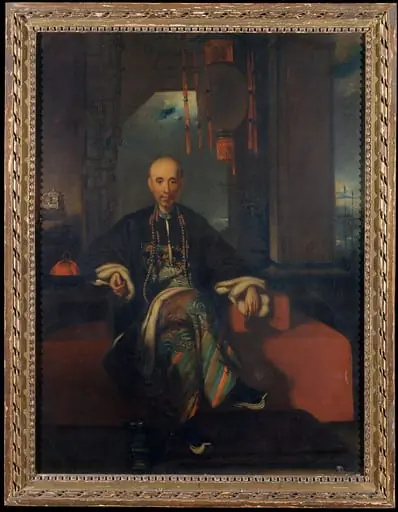
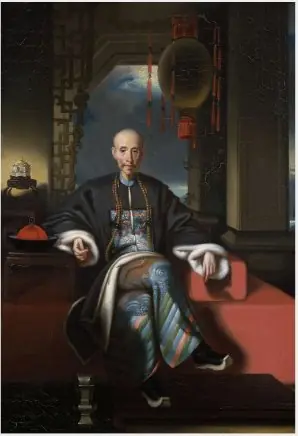
- A group of Chinese figures
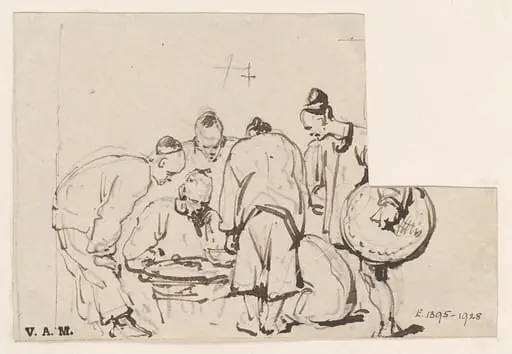 A group of six Chinese figures
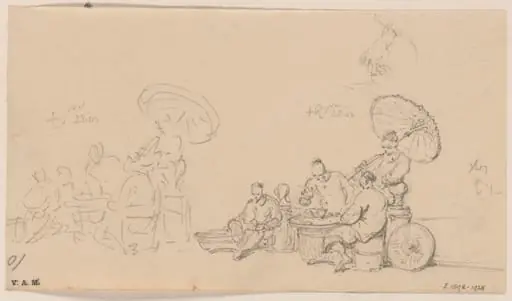 Chinese figures around a basket
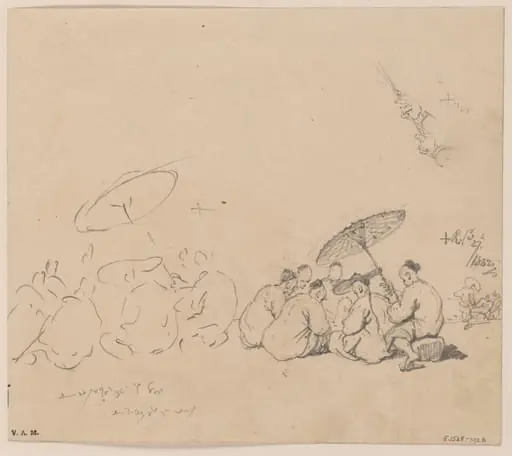 Two drawings of a group of Chinese figures
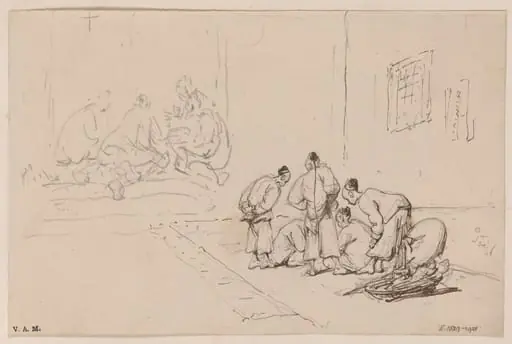 Two drawings of groups of Chinese figures
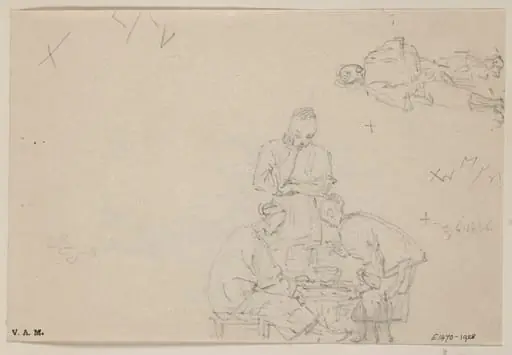 Chinese figures
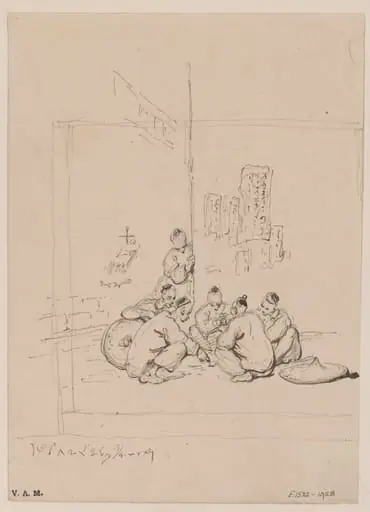 A group of Chinese figures at a street corner
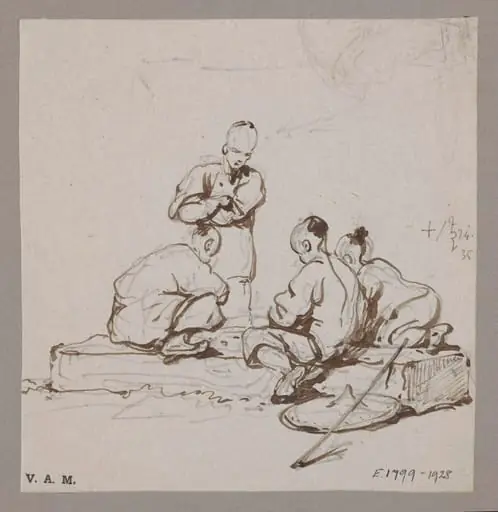 Four Chinese figures
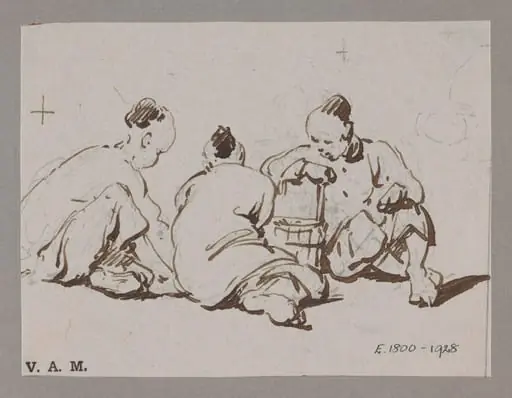 Three seated figures
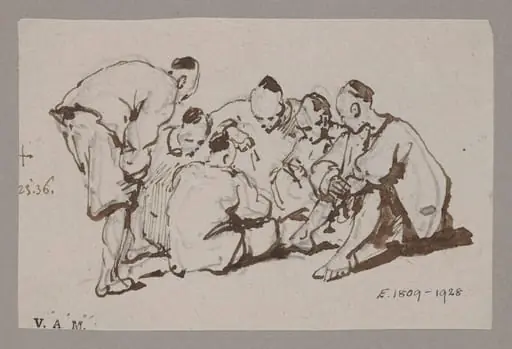 A group of six Chinese figures