Artwork
Titian (c.1485–1576) (design for a mosaic in the Victoria and Albert Museum)
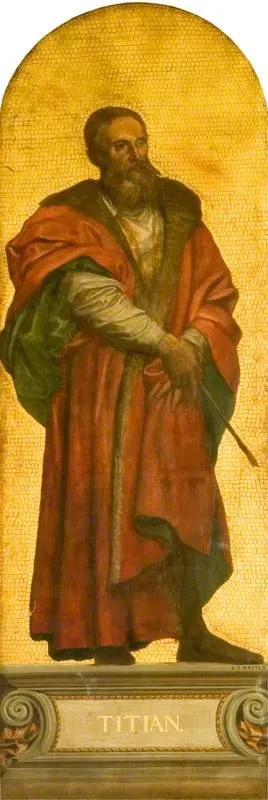
Titian (c.1485–1576) (design for a mosaic in the Victoria and Albert Museum) is an oil painting by the Aestheticist artist George Frederic Watts. It dates from 1870 and is held in the collection of the Victoria and Albert Museum.
About this work
Overview
George Frederic Watts executed this oil painting in 1870 as a preparatory design for a mosaic now in the Victoria and Albert Museum. The work serves as a portrait of the 16th‑century Venetian painter Titian, rendered in a formal pose that underscores his stature within art history.
Subject & Meaning
The figure stands on a raised platform, clothed in a long red robe edged with green and a white shirt beneath, his beard flowing and a staff held in his right hand. By presenting Titian in such dignified attire, Watts aligns the Renaissance master with the timeless, allegorical figures that populate his broader symbolic program.
Technique & Style
Executed in oil on canvas, the composition employs a warm palette of reds, yellows and greens that accentuate the figure’s prominence. Subtle chiaroscuro modelling creates volume, while the overall handling reflects Watts’s late‑Victorian approach to allegory, balancing realistic detail with a stylised, emblematic presence.
History & Provenance
Created as a design for a mosaic commission, the painting remained in Watts’s possession until it entered the Victoria and Albert Museum’s collection, where it is displayed as part of the museum’s holdings of 19th‑century British art.
Context
The portrait forms part of Watts’s ambitious “House of Life” series, a collection of works intended to explore universal human experiences through allegorical figures. By choosing Titian as a subject, Watts linked the Renaissance tradition of artistic genius with his own symbolic aspirations.
Artist & collection
Artist
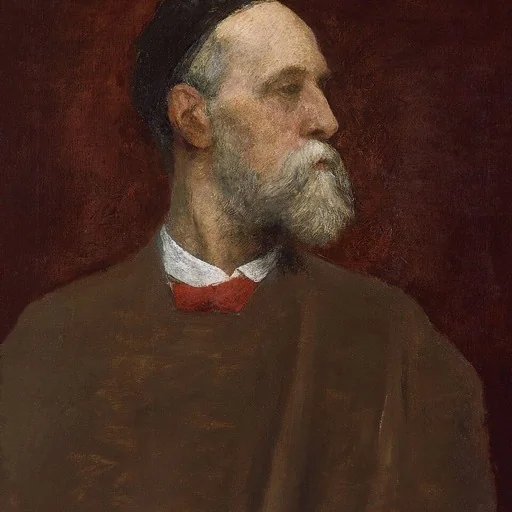
George Frederic Watts (23 February 1817 – 1 July 1904) was a British painter and sculptor associated with the Symbolist movement.

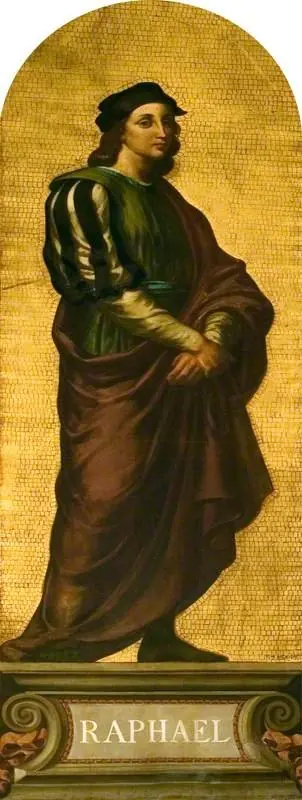
- Raphael (1483–1520) (design for a mosaic in the Victoria and Albert Museum)
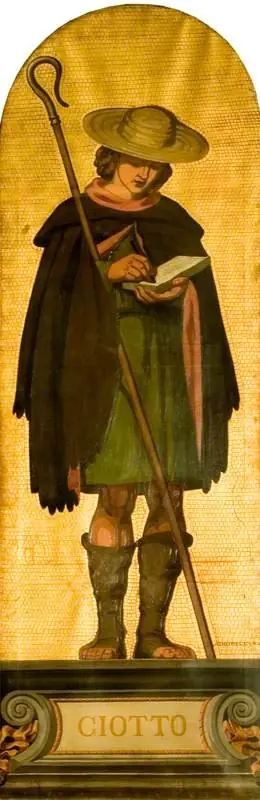 Giotto (c.1267–1337) (design for a mosaic in the Victoria and Albert Museum)
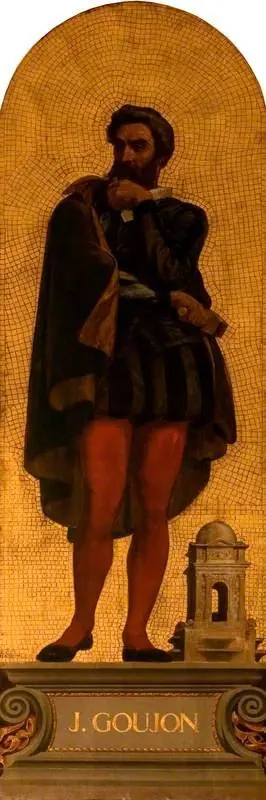 Jean Goujon (c.1510–1565) (design for a mosaic in the Victoria and Albert Museum)
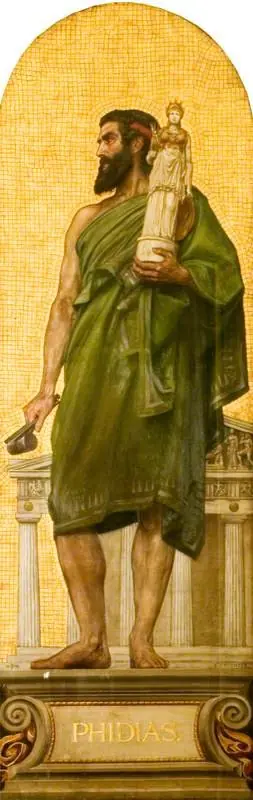 Phidias (c.480 BC–c.430 BC) (design for a mosaic in the Victoria and Albert Museum)
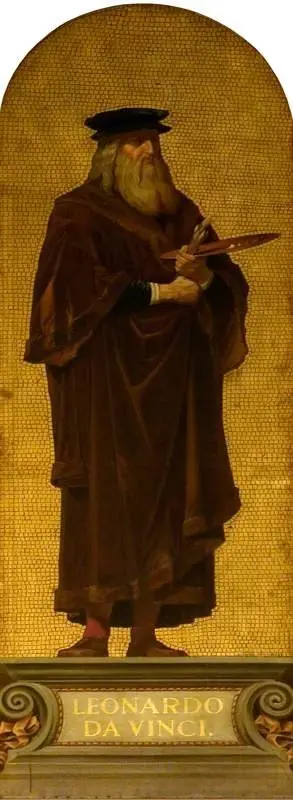 Leonardo da Vinci (1452–1519) (design for a mosaic in the Victoria and Albert Museum)
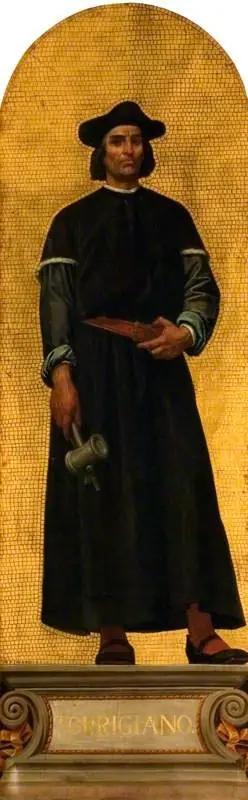 Pietro Torrigiano (1472–1522) (design for a mosaic in the Victoria and Albert Museum)
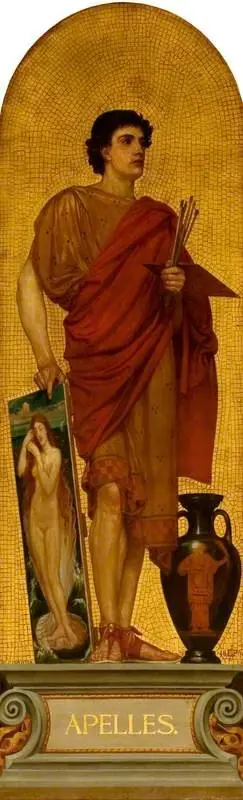 Apelles (design for a mosaic in the Victoria and Albert Museum)
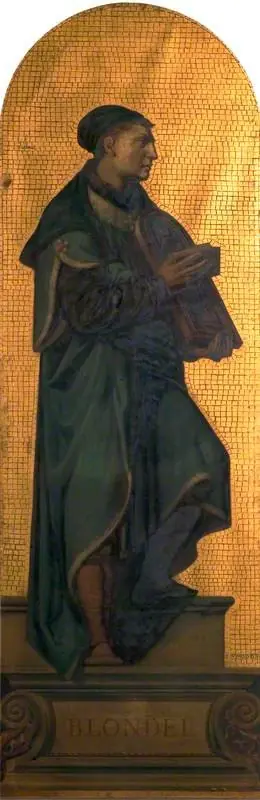 Lancelot Blondeel (1498–1561) (design for a mosaic in the Victoria and Albert Museum)
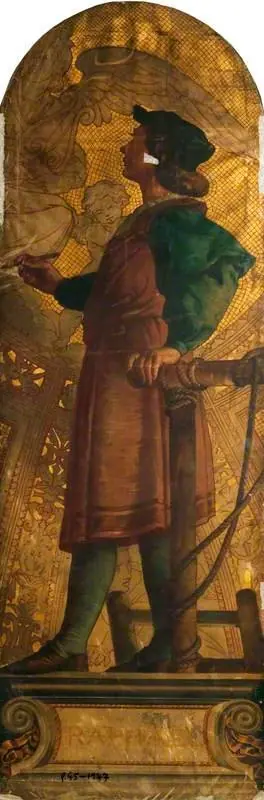 Raphael (1483–1520) (design for a mosaic in the Victoria and Albert Museum, not executed)