Artwork
The Edge of a City
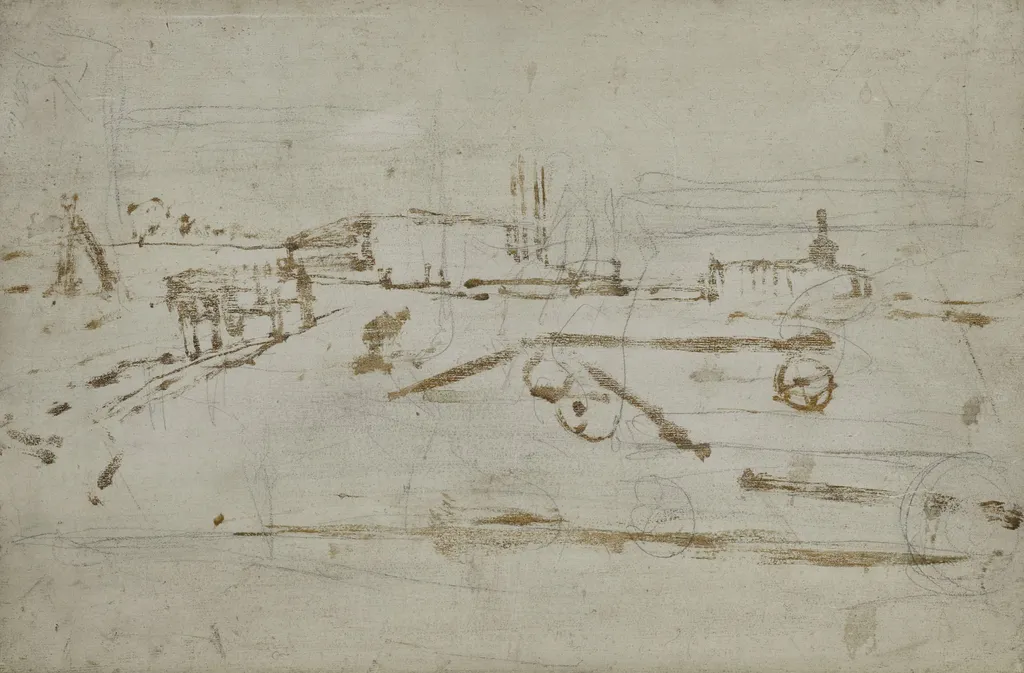
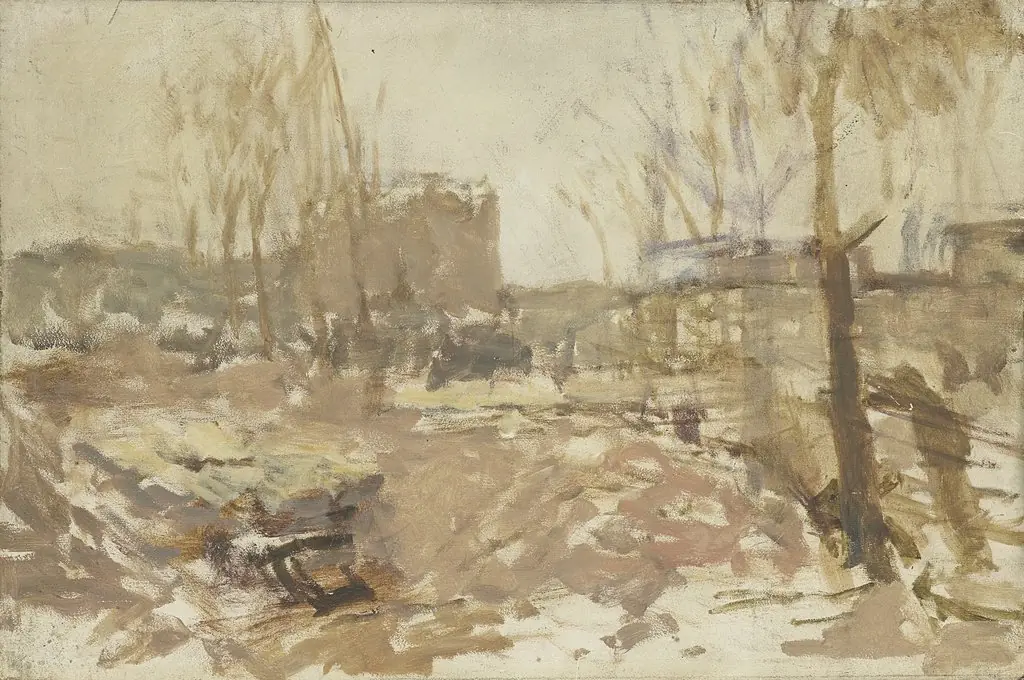
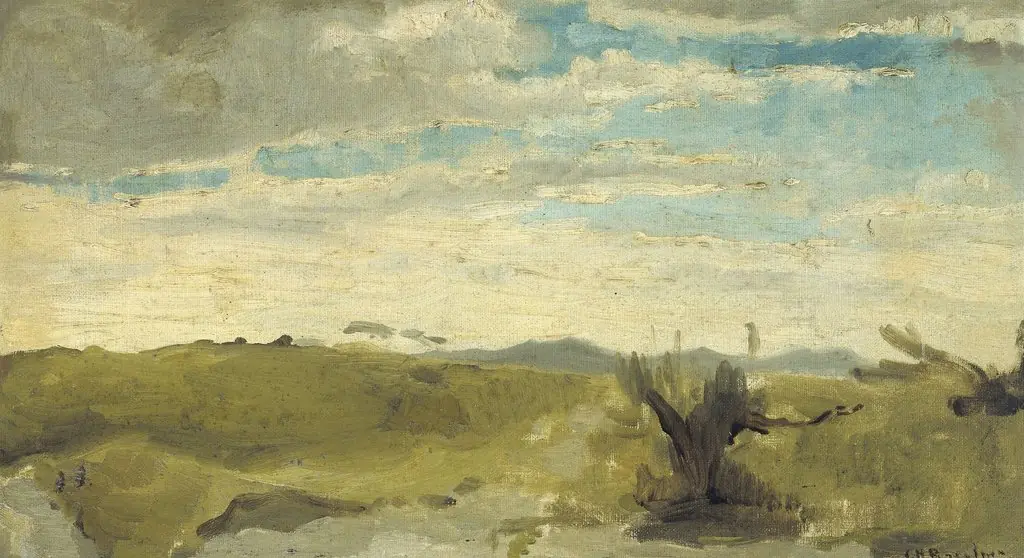
The Edge of a City is an oil painting by the Impressionist artist George Hendrik Breitner. It dates from 1901 and is held in the collection of the Rijksmuseum.
About this work
Technique & Style
The Edge of a City is an oil painting executed on panel, with the support measuring 22 cm in height by 33 cm in width.
The Edge of a City is an oil painting executed on panel, with the support measuring 22 cm in height by 33 cm in width. The work is classified as a cityscape, situating it within Breitner's documented focus on urban subjects. The combination of oil paint on a relatively small wooden panel is consistent with the compact, sketch-like format the artist favored for his street and city scenes, allowing for rapid, on-the-spot handling of paint.
Stylistically, the piece belongs to the cityscape genre, reflecting Breitner's late-period interest in capturing the atmospheres of urban environments through painterly means rather than precise topographical description.
History & Provenance
The painting The Edge of a City was created in 1901 by George Hendrik Breitner as an oil on panel work depicting a cityscape. It measures 22 cm in height and 33 cm in width and belongs to the cityscape genre. The artwork is part of the Rijksmuseum collection and is currently housed at the Rijksmuseum in Amsterdam.
The painting The Edge of a City by George Hendrik Breitner is held in the collection of the Rijksmuseum. Created in 1901, the work is an oil painting on panel measuring 22 cm in height and 33 cm in width. The provided sources do not contain specific inventory or accession numbers for this piece, nor do they list any exhibition history.
Overview
George Hendrik Breitner’s 1901 oil painting The Edge of a City presents a muted view of an urban landscape on the periphery of Amsterdam. The composition is dominated by a soft, smoky atmosphere that renders buildings and streets almost indistinct, with a limited palette of greys, pale browns and a distant hint of blue. The work is part of the Rijksmuseum’s collection.
Subject & Meaning
The canvas captures a transitional zone of the Dutch capital, emphasizing the fleeting quality of modern life as the city expands. By depicting the outskirts shrouded in haze, Breitner suggests both the physical and psychological distance between the bustling core and its marginal areas, inviting contemplation of urban change and the anonymity of everyday street scenes.
Context
Breitner was a central figure in Amsterdam Impressionism, a movement that combined realist observation with the loose brushwork of French Impressionism. His dual practice as a photographer informed his paintings, allowing him to capture the immediacy of street life. The Edge of a City exemplifies his focus on the evolving cityscape, a subject shared by his peers who sought to record the rapid modernization of early‑20th‑century Amsterdam.
Own this work as a print
Artist & collection
Artist
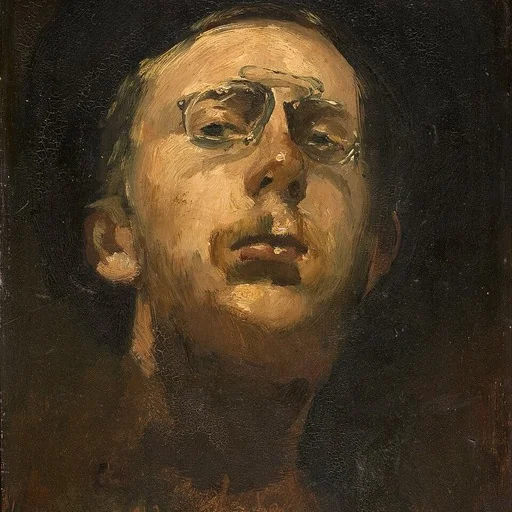
George Hendrik Breitner (12 September 1857 – 5 June 1923) was a Dutch painter and photographer.


- The Riva, Venice
 Landscape in Hertfordshire
 Villa Medici
 Houses in Italy
 Italian City Scene
 The Forno inside the Walls of the Vatican
 Sketch of a Village (verso)
 Little Salute
 Houses on the North Side of the Forum with the Basilica of Maxentius Beyond
![Gillingham Pier, London [verso], by Félix-Hilaire Buhot](https://artifactworldgallery.com/img/felix-hilaire-buhot--gillingham-pier-london-verso--641e03dd7de8217b-w320.webp) Gillingham Pier, London [verso]
Gillingham Pier, London [verso] View of Diemen
 Canal, Ostend