Artwork
Convent near Rome
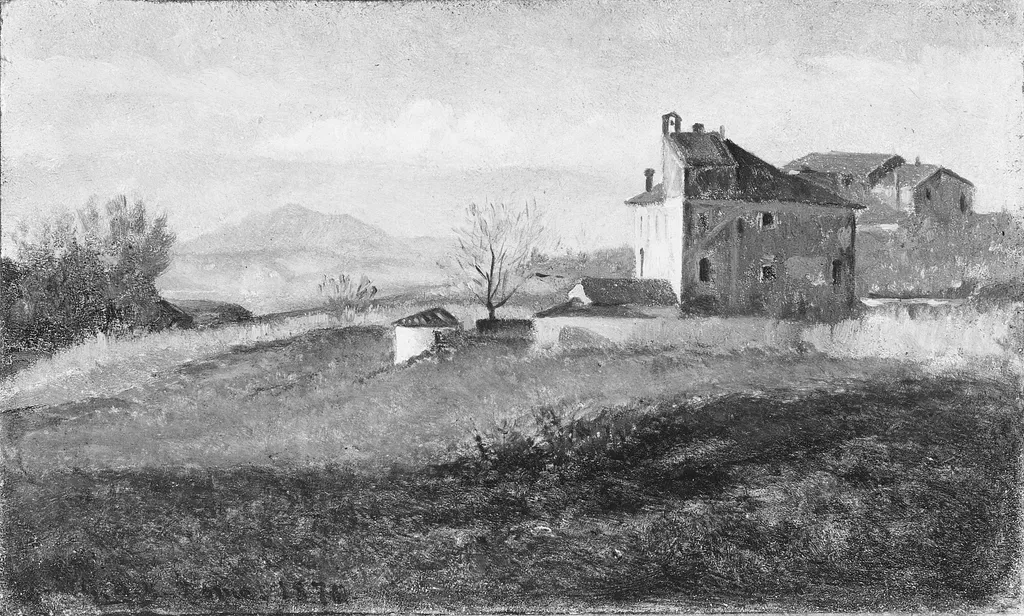
Convent near Rome is an unspecified painting by the American Impressionist artist George Henry Yewell. It dates from 1870 and is held in the collection of the Metropolitan Museum of Art.
About this work
History & Provenance
The painting is classified as a landscape, and no specific accession number or detailed exhibition history is documented in the available sources.
Convent near Rome is an 1870 oil landscape by American artist George Henry Yewell. The work measures approximately 14 cm in height by 22.9 cm in width and depicts a convent situated near Rome. It entered the collection of the Metropolitan Museum of Art, where it remains.
No documentary evidence of a specific commission has been identified; the circumstances of its production are inferred from the artist's known practice of creating landscape subjects in the 1870s. The painting is classified as a landscape, and no specific accession number or detailed exhibition history is documented in the available sources.
Overview
George Henry Yewell's painting, Convent near Rome, completed in 1870, offers a serene depiction of a rural Italian scene. This oil on canvas work is part of the collection at The Metropolitan Museum of Art. It presents an old structure nestled within a tranquil landscape, characterized by its subtle rendering of light and a sense of quietude. The artwork exemplifies Yewell's approach to landscape painting during his career.
Subject & Meaning
The painting centers on an aged, modest building, possibly a convent or a rural dwelling, featuring a sloping roof, chimney, and visible signs of wear such as broken windows and crumbling walls. This structure is situated within a gentle, expansive landscape of rolling hills and distant trees, under a light, hazy sky. The foreground includes patches of grass and various bushes, contributing to the overall impression of a quiet, undisturbed natural environment.
Technique & Style
Yewell employs a naturalistic approach to capture the Italian countryside, emphasizing a sense of calm and tranquility. The artist renders the rural setting with soft light, particularly evident in the hazy sky that bathes the scene. Details like the weathered texture of the building and the varied foliage are depicted with careful observation, contributing to the painting's overall serene and contemplative mood. The composition balances architectural elements with the expansive natural surroundings.
Artist & collection


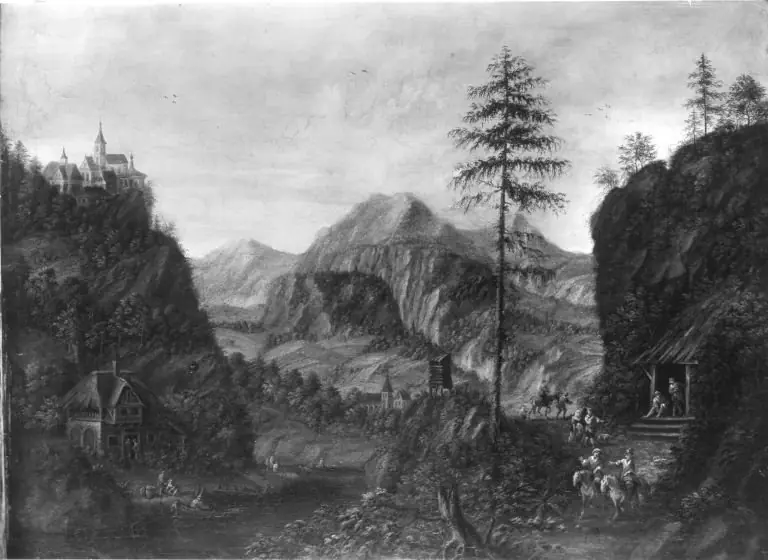
- Gebirgslandschaft
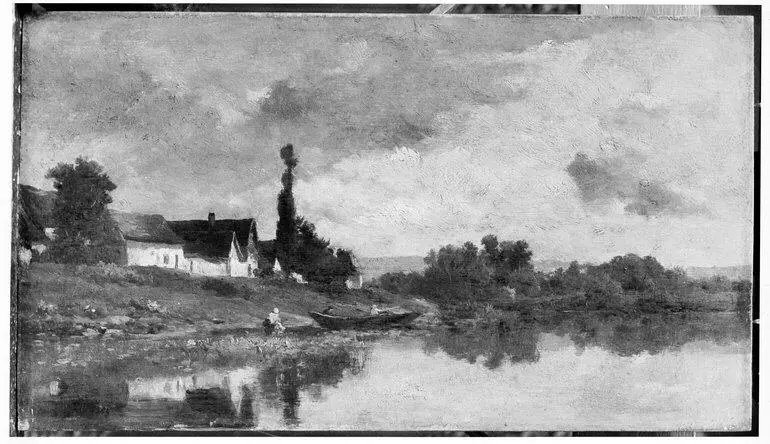 Portejoie on the Seine
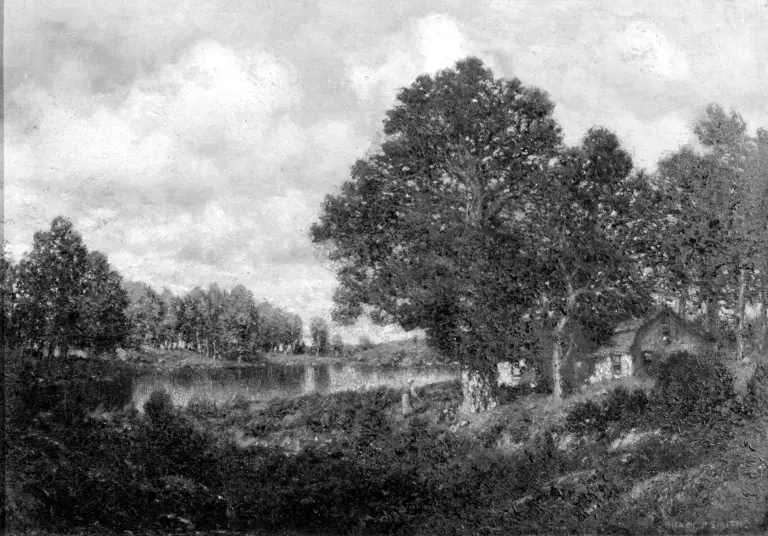 Old Homestead
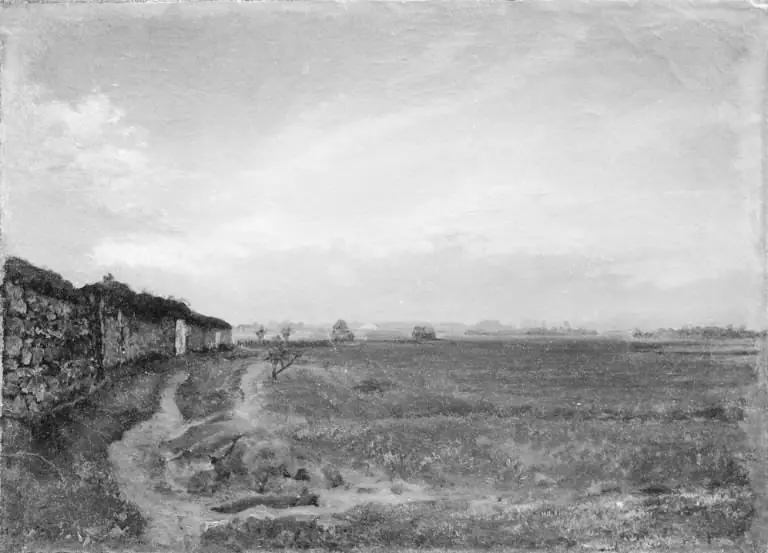 Landscape (in the Barbizon district?)
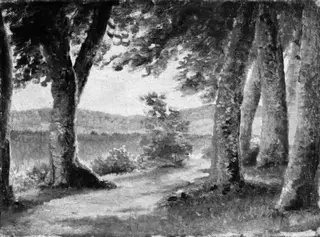 Study of a Wood
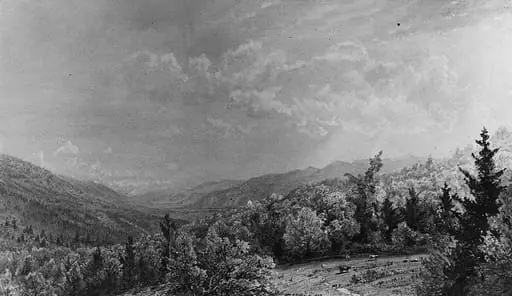 From the Flume House, Franconia, New Hampshire
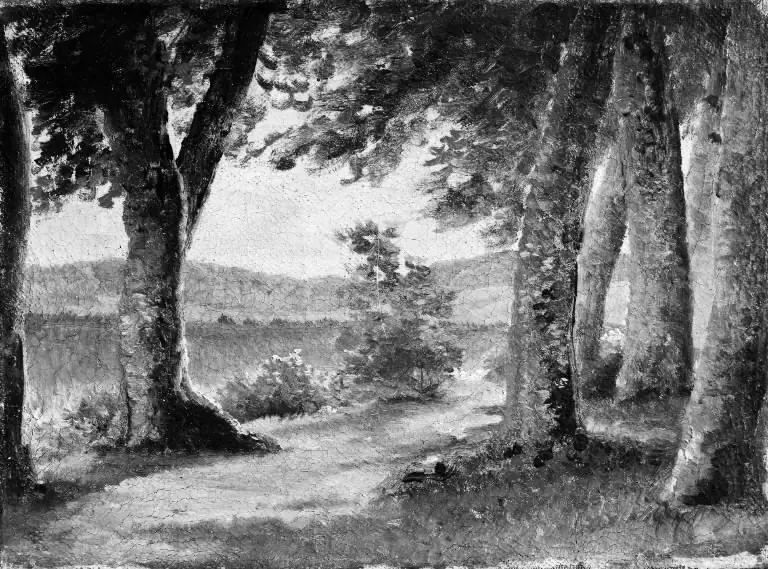 Study of a Wood
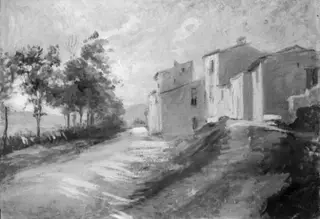 Road near Sulmona, Italy
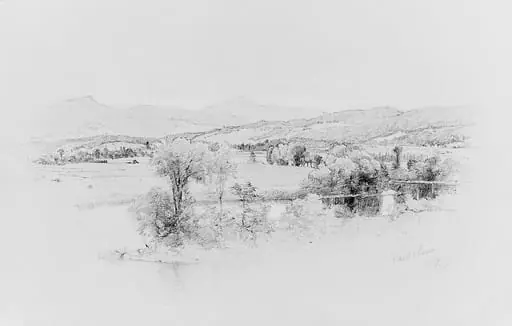 Maidstone, Vermont
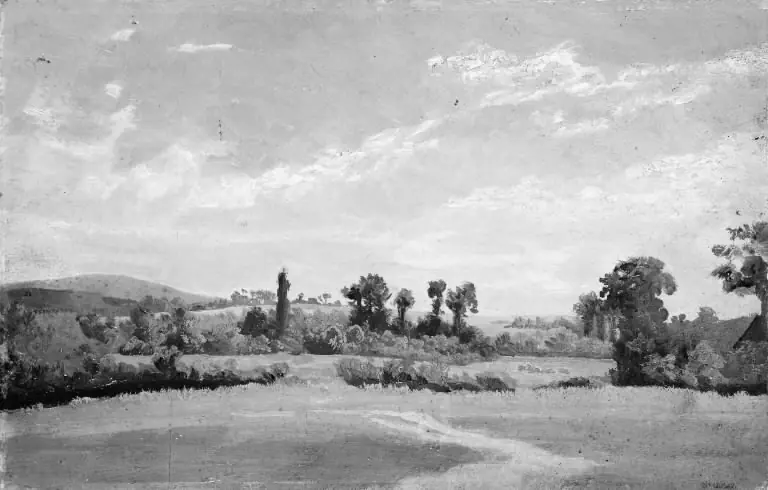 Open Landscape with Low Hills. Summer
 Parti fra Frederiksværk
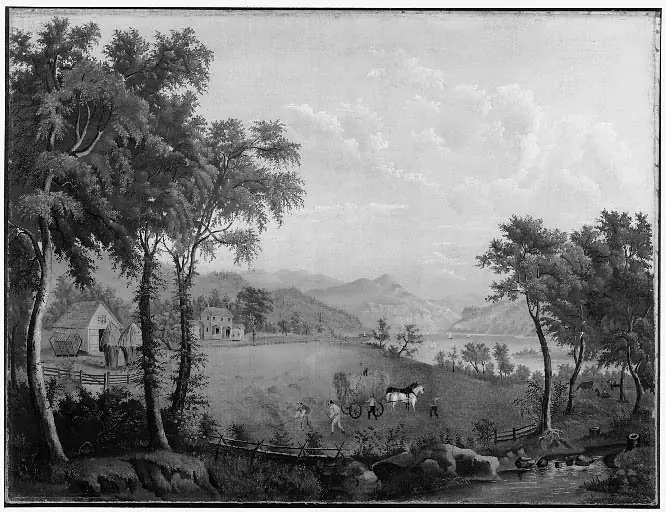 Summer Landscape: Haymaking (after American Harvesting)