Artwork
Across the Campagna
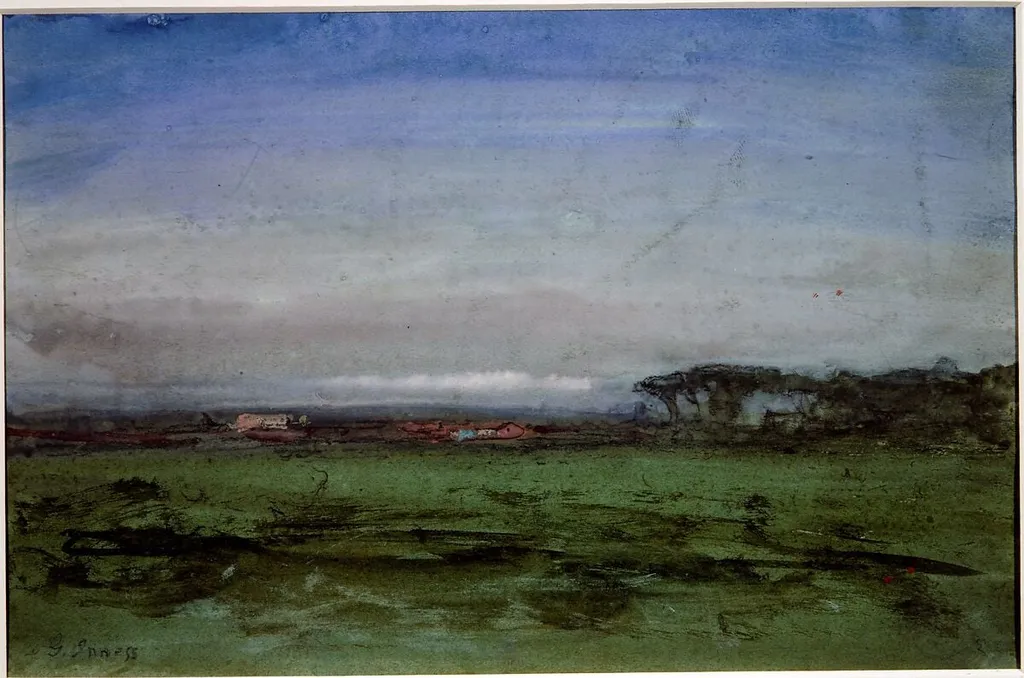
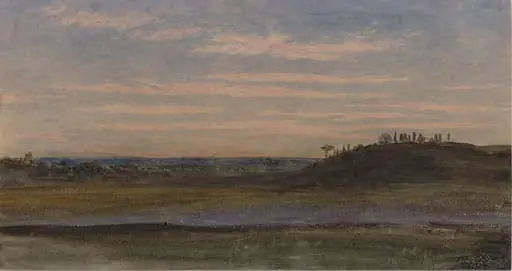
Across the Campagna is a watercolor work on paper by the Barbizon school artist George Inness. It dates from 1872 and is held in the collection of the Metropolitan Museum of Art.
About this work
Subject & Meaning
The composition thus embodies a synthesis of empirical detail and poetic idealism characteristic of late nineteenth-century American art.
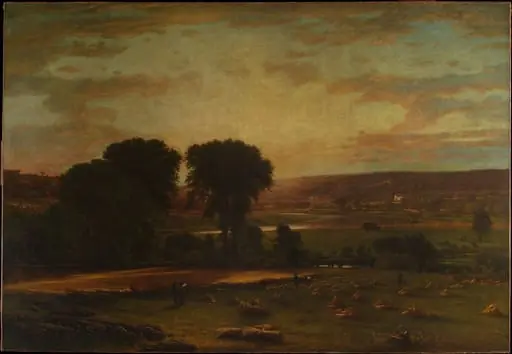
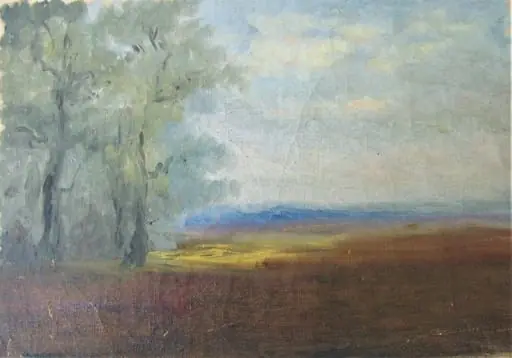
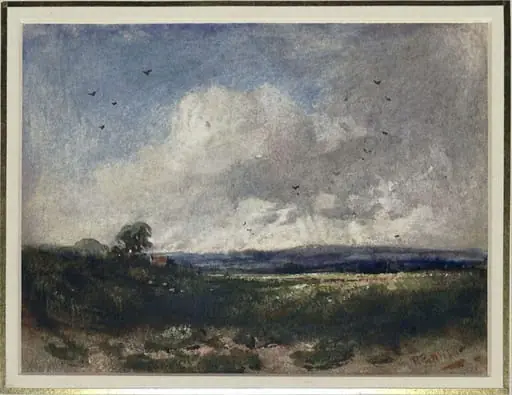
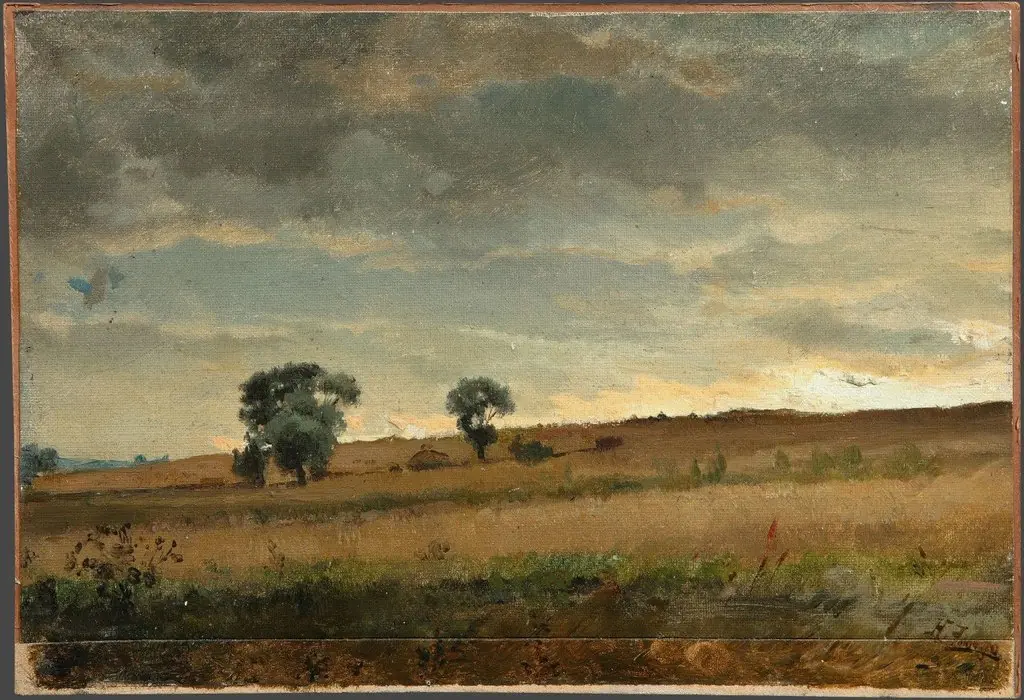
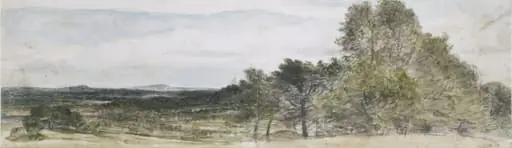
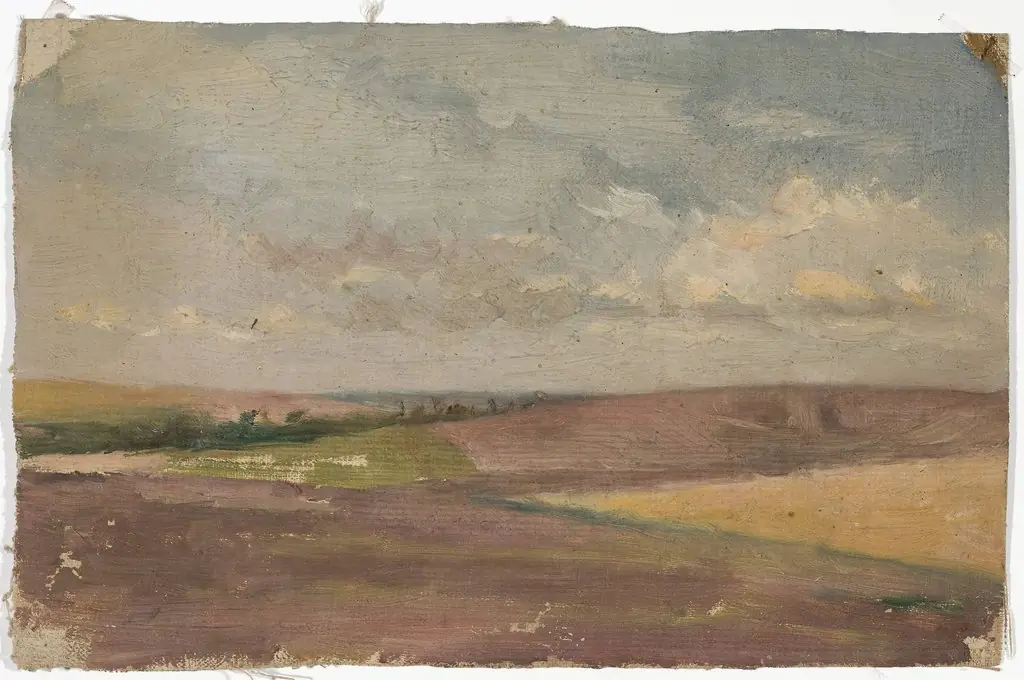
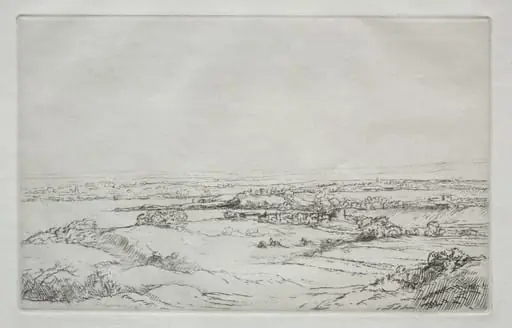
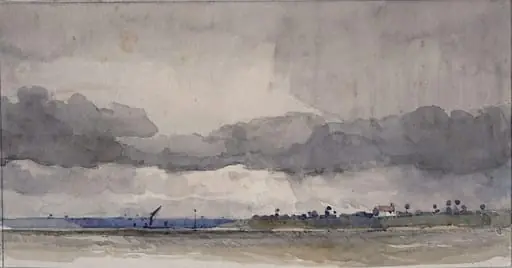
The work portrays a sweeping pastoral scene of the Roman Campagna, a landscape tradition tied to the American Barbizon school's emphasis on naturalistic observation. Inness renders undulating fields and distant hills under a soft sky, employing delicate washes of watercolor and gouache to evoke atmospheric light and mood rather than topographical precision. This approach reflects the movement's shift toward emotional resonance in nature, aligning with contemporary theories of the sublime that linked landscape to spiritual contemplation.
The composition thus embodies a synthesis of empirical detail and poetic idealism characteristic of late nineteenth-century American art.
Technique & Style
Executed in 1872, this landscape work by George Inness utilizes a mixed-media approach on an off-white wove paper support. The artist combined watercolor and gouache with graphite to achieve the composition's tonal variations and textural details. Measuring 17.3 cm in height and 26.2 cm in width, the piece reflects the stylistic tendencies of the American Barbizon school through its depiction of the Campagna.
The integration of opaque gouache with transparent watercolor washes allows for a distinct handling of light and atmosphere, characteristic of Inness's approach to landscape during this period. The use of graphite underpins the structural elements of the scene, providing a foundation for the applied pigments.
History & Provenance
George Inness created the watercolor, gouache, and graphite work titled Across the Campagna in 1872. Executed on off-white wove paper, the piece measures 17.3 cm in height and 26.2 cm in width. The artwork is currently held in the collection of the Metropolitan Museum of Art, where it is classified under the American Wing.
While the specific circumstances of its commission or earlier ownership history are not detailed in the available records, its inception is firmly established as 1872.
Overview
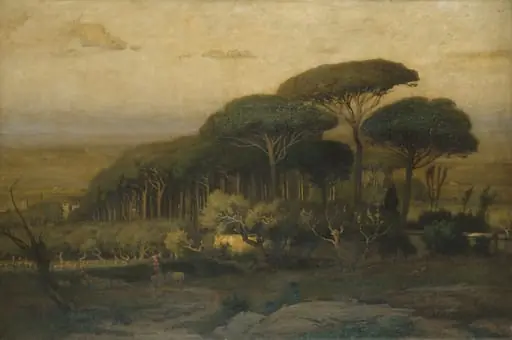
Created in 1872, Across the Campagna is a small-scale work on off‑white wove paper that combines watercolor, gouache, and graphite. The composition presents a tranquil countryside scene of gentle hills and scattered trees, rendered in a muted palette that emphasizes atmosphere over detail.
Artist & collection

Artist
George Inness (May 1, 1825 – August 3, 1894) was an American landscape painter. Now recognized as one of the most influential American artists of the nineteenth century, Inness was influenced by the Hudson River School…