Artwork
Delaware Water Gap
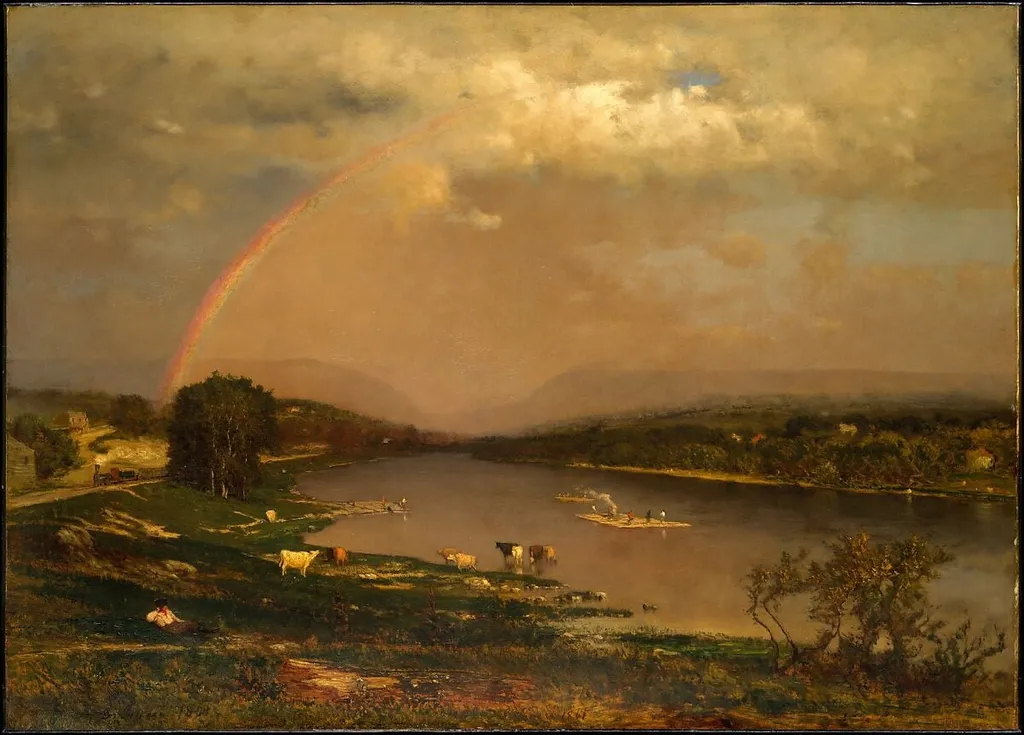
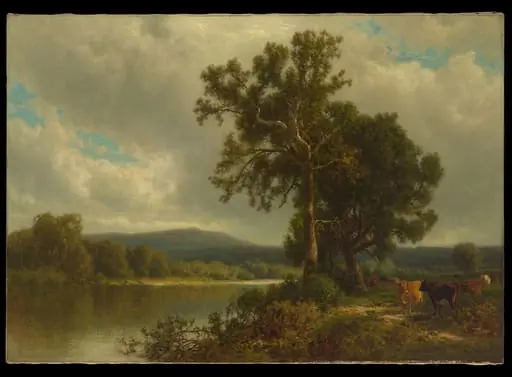
Delaware Water Gap is an oil painting by the Barbizon school artist George Inness. It dates from 1861 and is held in the collection of the Metropolitan Museum of Art.
About this work
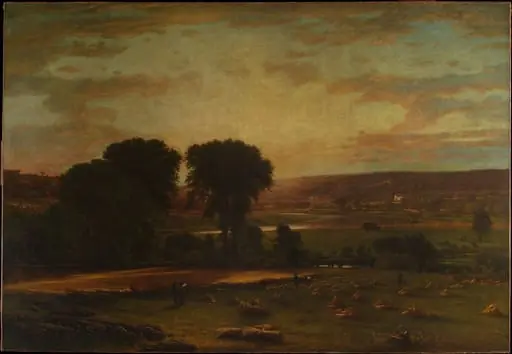
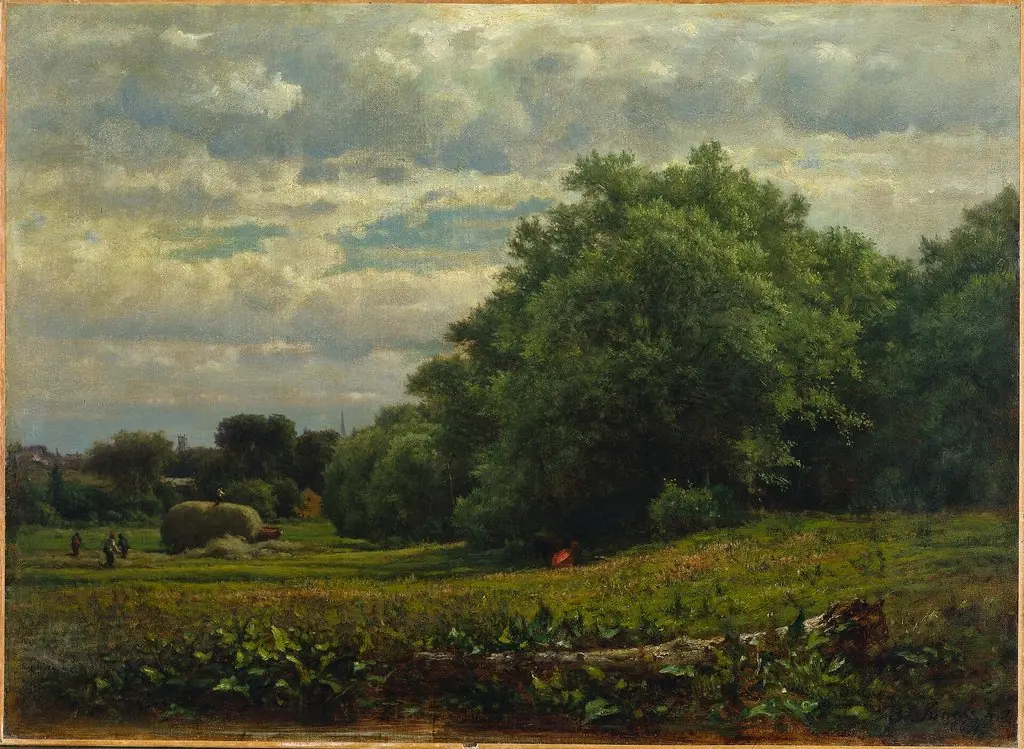
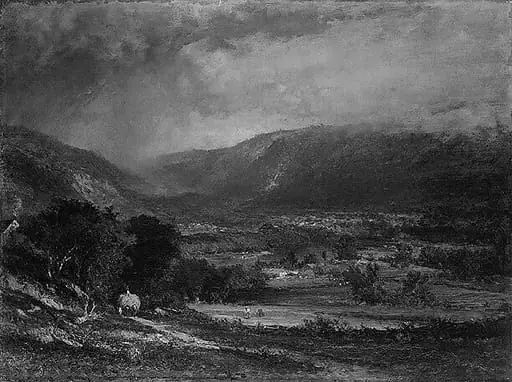
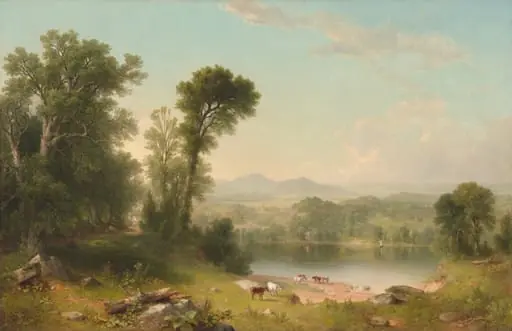
Cows graze near a river in a calm, open landscape. George Inness painted the scene in 1861, during the American Civil War, and his turn toward peaceful country may have been one way to step back from the turmoil of those years.
Subject & Meaning
As a work of the American Barbizon school, the piece utilizes these visual components to evoke a serene, harmonious relationship between nature and rural life.
George Inness's 1861 oil painting, Delaware Water Gap, depicts a quintessential American landscape scene centered on the river flowing through the gap. The composition features specific natural and pastoral elements, including a prominent rainbow arching over the water and a herd of cattle grazing within the terrain. As a work of the American Barbizon school, the piece utilizes these visual components to evoke a serene, harmonious relationship between nature and rural life.
The inclusion of the rainbow and the tranquil river setting suggests themes of divine presence and the sublime beauty of the American wilderness, characteristic of Inness's approach to landscape painting during this period.
Technique & Style
Delaware Water Gap is executed in oil on canvas, a traditional combination that allowed Inness to build layered, atmospheric effects suited to the landscape genre. The painting measures 91.4 by 127.6 centimeters, a horizontal format that accommodates the broad panoramic vista of the river, surrounding terrain, and a rainbow arching across the sky. Stylistically, the work is associated with the American Barbizon school, a movement that emphasized naturalistic observation, tonal harmony, and the sympathetic rendering of rural scenery, including the cattle and watercourse that animate the composition.
The use of oil paint on a woven canvas support provided the artist with a flexible ground for blending wet-into-wet passages, particularly in the depiction of the luminous rainbow and reflective river surface, while permitting finer detail in the grazing animals and foreground terrain.
History & Provenance
Delaware Water Gap is an 1861 oil on canvas landscape by George Inness, created in the American Barbizon school style and depicting a river, cattle, and a rainbow. The work measures 91.4 × 127.6 cm and is classified as a landscape painting. It has been part of the Metropolitan Museum of Art’s American Wing collection since entering the museum, where it is catalogued under The American Wing genre.
The painting’s creation history is documented through its date, medium, and stylistic affiliation, while its current ownership rests with the Metropolitan Museum of Art.
Delaware Water Gap (1861) by George Inness is held by the Metropolitan Museum of Art, where it is classified within The American Wing. The painting entered the museum's collection as an oil on canvas landscape measuring 91.4 by 127.6 centimeters. No specific accession number, acquisition date, or documented exhibition history is provided in the available sources.
Overview
"Delaware Water Gap" is an oil on canvas painting that captures a tranquil natural scene. This artwork is housed within The American Wing, representing a landscape typical of its period. The artist rendered a peaceful vista, inviting contemplation of a moment of calm captured on canvas through the medium of oil paint.
Context
Created during the profound upheaval of the American Civil War, "Delaware Water Gap" presents a vision of harmony and pastoral quietude. As the nation was embroiled in conflict, the artist chose to depict a scene devoid of strife, potentially offering a contemplative escape for both the creator and contemporary viewers. This work exemplifies how art could provide solace or an alternative reality during times of national crisis.
Artist & collection

Artist
George Inness (May 1, 1825 – August 3, 1894) was an American landscape painter. Now recognized as one of the most influential American artists of the nineteenth century, Inness was influenced by the Hudson River School…

 Compared in the Color & Light course