Artwork
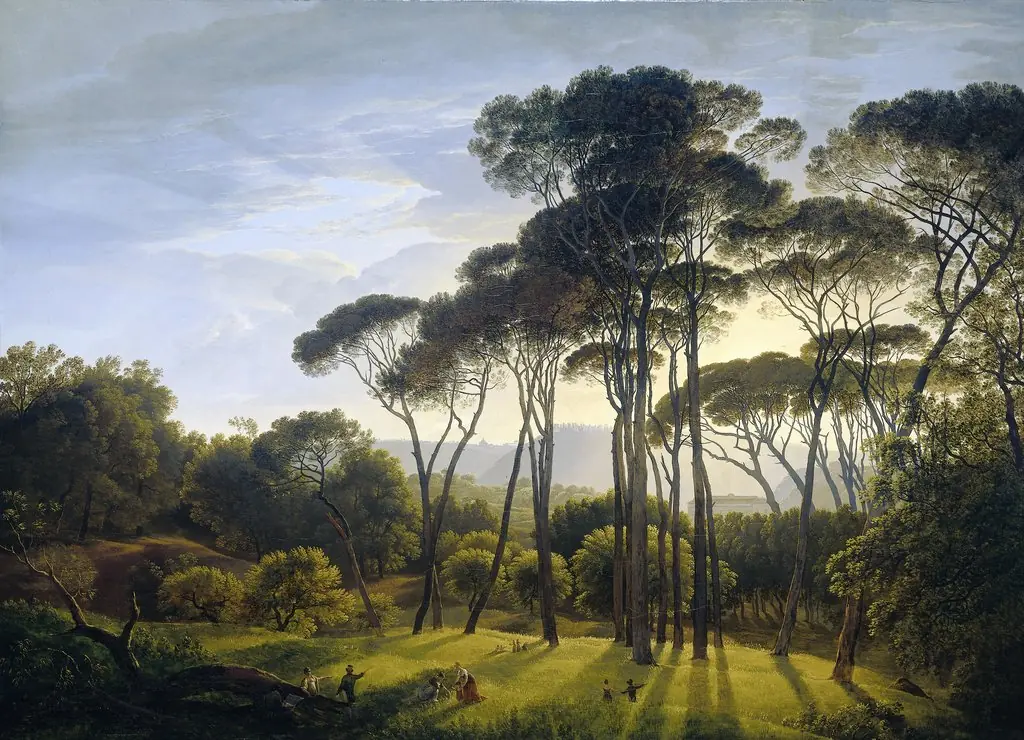
Pine Grove of the Barberini Villa
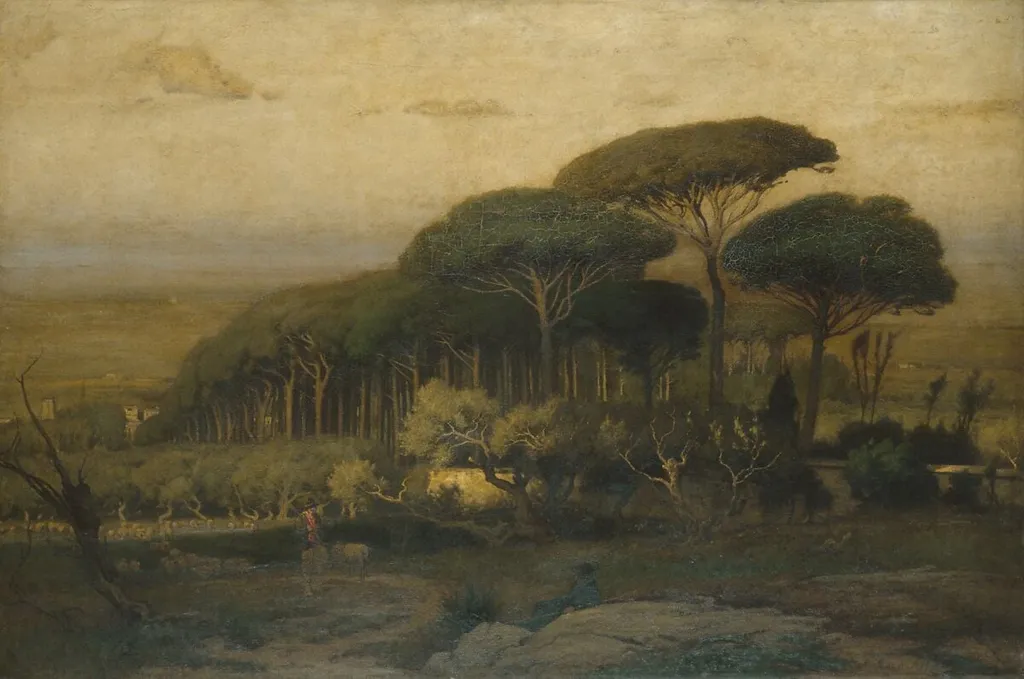
Pine Grove of the Barberini Villa is an oil painting by the Barbizon school artist George Inness. It dates from 1876 and is held in the collection of the Metropolitan Museum of Art.
About this work
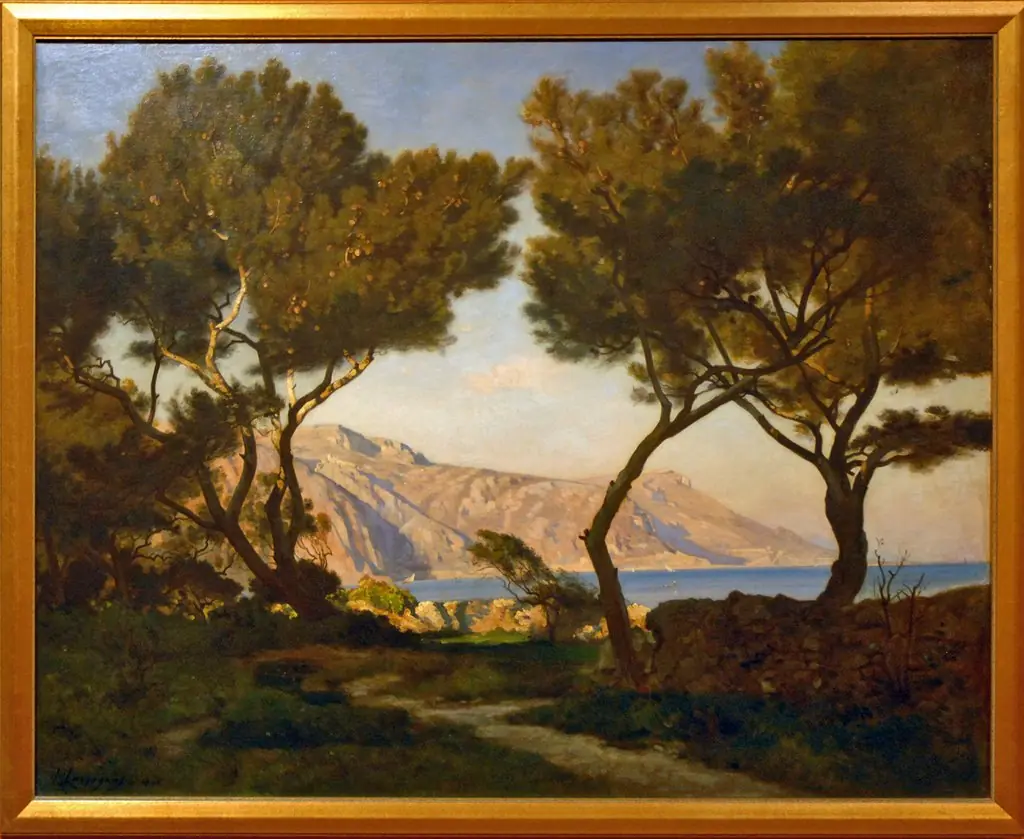
Tall pines in soft morning light, their trunks glowing pink, under a pale blue sky streaked with a few wispy clouds. George Inness painted them at the Barberini Villa near Rome in 1876, using loose brushwork that keeps the trees alive as light shifts across them and the shadows move.
Technique & Style
Stylistically, the painting aligns with the American Barbizon school, a movement characterized by its focus on naturalistic scenery and atmospheric effects.
George Inness executed Pine Grove of the Barberini Villa in 1876 using oil paint applied to a canvas support. The work measures approximately 200 centimeters in height and 301 centimeters in width, establishing it as a substantial landscape composition. Stylistically, the painting aligns with the American Barbizon school, a movement characterized by its focus on naturalistic scenery and atmospheric effects.
The formal qualities emphasize the depiction of trees within a broader landscape setting, reflecting the artist's engagement with the genre.
History & Provenance
Pine Grove of the Barberini Villa was executed by George Inness in 1876 as an oil on canvas landscape within the American Barbizon school. The canvas measures 200 × 301 cm. The painting entered the collection of the Metropolitan Museum of Art, where it remains on view in The American Wing. No earlier owners or sale records are documented in the available sources.
Context
Pine Grove of the Barberini Villa stands as a defining example of George Inness's contribution to the American Barbizon school, a movement that adapted European Romantic landscape traditions for an American context. Painted in 1876, the work reflects Inness's mature style, prioritizing atmospheric mood and tonal unity over strict topographical accuracy. As a significant entry in the Metropolitan Museum of Art's collection, the painting underscores the artist's pivotal role in bridging the gap between mid-century realism and the emerging aesthetic sensibilities of the late nineteenth century. Its inclusion in The American Wing highlights its status as a cornerstone of American landscape history.
Overview
Pine Grove of the Barberini Villa is an oil on canvas painting that portrays a cluster of tall pine trees illuminated by the gentle glow of morning. The artwork captures a serene landscape, emphasizing the interplay of light and shadow within the natural setting. It offers a contemplative view of a specific location, rendered with a focus on atmospheric effects and the subtle nuances of color.
Subject & Meaning
The painting transports viewers to the Barberini Villa, situated near Rome, Italy. It focuses on a dense grouping of pine trees, their towering forms catching the soft light of dawn. The sun's early rays impart a warm, pinkish hue to the tree trunks, contrasting with the pale blue sky overhead, which is dotted with delicate, wispy clouds. This composition evokes a sense of tranquility and the ephemeral beauty of a new day.
Artist & collection

Artist
George Inness (May 1, 1825 – August 3, 1894) was an American landscape painter. Now recognized as one of the most influential American artists of the nineteenth century, Inness was influenced by the Hudson River School…