Artwork
Peace and Plenty
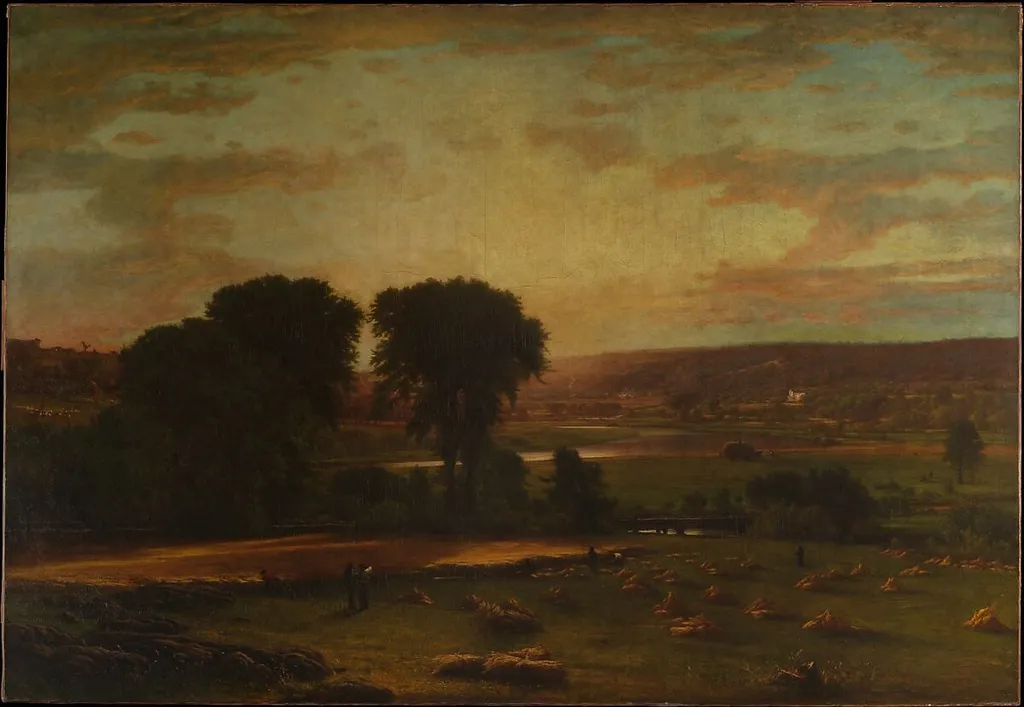
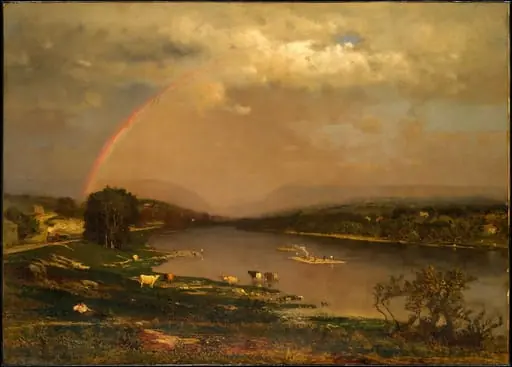
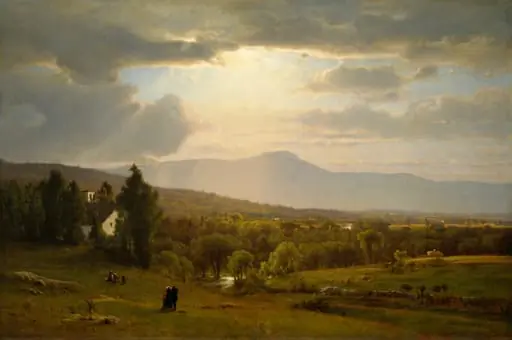
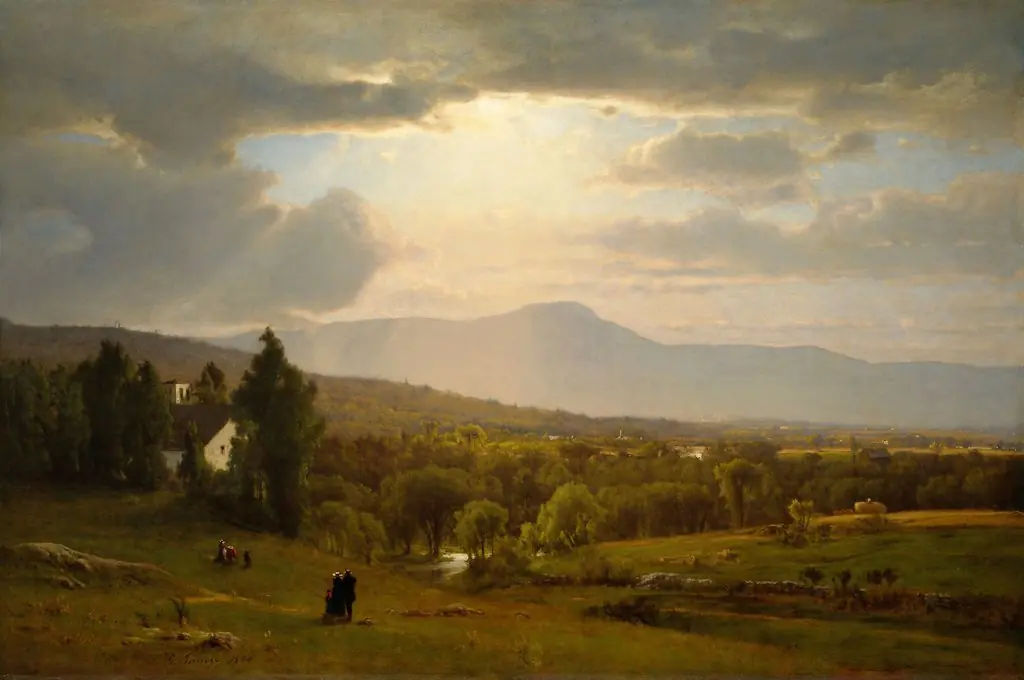
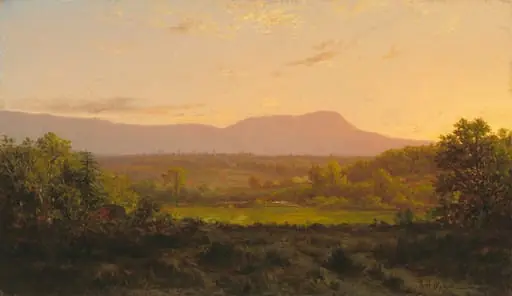
Peace and Plenty is an oil painting by the Barbizon school artist George Inness. It dates from 1865 and is held in the collection of the Metropolitan Museum of Art.
About this work
Technique & Style
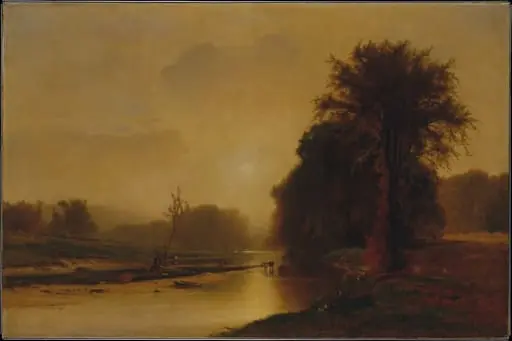
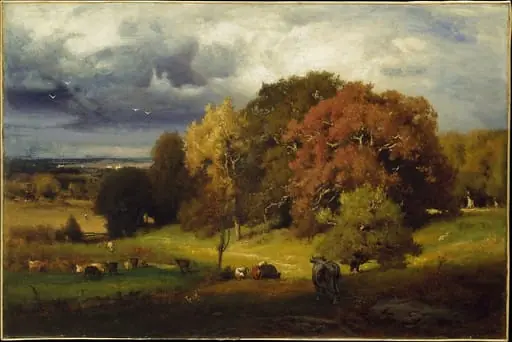
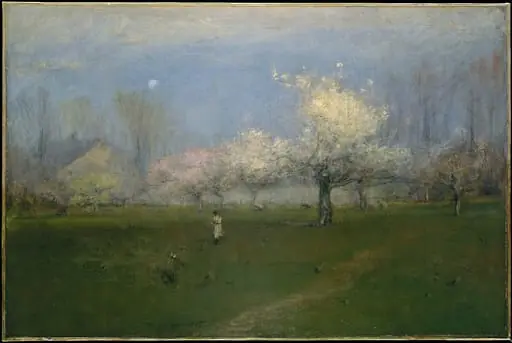
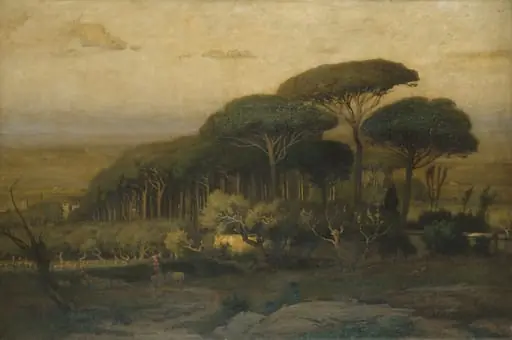
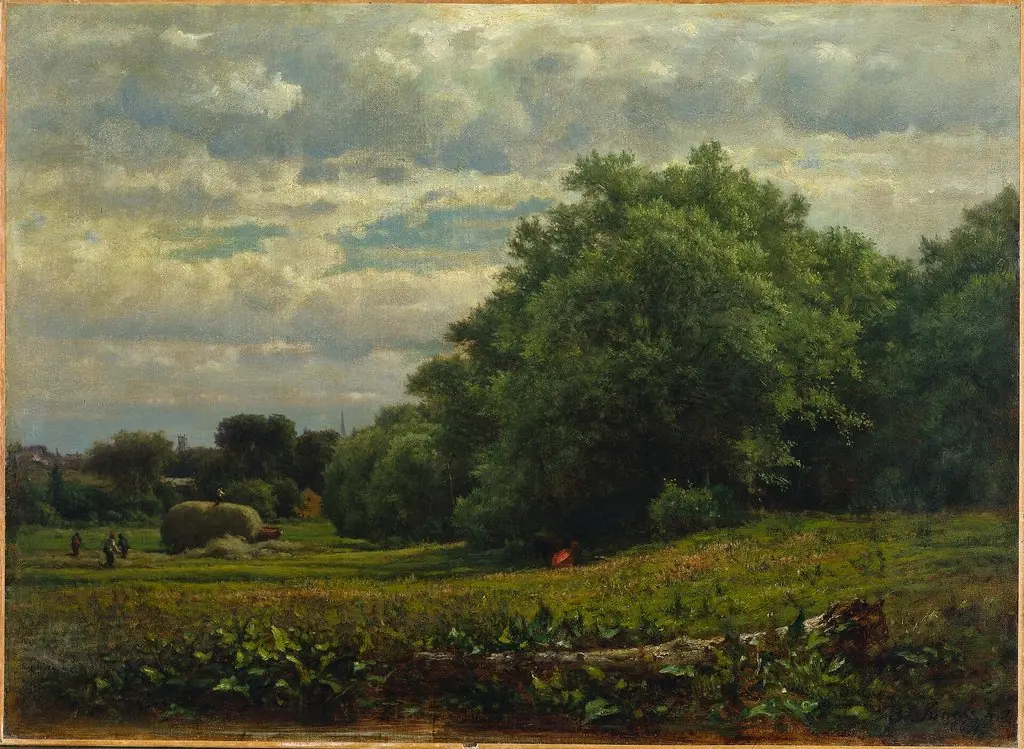
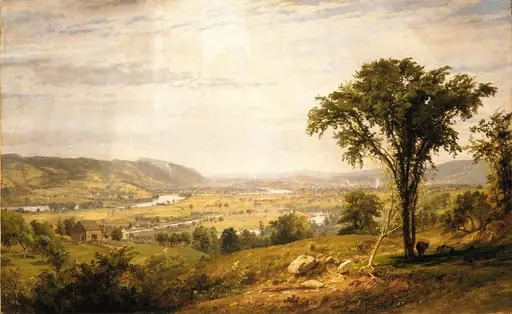
The landscape composition focuses on trees and open space, rendered with a soft, blended handling that creates a sense of depth and tranquility.
Peace and Plenty is executed in oil paint on a canvas support, a medium typical of George Inness’s mature work. The painting belongs to the American Barbizon school, characterized by loose, atmospheric brushwork that emphasizes tonal harmony and subtle gradations of light rather than detailed description. The landscape composition focuses on trees and open space, rendered with a soft, blended handling that creates a sense of depth and tranquility.
While the sources do not note the painting’s current condition, its technique reflects Inness’s commitment to capturing mood through restrained, painterly application of oil on canvas.
History & Provenance
George Inness created the oil-on-canvas landscape painting Peace and Plenty in 1865. The work, measuring 197.2 by 285.4 centimeters, is associated with the American Barbizon school movement. It is currently held in the collection of the Metropolitan Museum of Art, specifically within The American Wing.
The painting depicts a landscape featuring trees. While the specific commission details and the full chain of ownership prior to its arrival at the museum are not detailed in the provided records, the work's creation is firmly dated to the year 1865. The piece remains a significant example of Inness's landscape output from the mid-1860s, characterized by its depiction of natural elements within the Barbizon style.
Peace and Plenty is housed in the Metropolitan Museum of Art in New York, where it is listed under the American Wing collection. The painting, executed in oil on canvas in 1865, measures 197.2 cm by 285.4 cm and is categorized as a landscape within the American Barbizon school. Its presence in the museum’s permanent holdings is documented in the internal catalog entry and confirmed by the Wikidata record, which also notes its accession within the museum’s landscape paintings. No specific exhibition venues beyond the museum’s display of the work are recorded in the available sources.
Overview
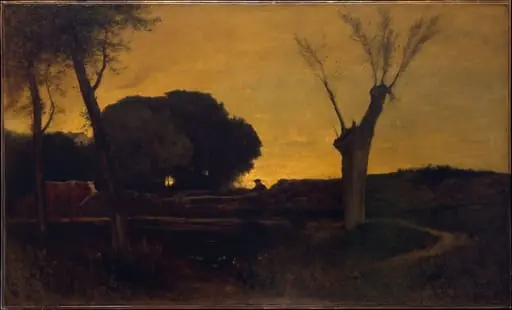
George Inness's Peace and Plenty, rendered in oil on canvas, depicts a tranquil farm landscape at twilight. The composition features rolling hills, a solitary tree, and a modest dwelling, all bathed in the soft, golden light of a setting sun. This scene evokes a sense of quietude and abundance, characteristic of Inness's approach to capturing the American countryside.
Subject & Meaning
The painting portrays a serene agricultural setting as day transitions to night, with the sun casting a warm glow across fields and distant terrain. This imagery of a bountiful, undisturbed land carries a profound symbolic weight. Created immediately following the conclusion of the American Civil War, the work conveys a message of national healing and a hopeful outlook for a future of stability and prosperity.
Context
Completed in the immediate aftermath of the American Civil War, Peace and Plenty reflects a broader cultural desire for national unity and restoration. The painting's emphasis on a harmonious, productive landscape offered a visual balm during a period of significant societal reconstruction. It embodies a vision of America's potential for peace and prosperity after years of conflict, aligning with the optimistic spirit of the era.
Artist & collection

Artist
George Inness (May 1, 1825 – August 3, 1894) was an American landscape painter. Now recognized as one of the most influential American artists of the nineteenth century, Inness was influenced by the Hudson River School…