Artwork
Autumn Oaks
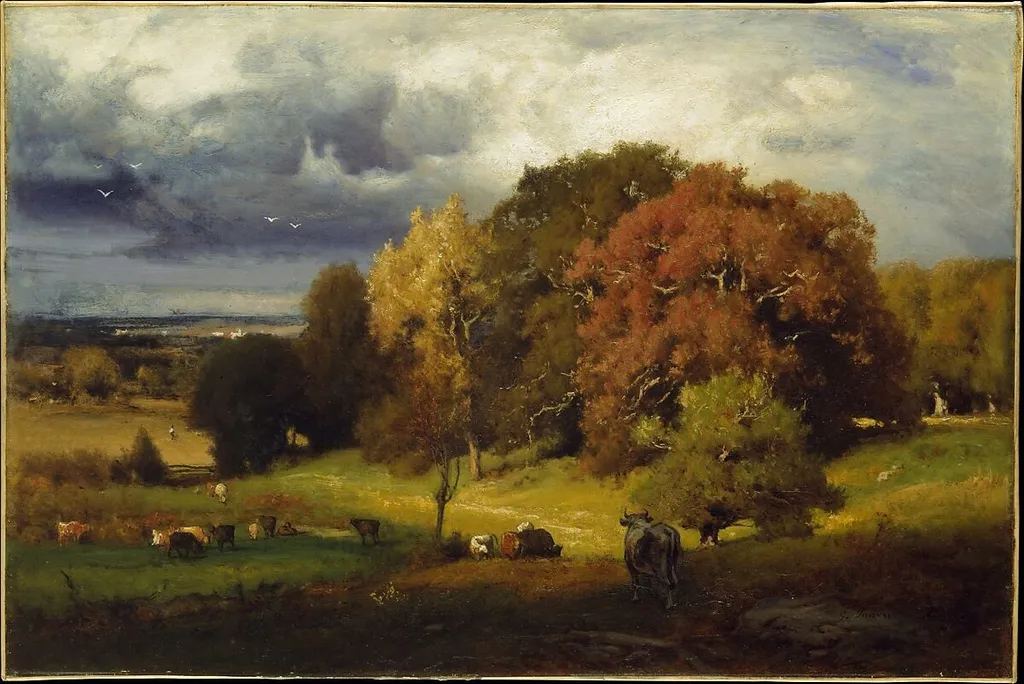
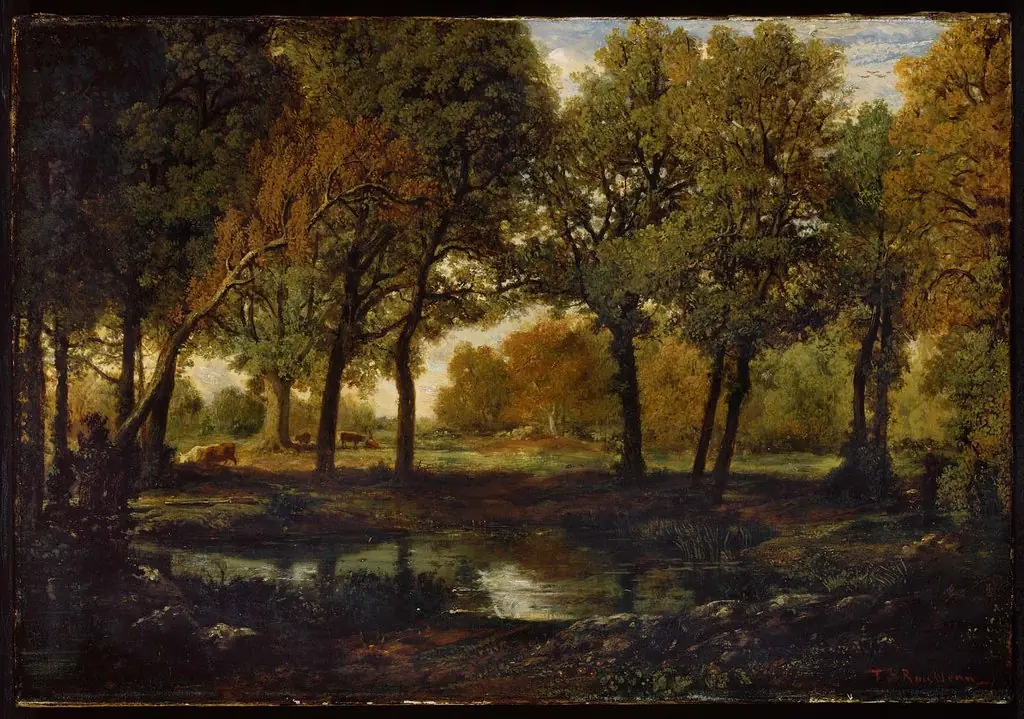
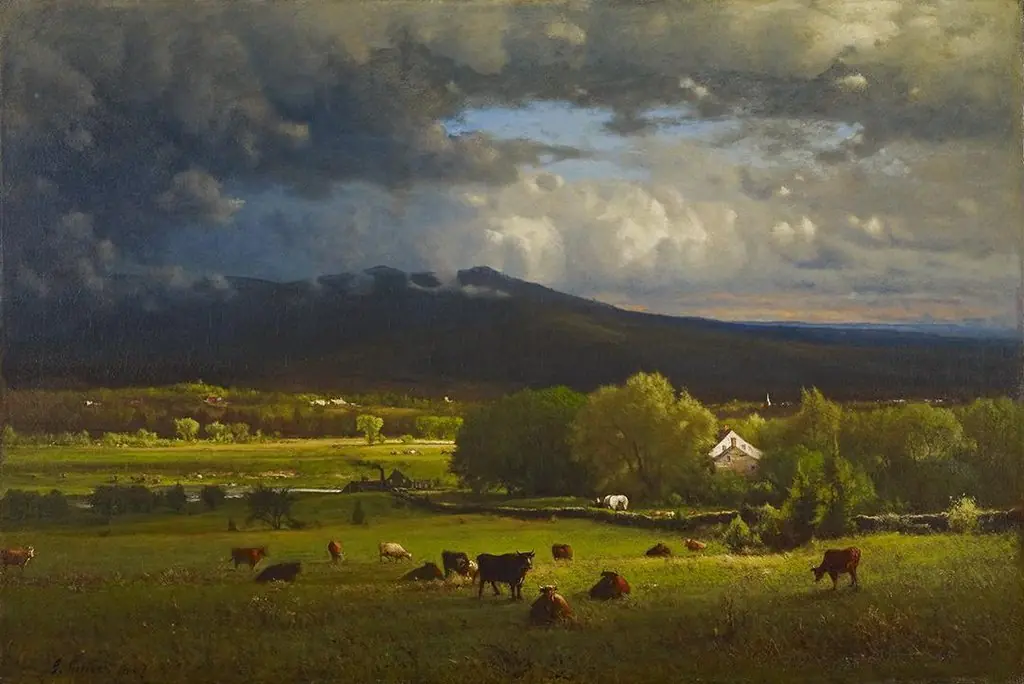
Autumn Oaks is an oil painting by the Barbizon school artist George Inness. It dates from 1878 and is held in the collection of the Metropolitan Museum of Art.
About this work
Subject & Meaning
The presence of cattle and the specific seasonal setting anchor the work in a pastoral tradition, emphasizing the harmony between nature and agricultural life.
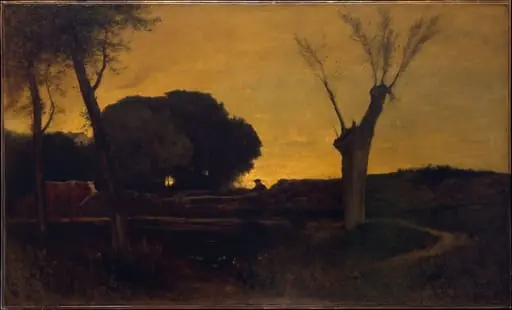
Autumn Oaks depicts a grove of oak trees situated within the American countryside, featuring cattle amidst the landscape. Executed in 1876, the work captures the autumn season through a composition that prioritizes lighting and color contrasts over minute detail. This approach reflects George Inness's stylistic evolution following his four-year return from Europe, where he adopted a richer palette characteristic of the American Barbizon school.
While the painting presents a naturalistic scene of rural life, its focus on atmospheric effects and the interplay of light suggests a deeper engagement with the emotional resonance of the landscape rather than a strictly topographical record. The presence of cattle and the specific seasonal setting anchor the work in a pastoral tradition, emphasizing the harmony between nature and agricultural life.
Technique & Style
Autumn Oaks (1876) by George Inness is executed in oil on canvas, measuring 54.3 by 76.5 centimeters. Created shortly after the artist's return from Europe, the work reflects a shift toward the American Barbizon school style, prioritizing atmospheric effects over precise detail. Inness employed a richer palette in this piece, emphasizing lighting and color contrasts to depict an autumnal grove with grazing cattle.
The handling focuses on the interplay of light and shadow within the landscape rather than intricate rendering of individual elements. The painting's condition is stable within the Metropolitan Museum of Art's collection, having been donated in 1887. Its formal qualities highlight the naturalistic approach characteristic of Inness's later career, blending tonal harmony with a focus on the emotional resonance of the scene.
History & Provenance
Autumn Oaks was painted by George Inness in 1876, shortly after his return from a four‑year sojourn in Europe, during which he adopted a richer palette and heightened attention to light and color. The work remained in private hands until it was acquired by collector George I. Seney, who donated it to the Metropolitan Museum of Art in 1887. No record of a commission exists in the cited sources; the painting appears to have been produced independently.
Since its donation, Autumn Oaks has remained continuously in the Met’s collection, where it is catalogued as an oil on canvas landscape.
Context
Autumn Oaks (1876) by George Inness stands as a significant example of the American Barbizon school, reflecting the artist's shift toward a more atmospheric approach following his four-year European sojourn. Unlike his earlier, more detailed compositions, this work prioritizes lighting and color contrasts through a richer palette, marking a maturation in his landscape style. The painting depicts a rural American grove with cattle, embodying the naturalistic tendencies Inness developed abroad while adapting them to the local countryside.
Its acquisition by the Metropolitan Museum of Art in 1887 through the donation of George I. Seney secured its place in major American collections, cementing its status as a key representation of late 19th-century American landscape painting.
Legacy
Autumn Oaks, completed in 1876, entered the Metropolitan Museum of Art in 1887 through the bequest of George I. Seney and has remained in the museum’s collection. The canvas is part of The American Wing and is categorized as a landscape painting within the American Barbizon school, a movement that Inness helped introduce to the United States. Critics have noted the work’s richer palette and heightened attention to lighting and color contrast, traits that signal Inness’s mature artistic phase and have contributed to his standing as a pivotal figure in 19th‑century American landscape art. Its continued display and scholarly attention underscore its lasting reputation as a representative example of the genre.
Overview
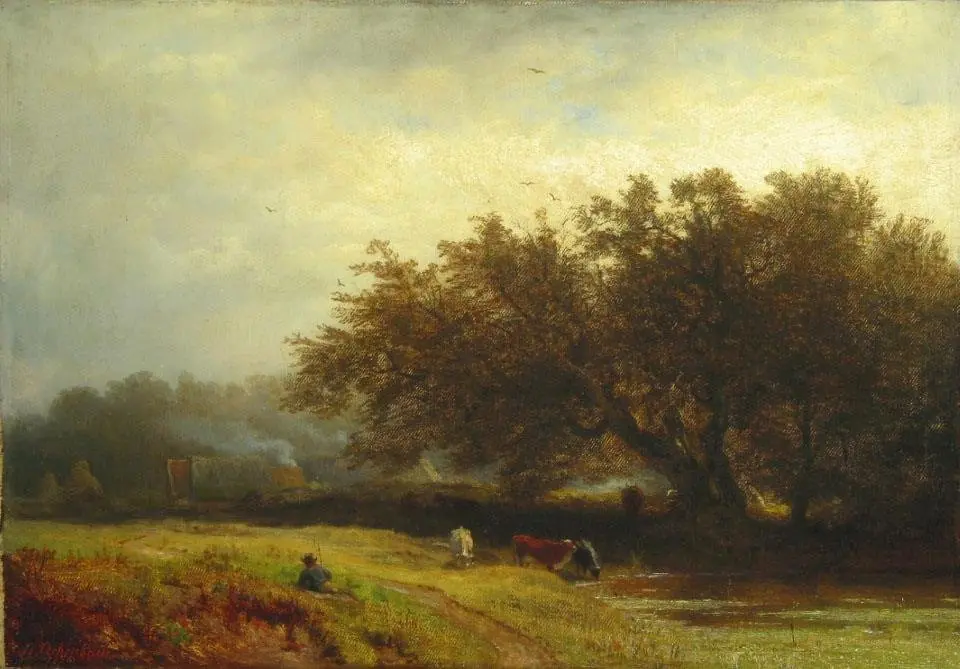
George Inness's Autumn Oaks, an oil on canvas from the late 19th century, presents a serene American landscape. The painting features a golden field where a few cows graze, leading to a prominent line of dark oak trees beneath a soft, hazy sky. This work exemplifies Inness's mature style, emphasizing atmospheric qualities over precise detail.
Artist & collection

Artist
George Inness (May 1, 1825 – August 3, 1894) was an American landscape painter. Now recognized as one of the most influential American artists of the nineteenth century, Inness was influenced by the Hudson River School…