Artwork
Cafeshantan (Cabaret)
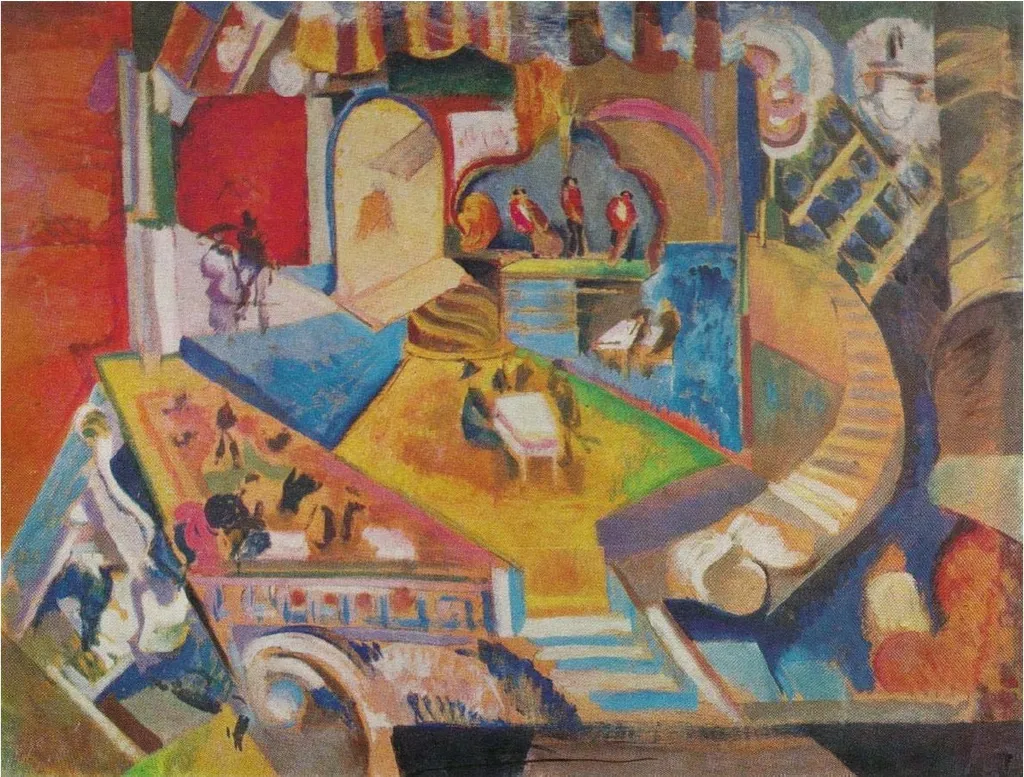
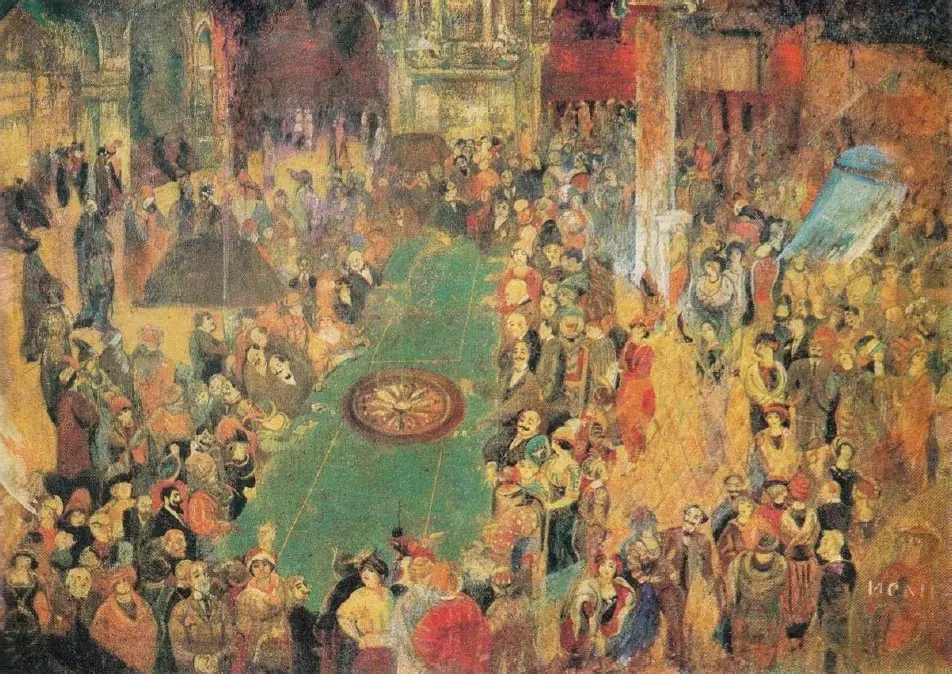
Cafeshantan (Cabaret) is an oil painting by the Cubism Synthetic artist Georgy Yakulov. It dates from 1912 and is held in the collection of the National Gallery of Armenia.
About this work
Overview
Georgy Yakulov painted Cafeshantan (Cabaret) in 1912 on plywood, a material choice reflecting his interest in accessible, non-traditional supports.
Georgy Yakulov painted Cafeshantan (Cabaret) in 1912 on plywood, a material choice reflecting his interest in accessible, non-traditional supports. The work emerges from his engagement with early 20th-century avant-garde currents, particularly synthetic cubism, though he maintained an independent approach, avoiding alignment with formal artistic groups. Its composition captures the dynamism of urban nightlife through fragmented forms and vivid color.
Subject & Meaning
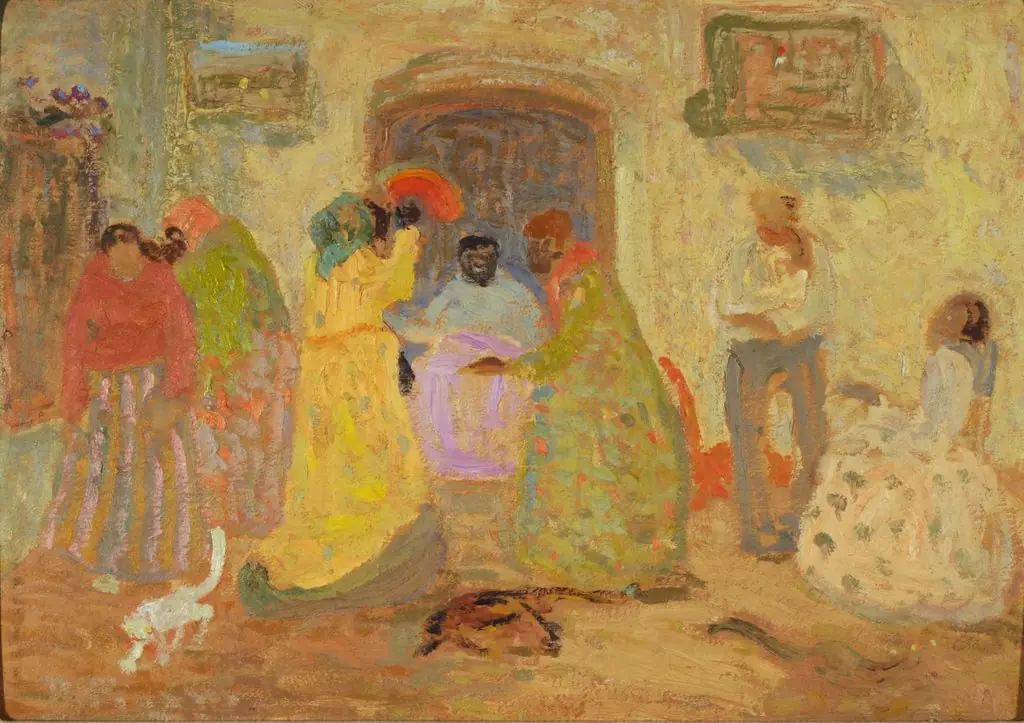
The painting depicts an interior of a bustling café, populated by figures gathered around central tables, surrounded by hanging banners and decorative elements. Rather than documenting a specific venue, Yakulov constructs an imagined social space, evoking the rhythm and energy of Moscow’s cabaret culture. The scene suggests movement and interaction, conveying the vibrancy of modern urban life without literal narrative.
Technique & Style
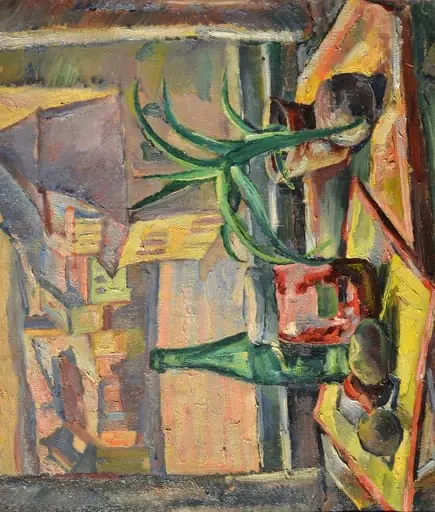
Yakulov employed angular, irregular geometric planes to fragment the space and figures, characteristic of synthetic cubism. Colors, bold yellows, blues, and reds, are applied flatly, enhancing the decorative quality of the composition. The irregularity of the shapes and the absence of chiaroscuro create a rhythmic, almost theatrical effect, emphasizing pattern over illusionistic depth and reinforcing the work’s playful, non-naturalistic tone.
History & Provenance
Created during Yakulov’s most active period in Moscow, the painting remained within the artist’s circle before entering the National Gallery of Armenia’s collection. Its survival through political upheavals reflects its significance to Armenian cultural institutions, which preserved works by diasporic artists. The plywood support and intact condition suggest careful handling and early institutional recognition.
Context
In 1912, Moscow’s artistic scene was a crossroads of European modernism and Eastern aesthetic traditions. Yakulov, of Armenian descent, drew from both, integrating motifs and spatial concepts from Armenian and Persian art into his cubist framework. This synthesis distinguished his work from Western contemporaries and aligned with broader efforts to redefine Russian art beyond imperial or academic norms.
Legacy
Though not widely exhibited outside Armenia, Cafeshantan (Cabaret) stands as a key example of Yakulov’s unique synthesis of avant-garde form and cultural memory. It illustrates how non-Western artists adapted European modernism to express local sensibilities. The work continues to inform scholarship on the pluralistic nature of early Soviet art beyond Moscow-centric narratives.
Artist & collection
Artist
Georgy Bogdanovich Yakulov (January 2 (14), 1884, December 28, 1928) was a Russian painter and art theorist of Armenian descent.