Artwork
Cadmus and the Dead Dragon
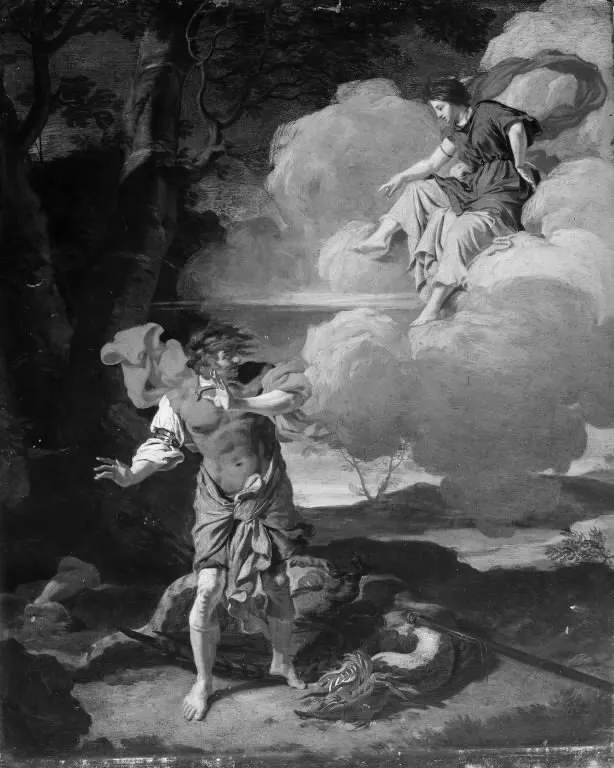
Cadmus and the Dead Dragon is an unspecified painting by the Dutch Golden Age artist Frans de Jongh. It dates from 1692 and is held in the collection of the Statens Museum for Kunst.
About this work
Subject & Meaning
Frans de Jongh's 1682 painting Cadmus and the Dead Dragon depicts the mythological hero Cadmus alongside a slain dragon, classifying the work within the genre of mythological painting. The subject draws on the Greek myth in which Cadmus, sent by his father to found the city of Thebes, slays a dragon guarding the spring of Ares and later sows the creature's teeth, from which armed warriors, the Spartoi, emerge to help him establish the city.
The pairing of the hero and the vanquished dragon functions as a symbolic motif of triumph over a monstrous or chthonic threat, a common allegorical device in late seventeenth-century mythological painting. By isolating Cadmus with the dead dragon, the composition emphasizes the moment of victory and the hero's role as civilizing founder, themes that resonated with classical humanist traditions of the period.
History & Provenance
Created by Frans de Jongh in 1682, the work is classified as a mythological painting depicting the figure of Cadmus alongside a dragon.
The painting titled Cadmus and the Dead Dragon was created by Frans de Jongh in 1682. It is classified as a mythological work depicting the figure of Cadmus alongside a dragon. The artwork is currently held in the collection of the Statens Museum for Kunst.
The painting Cadmus and the Dead Dragon is held in the collection of the Statens Museum for Kunst in Copenhagen. Created by Frans de Jongh in 1682, the work is classified as a mythological painting depicting the figure of Cadmus alongside a dragon. The provided sources confirm the artwork's location and creator but do not contain specific inventory numbers, accession codes, or a record of its exhibition history.
Context
Cadmus and the Dead Dragon is a 1682 mythological painting by Dutch artist Frans de Jongh, depicting the classical hero Cadmus standing triumphantly over a slain dragon. The work is part of the permanent collection at the Statens Museum for Kunst in Copenhagen, where it has been studied within broader scholarship on Northern European mythological painting and the artist's role in transitional Dutch Golden Age genres beyond portraiture. Its reception is noted in academic analyses of de Jongh's stylistic evolution and thematic engagement with mythological narratives in 17th-century European art.
Scholarly discourse situates the painting within de Jongh's oeuvre as an example of his mythological subjects, reflecting contemporary Dutch interest in classical antiquity and biblical-apocryphal themes rendered in Baroque-influenced compositions. The work's provenance and display at the Statens Museum for Kunst underscore its significance in institutional collections of Northern European art, though specific critical commentary on its initial reception remains sparse in digitized archives.
The painting's placement in art history highlights de Jongh's contribution to mythological painting during a period when such subjects bridged religious narrative and secular artistic expression in Northern Europe.
Overview
Frans de Jongh’s 1692 canvas, titled Cadmus and the Dead Dragon, presents a mythic tableau drawn from classical legend. The work is part of the collection of Denmark’s Statens Museum for Kunst, where it remains on display as a representative example of late‑seventeenth‑century Dutch narrative painting.
Technique & Style
De Jongh employs pronounced chiaroscuro to model the figures, creating a strong contrast between illuminated flesh and shadowed surroundings. The dynamic stance of Cadmus, left leg bent, right arm extended, contrasts with the serene, almost ethereal posture of the cloud‑borne woman, generating visual tension that guides the viewer’s eye across the landscape of trees and rocks.
Artist & collection
Artist
Dutch artists in 1682 painted big biblical and myth scenes with bright colors and dramatic poses.

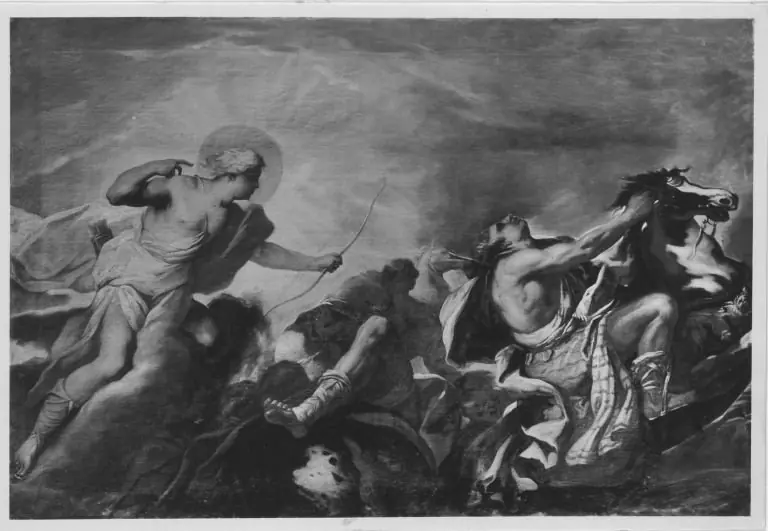 Apollo tötet die Kinder der Niobe
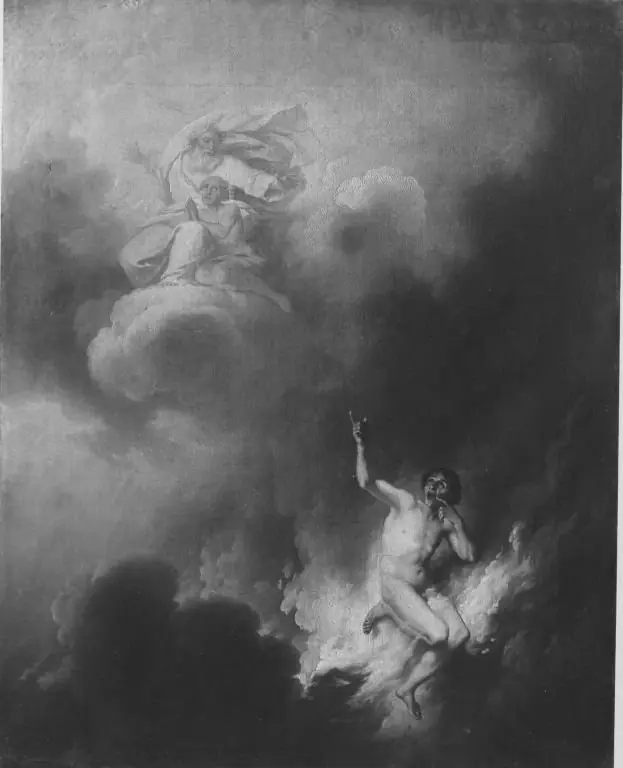 Der arme Lazarus und der reiche Prasser
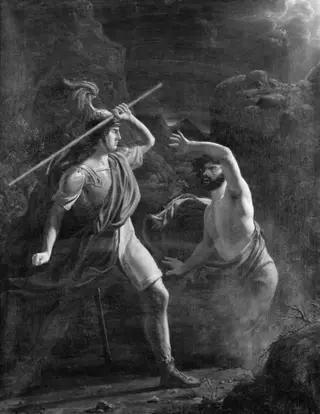 Loke styrtes i afgrunden af Hother
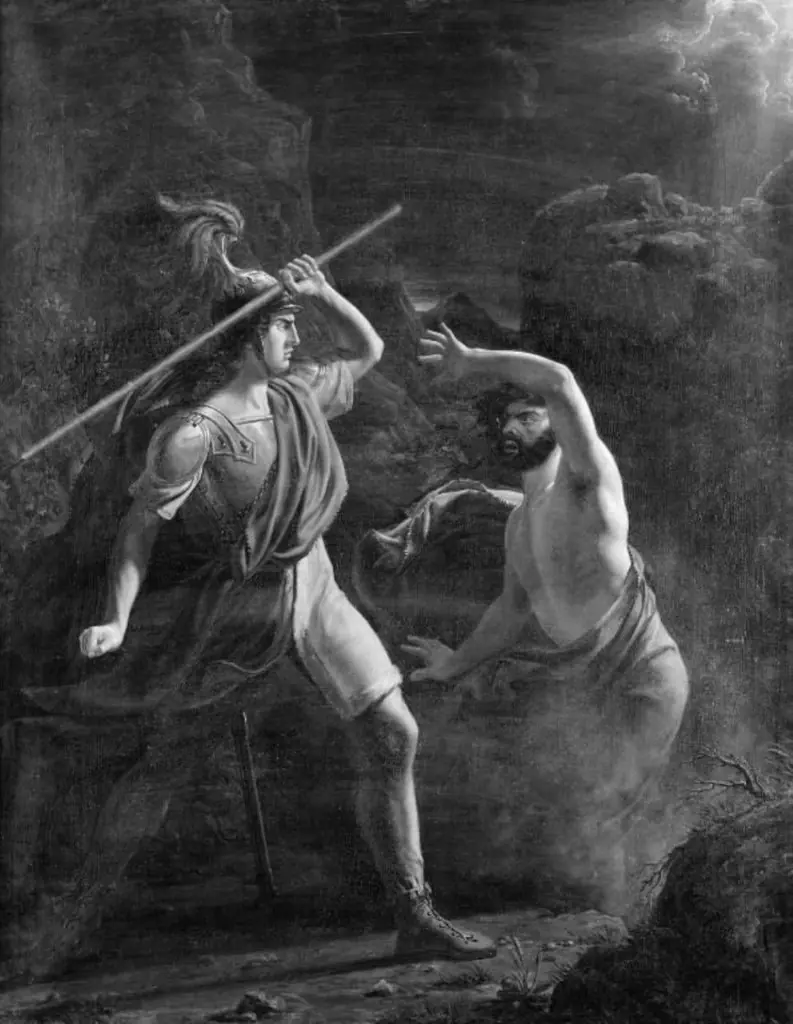 Loke styrtes i afgrunden af Hother
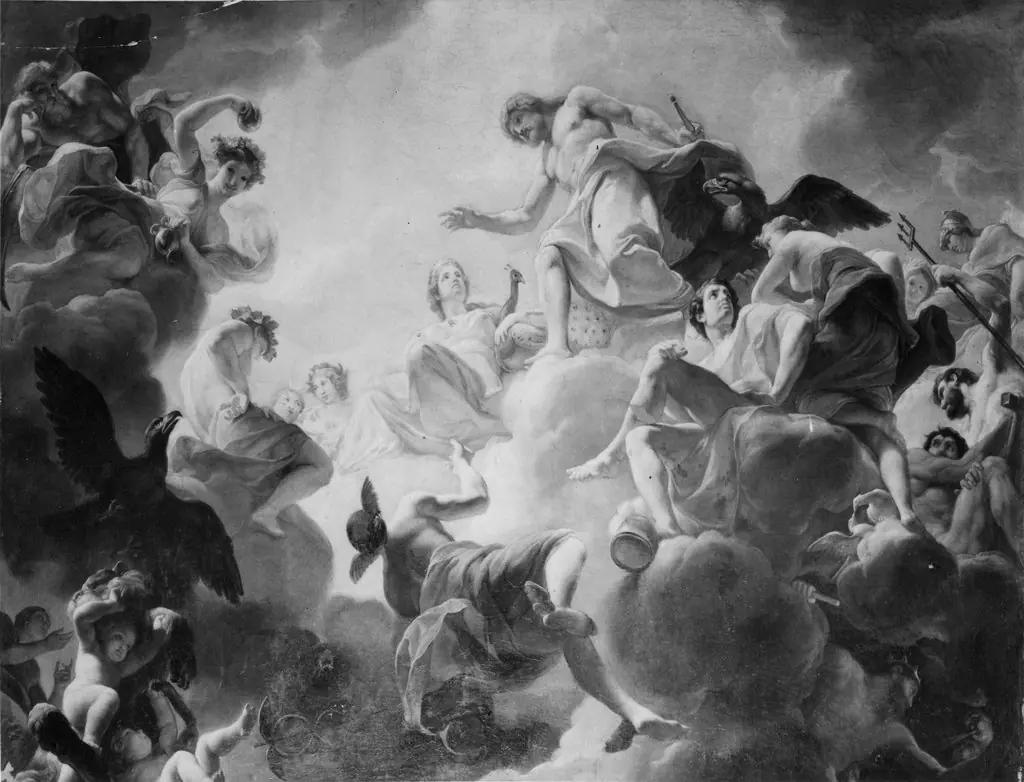 The Apotheosis of Hercules
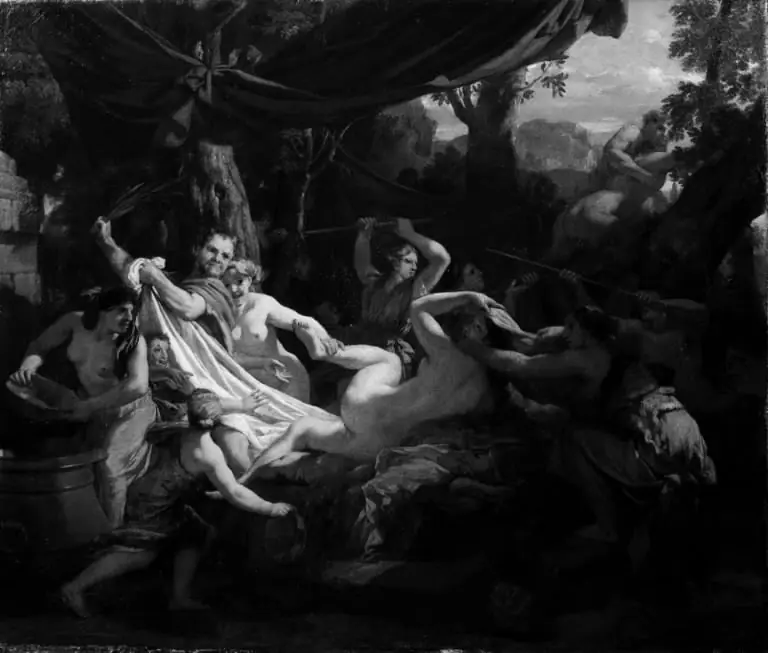 Nymphs Surprised by Satyrs
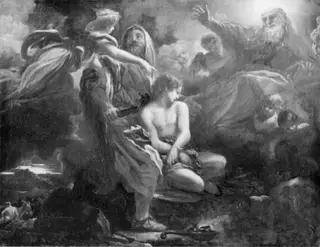 The Sacrifice of Isaac
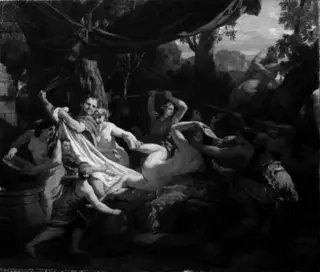 Nymphs Surprised by Satyrs
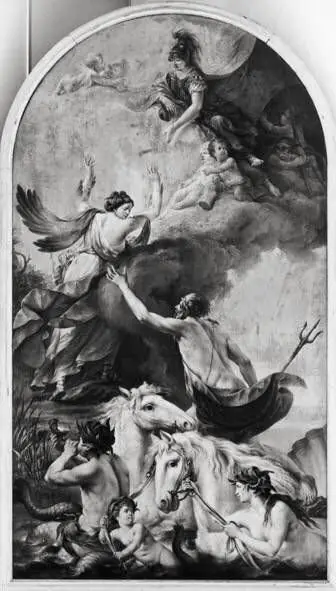 Neptun und Koronis
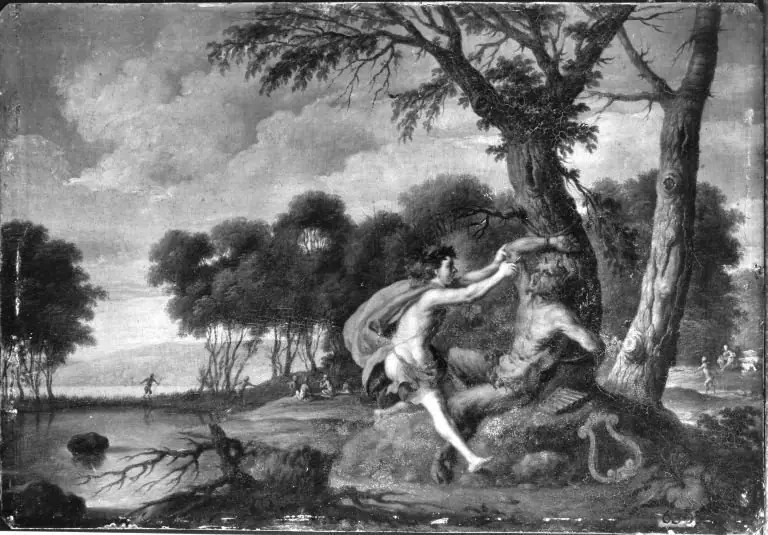 Schindung des Marsyas (?)
 Pan und Bacchantinnen
- Cadmus and the Dead Dragon