Artwork
Narcissus
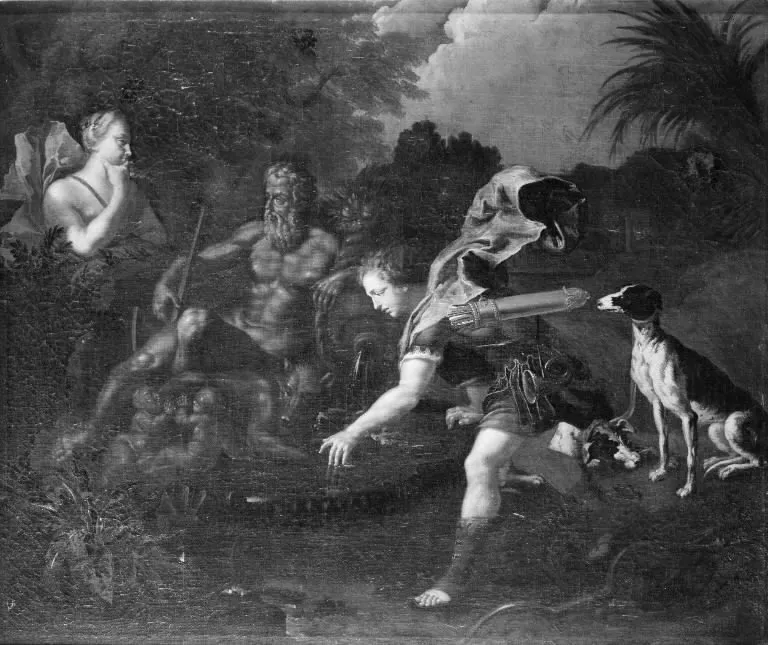
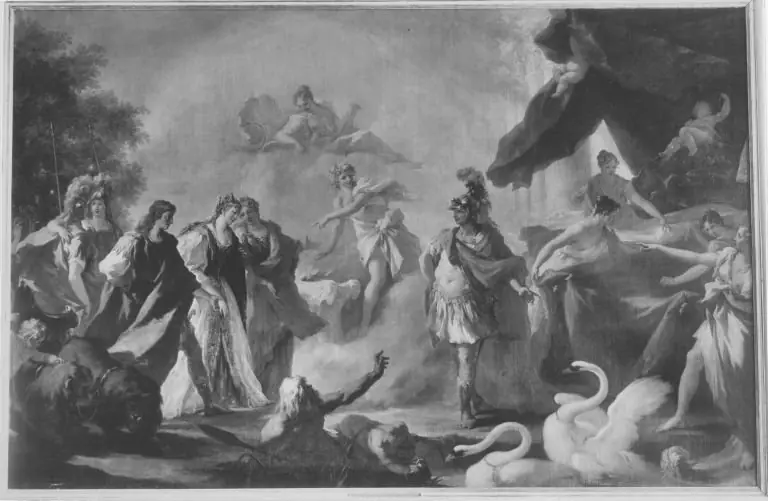
Narcissus is an oil painting by the Early Baroque Italian artist Francesco Liberti. It dates from 1629 and is held in the collection of the Statens Museum for Kunst.
About this work
Subject & Meaning
The painting depicts the mythological figure Narcissus, the youth condemned by the gods to fall in love with his own reflection.
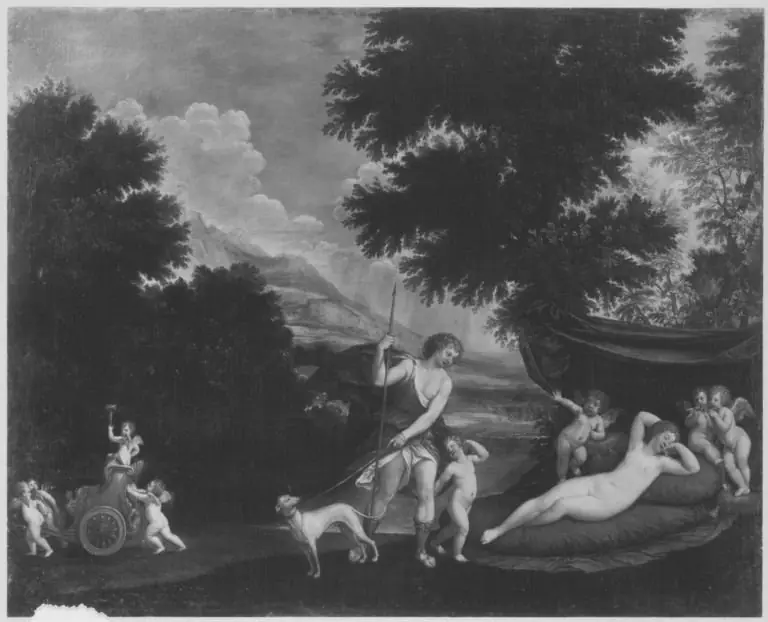
The painting depicts the mythological figure Narcissus, the youth condemned by the gods to fall in love with his own reflection. Liberti's composition treats the subject as a mythological narrative, with the central figure of Narcissus joined by a dog as a secondary element within the scene. As a mythological painting, the work draws on the Ovidian tale in which Narcissus, transfixed by his image in a pool, is unable to turn away, a story long used as an allegory of vanity, self-absorption, and unrequitable desire.
The inclusion of the dog is consistent with traditional iconography of the subject, where the animal often accompanies the youth at the water's edge and serves as a witness to his fate. The painting's meaning thus rests on the moralizing reading of the Narcissus myth, presenting the doomed youth and his loyal companion as an emblem of self-inflicted loss.
Technique & Style
Executed in oil on canvas in 1629, the painting renders the mythological subject with a restrained palette and smooth handling.
The composition centers on the kneeling figure of Narcissus beside a still pool, where his reflection is depicted with delicate gradations of light and shadow. Subtle glazing articulates the flesh and drapery, while the background remains softly atmospheric, directing attention to the central motif. The dog at lower left is rendered with more direct brushwork, providing a counterpoint to the refined modeling of the protagonist.
No signs of significant damage or restoration are recorded for the work, indicating its preserved condition.
History & Provenance
The work titled Narcissus was created in 1629 by Francesco Liberti as an oil paint painting on canvas, classified within mythological genre. It entered the collection of the Statens Museum for Kunst at some point following its creation, where it remains part of the museum's holdings. The painting was executed as a mythological scene depicting Narcissus alongside a dog, reflecting the thematic interests of the period.
Contemporary documentation aligns its inception with the year 1629, establishing its creation history within the Baroque tradition of mythological subjects.
Overview
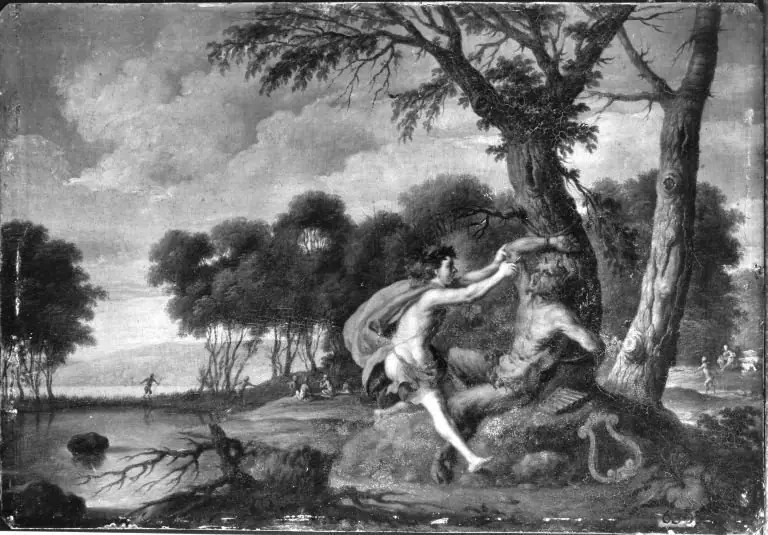
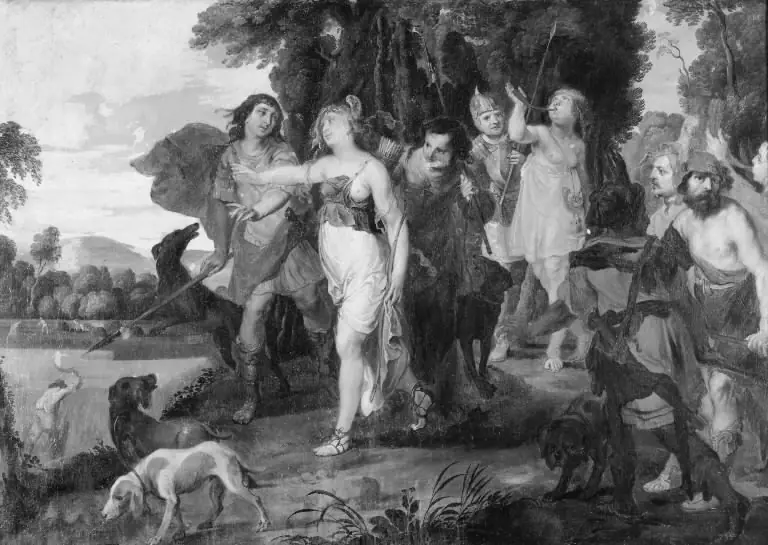
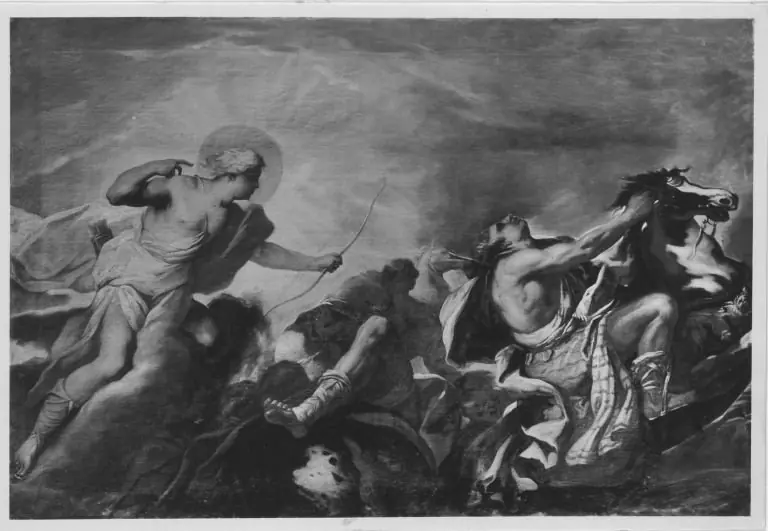
Francesco Liberti’s 1629 oil on canvas, titled Narcissus, presents a dramatic forest tableau that juxtaposes mythic narrative with a tense, natural setting. The composition is anchored by a kneeling youth at a stream, accompanied by a dog, while a bearded figure with a spear watches from above. A robed woman stands to the left, her gaze turned away, all set against a dark, storm‑filled backdrop.
Artist & collection
Artist
Francesco Liberti painted dramatic scenes from ancient myths. In 1629 he showed Pyramus and Thisbe, a tragic love story split by a bloody misunderstanding, and Narcissus, the proud youth who falls for his own…