Artwork
The Curious
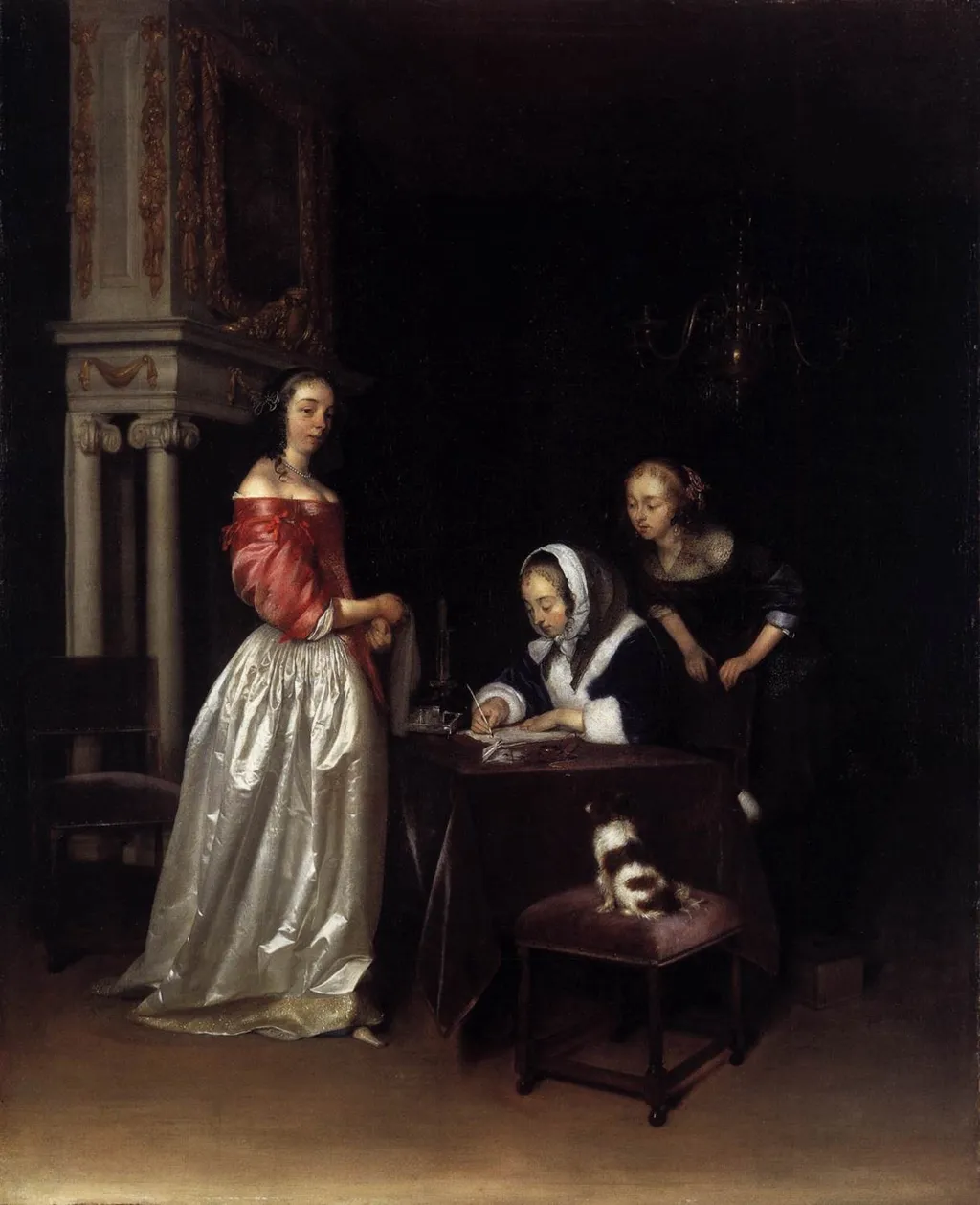
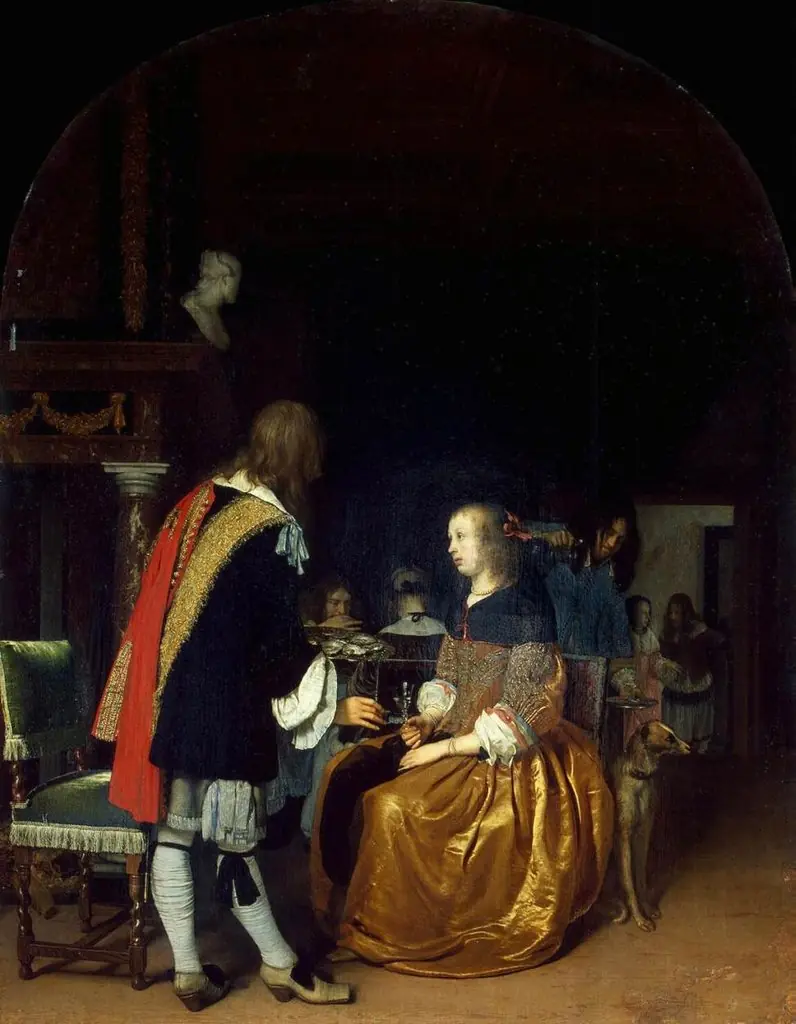
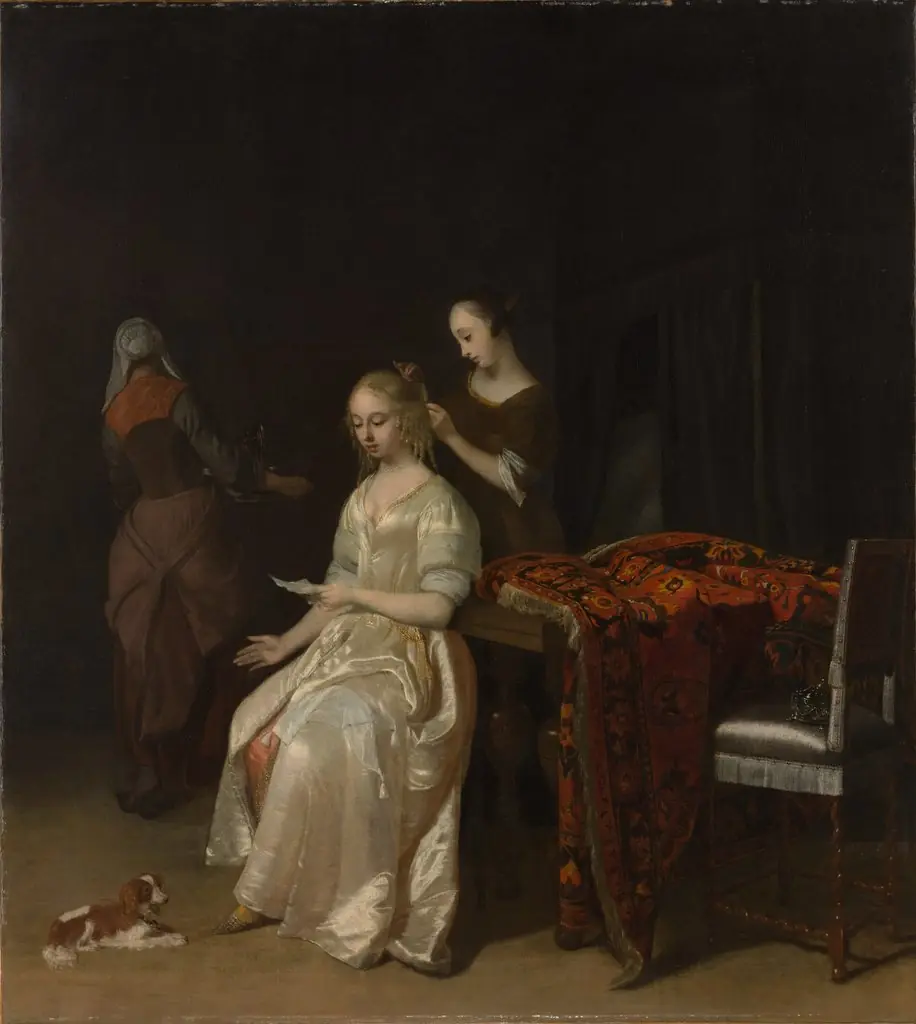
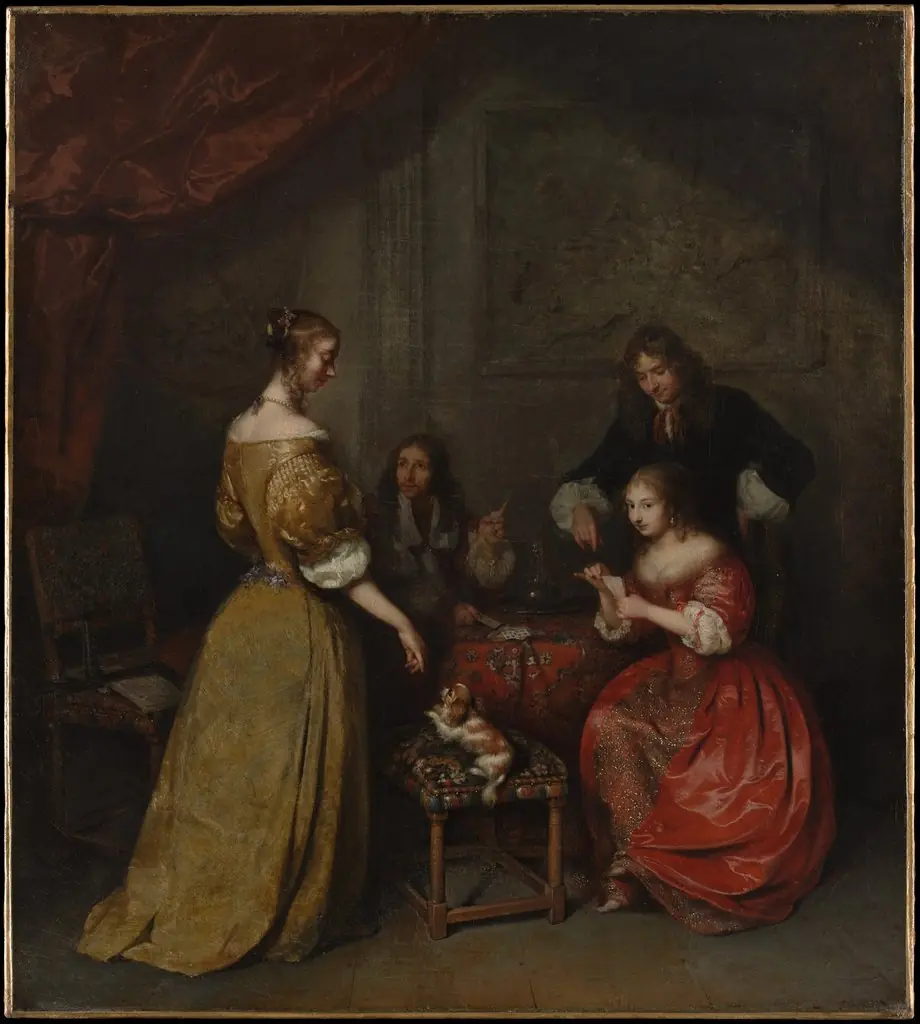
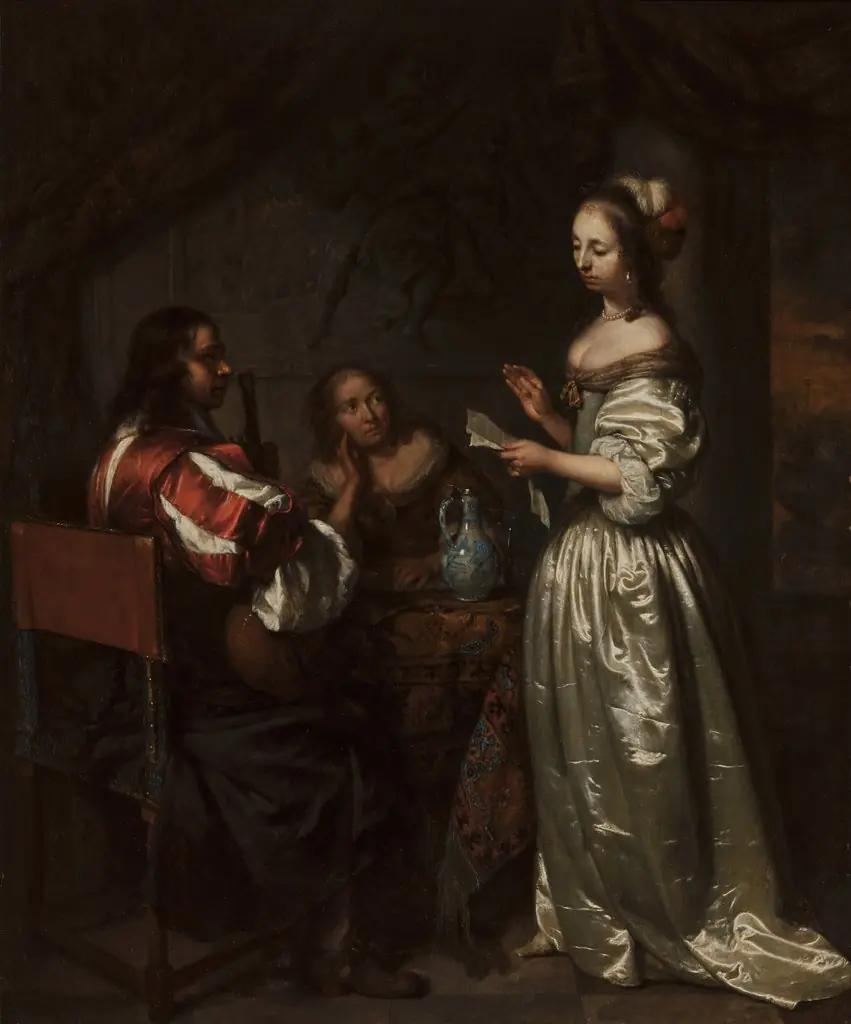
The Curious is an oil painting by the Dutch Golden Age artist Gerard ter Borch. It dates from 1660 and is held in the collection of the Metropolitan Museum of Art.
About this work
Subject & Meaning
Gerard ter Borch's 1660 oil painting, The Curious, depicts a domestic interior scene centered on a woman engaged in the act of writing.
Gerard ter Borch's 1660 oil painting, The Curious, depicts a domestic interior scene centered on a woman engaged in the act of writing. The figure is portrayed wearing fur clothing while seated before a table equipped with a quill, an inkstand, and a letter, suggesting a moment of correspondence or composition. A dog is also present within the room, accompanying the solitary figure.
As a work of genre art, the painting focuses on the quiet observation of everyday life, specifically highlighting the private activity of a woman managing written communication. The inclusion of specific objects like the writing implements and the letter serves to define the narrative action, while the fur garment adds textural detail to the depiction of the subject.
Technique & Style
The Curious is an oil painting on canvas, executed in 1660 by Gerard ter Borch. The work belongs to the genre_scene category, presenting a carefully observed domestic interior. A richly dressed woman sits at a table, her fur-trimmed garment rendered with delicate brushwork, while a small dog rests nearby.
On the table lie an open letter, a quill, and an inkstand, each depicted with precise detail that captures the textures of fabric, paper, and metal. The composition exemplifies ter Borch’s refined technique and his interest in quiet, narrative moments.
History & Provenance
Gerard ter Borch created The Curious in 1660 using oil paint on canvas. The painting's early ownership traces back to the collection of Anatoly Nikolaievich Demidov, 1st Prince of San Donato, at the Villa San Donato. It subsequently passed through the hands of François-Antoine Robit.
The artwork was featured in the 1883 exhibition 'Hundred Masterpieces in Parisian Collections.' Later, the painting was owned by the art dealer Joseph Duveen, 1st Baron Duveen, followed by Jules Bache. Ultimately, the work entered the collection of the Metropolitan Museum of Art, where it is currently held.
The painting The Curious (1660) by Gerard ter Borch II is part of the Metropolitan Museum of Art’s Demidov collection and is displayed in the museum’s Villa San Donato venue. Its provenance traces through several owners, including Jules Bache, Joseph Duveen, 1st Baron Duveen, Anatoly Nikolaievich Demidov, 1st Prince of San Donato, and François-Antoine Robit. The work was featured in the 1883 exhibition Hundred Masterpieces in Parisian Collections and subsequently toured several European venues.
Context
The Curious (1660) exemplifies Gerard ter Borch’s mastery of genre painting, combining meticulous oil technique with a domestic interior that captures a woman engaged in letter‑writing amid fur garments, a dog, and scholarly accessories. Art historical studies note its significance as a window into 17th‑century Dutch domestic life and the artist’s exploration of quiet narrative moments. The work’s provenance through the Demidov collection and prior ownership by figures such as Jules Bache and Barons Duveen underscores its circulation among elite collectors, while its inclusion in the 1883 Paris exhibition highlighted contemporary appreciation.
Scholarship emphasizes its role in contextualizing ter Borch’s contribution to genre scenes within the broader Dutch Golden Age.
Overview
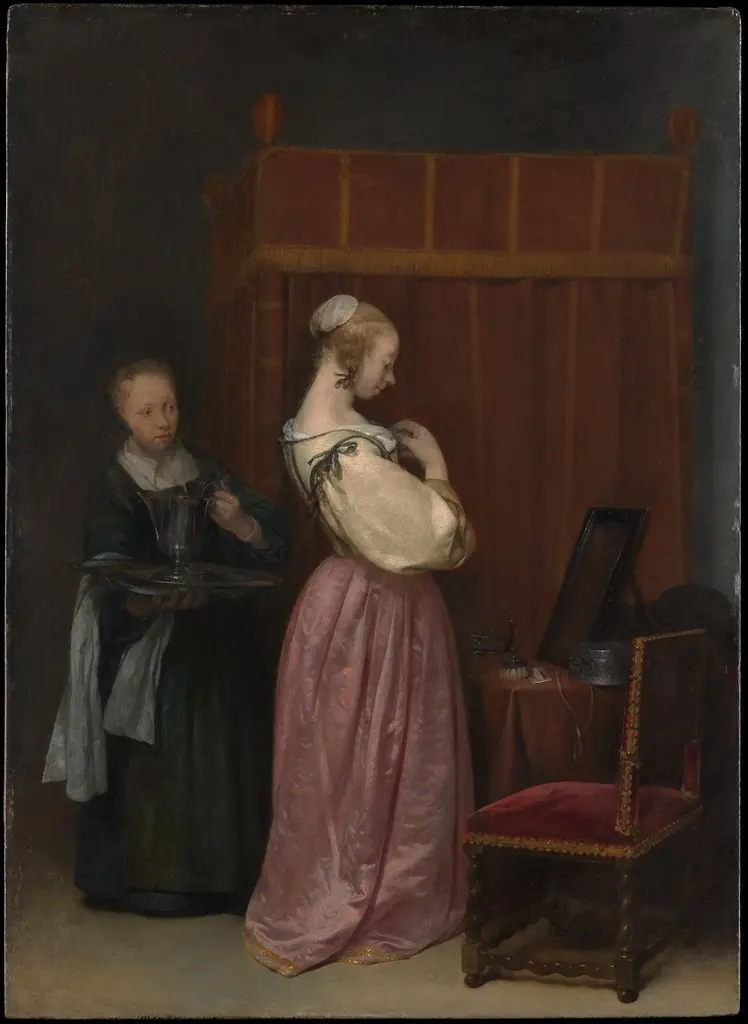
Titled "The Curious," this oil painting depicts an intimate domestic scene featuring three women and a small dog. The composition centers on one woman engaged in writing a letter, while another stands nearby, seemingly observing the activity. The artist utilizes oil paint to render the figures and their surroundings, capturing a specific narrative moment within a private interior setting.
Own this work as a print
Artist & collection
Artist
Gerard ter Borch (Dutch:; December 1617 – 8 December 1681), also known as Gerard Terburg (Dutch: ), was a Dutch Golden Age painter mainly of genre subjects.