Artwork
A Woman Playing the Theorbo-Lute and a Cavalier
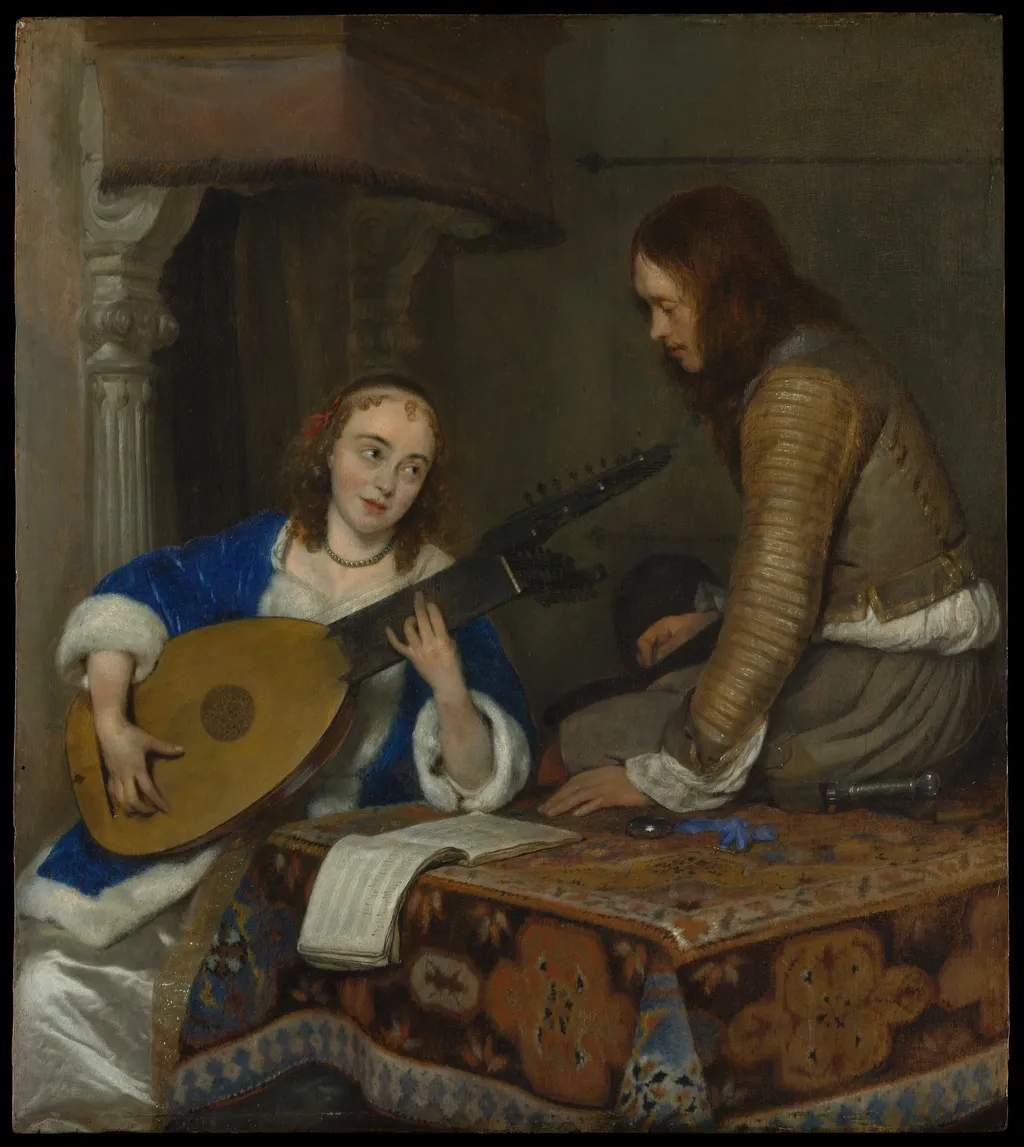
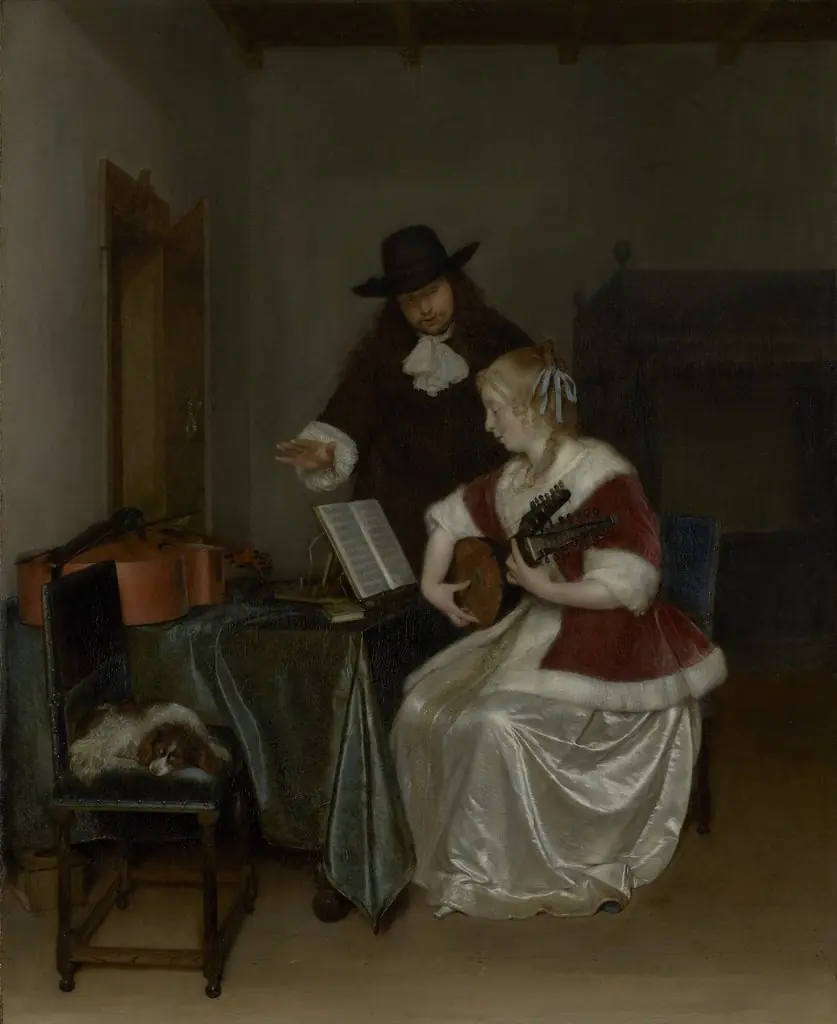
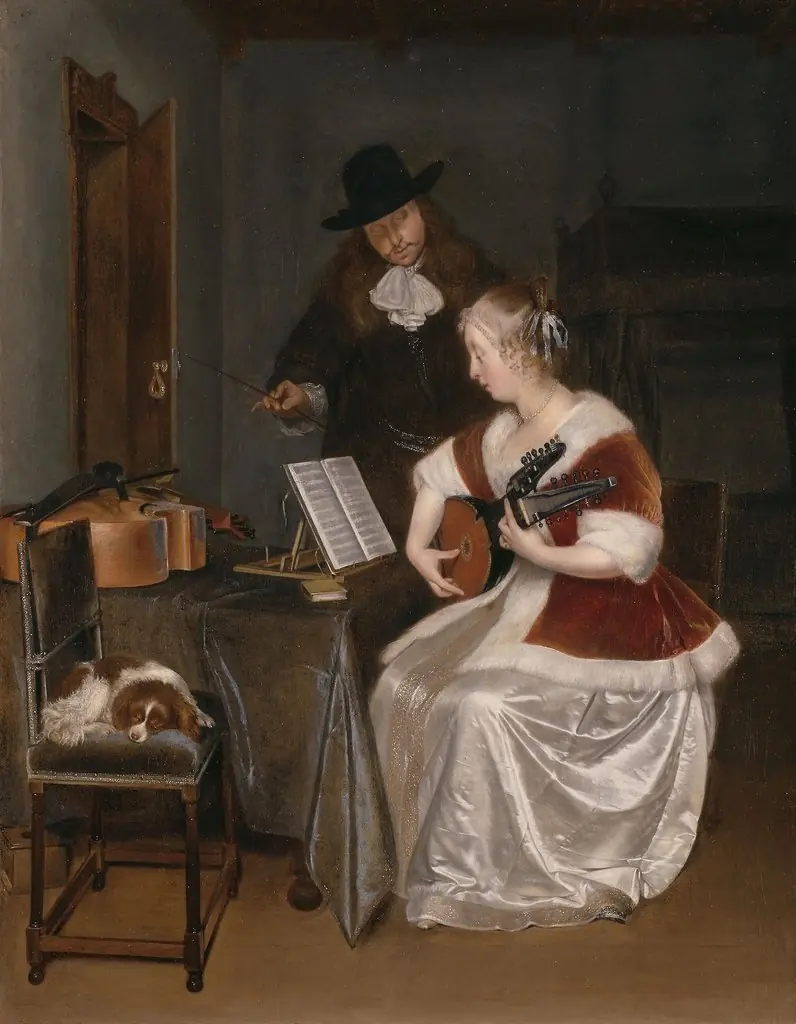
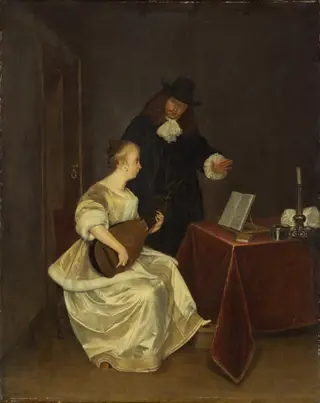
A Woman Playing the Theorbo-Lute and a Cavalier is an oil painting by the Dutch Golden Age artist Gerard ter Borch. It dates from 1658 and is held in the collection of the Metropolitan Museum of Art.
About this work
Subject & Meaning
The presence of a pocket watch beside these objects has been interpreted as a symbol of temperance or the transitory nature of the liaison.
The painting shows a young woman seated at a table, plucking a theorbo while a cavalier stands nearby, his sword resting on the cloth-covered surface and a bound music book placed within reach. The presence of a pocket watch beside these objects has been interpreted as a symbol of temperance or the transitory nature of the liaison. Ter Borch's ambiguous composition allows the viewer to read the scene either as a virtuous maiden engaged in a courtship gift of music or as a courtesan whose fleeting affection is underscored by the watch. The work thus encapsulates 17th-century Dutch concerns with virtue, desire, and the passage of time.
Technique & Style
A Woman Playing the Theorbo-Lute and a Cavalier is executed in oil paint on a wooden panel, a support typical of Dutch cabinet pictures of the period. The painted surface measures approximately 36.8 cm in height by 32.4 cm in width, a modest scale suited to intimate viewing. Ter Borch's technique reflects the refined handling associated with his genre scenes, in which carefully delineated textures distinguish the rich cloth draped over the table, the polished steel of the cavalier's sword laid flat, the sheet music resting nearby, and the small pocket watch placed among the objects.
Subtle tonal gradations model the figures and the strings of the theorbo-lute, while the overall palette and finish underscore the ambiguous, quietly charged character of the encounter.
History & Provenance
The oil-on-panel work A Woman Playing the Theorbo-Lute and a Cavalier was executed by Gerard ter Borch the Younger around 1658. According to early provenance records, the painting belonged to Benjamin Altman, then Willem Lormier, followed by Abel-François Poisson, Jean-Baptiste-Pierre Le Brun, Charles Alexandre de Calonne, and finally William Wells before entering the museum.
The painting is held in the collection of the Metropolitan Museum of Art, New York, as part of the Benjamin Altman Bequest, accession number 14.40.609. It entered the museum in 1914 following the bequest of Benjamin Altman (d. 1913).
Legacy
The 1658 genre scene by Gerard ter Borch the Younger has remained a reference point for studies of Dutch Golden Age gender and music. Its inclusion in the Metropolitan Museum of Art collection and systematic attention in scholarly literature demonstrate sustained interest. The painting's detailed depiction of a theorbo-playing woman and her cavalier, together with its provenance through notable collectors, has contributed to its reputation as an emblematic example of courtly intimacy and musical symbolism in art history.
Overview
Gerard ter Borch the Younger, a Dutch artist, created A Woman Playing the Theorbo-Lute and a Cavalier around 1658. This oil painting, executed on a wood panel, captures an intimate domestic scene. It portrays a woman engaged with a musical instrument while a man observes her. The work is currently housed in the collection of the Metropolitan Museum of Art in New York.
Own this work as a print
Artist & collection
Artist
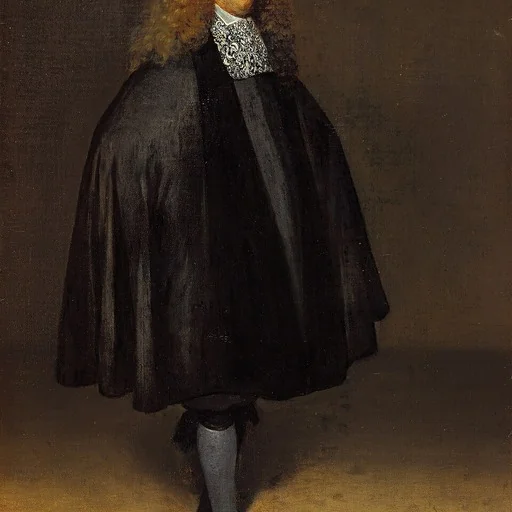
Gerard ter Borch (Dutch:; December 1617 – 8 December 1681), also known as Gerard Terburg (Dutch: ), was a Dutch Golden Age painter mainly of genre subjects.