Artwork
The Gallant Conversation, known as Paternal Admonition
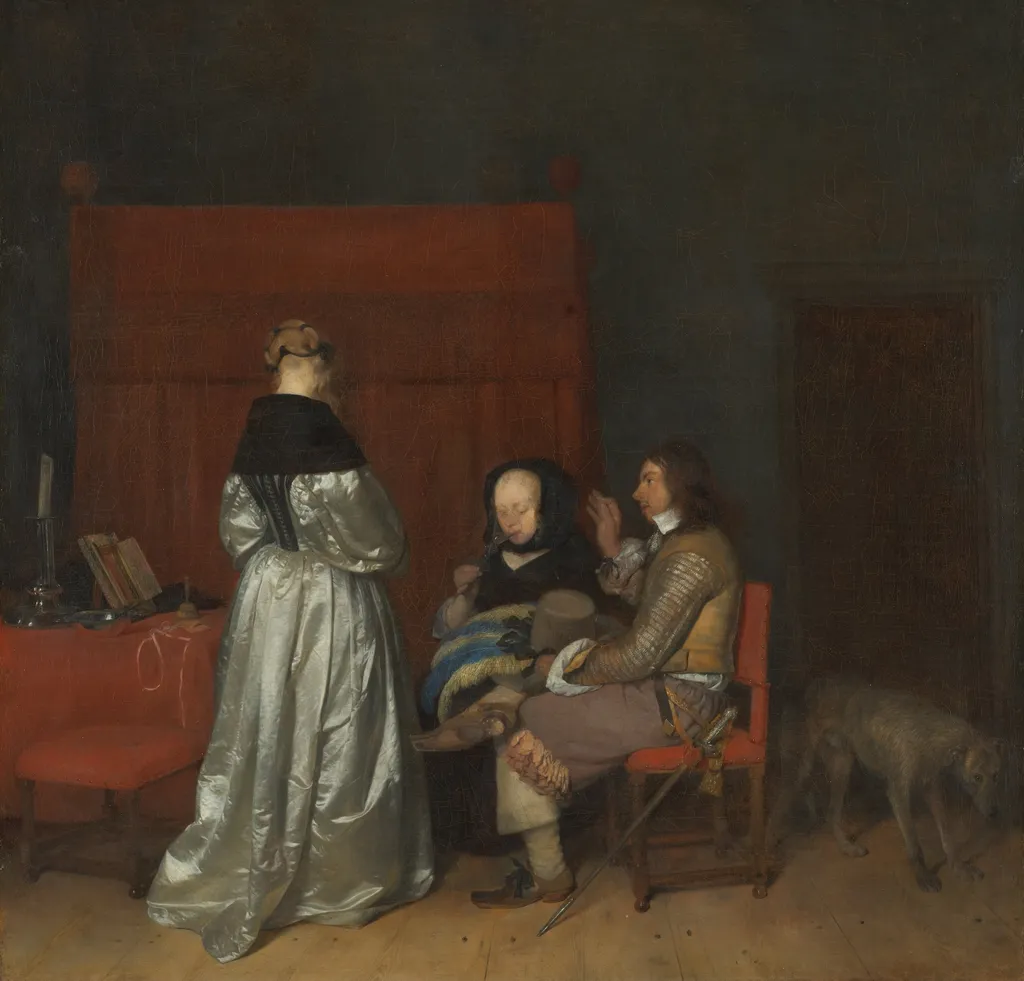
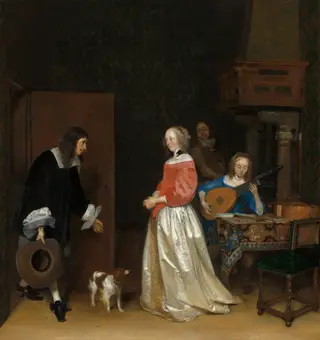
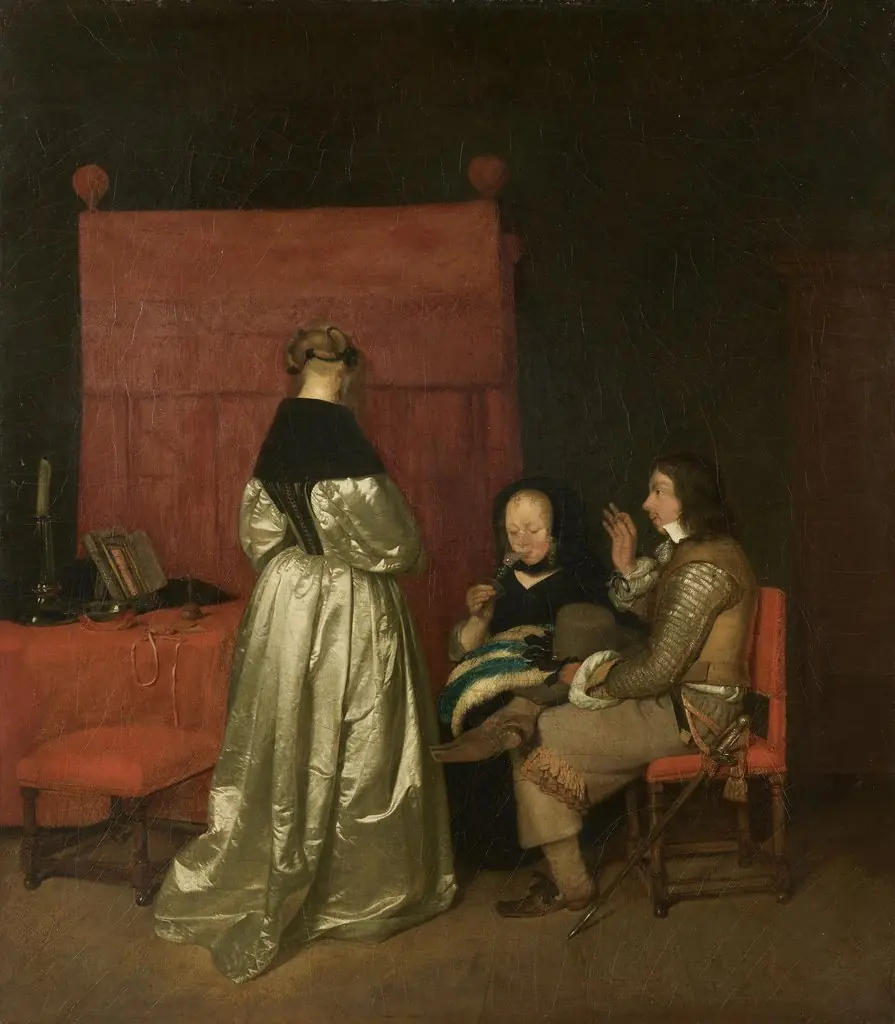
The Gallant Conversation, known as Paternal Admonition is an oil painting by the Dutch Golden Age artist Gerard ter Borch. It dates from 1654 and is held in the collection of the Rijksmuseum.
About this work
Long ago, a French print called it “The Paternal Admonition,” but today experts think it’s about a possible romance or a business deal.
This painting shows two people talking in a quiet room. One person stands, the other sits. Oil paint was used to make it around 1654.
Long ago, a French print called it “The Paternal Admonition,” but today experts think it’s about a possible romance or a business deal. Two versions exist, one here and one in Berlin. The Amsterdam version adds a dog and a door on the right side.
Look up the artist next.
Subject & Meaning
Created circa 1654, this work was historically titled 'Paternal Admonition' based on an 18th-century print interpreting the scene as a father reprimanding his daughter while her mother drinks wine. Modern scholarship rejects this moralizing view, noting the male figure is a young soldier rather than a father, and proposes the interaction depicts either a formal betrothal negotiation or a transaction in a brothel. The ambiguity is intentional; the standing woman's exquisite silver satin gown and the nearby dressing table with combs and a mirror suggest preparation for either a husband or a client.
While a large bed and a scruffy dog hint at underlying sensuality or untamed instincts, the woman's stiff, upright posture maintains a sense of formal reserve. Technical analysis of a smaller version in Berlin once suggested the man held a coin, supporting the brothel theory, though later examinations found no evidence of a coin, leaving the specific narrative open to viewer interpretation.
Technique & Style
The Gallant Conversation is an oil-on-canvas painting executed by Gerard ter Borch around 1654. The Amsterdam version held at the Rijksmuseum measures 71 by 73 cm, with the additional centimeters on the right taken up by a dog and a door, while the Berlin autograph copy is smaller at 70 by 60 cm.
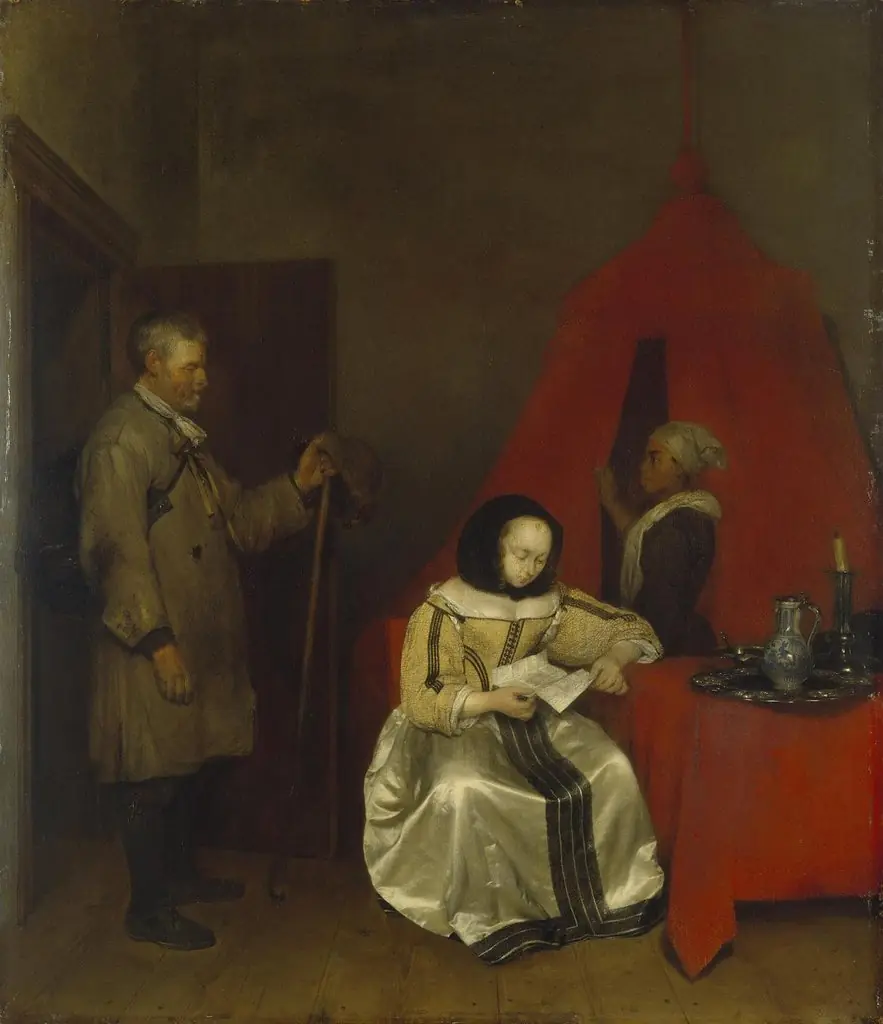
Ter Borch's handling centers on the shimmering silver satin gown of the standing woman, rendered with deceptive realism through artfully folded, lustrous fabric that forms a strong highlight against the dark earth tones dominating the rest of the composition. The setting is simply designed yet conveys feminine elegance through a sparsely furnished interior containing a large bed, chairs, and a dressing table bearing a burning candle, mirror, powder puff, combs, and a trailing ribbon. The man's military attire and finely decorated plumed hat, the seated woman's wine glass, and a scruffy dog lurking behind the soldier's chair complete the carefully balanced tableau, in which Ter Borch deliberately left visual cues ambiguous enough to support either a formal betrothal or a brothel transaction.
History & Provenance
The Amsterdam version of the painting is held by the Rijksmuseum, where it is part of the Kabinet van Heteren Gevers collection. Its documented provenance traces through Willem Lormier, Adriaan Leonard van Heteren Gevers, and Henrica Cunera Lormier-van Olden. A second autograph version, measuring 70 by 60 cm, is preserved at the Gemäldegalerie in Berlin.
The work's recorded exhibition history includes its inclusion in the show "Vermeer and the Masters of Genre Painting. Inspiration and Rivalry."
Context
Originally titled The Paternal Admonition following an 18th-century French print, this work was long interpreted through a moralizing lens, notably by Goethe in Elective Affinities, as a father reprimanding his daughter. Modern scholarship, however, rejects this view due to the soldier's youth, favoring readings of the scene as either a betrothal negotiation or a brothel transaction. This ambiguity is central to Ter Borch's genre painting; while a coin visible in the Berlin version's underlayers suggests payment, technical analysis has disputed its existence, leaving the narrative intentionally open.
The painting's immediate popularity is evidenced by at least 24 known copies by other artists and its inclusion in Samuel van Hoogstraten's The Slippers. Art historians cite the work as a prime example of Ter Borch's ability to render shimmering satin and construct nuanced social interactions that resist definitive moral categorization, reflecting the complex interplay between domestic virtue and underlying sensuality in Dutch Golden Age art.
Overview
Gerard ter Borch's oil painting, "The Gallant Conversation," created around 1654, depicts an intimate interior scene featuring two figures engaged in discussion. While historically known by the title "The Paternal Admonition," suggesting a family dynamic, contemporary art scholarship offers alternative interpretations. The artist produced two distinct versions of this work, one housed in Amsterdam and another in Berlin, each presenting subtle variations in composition.
Own this work as a print
Artist & collection
Artist
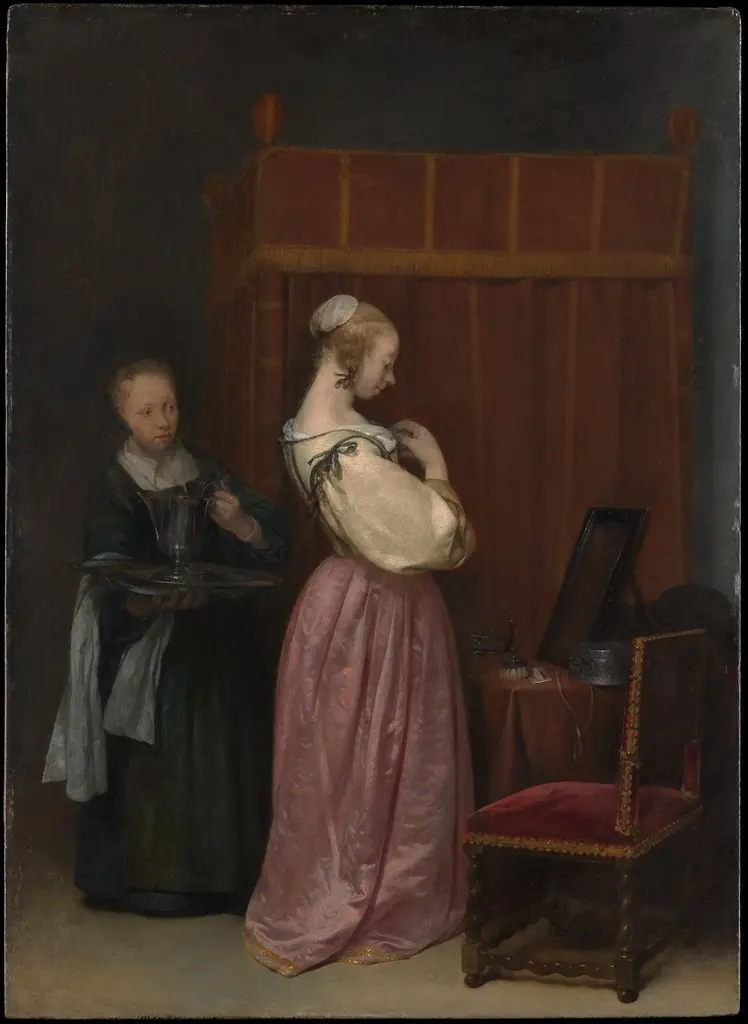
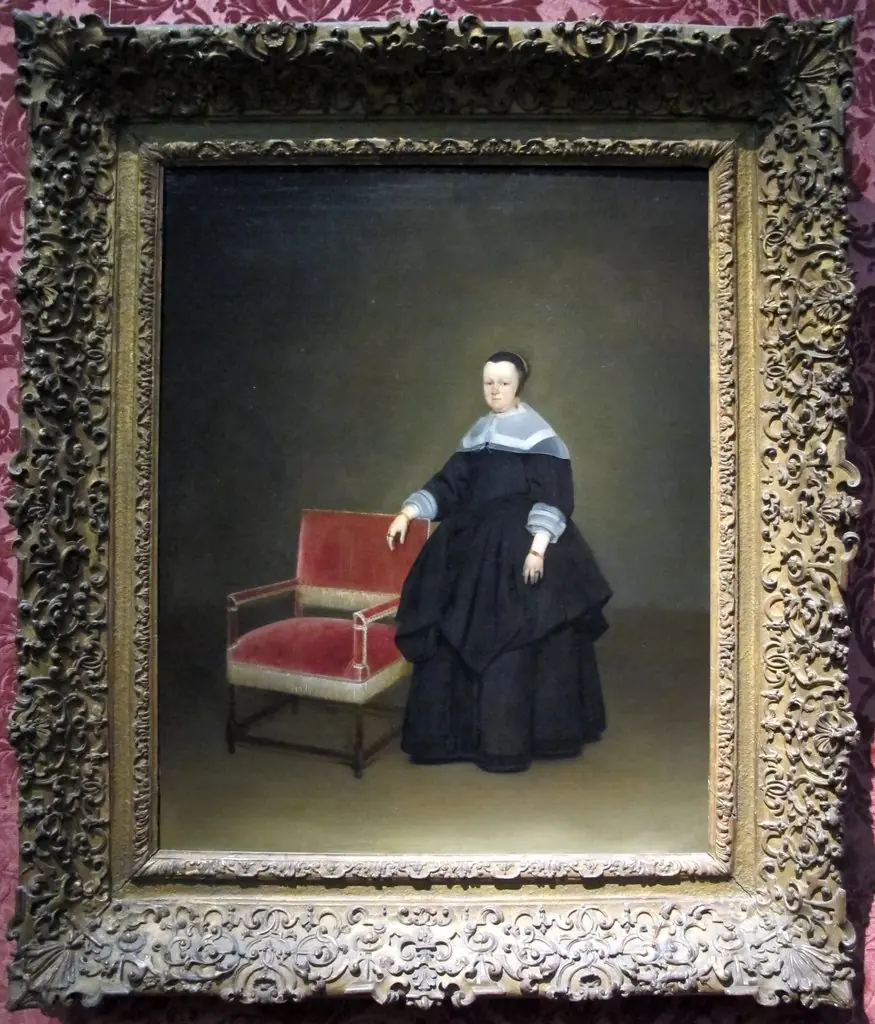
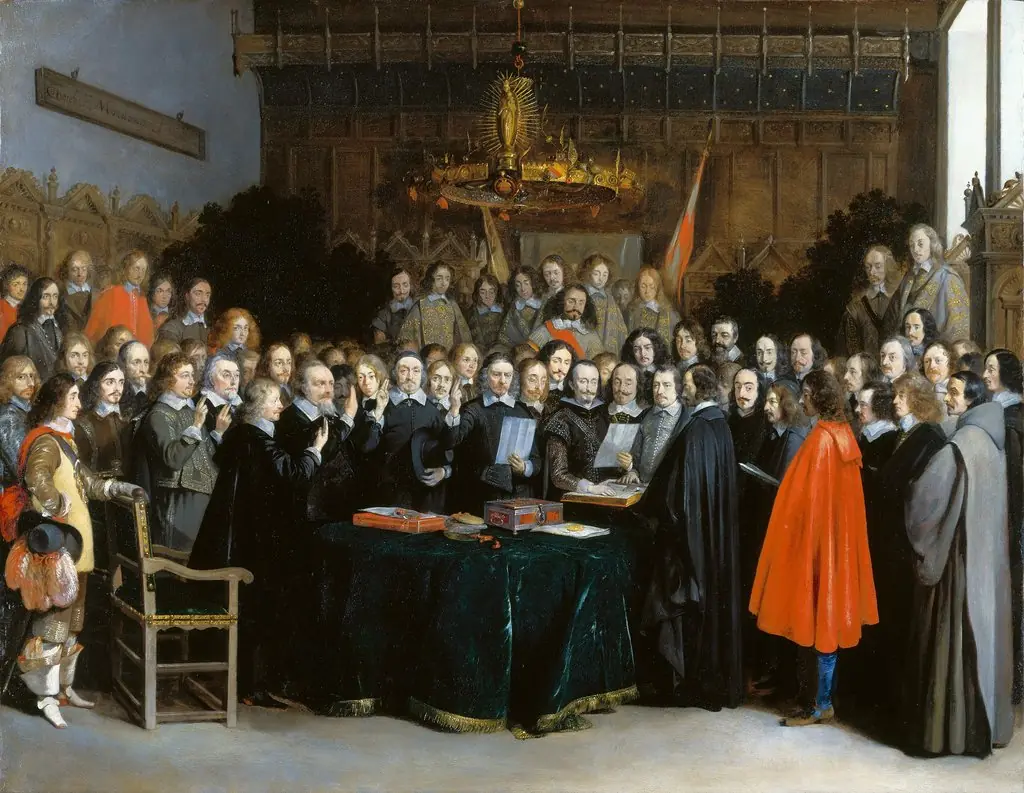
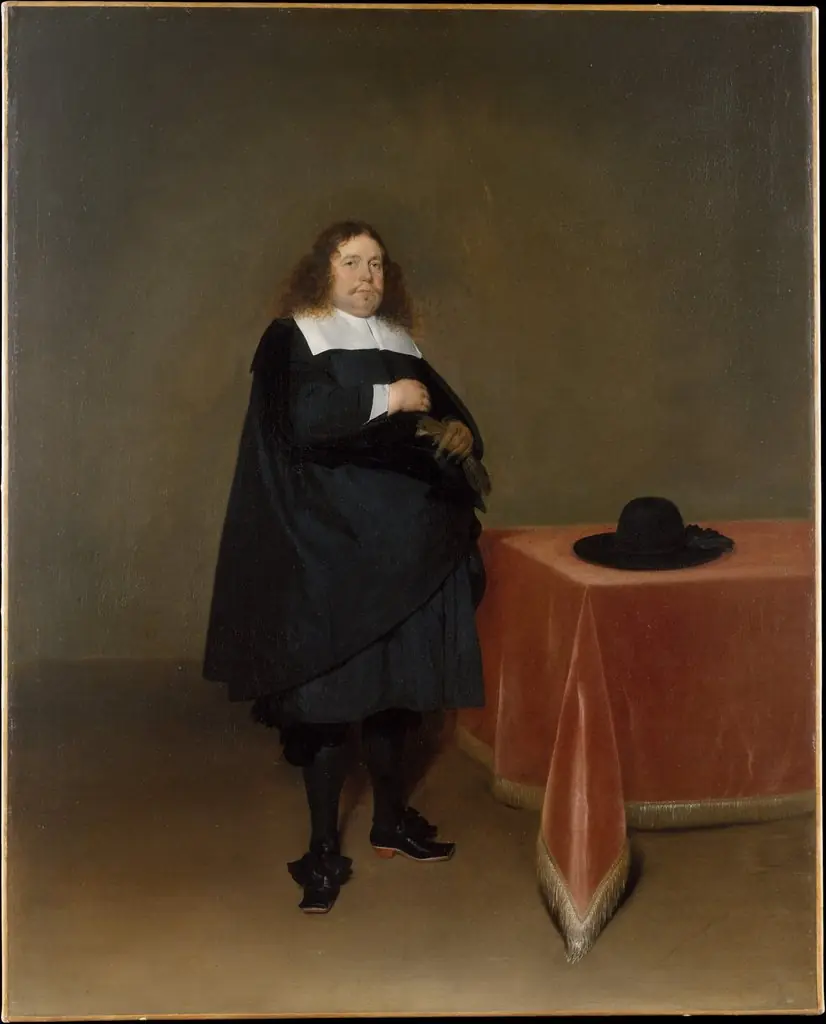
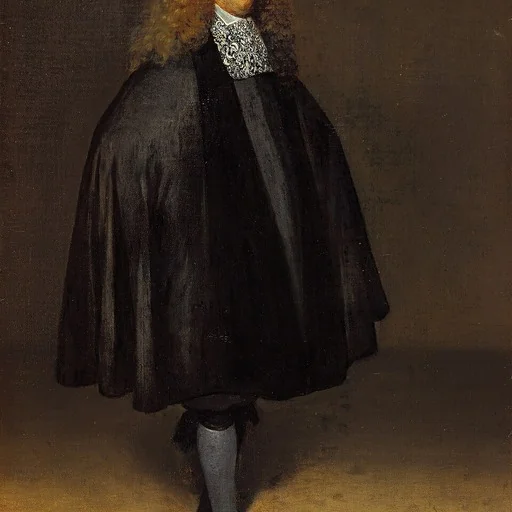
Gerard ter Borch (Dutch:; December 1617 – 8 December 1681), also known as Gerard Terburg (Dutch: ), was a Dutch Golden Age painter mainly of genre subjects.