Artwork
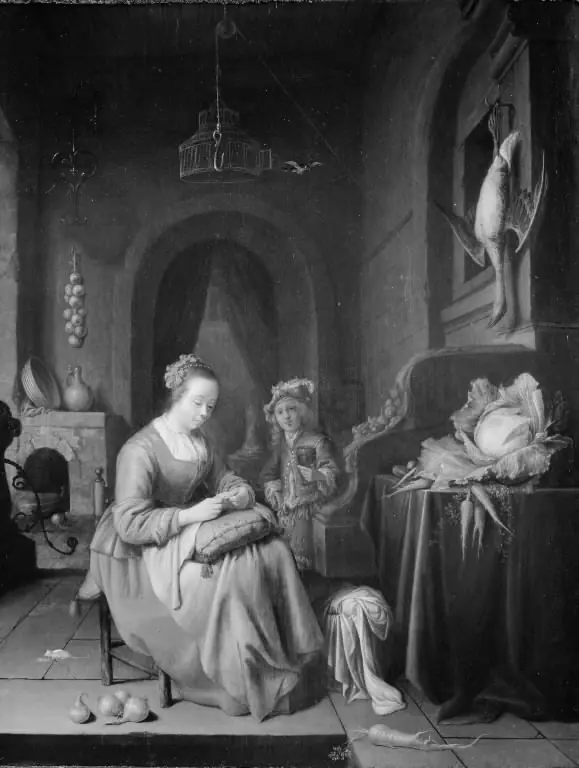
Woman sewing with Maid
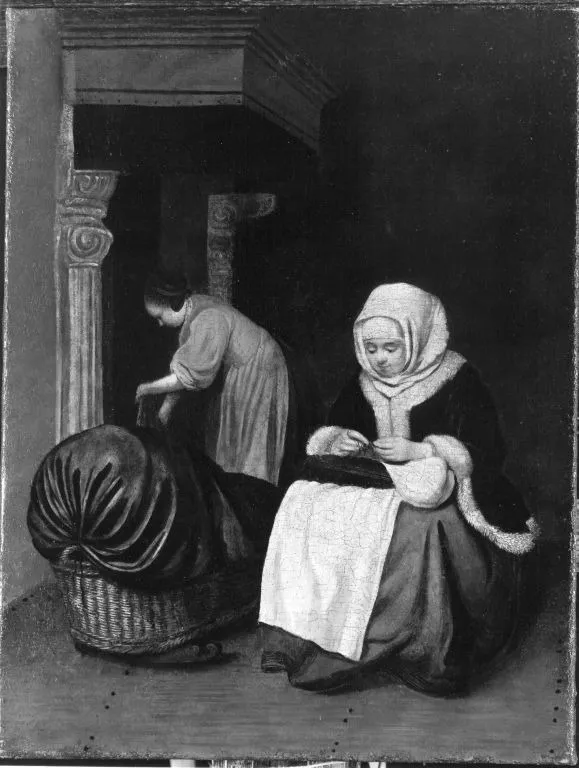
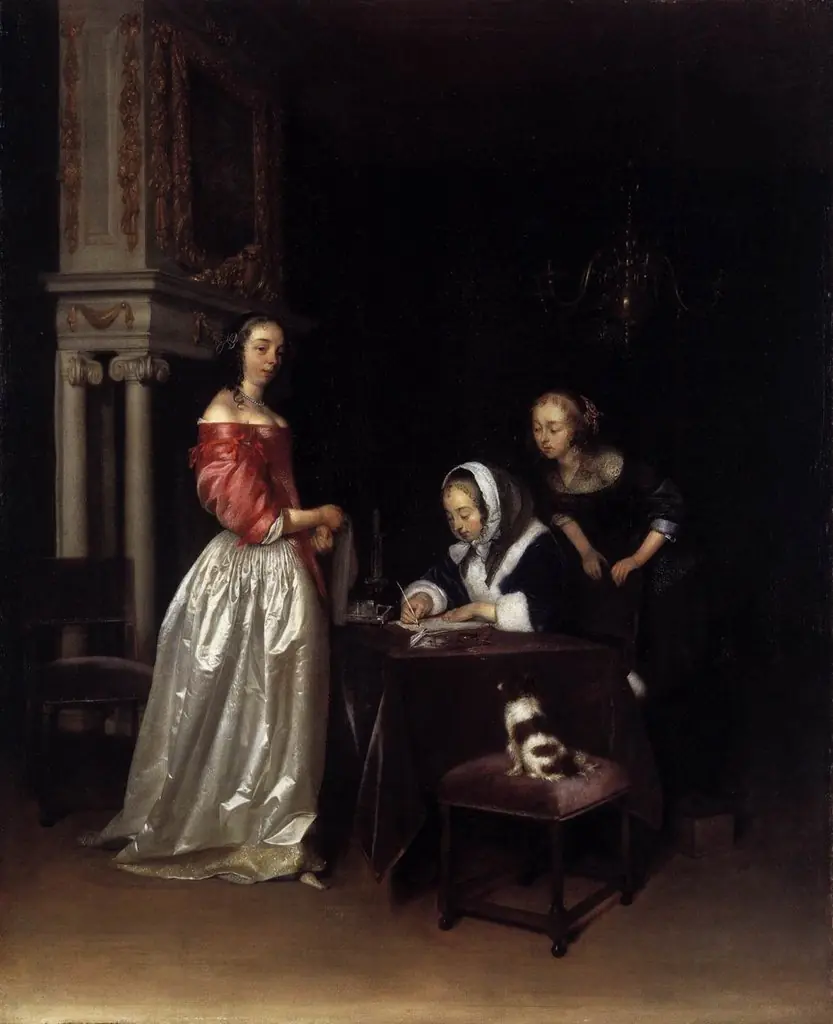
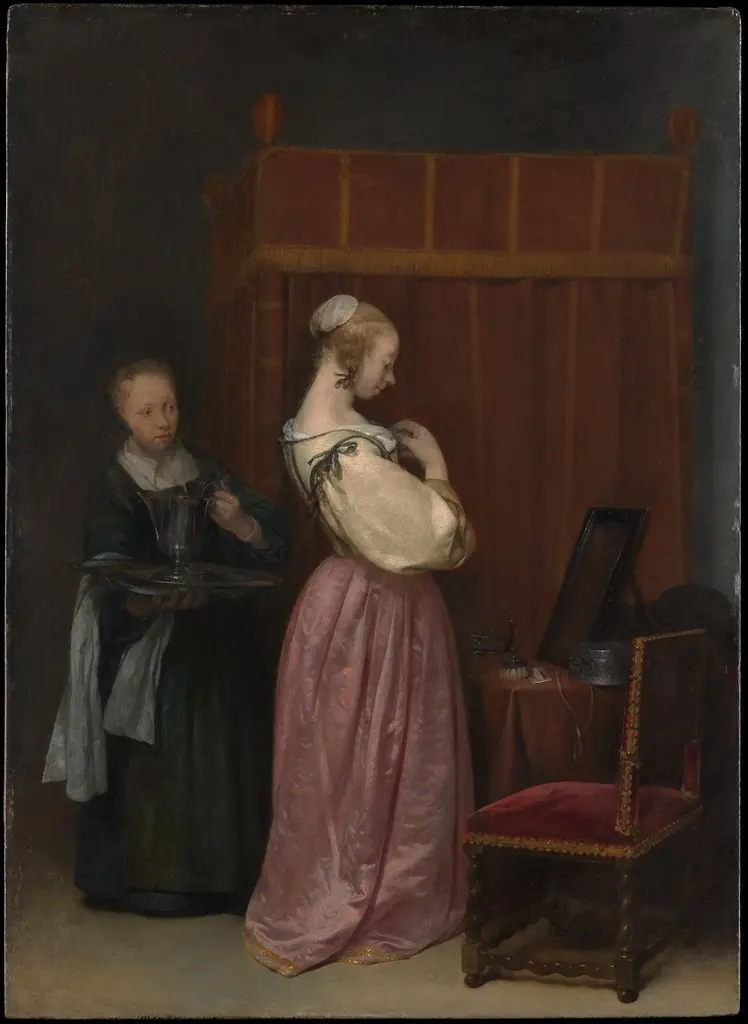
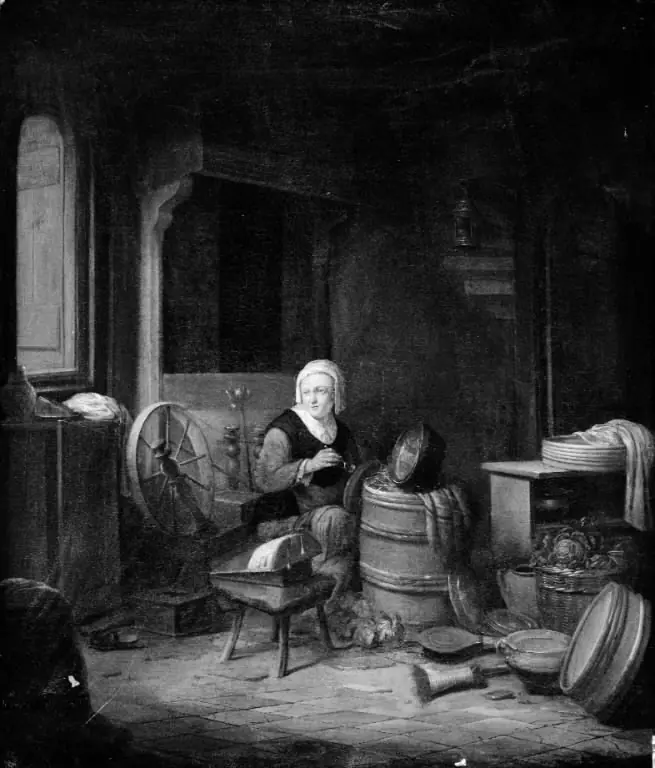
Woman sewing with Maid is an oil painting by the Dutch Golden Age artist Gerard ter Borch. It dates from 1649 and is held in the collection of the Bavarian State Painting Collections.
About this work
Subject & Meaning
By portraying these two figures engaged in a shared task, the work captures a moment of focused labor and social hierarchy within a private setting.
Gerard ter Borch's Woman sewing with Maid is a genre painting that depicts a domestic interior scene featuring a woman and her maid. The composition centers on the everyday activity of sewing, a common subject in Dutch Golden Age art that often highlighted themes of industry, virtue, and the quiet order of household life. By portraying these two figures engaged in a shared task, the work captures a moment of focused labor and social hierarchy within a private setting.
The scene reflects the 17th-century fascination with detailed, realistic representations of daily existence, elevating a mundane chore into a subject of artistic contemplation.
Technique & Style
Executed in 1649, this work is an oil painting on canvas measuring 49.5 cm in height and 37.7 cm in width. Classified as a genre scene, the composition depicts a woman engaged in sewing accompanied by a maid. The piece is identified as a copy after the original by Gerard ter Borch the Younger and is held within the collection of the Bavarian State Painting Collections at the Alte Pinakothek.
History & Provenance
The painting titled Woman sewing with Maid was created in 1649 by Gerard ter Borch the younger, likely as a copy after the original by his father, Gerard ter Borch. It is an oil on canvas work measuring 49.5 cm in height and 37.7 cm in width. The artwork entered the collection of the Bavarian State Painting Collections and has been housed in the Alte Pinakothek in Munich since its acquisition.
Woman sewing with Maid, an oil painting by Gerard ter Borch dated 1649, is held by the Bavarian State Painting Collections and housed at the Alte Pinakothek in Munich. The work measures 49.5 cm in height by 37.7 cm in width and is catalogued as a copy after the artist.
No exhibition history is documented in the available sources.
Context
Gerard ter Borch's 1649 oil painting Woman sewing with Maid was created as a genre scene within Dutch Golden Age painting and reflects the artist's focus on domestic interior moments. The work is classified as a genre art piece and exemplifies ter Borch's technical precision in depicting domestic labor through careful rendering of fabric and light. It is held in the Bavarian State Painting Collections at the Alte Pinakothek in Munich, where it remains part of their permanent holdings of 17th-century Dutch genre paintings.
Scholarship emphasizes its significance within ter Borch's broader oeuvre of bourgeois domestic scenes, particularly his exploration of gender roles and social hierarchies through intimate genre subjects.
The painting's composition and execution demonstrate ter Borch's mastery of oil paint technique while contributing to the historical discourse on genre painting's role in documenting 17th-century domestic life.
Legacy
The painting has influenced scholarly discussions of 17th-century Dutch domestic scenes, with art historians citing its nuanced portrayal of gender roles and material culture. Its compositional study of needlework has informed analyses of visual symbolism in genre painting, particularly regarding the representation of labor and domesticity. The work remains part of the Bavarian State Painting Collections, where it is displayed at the Alte Pinakothek in Munich, preserving its accessibility for ongoing research and public engagement.
Overview
Gerard ter Borch’s 1649 oil painting Woman Sewing with Maid presents a quiet interior scene in which two women engage in domestic activity. The composition is confined to a modestly furnished room illuminated by daylight from a small window, creating a focused, intimate atmosphere characteristic of the Dutch genre tradition.
Artist & collection
Artist
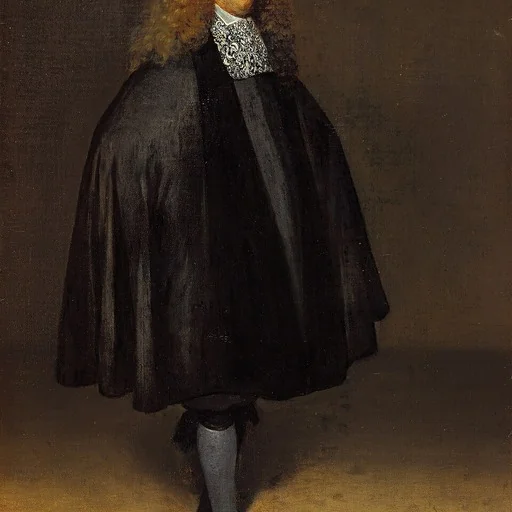
Gerard ter Borch (Dutch:; December 1617 – 8 December 1681), also known as Gerard Terburg (Dutch: ), was a Dutch Golden Age painter mainly of genre subjects.