Artwork
Portrait of Willem III (1650-1702), Prince of Orange
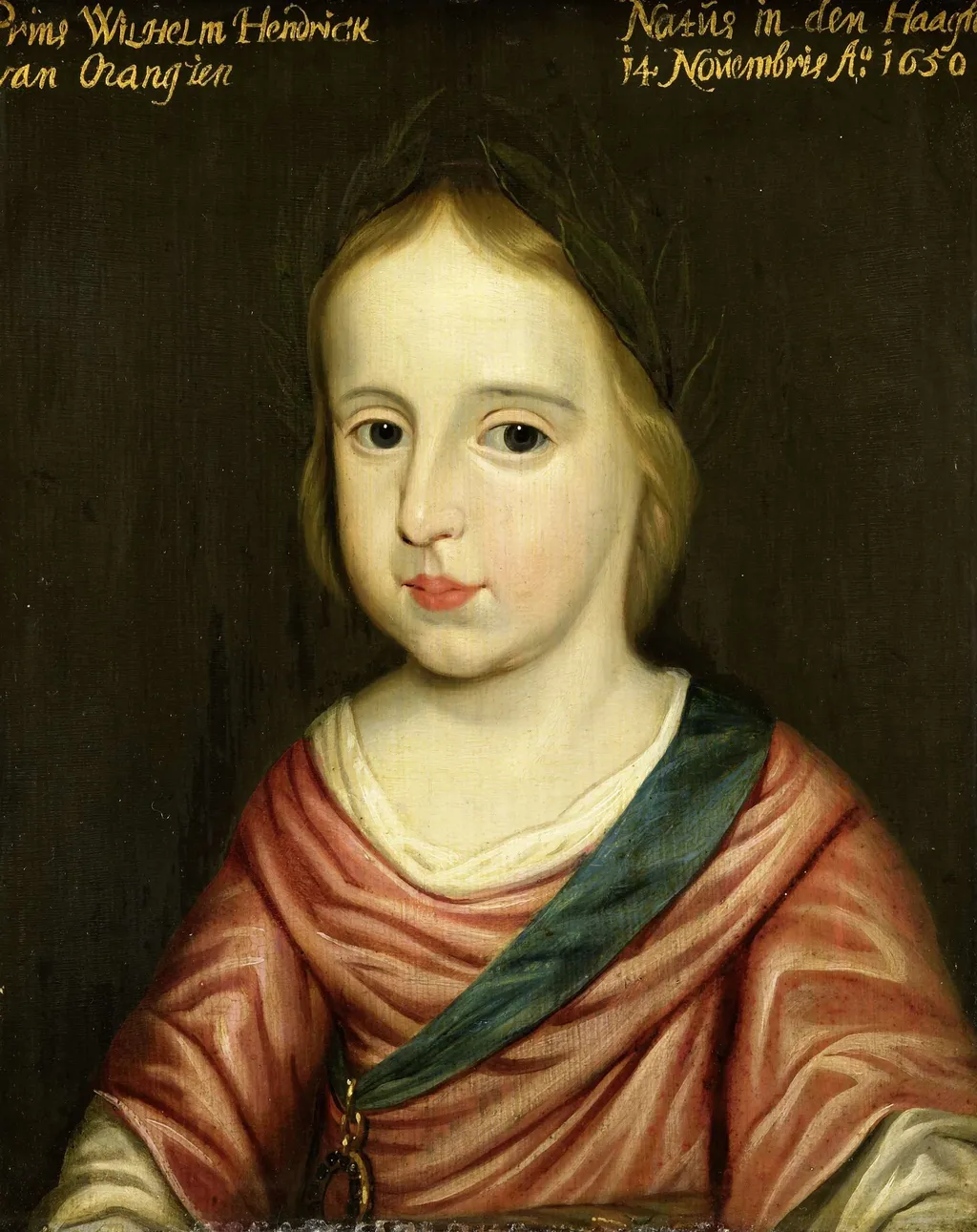
Portrait of Willem III (1650-1702), Prince of Orange is an oil painting by the Dutch Golden Age artist Gerard van Honthorst. It dates from 1653 and is held in the collection of the Rijksmuseum.
About this work
Subject & Meaning
As a portrait, the work's primary function is to capture the likeness of this specific historical figure during his early years.
The painting depicts William III of England, who was also the Prince of Orange, as a young child in 1653. As a portrait, the work's primary function is to capture the likeness of this specific historical figure during his early years. The subject is presented simply as the main focus of the composition, reflecting his status as a member of the House of Orange without additional narrative elements described in the available records.
Technique & Style
Gerard van Honthorst executed this portrait in 1653 using oil paint applied to a panel support. The work measures 29.9 cm in height and 24 cm in width, adhering to the compact dimensions typical of intimate royal likenesses from the period. As a formal portrait, the piece depicts William III of England, capturing the subject with the stylistic precision characteristic of Honthorst's courtly commissions. The painting remains part of the Rijksmuseum collection, where it is housed at the Stadhouderlijk Hof location.
History & Provenance
The painting was commissioned and executed in 1653, as indicated by the work’s inception date and the sitter’s age during the period of van Honthorst’s documented activity in The Hague.
The portrait entered the collection of its sitter, William III of Orange, upon completion, reflecting its original purpose as a dynastic representation. Following William III’s death in 1702, the work remained within the Orange-Nassau family holdings before later transfer to public institutions.
It is now held by the Rijksmuseum, Amsterdam, where it is catalogued as part of the National Art Gallery of the Netherlands’ holdings.
The portrait is held in the collection of the Rijksmuseum, also known as the National Art Gallery of the Netherlands, located at the Stadhouderlijk Hof. The work depicts William III of England and was created in 1653 by Gerard van Honthorst using oil paint on panel. While the painting's ownership history includes William III himself, the provided sources do not list a specific inventory or accession number, nor do they detail any public exhibition history for the piece.
Context
Gerard van Honthorst painted this 1653 oil portrait for the Dutch stadholder William III, who commissioned it during his early reign as Prince of Orange. Contemporary records indicate the work hung prominently in the Stadhouderlijk Hof, reflecting the Prince's assertion of political authority through visual representation. The painting's composition, showing William in regal attire against a dark background, became a model for court portraiture across Northern Europe, influencing artists like Rembrandt van Rijn in their depictions of elite subjects.
Art historians consider it a pivotal example of Baroque portraiture's role in shaping dynastic legitimacy, with its technical mastery of chiaroscuro and psychological depth noted in modern scholarship.
Overview
Gerard van Honthorst’s oil portrait presents the young William III, Prince of Orange, against a dark, unadorned backdrop. The composition isolates the sitter, emphasizing his pale complexion, solemn gaze, white collar, and a red cloak trimmed with a green stripe that falls over one shoulder. The restrained setting and focused lighting draw attention to the delicate rendering of the face.
Own this work as a print
Artist & collection
Artist
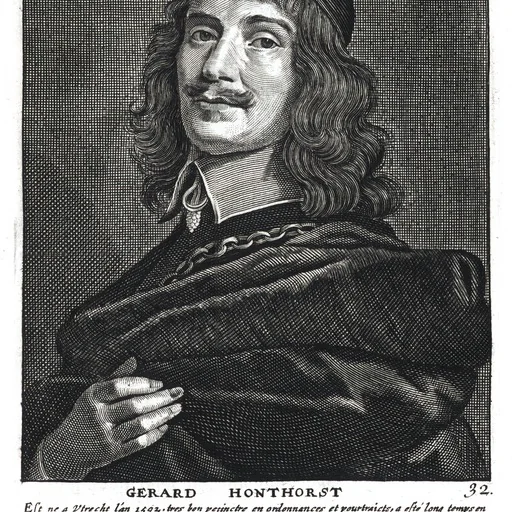
Gerard "Gerrit" van Honthorst (4 November 1592 – 27 April 1656) was a Dutch Golden Age painter who became known for his depiction of artificially lit scenes, eventually receiving the Italian nickname Gherardo delle Notti ("Gerard of the…

 The Triumph of the Winter Queen: Allegory of the Just
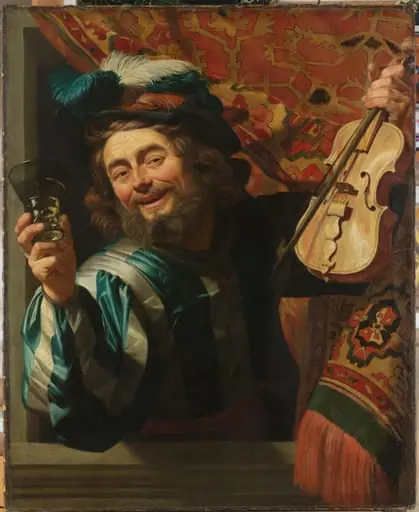 Een vrolijke vioolspeler
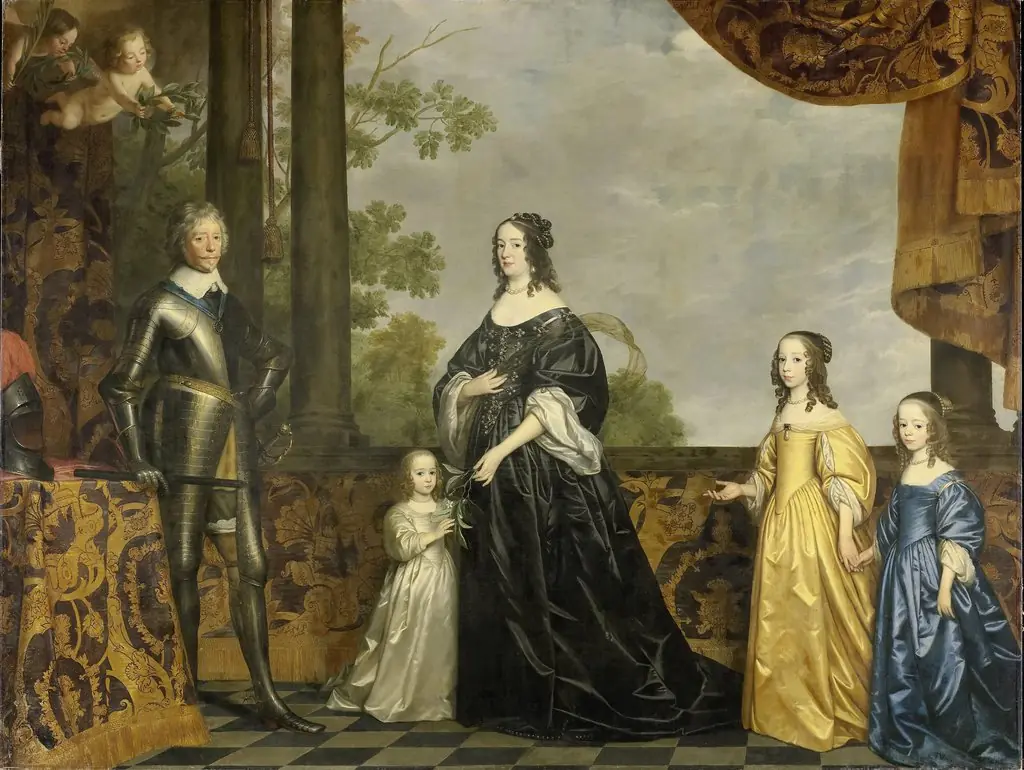 Frederik Hendrik (1584-1647), Prince of Orange, his wife Amalia van Solms (1602-75) and their three youngest daughters, Albertina Agnes (1634-96), Henrietta Catharina (1637-1708) and Maria (1642-88)
 The Concert
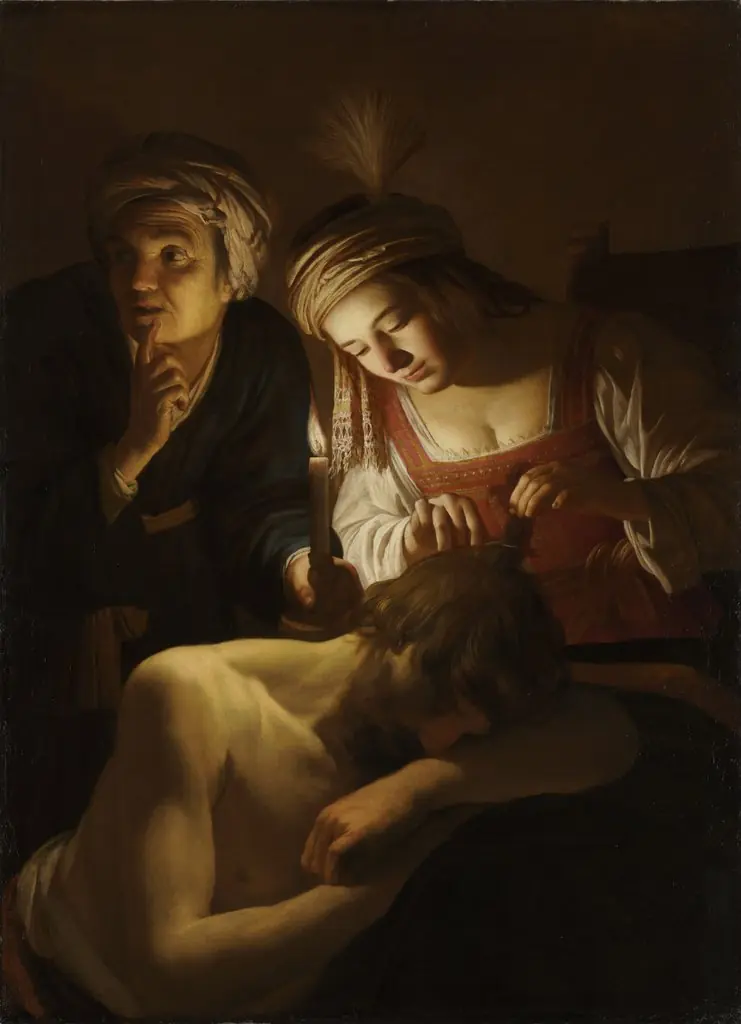 Samson and Delilah
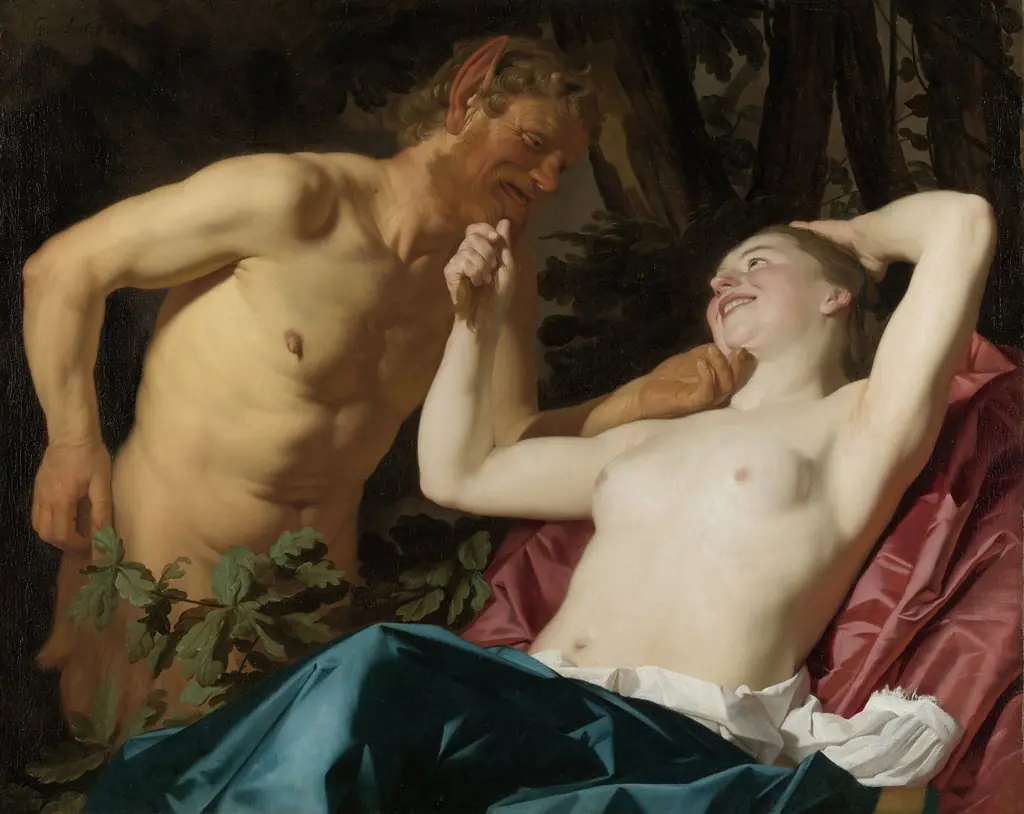 Satyr and Nymph
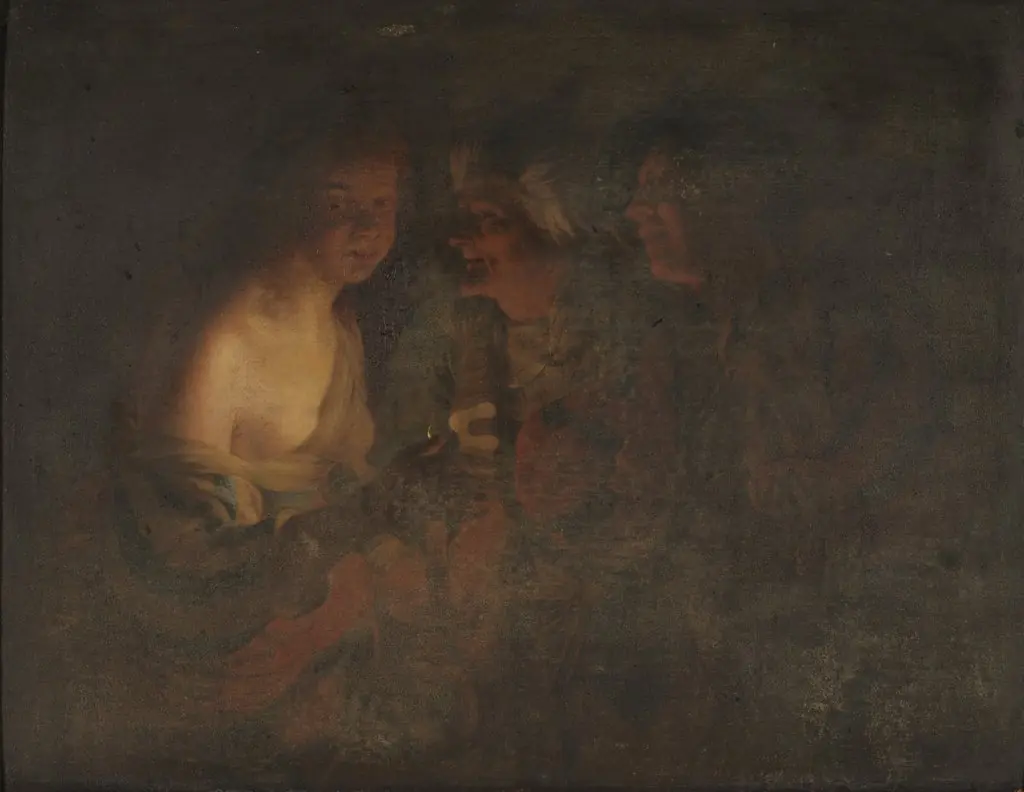 Young Woman with a Candlestick, Old Woman and a Violin Player
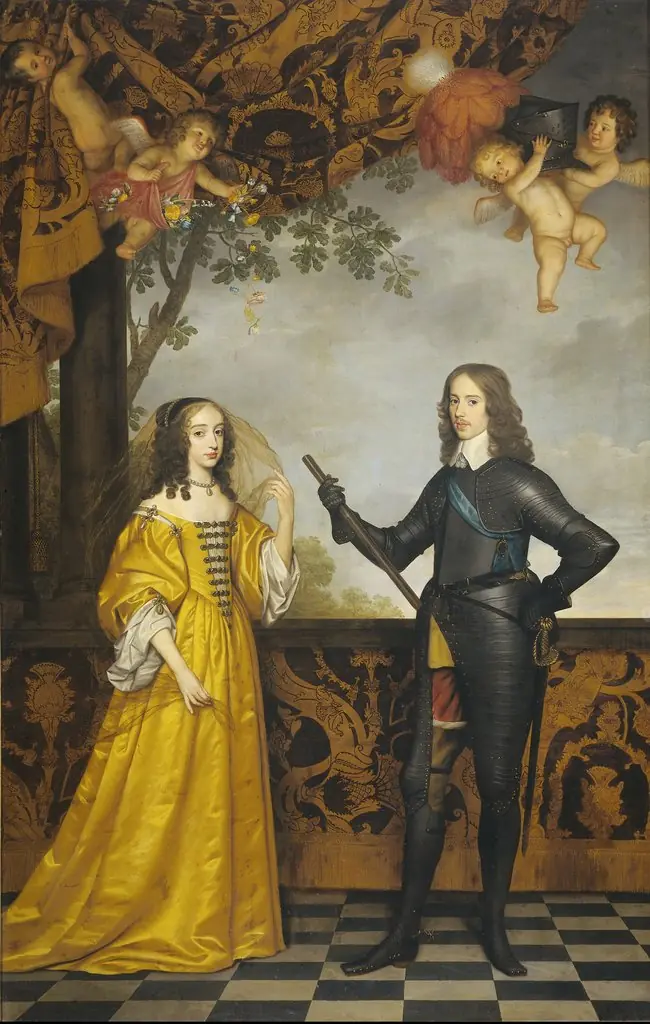 Willem II (1626-50), Prince of Orange, and his wife Maria Stuart (1631-60)
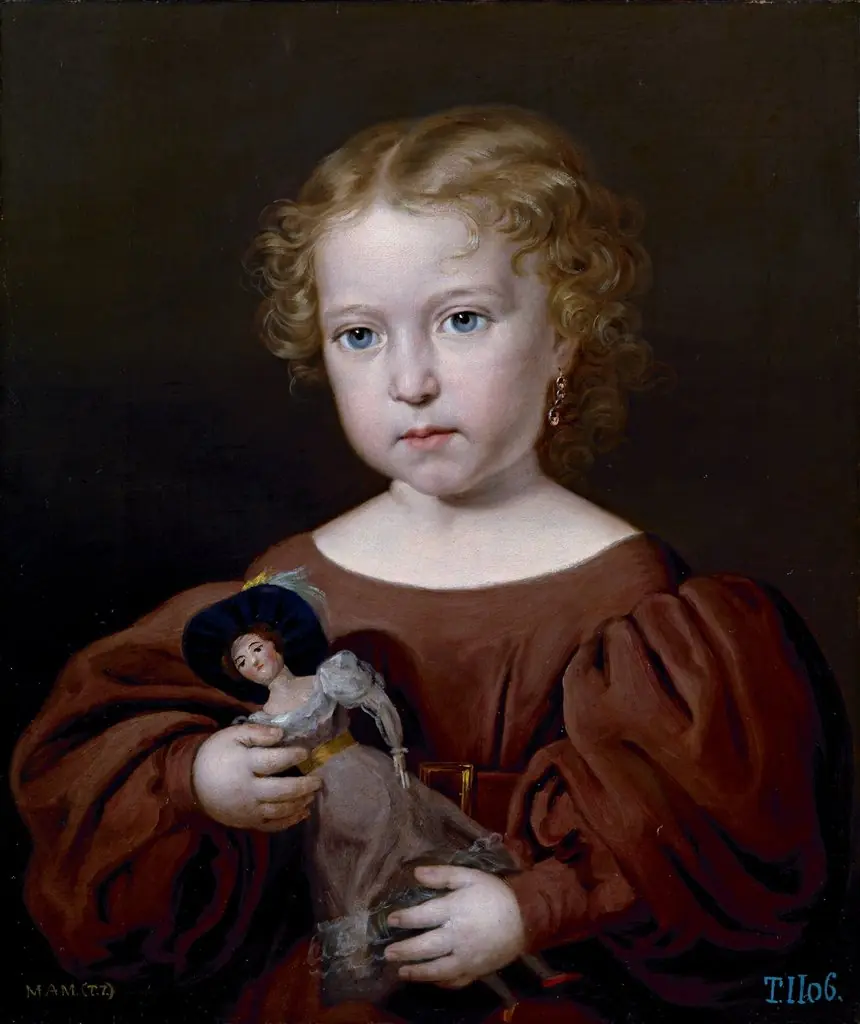 Ángela Tegeo
 Portrait of a Young Boy
 Erzherzogin Maria Elisabeth (1680-1741) im Alter von ca. vier Jahren
 Portrait of Eleanor Maria Josepha of Austria.
 Childhood portrait of Charles II of Spain
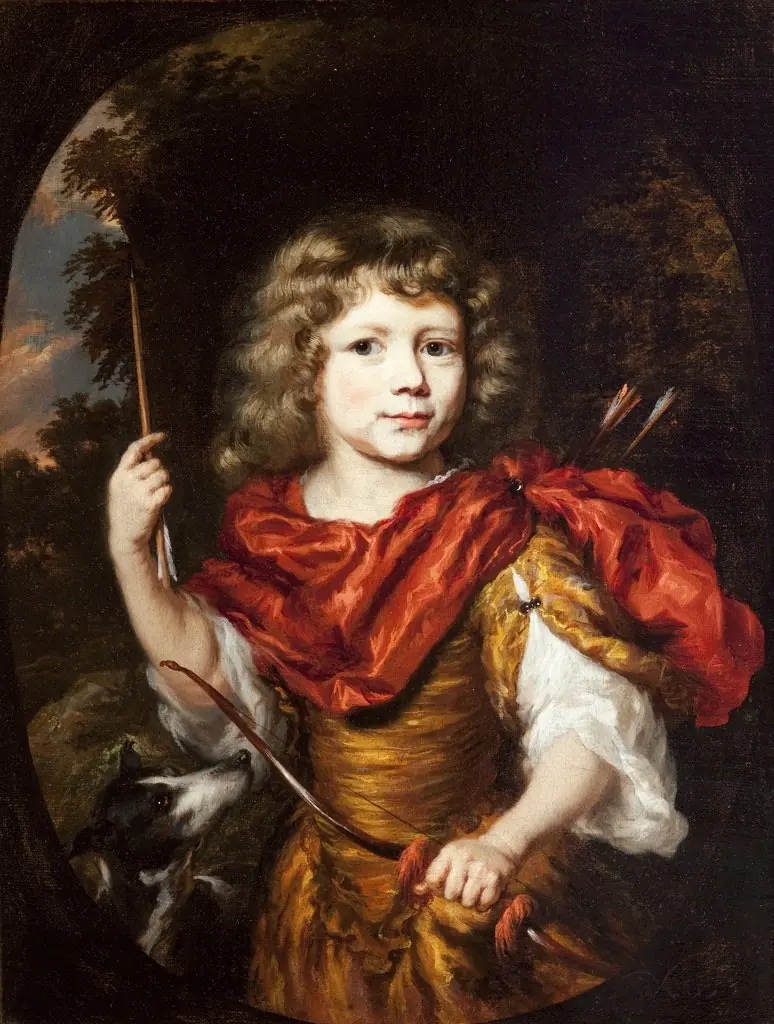 Portrait of a Boy as a Hunter, with a Bow and Arrow and a Dog
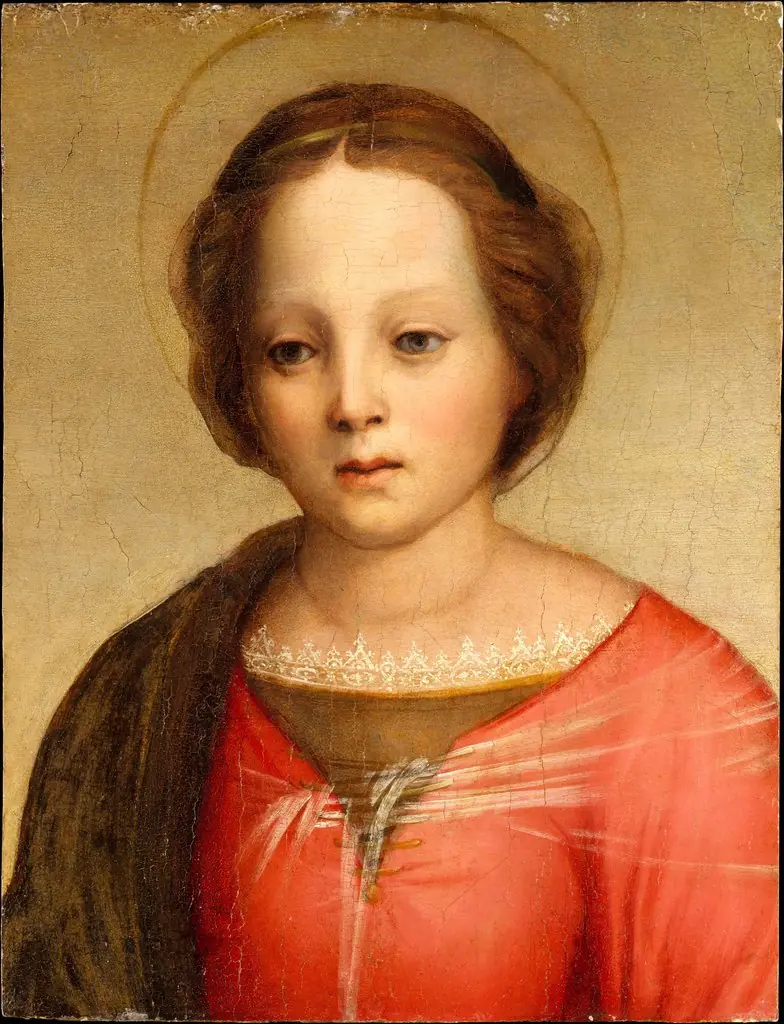 Head of the Madonna
 Knabenbildnis (Werkstatt)
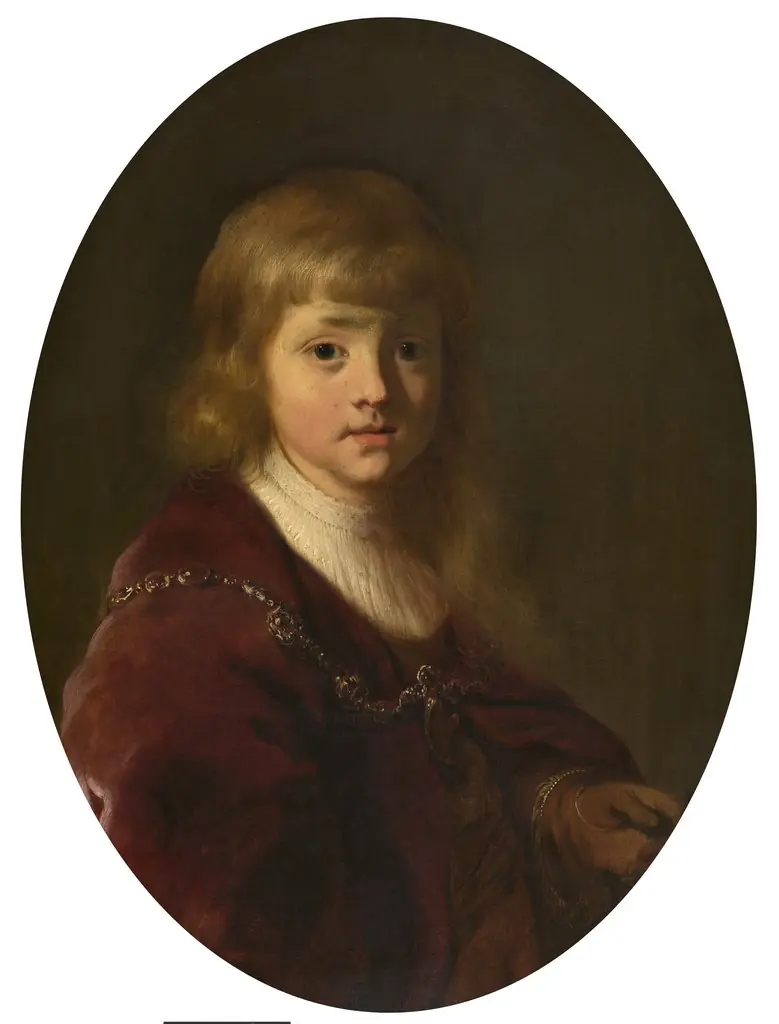 Portrait of a Boy
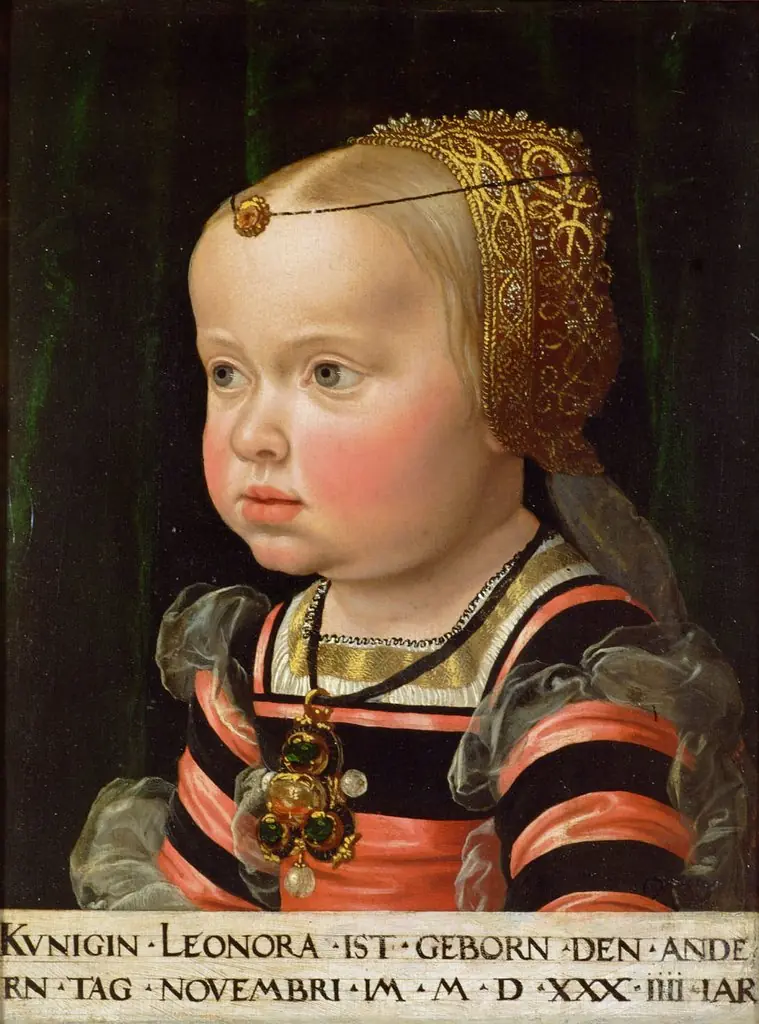 Erzherzogin Eleonore (1534-1594), Herzogin von Mantua als Zweijährige
 Portrait of a Young Lady
- Portrait of William III, Prince of Orange, and Maria, Princess of Orange, as Children