Artwork
Samson and Delilah
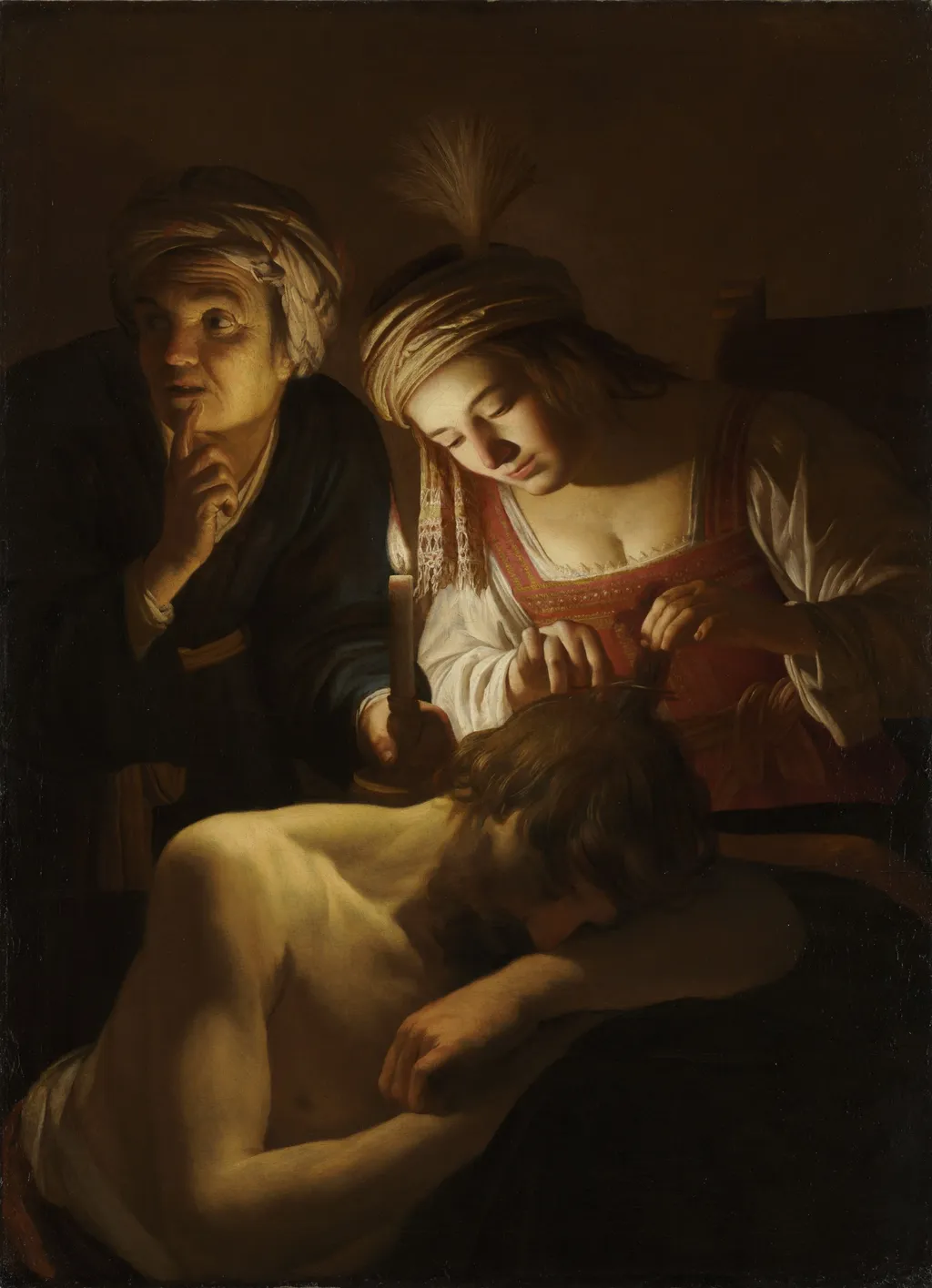
Samson and Delilah is an oil painting by the Dutch Golden Age artist Gerard van Honthorst. It dates from 1616 and is held in the collection of the Cleveland Museum of Art.
About this work
Subject & Meaning
Delilah's attire, including a red Roman-style dress and a silk turban, grounds the scene while highlighting her role in the downfall of the hero.
The painting depicts the biblical betrayal of Samson by Delilah, an episode from the Book of Judges in which the Philistine woman cuts Samson's hair while he sleeps, stripping him of his divine strength. The act fulfills the condition that his uncut hair serves as the symbol of his Nazirite status. Van Honthorst captures the moment Delilah severs the locks, aided by an elderly woman who holds a candle and signals silence.
The composition uses a single light source to illuminate the conspirators' faces and hands against a dark background, emphasizing the intimacy and treachery of the scene. The elderly figure, a common motif in Utrecht Caravaggism, adds a layer of moral ambiguity. Delilah's attire, including a red Roman-style dress and a silk turban, grounds the scene while highlighting her role in the downfall of the hero.
Technique & Style
Executed in 1616 during the artist's Roman period, this work is an oil painting on canvas measuring 129 by 94 cm. Van Honthorst employs a single light source, a candle held by an elderly woman, to illuminate the scene against a dark, neutral background. This chiaroscuro technique highlights the faces and hands of Delilah and the attendant while leaving the sleeping Samson in the foreground.
Stylistically, the composition blends Dutch restraint with Caravaggesque drama. Delilah is depicted wearing a red dress and a silk turban with golden highlights, her concentration emphasized by the candlelight on her features. She uses scissors to cut Samson's hair.
The parchment-like texture of the old woman's face and the controlled atmosphere distinguish the piece within the Utrecht Caravaggist tradition.
History & Provenance
Samson and Delilah was painted by Gerrit van Honthorst in 1616, during the years the artist was living and working in Rome. The painting's earliest recorded owners appear to have been the Marquis Tommaso Raggi (1595/1596–1679) and his descendants, after which it passed into the Ruspoli family. In 1967 the work was sold to the Hazlitt Gallery in London, which resold it in 1968 to the Cleveland Museum of Art, where it remains today under accession number 1968.23.
Overview
Gerard van Honthorst, a prominent artist of the Dutch Golden Age, completed Samson and Delilah in 1616. This oil painting portrays a pivotal moment from the biblical account of Samson and Delilah, a popular subject in religious art. The work is currently part of the collection at The Cleveland Museum of Art, representing a significant example of Honthorst's early career and his engagement with dramatic narrative.
Context
Gerard van Honthorst emerged as a notable figure during the Dutch Golden Age. His early artistic development was significantly shaped by his period in Rome, where he encountered and absorbed the dramatic naturalism of Caravaggio. This foundational experience, particularly his exploration of artificial light, became a hallmark of his work.
Upon returning to the Netherlands, Honthorst diversified his practice, establishing a successful career as a prominent portrait painter for various European courts.
Own this work as a print
Artist & collection
Artist
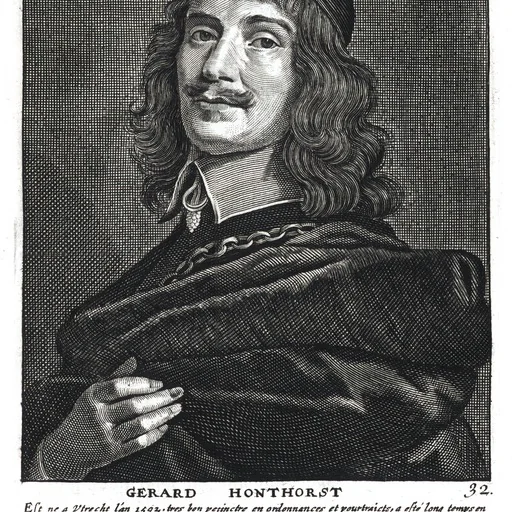
Gerard "Gerrit" van Honthorst (4 November 1592 – 27 April 1656) was a Dutch Golden Age painter who became known for his depiction of artificially lit scenes, eventually receiving the Italian nickname Gherardo delle Notti ("Gerard of the…

 The Triumph of the Winter Queen: Allegory of the Just
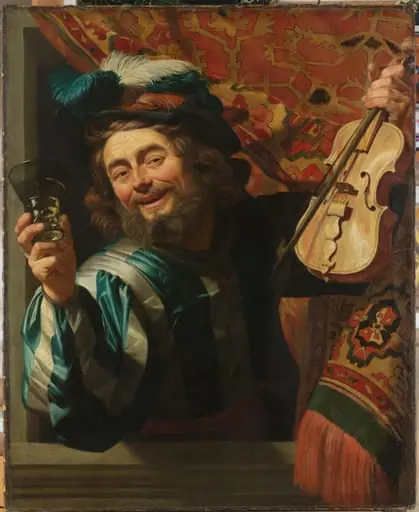 Een vrolijke vioolspeler
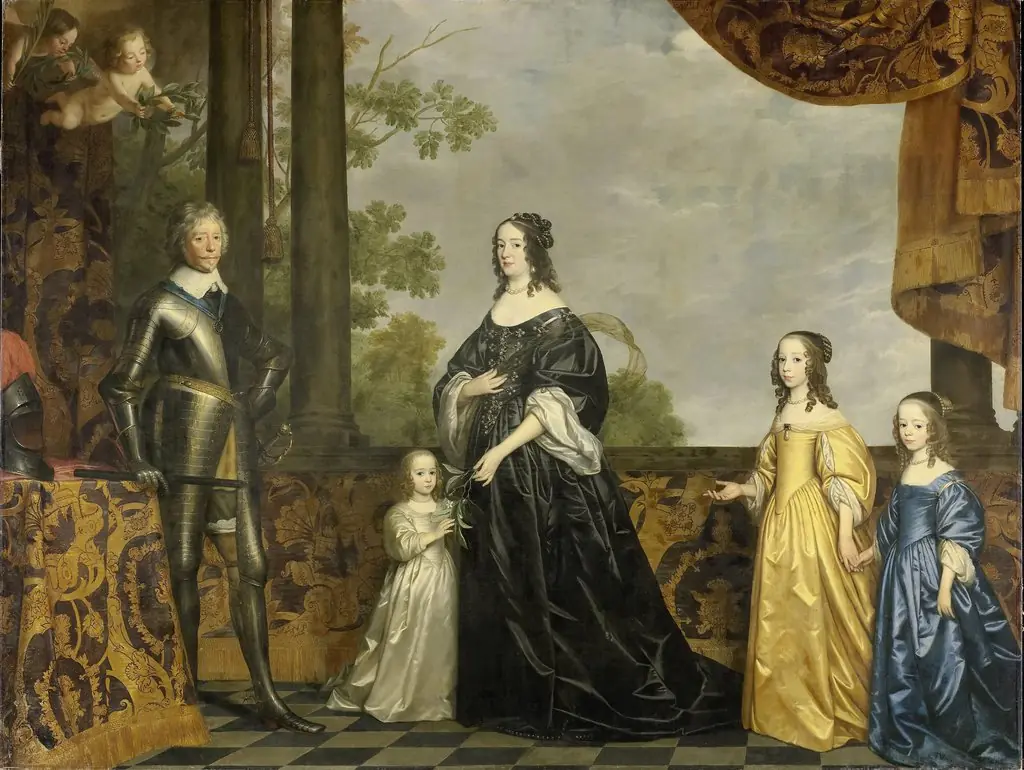 Frederik Hendrik (1584-1647), Prince of Orange, his wife Amalia van Solms (1602-75) and their three youngest daughters, Albertina Agnes (1634-96), Henrietta Catharina (1637-1708) and Maria (1642-88)
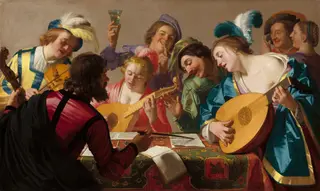 The Concert
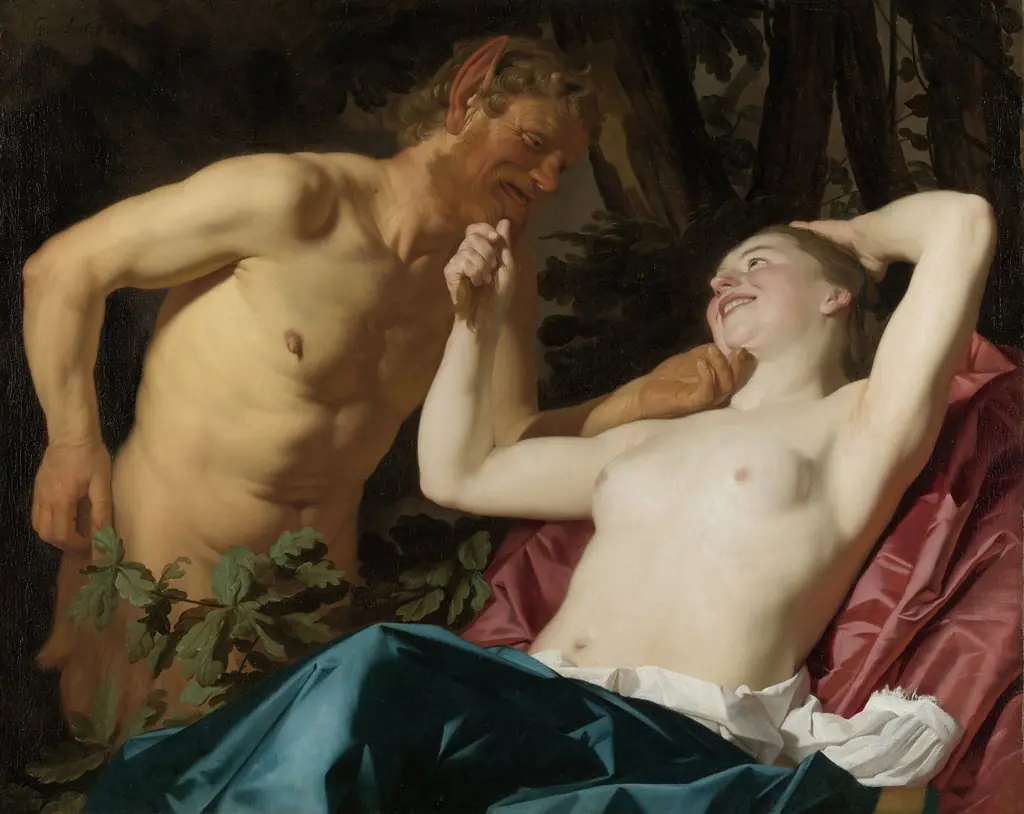 Satyr and Nymph
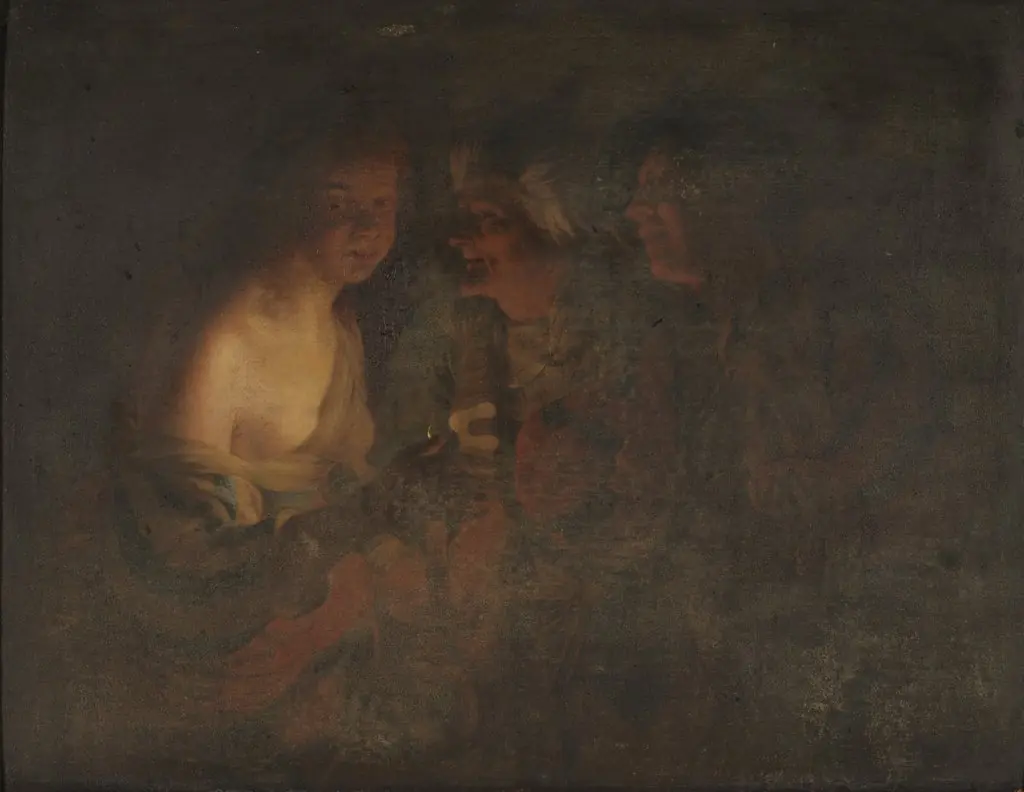 Young Woman with a Candlestick, Old Woman and a Violin Player
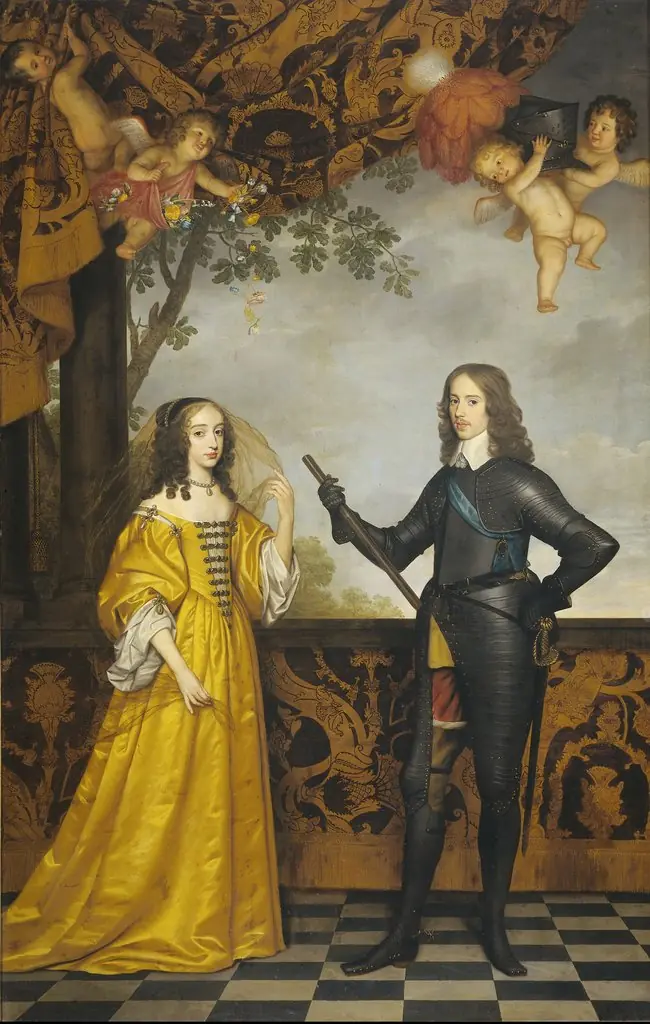 Willem II (1626-50), Prince of Orange, and his wife Maria Stuart (1631-60)
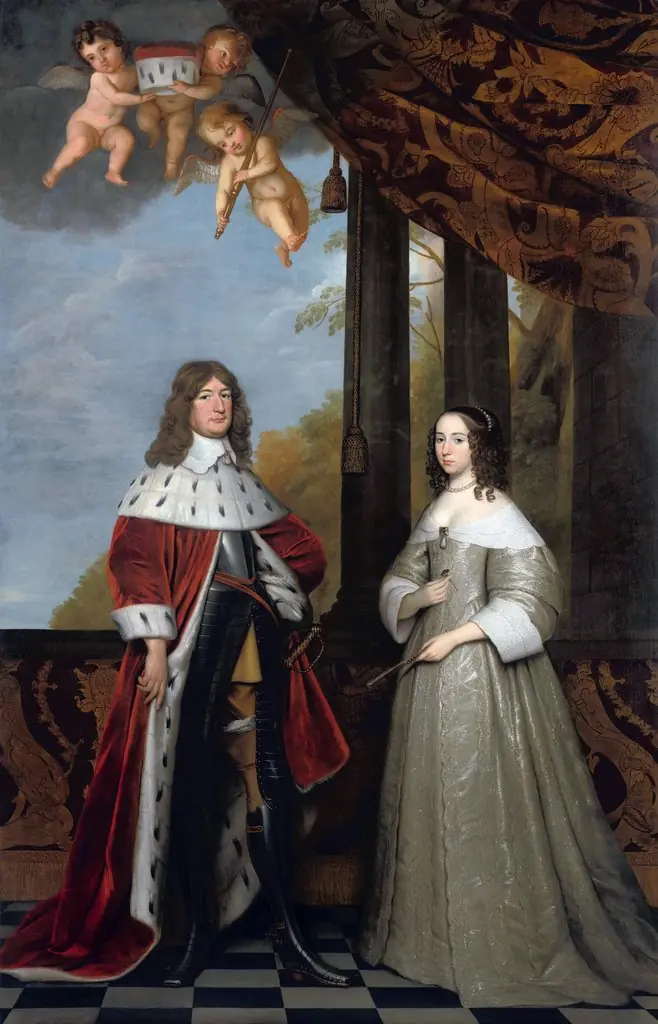 Friedrich Wilhelm (1620-88), Elector of Brandenburg, and his wife Louise Henriette (1627-67), Countess of Orange-Nassau
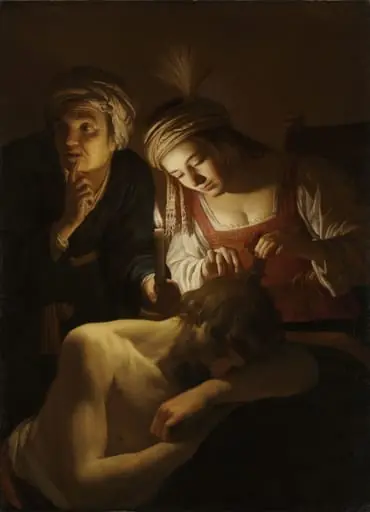 Samson and Delilah
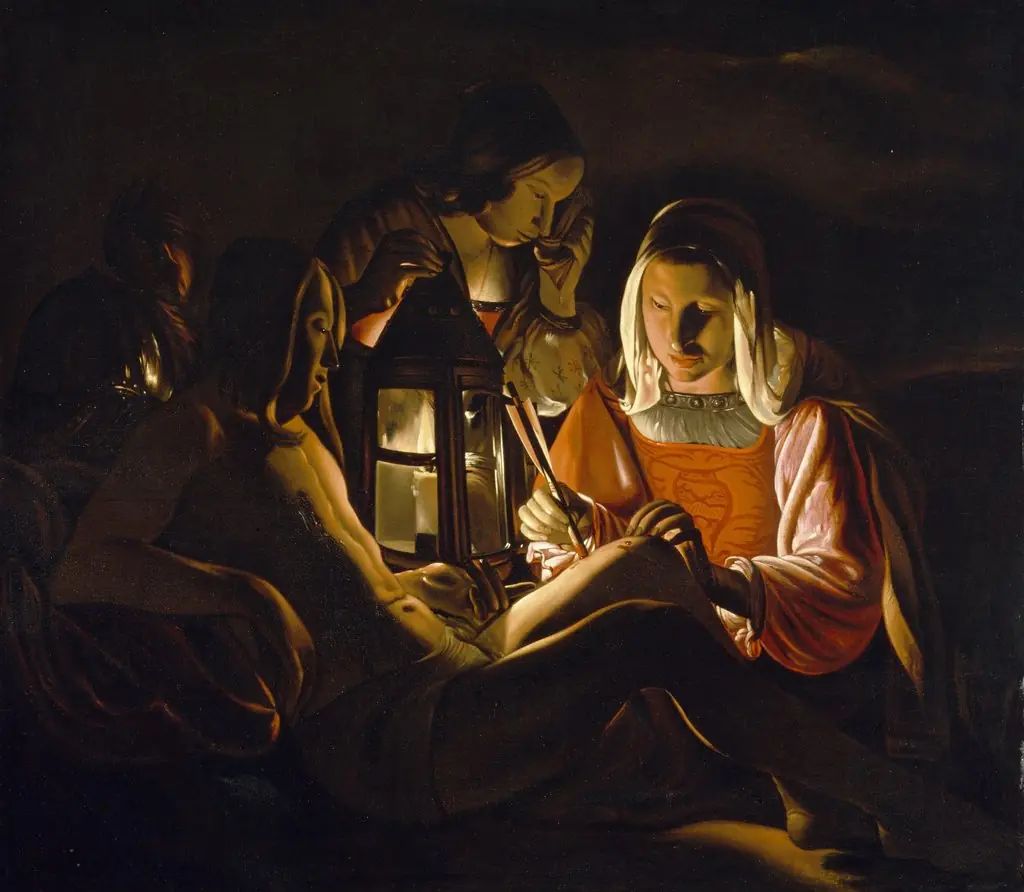 Saint Sebastian Nursed by Saint Irene
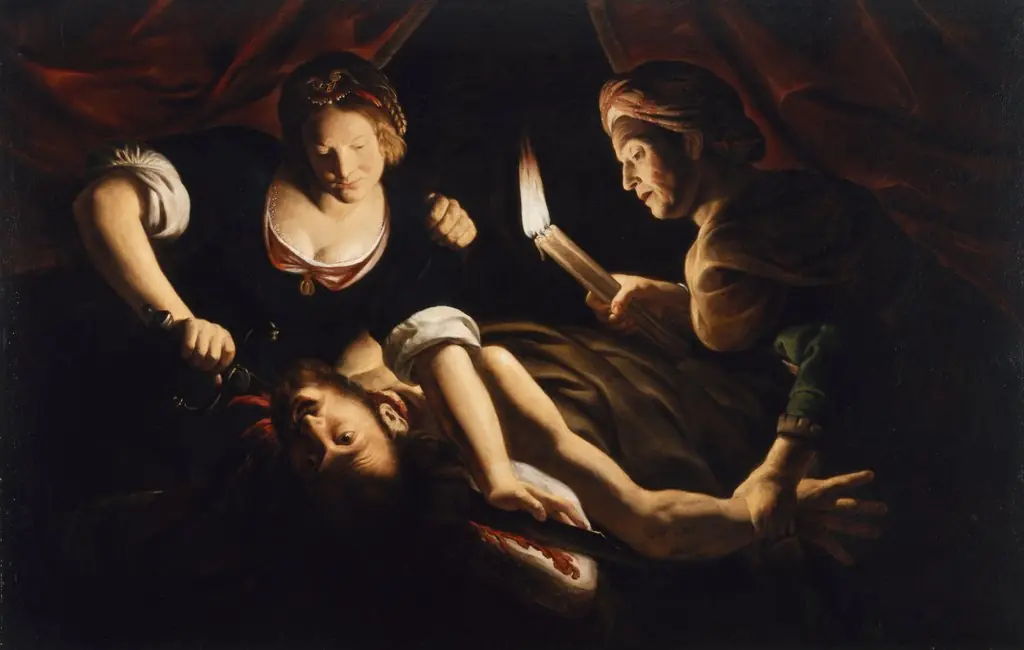 Judith Cutting Off the Head of Holofernes
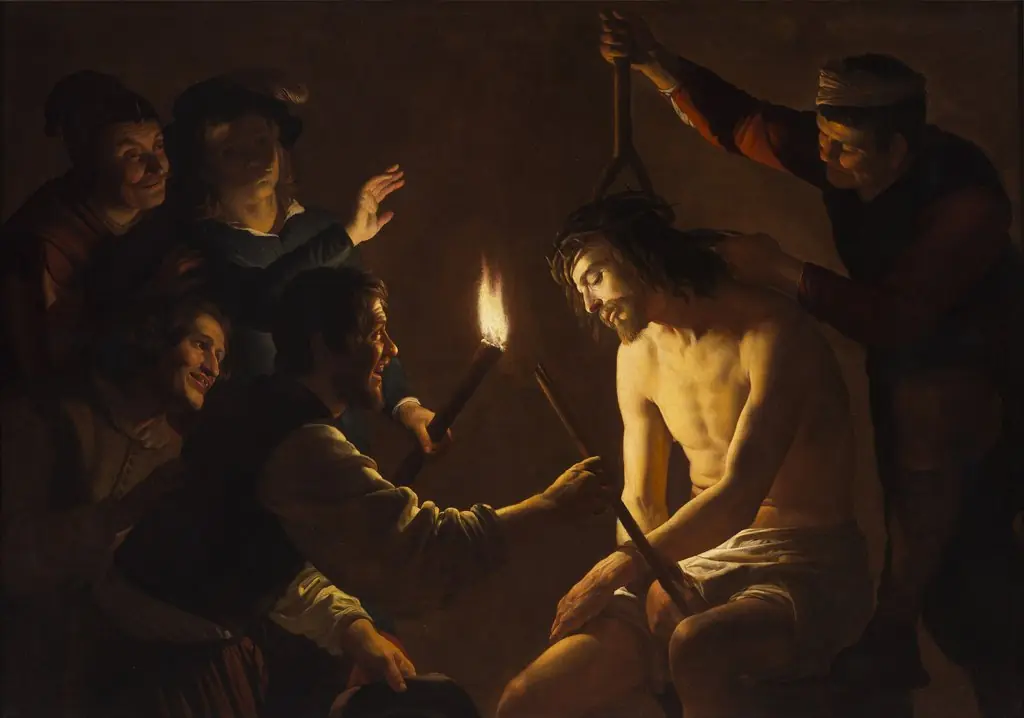 The Mocking of Christ
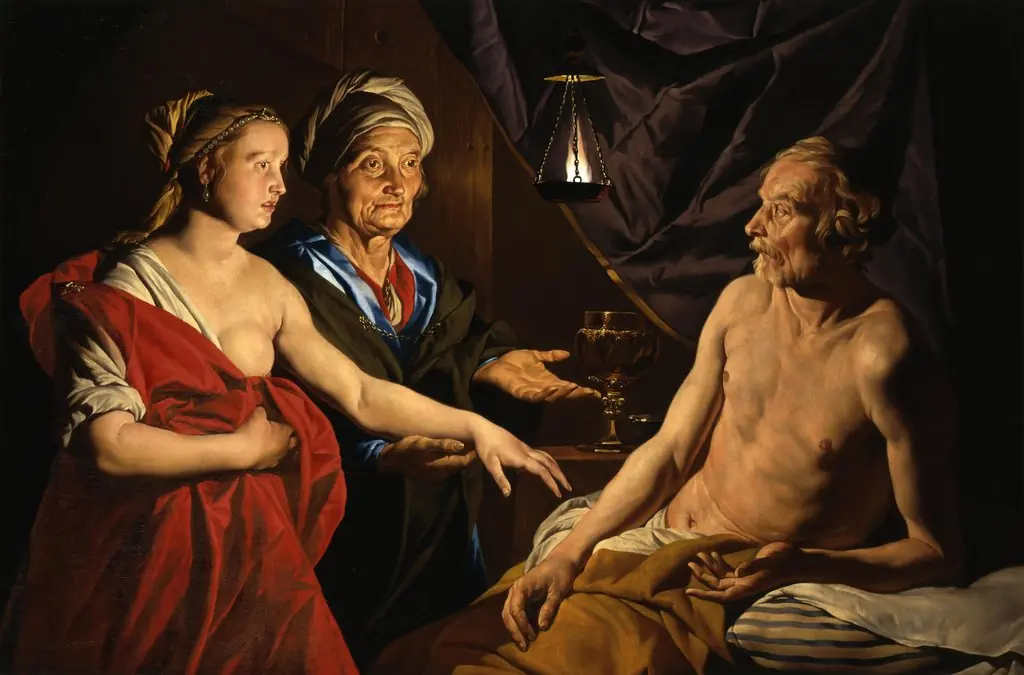 Sarah Leads Abraham to Hagar
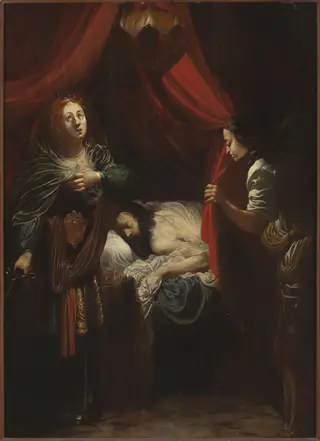 Judith in the tent of Holofernes (Judith 13:4-6)
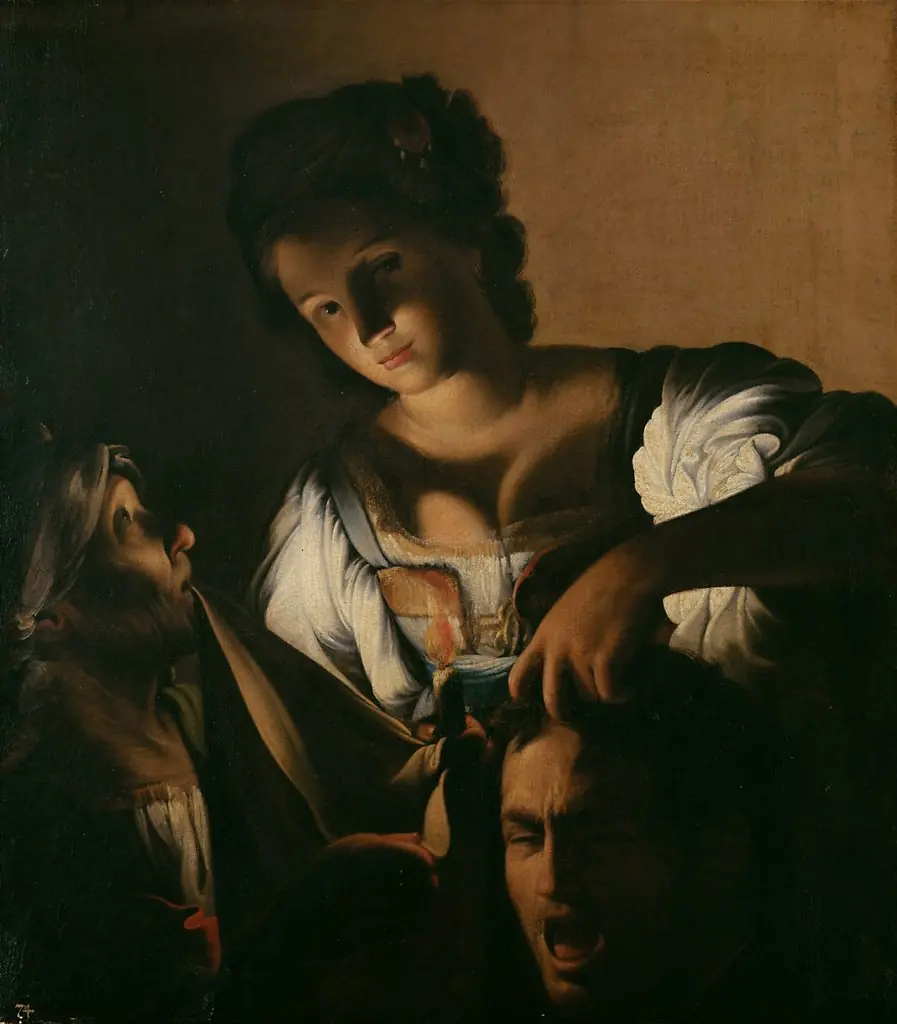 Judith with the head of Holofernes
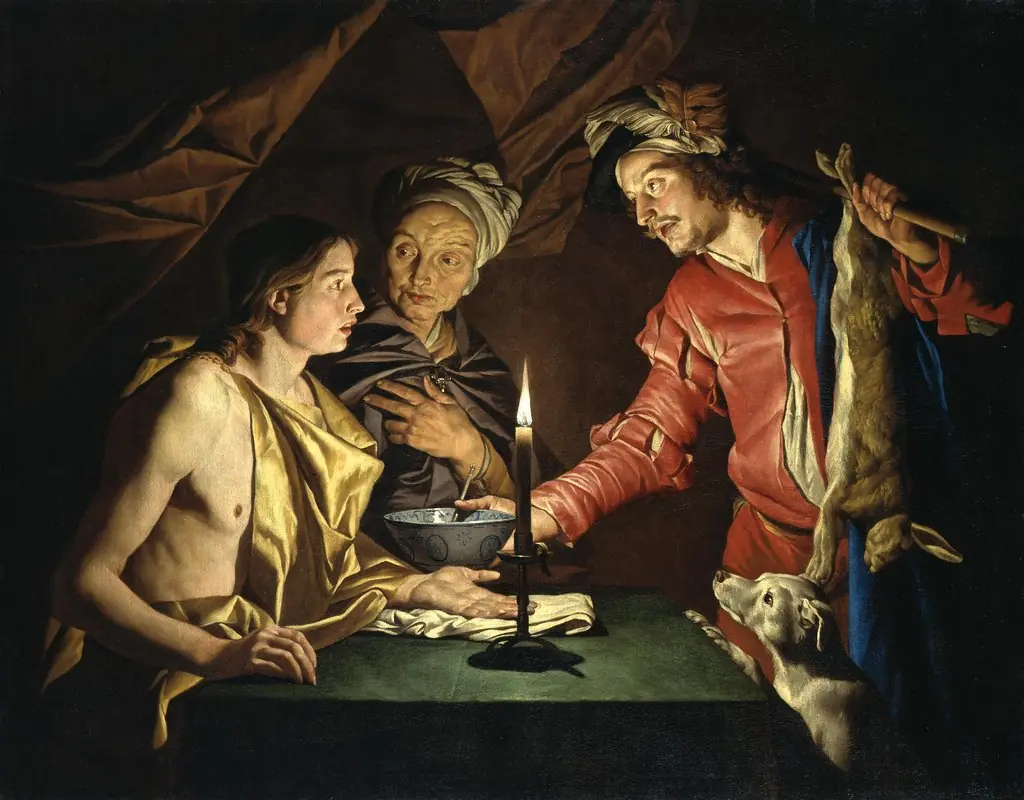 Esau, returning hungry from the hunt, sells his first birthright to Jacob for a pottage of lentils(Genesis 25:31)
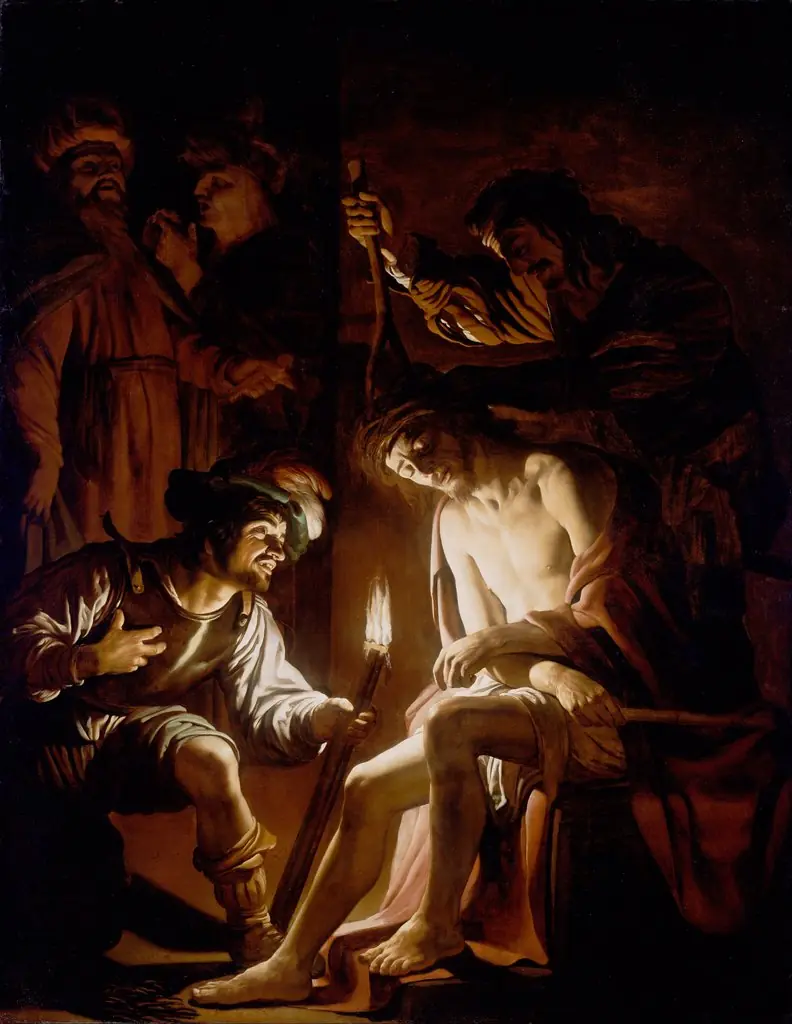 Christ Crowned with Thorns
 Compared in the Caravaggio & Baroque course