Artwork
Een vrolijke vioolspeler
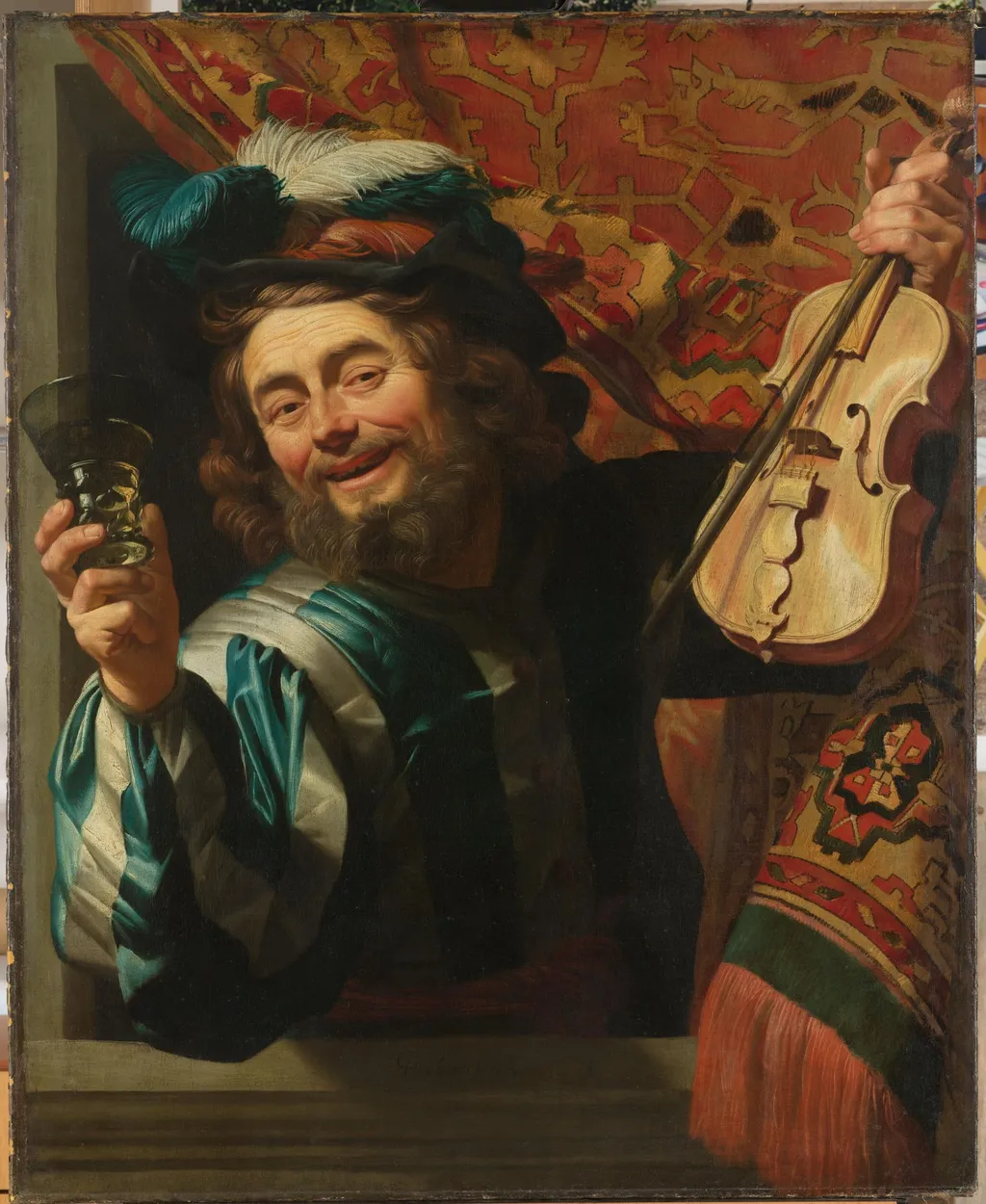
Een vrolijke vioolspeler is an unspecified painting by the Caravaggisti artist Gerard van Honthorst. It dates from 1623 and is held in the collection of the Rijksmuseum. This painting depicts a musician, dressed in elaborate Italianate attire, emerging from behind a curtain and leaning from a window.
About this work
Subject & Meaning
The subject of Een vrolijke vioolspeler (1623) is a single musician playing the violin, presented as a genre scene in the manner of Utrecht Caravaggism.
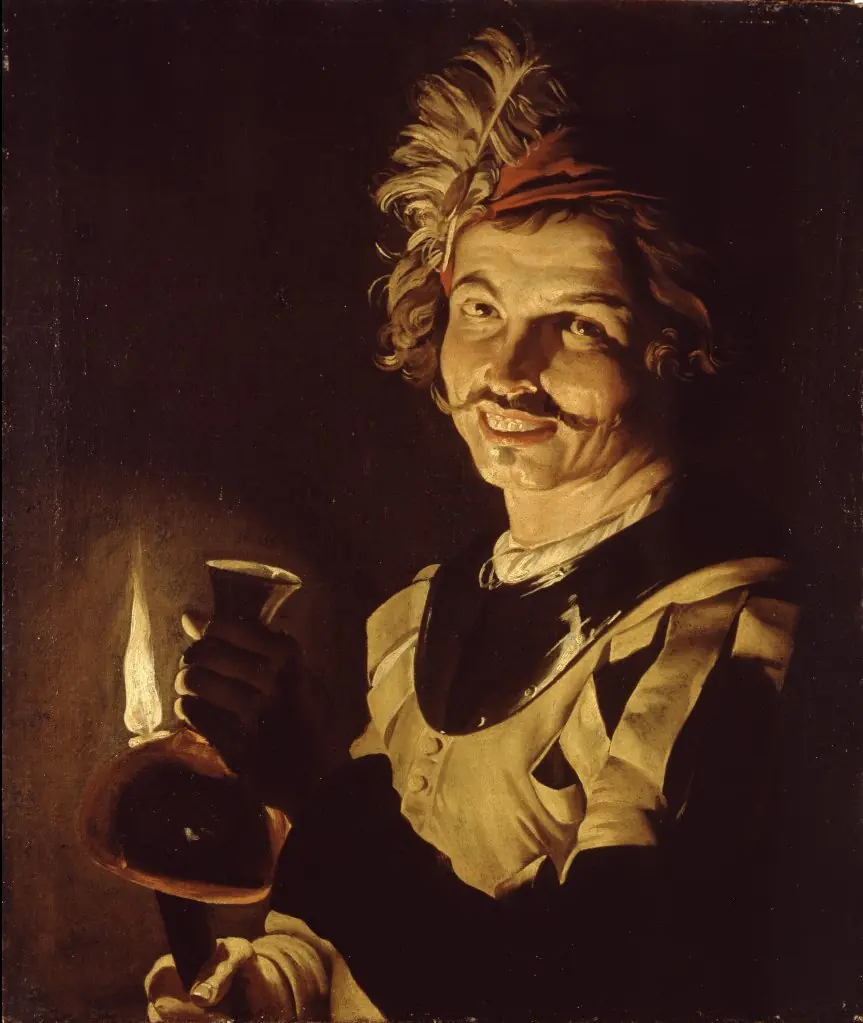
The subject of Een vrolijke vioolspeler (1623) is a single musician playing the violin, presented as a genre scene in the manner of Utrecht Caravaggism. The figure's animated posture and upward glance suggest lively performance rather than static portraiture, aligning with Honthorst's specialization in tavern and musical subjects during his early Utrecht years after returning from Italy. The use of concentrated candlelight to model form and isolate the player emphasizes immediacy and virtuosity, consistent with the artist's reputation for chiaroscuro effects.
In Honthorst's oeuvre, such scenes often convey the pleasures of music and social harmony, reflecting broader Dutch Golden Age interests in domestic and civic virtue. The title's emphasis on cheerfulness points to an idealized representation of musical enjoyment rather than a moralizing narrative.
Technique & Style
Created in 1623, Een vrolijke vioolspeler is an oil painting executed on canvas, consistent with the primary medium Gerard van Honthorst employed for his major works during this period. The piece exemplifies the artist's mastery of chiaroscuro, a technique for which he became renowned, often depicting scenes illuminated by a single artificial light source such as a candle. This approach, influenced by his time in Rome studying Caravaggio, results in dramatic contrasts between light and shadow.
Stylistically, the work belongs to the Utrecht Caravaggism movement, characterized by genre scenes featuring musicians and everyday figures. Unlike the raw realism of some contemporaries, Honthorst's handling retains an elegant quality, blending naturalistic observation with a refined, smooth finish typical of his portraiture.
Context
Gerard van Honthorst's Een vrolijke vioolspeler (1623) exemplifies his role within Utrecht Caravaggism, a movement that adapted Caravaggio's chiaroscuro to Dutch genre subjects. Honthorst trained under Abraham Bloemaert in Utrecht before studying in Rome (c. 1616–1620), where he absorbed Caravaggio's tenebrism and candlelit nocturnes. Returning to Utrecht, he became a leading figure among the Utrecht Caravaggisti, alongside Hendrick ter Brugghen and Dirck van Baburen, specializing in illuminated tavern scenes and musician portraits that delighted patrons with their dramatic light effects and anecdotal charm.
The work's place in art history rests on its synthesis of Italian innovation and Northern taste. Honthorst's reputation grew rapidly after 1620, securing commissions from the exiled Bohemian court and European elites. His technique, often rendering light sources explicitly, distinguished him from peers, reinforcing his status as a bridge between Caravaggio's revolutionary style and the polished classicism favored by Dutch aristocracy in the 1630s.
Legacy
Gerard van Honthorst's legacy is defined primarily by his Caravaggist period, particularly his mastery of artificially lit scenes that earned him the nickname "Gherardo delle Notti" (Gerard of the Nights). While he achieved immense contemporary fame as a court painter for royalty across Europe, his reputation for later generations rests largely on these early genre works featuring musicians and gamblers illuminated by candlelight. By contrast, his later shift toward a smoother, more classicist style is now viewed as lacking personal vitality; the 17th-century writer Samuel van Hoogstraten noted that the artist eventually fell into a "stiff smoothness" driven by profit or the desire to please fashionable patrons.
Consequently, modern appreciation of Honthorst focuses on the dramatic chiaroscuro of his Utrecht years rather than his extensive output of royal portraiture.
Overview
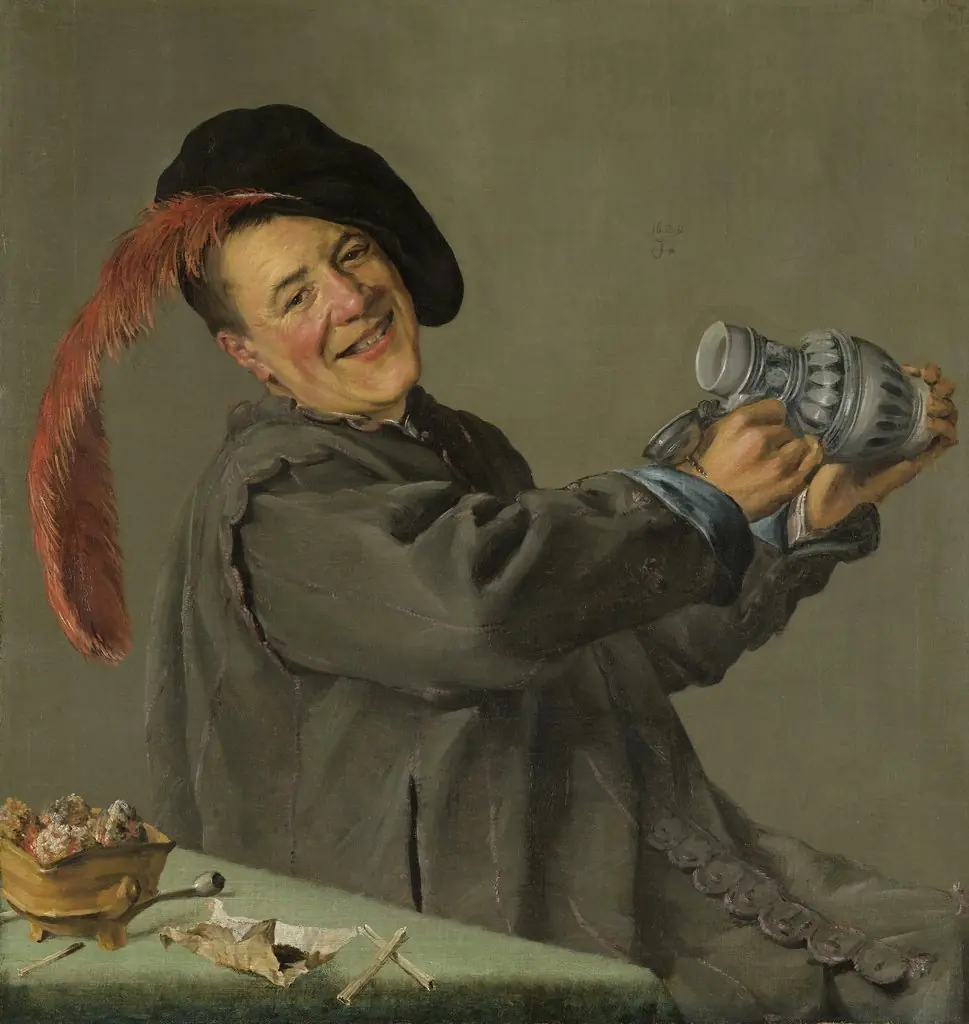
This painting depicts a musician, dressed in elaborate Italianate attire, emerging from behind a curtain and leaning from a window. With a grin, he raises a glass, inviting the viewer to interact. Honthorst's portrayal creates a vivid sense of immediacy, making the figure appear to extend beyond the canvas and into the viewer's space. The composition emphasizes direct engagement and a spontaneous encounter.
Own this work as a print
Artist & collection
Artist
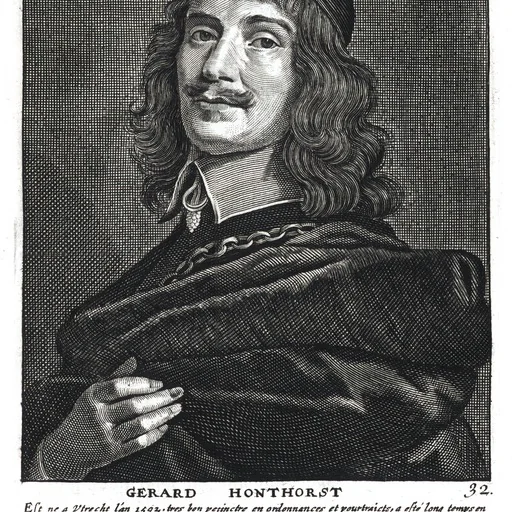
Gerard "Gerrit" van Honthorst (4 November 1592 – 27 April 1656) was a Dutch Golden Age painter who became known for his depiction of artificially lit scenes, eventually receiving the Italian nickname Gherardo delle Notti ("Gerard of the…

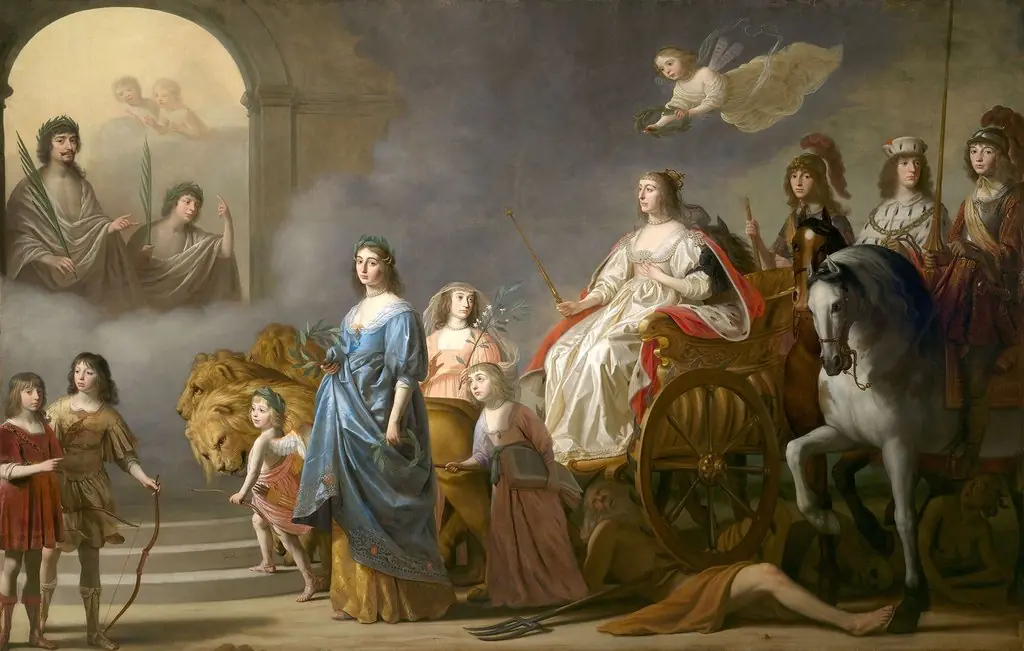 The Triumph of the Winter Queen: Allegory of the Just
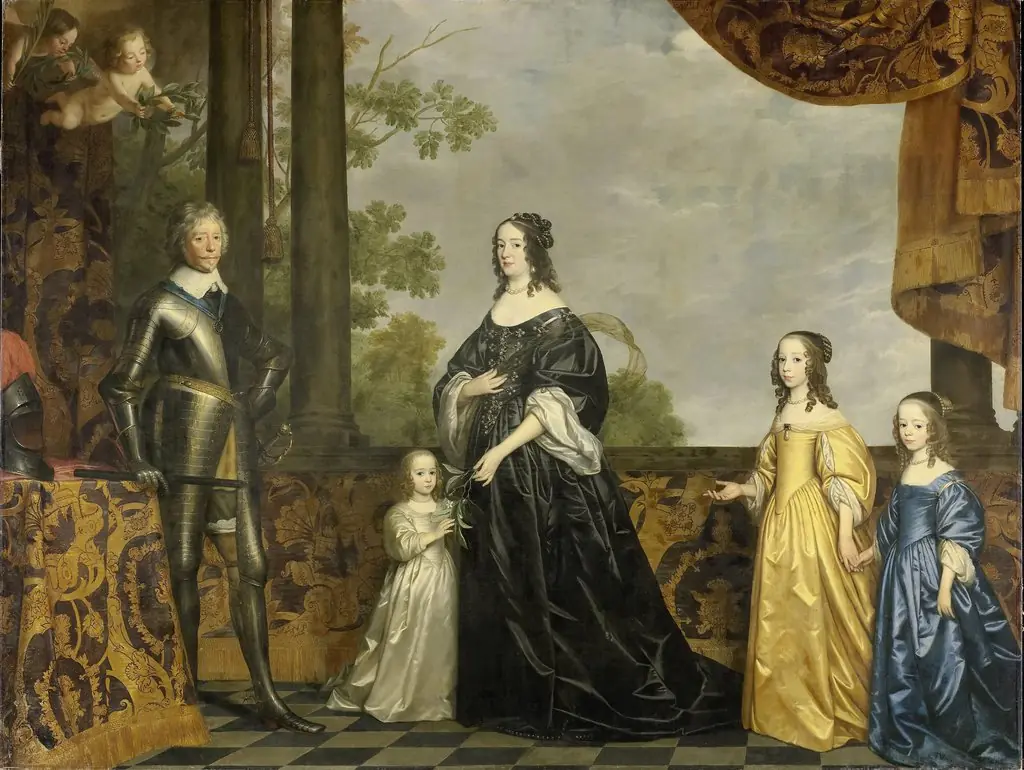 Frederik Hendrik (1584-1647), Prince of Orange, his wife Amalia van Solms (1602-75) and their three youngest daughters, Albertina Agnes (1634-96), Henrietta Catharina (1637-1708) and Maria (1642-88)
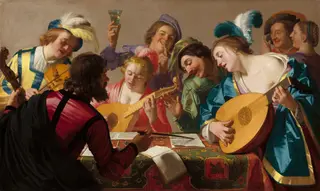 The Concert
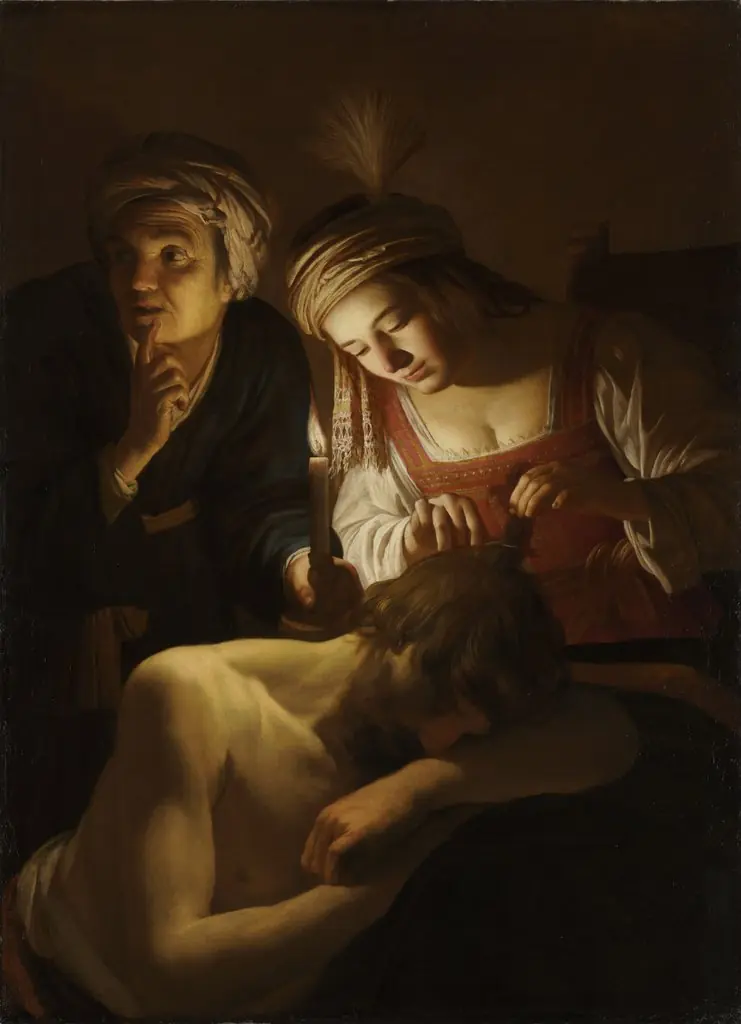 Samson and Delilah
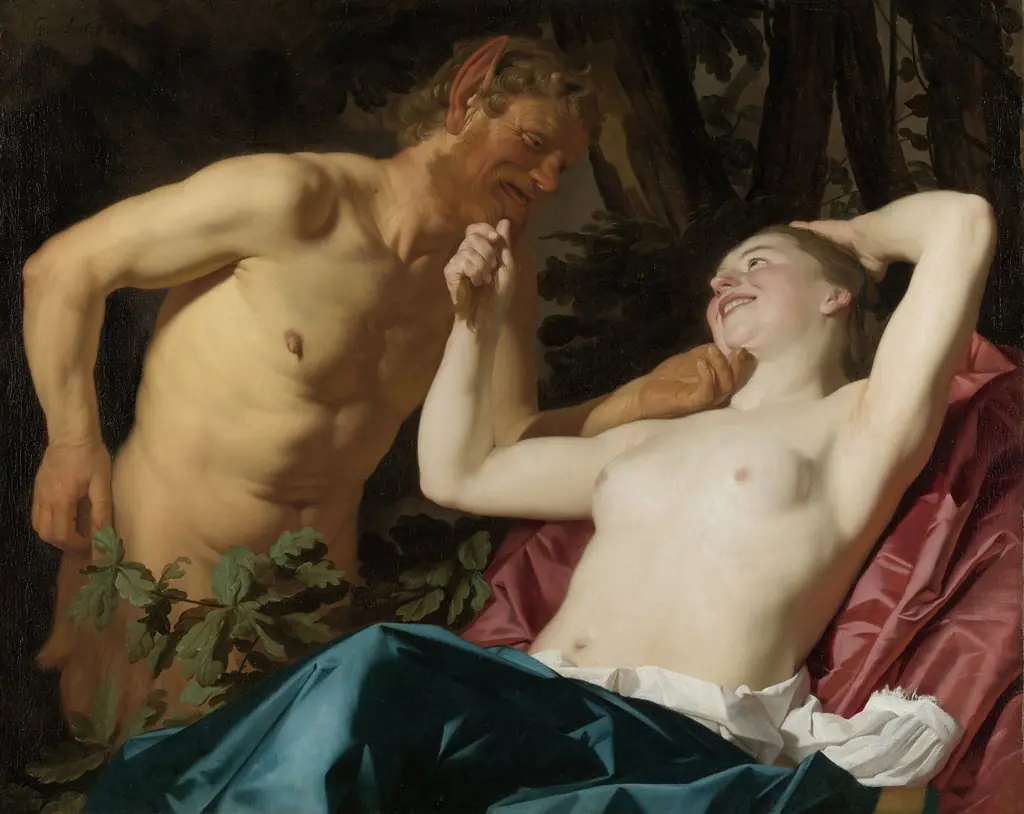 Satyr and Nymph
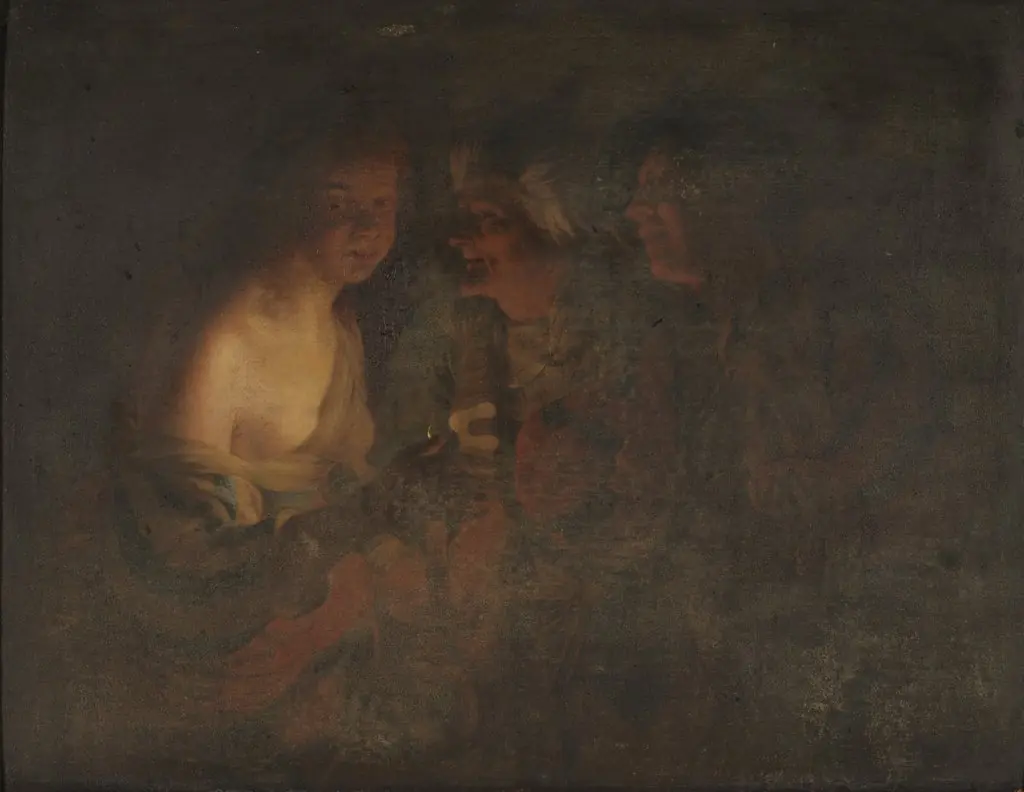 Young Woman with a Candlestick, Old Woman and a Violin Player
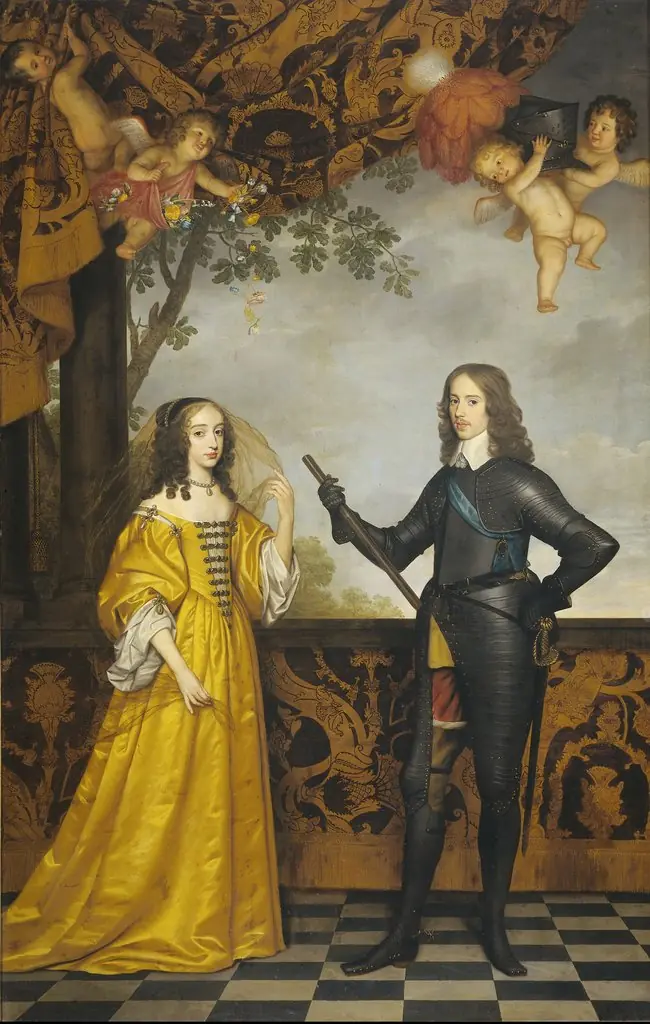 Willem II (1626-50), Prince of Orange, and his wife Maria Stuart (1631-60)
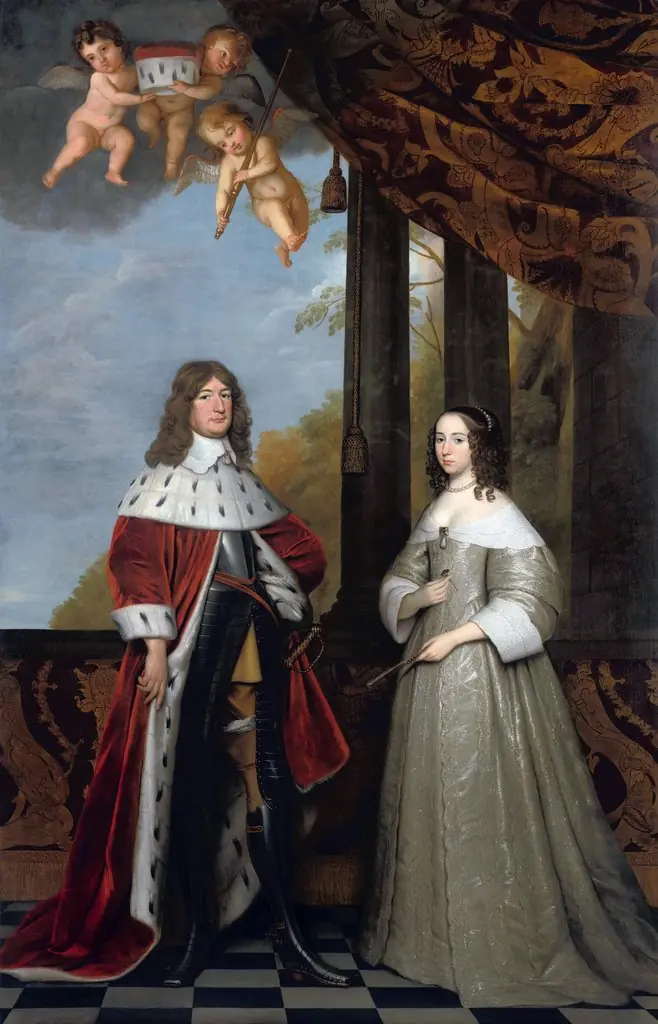 Friedrich Wilhelm (1620-88), Elector of Brandenburg, and his wife Louise Henriette (1627-67), Countess of Orange-Nassau
- The Merry Fiddler
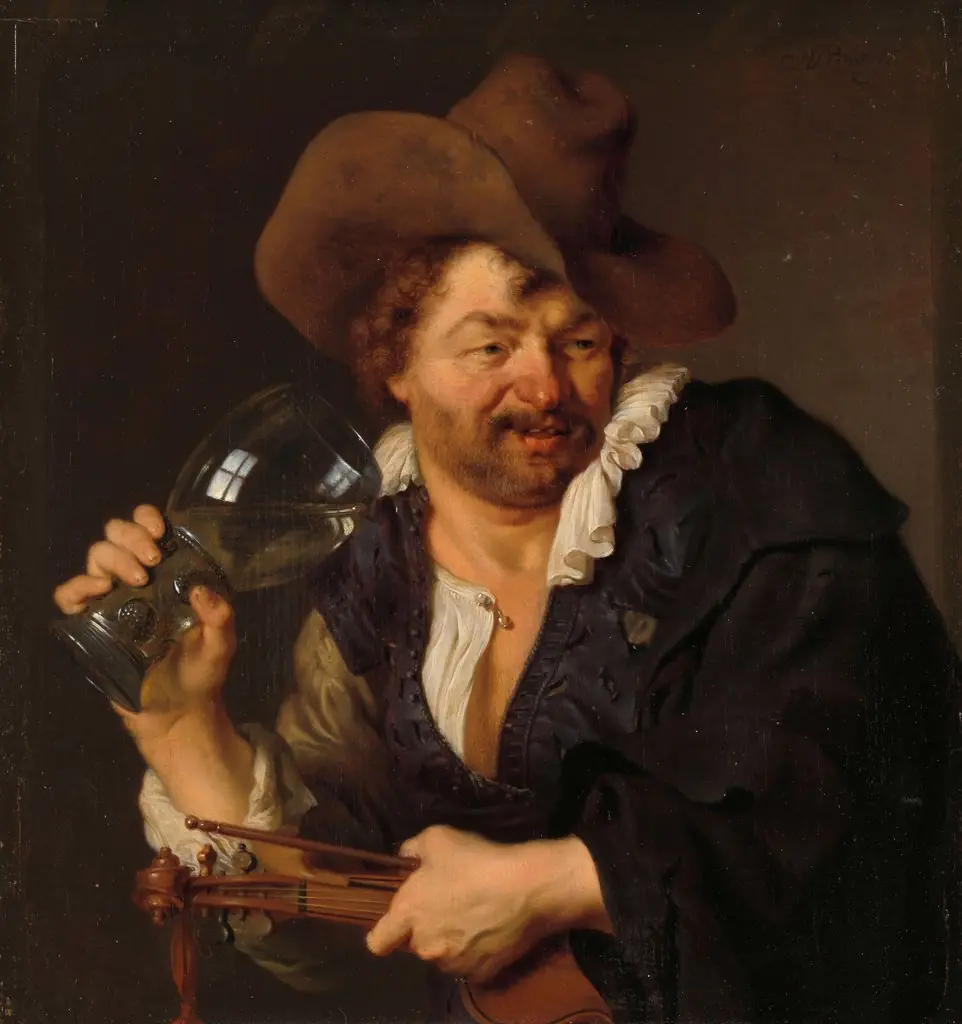 The Merry Fiddler
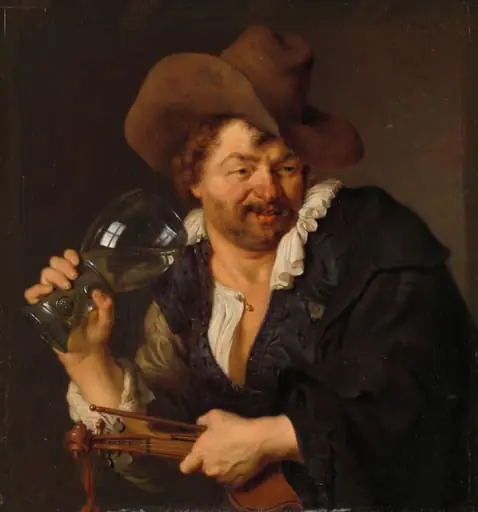 De vrolijke speelman
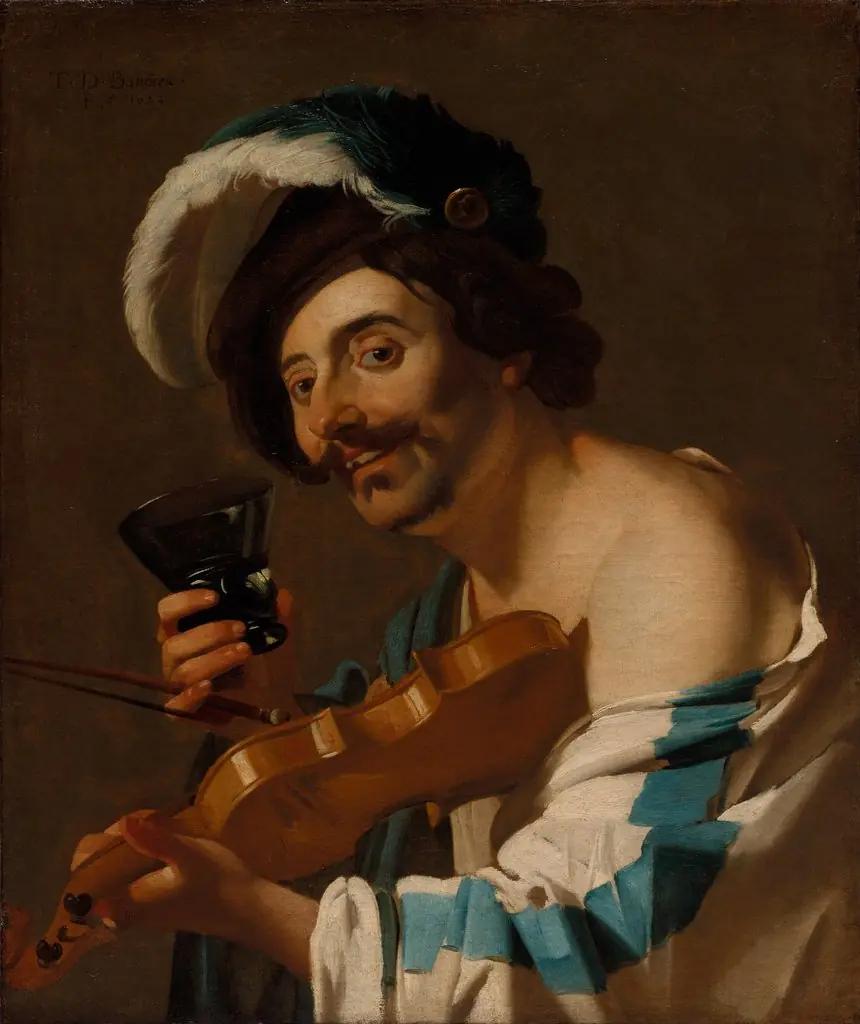 Violin Player with a Wine Glass
 De vrolijke drinker
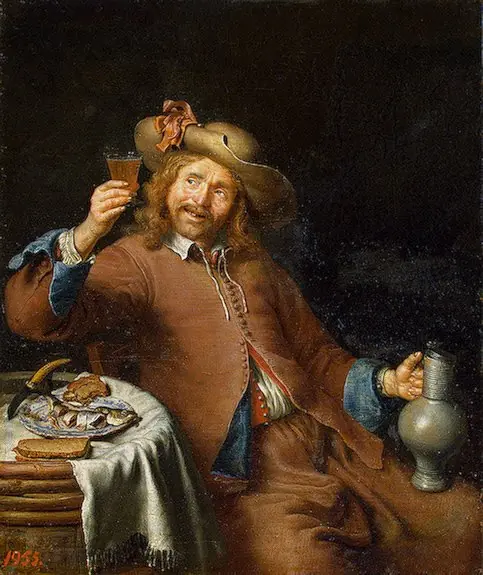 Breakfast of a Young Man
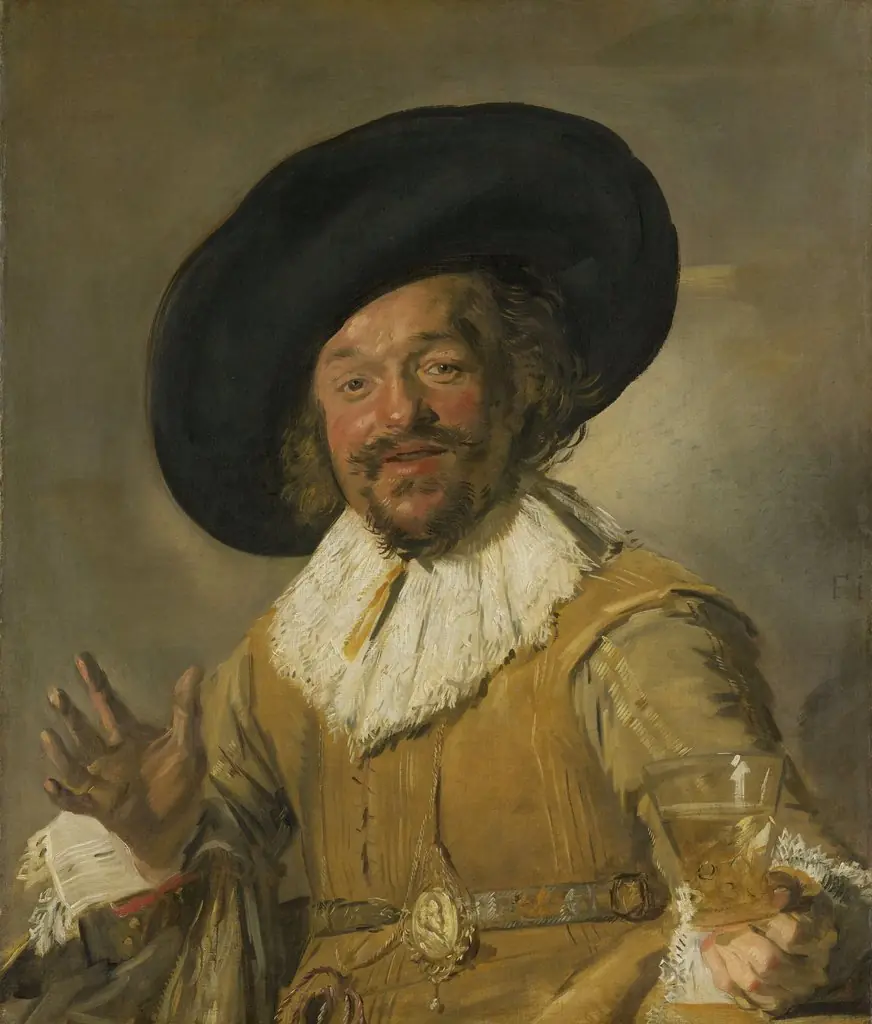 A Militiaman Holding a Berkemeyer, Known as the ‘Merry Drinker’
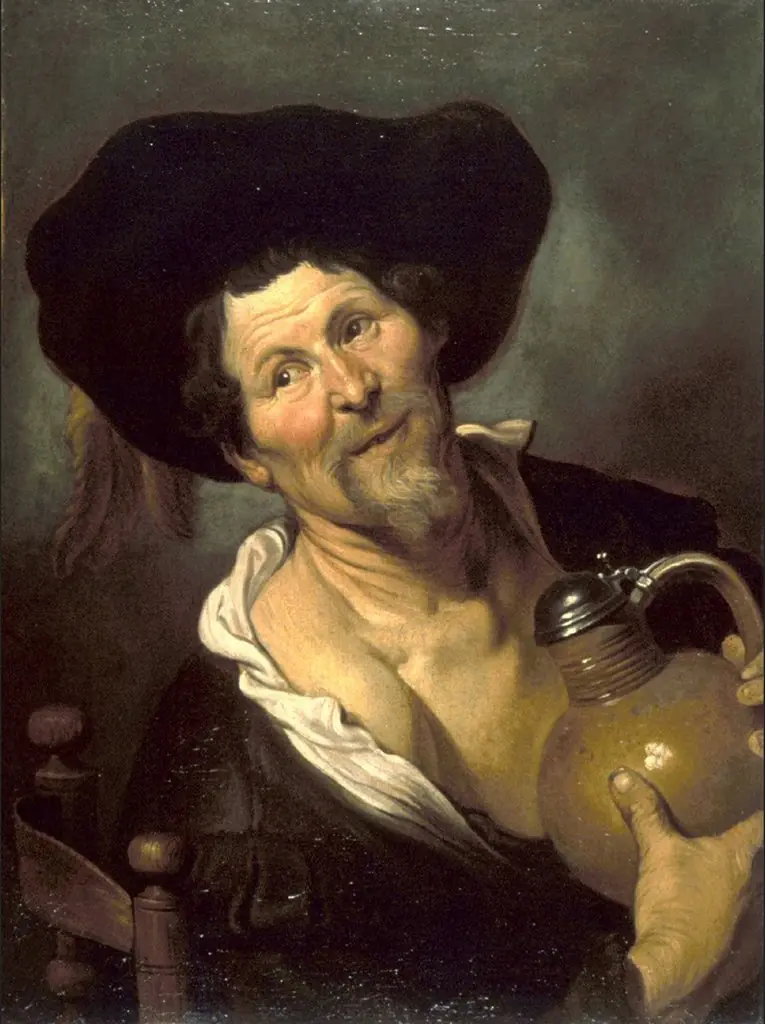 The Jolly Drinker
 The Lute Player
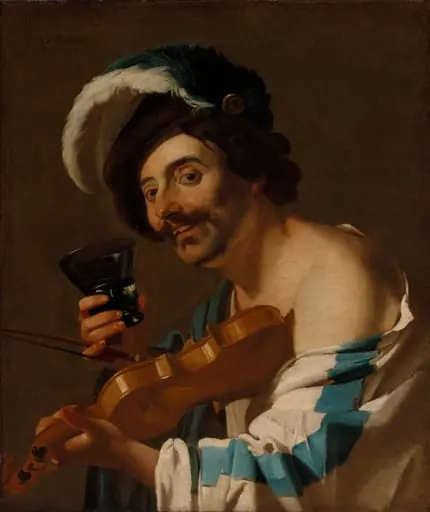 Violin Player with a Wine Glass
 Young man with a decanter by candlelight
 The Jolly Toper
 Studied in the Caravaggio & Baroque course