Artwork
The Concert
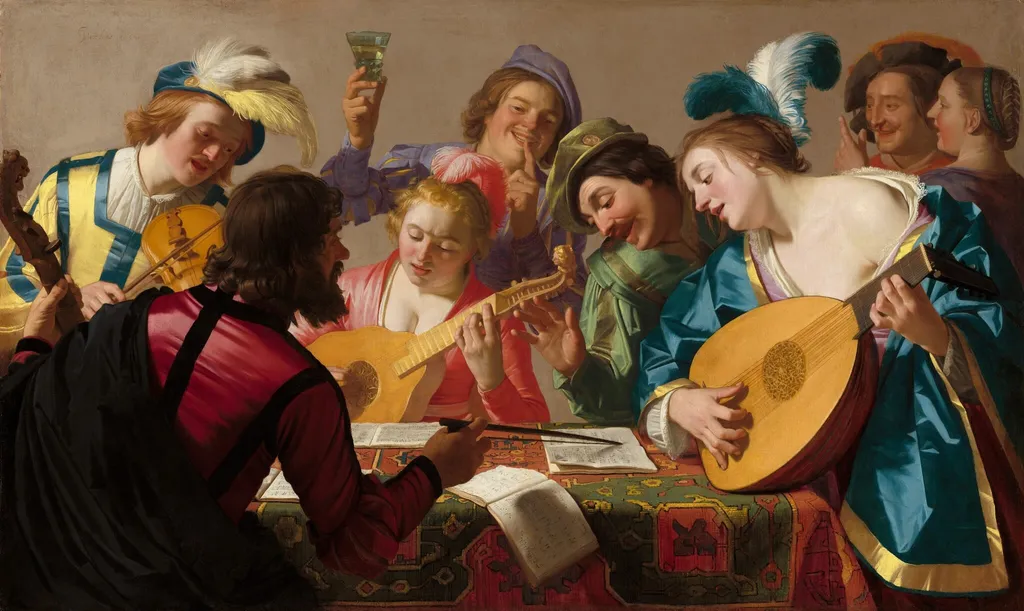
The Concert is an oil painting by the Baroque artist Gerard van Honthorst. It dates from 1623 and is held in the collection of the National Gallery of Art.
- Inscription
- Inscribed:upper left, GH in monogram: GHonthorst fe 1623
About this work
Subject & Meaning
The setting emphasizes harmony and collaboration, with each figure positioned evenly around a rectangular table draped in an Oushak carpet.
The Concert depicts a group of eight musicians and singers gathered around a table, engaged in a collective performance. The setting emphasizes harmony and collaboration, with each figure positioned evenly around a rectangular table draped in an Oushak carpet. A central figure playing a viola da gamba points to sheet music with his bow, guiding a lutenist and singer, while instruments such as the violin and bandore are arranged to the left and right.
The scene’s lighting highlights the rich garments and refined features of the participants, underscoring the elegance of the moment.
Symbolism centers on the act of musical collaboration as a metaphor for social and political order. The standing figure, distinguished by long hair and a beard, has been identified as Frederick V, Elector Palatine and former King of Bohemia, suggesting a reading of the scene as an allegory of the ruler’s role in uniting diverse subjects through harmonious action. This interpretation aligns with contemporary emblematic literature, notably Zincgref’s 1619 Emblematum Ethico-politicorum Centuria, which frames the sovereign’s guidance as essential to communal harmony.
Technique & Style
The Concert is an oil on canvas executed by Gerrit van Honthorst in 1623. The support consists of two vertically seamed linen pieces, with the paint applied in smooth glazes over shadowed areas and denser impasto in illuminated passages. The composition is arranged symmetrically around a rectangular table draped with an Ottoman rug, its eight figures positioned with measured regularity.
Light is evenly diffused to emphasize rich costume textures and refined facial features, while the instruments, including viola da gamba, violin, bandore, and lute, converge as a cohesive ensemble. A signature and date, "GHonthorst fe 1623," appear at upper left. The lute’s right side was later enlarged and retouched, though X-radiography reveals no underlying revisions.
History & Provenance
Painted in Utrecht in 1623 shortly after Gerrit van Honthorst's return from Rome, this work was likely commissioned by either Maurice of Nassau or the exiled Bohemian sovereigns Frederick V and Elizabeth Stuart. By August 1632, the painting was recorded in the inventory of the Stadhouderlijk Kwartier in The Hague as belonging to Prince Frederick Hendrick of Orange. It remained in the House of Orange collection, passing by descent to Prince Willem V, until French revolutionary forces requisitioned it as war booty in May 1795 and transported it to Paris.
Following its removal, the artwork disappeared from public records until re-emerging in a private French collection around 1840. It remained in private hands until 2009, when it was jointly acquired by dealers Anthony Speelman and Adam Williams Fine Art. The National Gallery of Art in Washington, D.C., ultimately purchased the canvas on July 31, 2013.
The Concert is held by the National Gallery of Art in Washington, D.C., which purchased it on 31 July 2013. Prior to that acquisition, the painting had been bought jointly in 2009 by Anthony Speelman of London and Adam Williams Fine Art, Ltd., of New York, and before that it resided in a private collection in Paris and Senan, France, from 1840 onward.
The work's documented ownership begins in the collection of Prince Frederick Hendrick of Orange by 1632, when it was recorded in the inventory of the Stadhouderlijk Kwartier in The Hague. It descended in the male line to Prince Willem V of Orange, whose pre-1793 catalog listed it as "A company making music" by Honthorst. In May 1795, during the Revolutionary period, the painting was requisitioned by the French Revolutionary Government and transported to Paris as a spoil of war, after which it passed into private hands in France by 1840.
Context
The Concert (1623) exemplifies the Dutch Caravaggisti, merging Caravaggio’s dramatic chiaroscuro with the genre scenes of Honthorst’s Roman period. Scholars highlight its classicist composition, the orderly placement of eight musicians, and the use of impasto to accentuate rich fabrics. The central conductor may allude to Frederick V, suggesting political symbolism.
Its provenance records ownership by Prince Frederick Henry, seizure by French forces in 1795, and purchase by the National Gallery of Art in 2013 after a 2009 reappearance. The work measures 123.5 × 205 cm and is catalogued as a genre scene.
Overview
Gerrit van Honthorst's "The Concert," an oil painting from 1623, presents a vibrant genre scene. This artwork captures a moment of social interaction, depicting a group of individuals gathered together, engrossed in musical performance and shared enjoyment. The painting exemplifies the artist's engagement with everyday life subjects prevalent in early 17th-century Dutch art.
Own this work as a print
Artist & collection
Artist
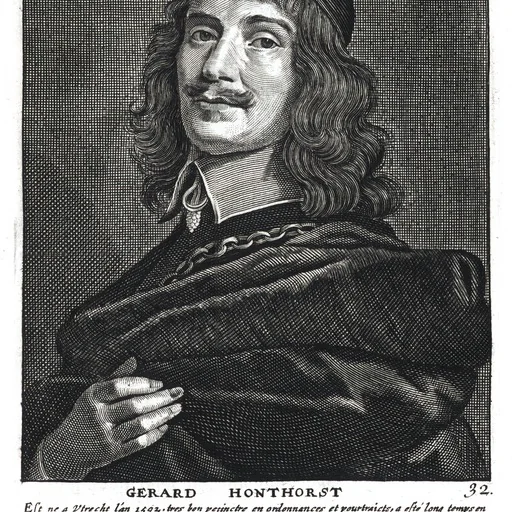
Gerard "Gerrit" van Honthorst (4 November 1592 – 27 April 1656) was a Dutch Golden Age painter who became known for his depiction of artificially lit scenes, eventually receiving the Italian nickname Gherardo delle Notti ("Gerard of the…

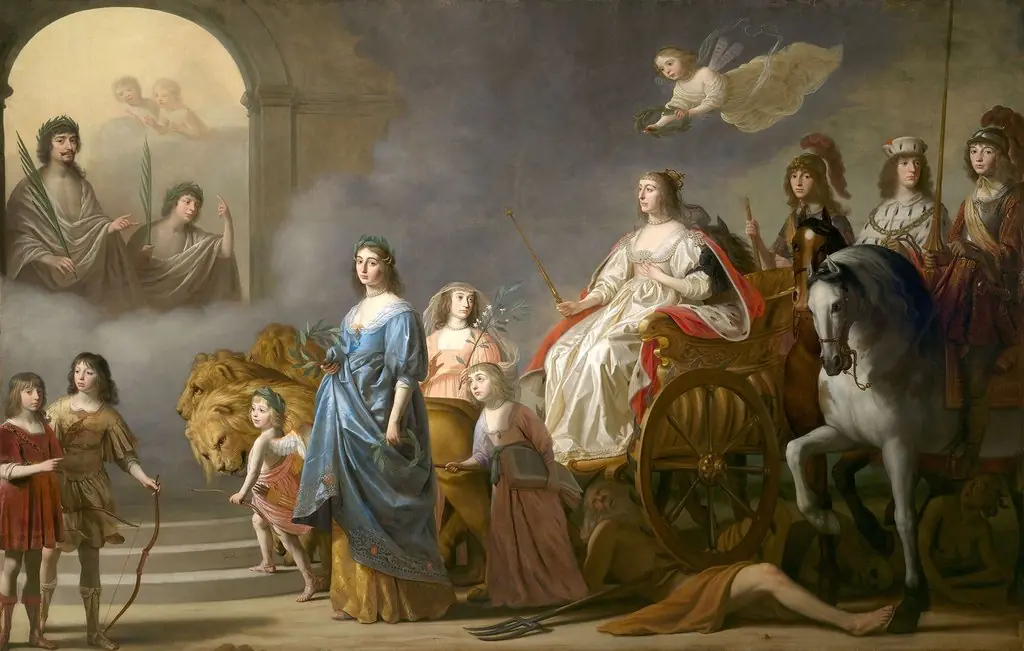 The Triumph of the Winter Queen: Allegory of the Just
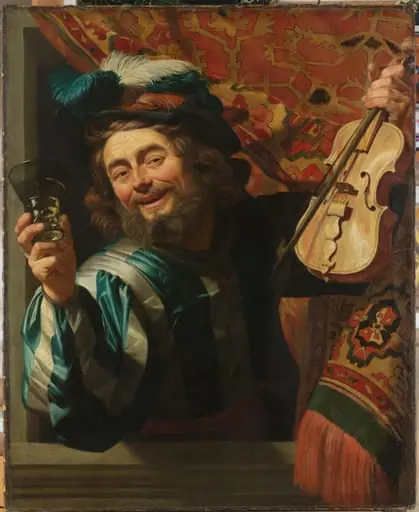 Een vrolijke vioolspeler
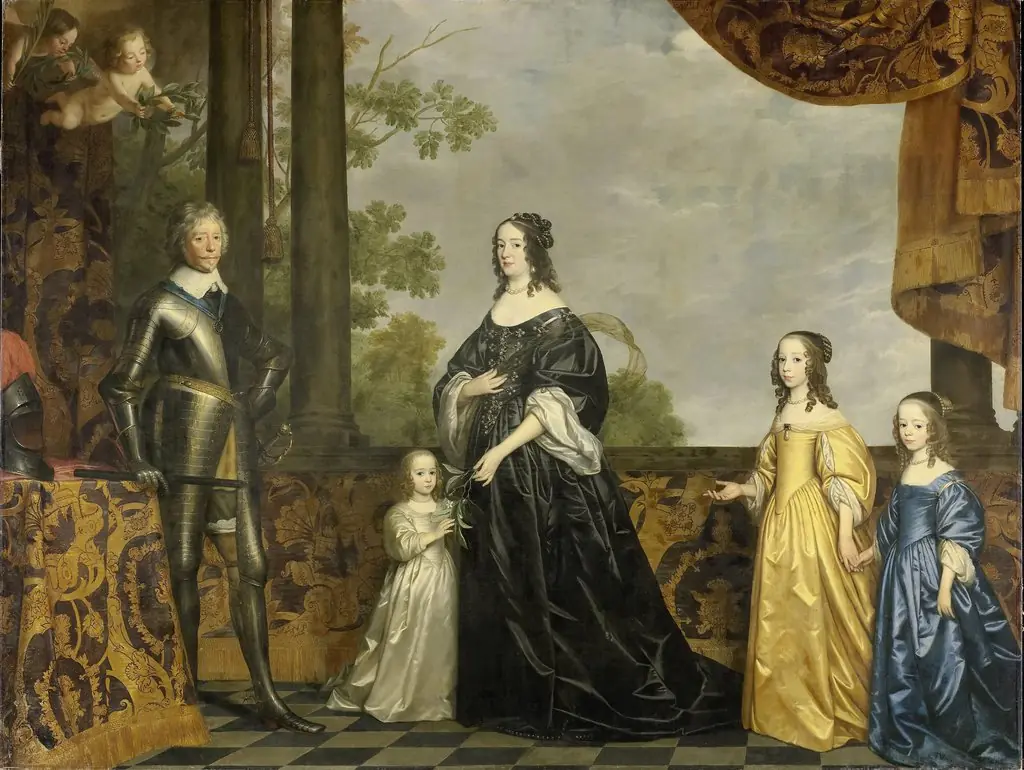 Frederik Hendrik (1584-1647), Prince of Orange, his wife Amalia van Solms (1602-75) and their three youngest daughters, Albertina Agnes (1634-96), Henrietta Catharina (1637-1708) and Maria (1642-88)
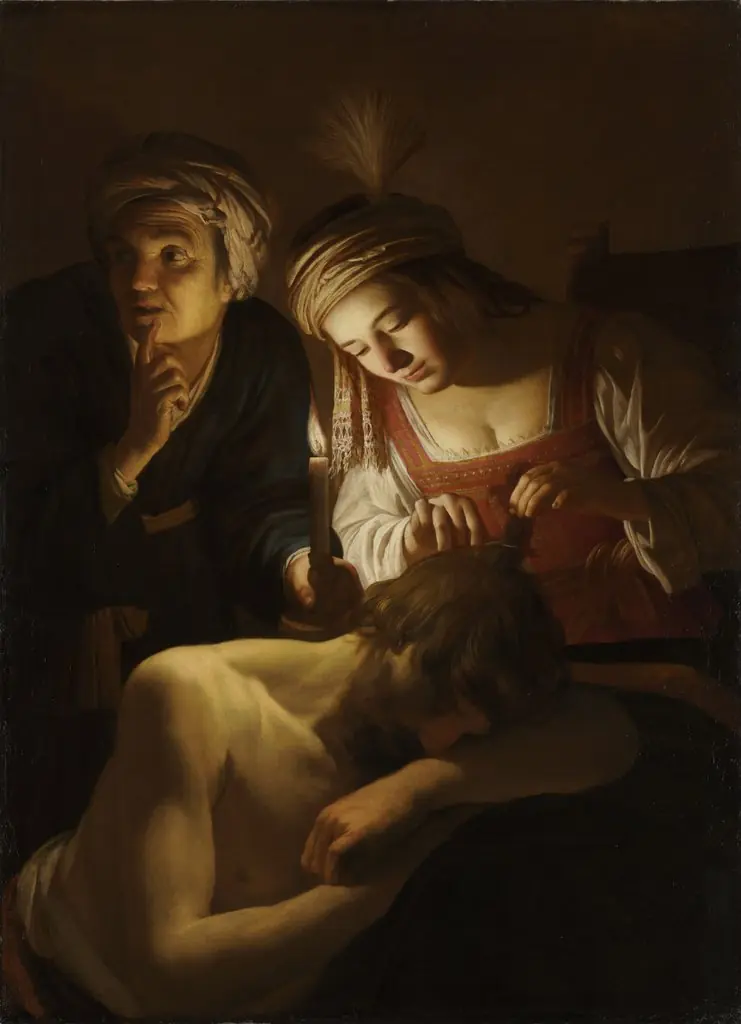 Samson and Delilah
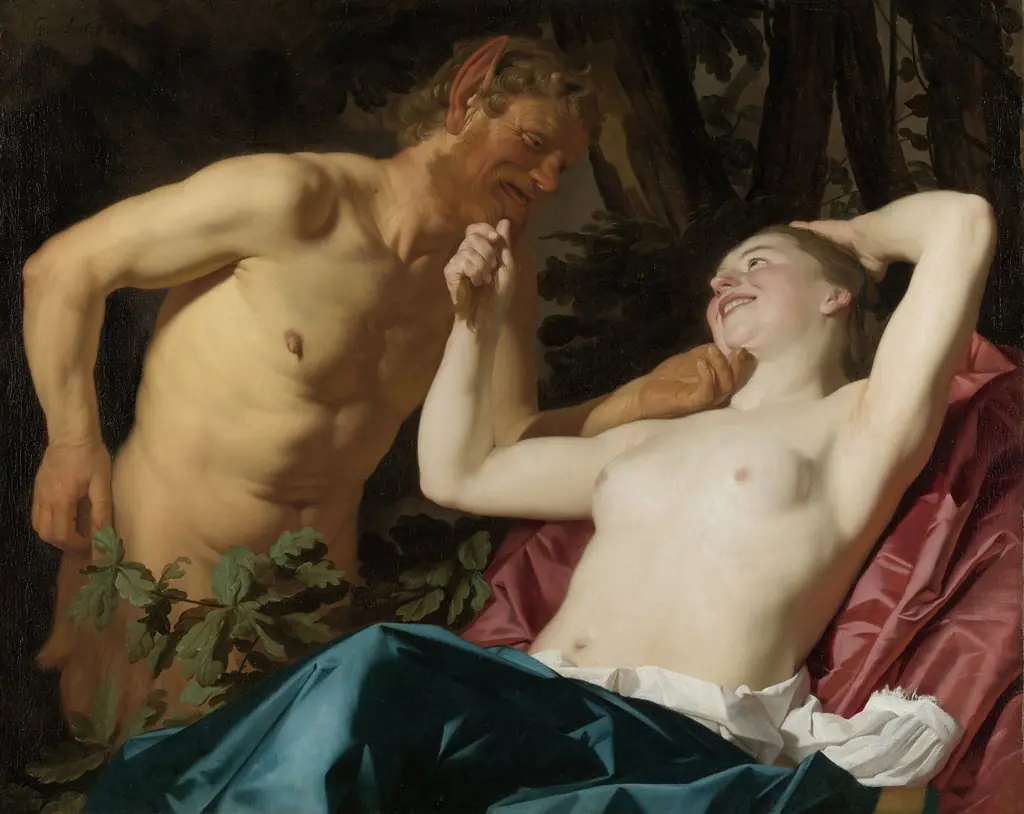 Satyr and Nymph
 Young Woman with a Candlestick, Old Woman and a Violin Player
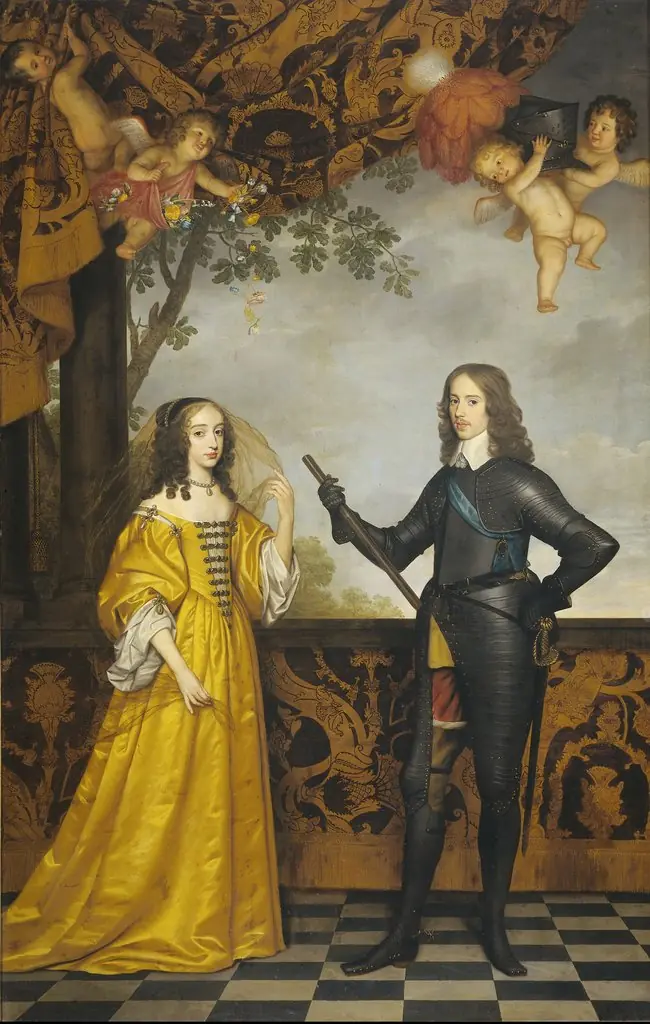 Willem II (1626-50), Prince of Orange, and his wife Maria Stuart (1631-60)
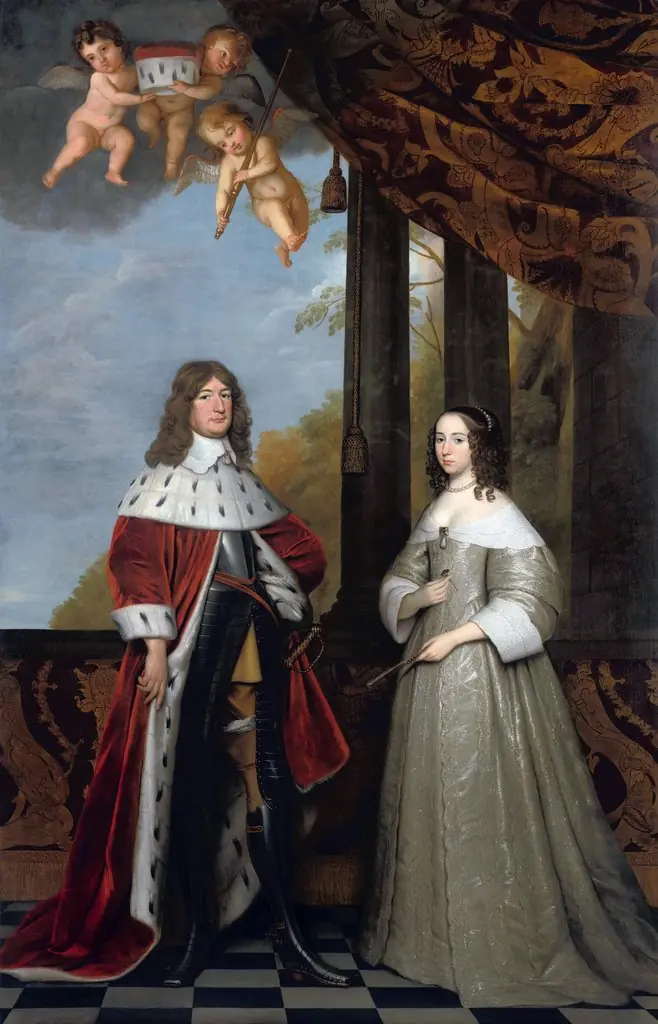 Friedrich Wilhelm (1620-88), Elector of Brandenburg, and his wife Louise Henriette (1627-67), Countess of Orange-Nassau