Artwork
Allegory of War and Peace
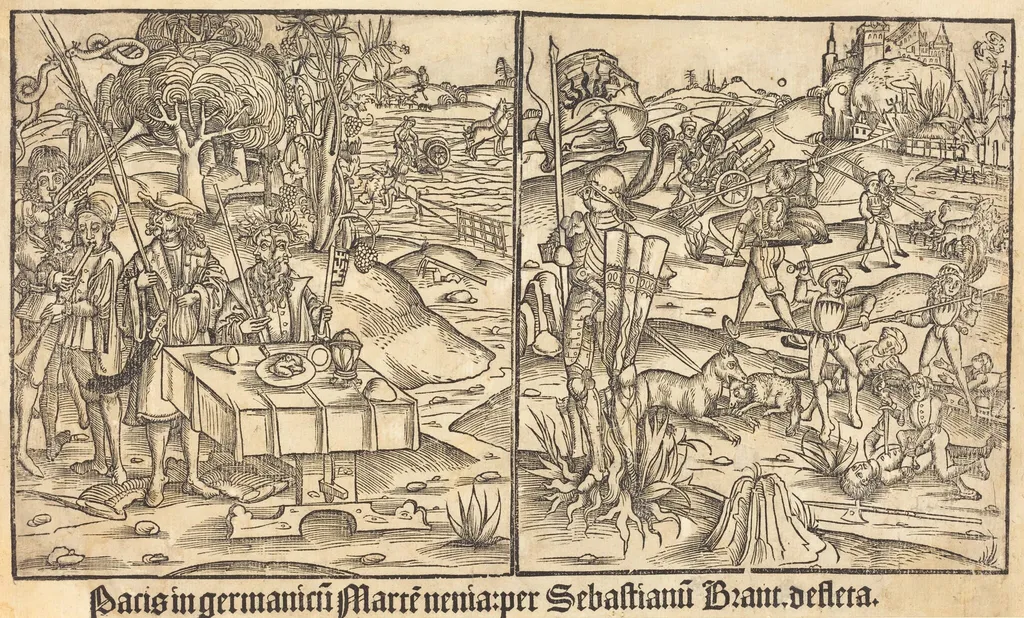
Allegory of War and Peace is an ink print by the Renaissance artist German 15th Century. It dates from 1499 and is held in the collection of the National Gallery of Art.
About this work
Overview
Despite its compact size, the composition is densely detailed, with figures and elements arranged to emphasize the tension between harmony and destruction.
This woodcut print presents a dual composition divided vertically into two contrasting scenes: one depicting peace and abundance, the other war and chaos. Created using the woodcut technique, the image relies on bold black-and-white contrasts to distinguish its themes. Despite its compact size, the composition is densely detailed, with figures and elements arranged to emphasize the tension between harmony and destruction.
Subject & Meaning
The left half shows a tranquil gathering around a woman holding a cornucopia, symbolizing fertility and prosperity. Fruit, flowers, and calm figures suggest the rewards of peace. Opposite, a violent battle unfolds with soldiers, weapons, and smoke, representing the ruin of conflict.
The juxtaposition frames peace as a cultivated state nurtured by nature, while war is portrayed as disorderly and self-consuming.
Technique & Style
Executed as a woodcut, the image was carved into a wooden block, with raised areas inked and pressed onto paper. The artist used sharp, linear contrasts to define forms, relying on negative space and dense patterning to convey movement and texture. The absence of grayscale creates a stark, graphic quality that heightens the emotional divide between the two halves of the scene.
History & Provenance
The print originates from the early modern period, when allegorical imagery was commonly used in prints to convey moral or political messages. Though the artist’s identity is not recorded, similar works circulated in Northern Europe during the 16th and 17th centuries. Its survival suggests it was reproduced and distributed, likely as a commentary on contemporary conflicts or as a devotional reminder of peace’s value.
Context
Produced during a time of religious and territorial wars across Europe, the print reflects widespread cultural anxiety over violence and the longing for stability. Allegories of peace and war were standard in civic and religious art, serving as visual sermons. The inclusion of nature as a symbol of peace aligns with humanist ideals that linked societal order with harmony in the natural world.
Legacy
This woodcut exemplifies how printmaking democratized symbolic imagery, making complex moral themes accessible beyond elite audiences. Its clear visual dichotomy influenced later political and satirical prints. Though not widely attributed to a named artist, its structure and intent echo in 18th- and 19th-century propaganda and allegorical prints, preserving its role as a visual tool for social reflection.
Artist & collection

Artist
This 15th-century German artist carved vivid religious scenes into metal and wood, then hand-painted them in bright, symbolic colors.

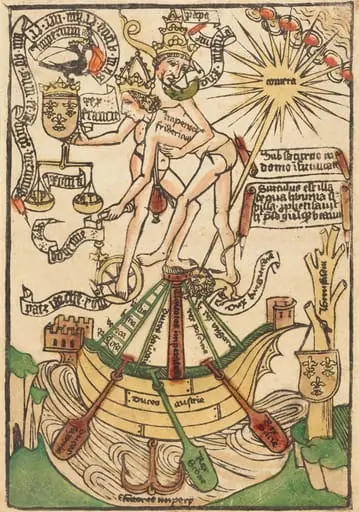 Allegory of the Meeting of Pope Paul II and Emperor Frederick III
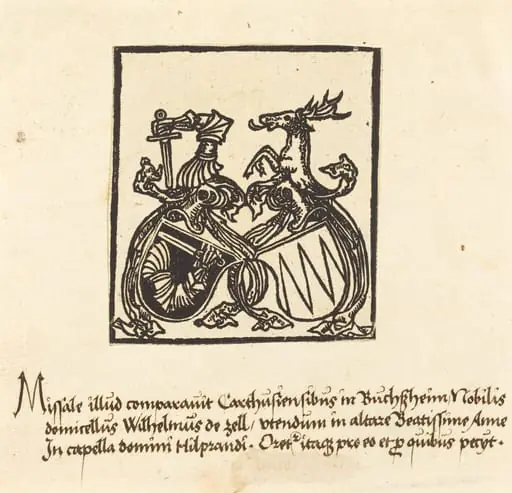 Bookplate of Wilhelm von Zell
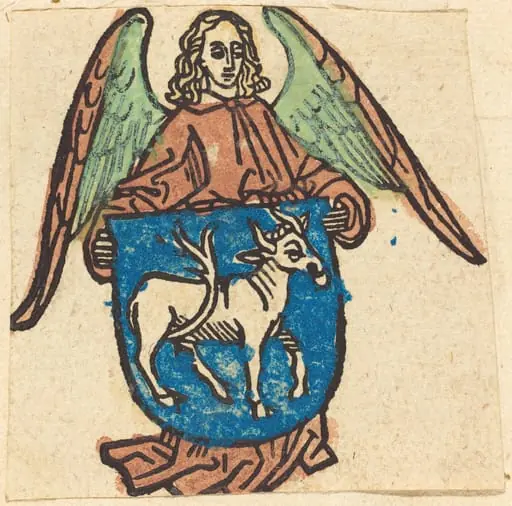 Bookplate of Hilprand Brandenburg of Bibrach
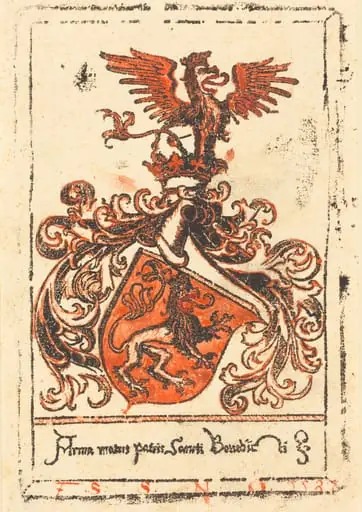 Bookplate of the Abbey of Ottobeuren
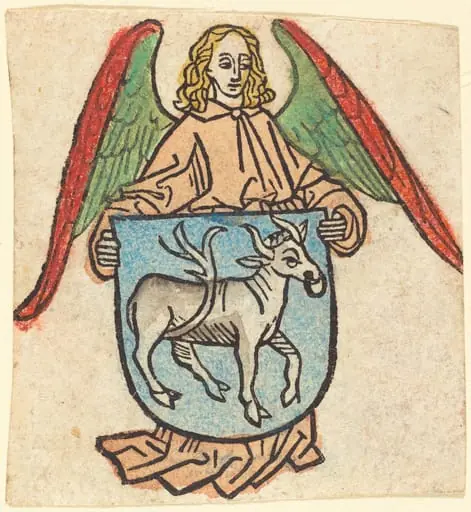 Bookplate of Hilprand Brandenburg of Bibrach
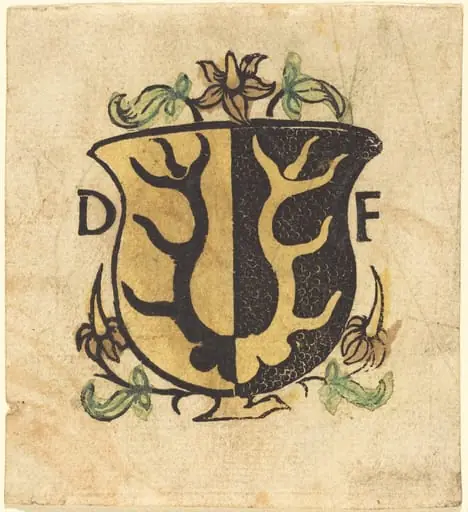 Bookplate of Dominicus Frauenfelder
![Studies for Six Figures (sheet from a model book) [recto], by German 15th Century](https://artifactworldgallery.com/img/german-15th-century--studies-for-six-figures-sheet-from-a-model-book-recto--4837429e0755bc3f-w320.webp) Studies for Six Figures (sheet from a model book) [recto]
Studies for Six Figures (sheet from a model book) [recto]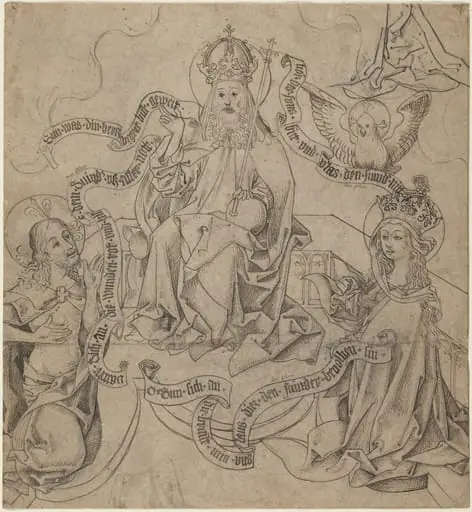 Christ and Mary Interceding with God the Father
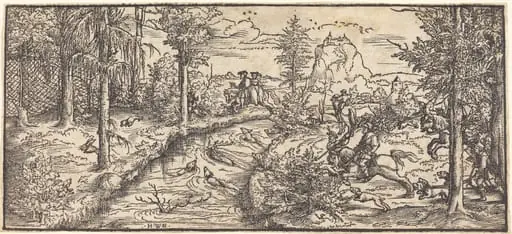 Stag Hunt in a Landscape
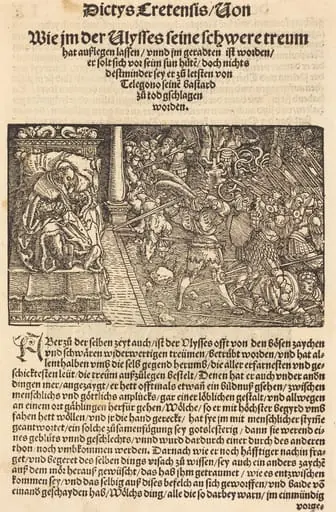 Page from Troianischen Kreig - Ausberg
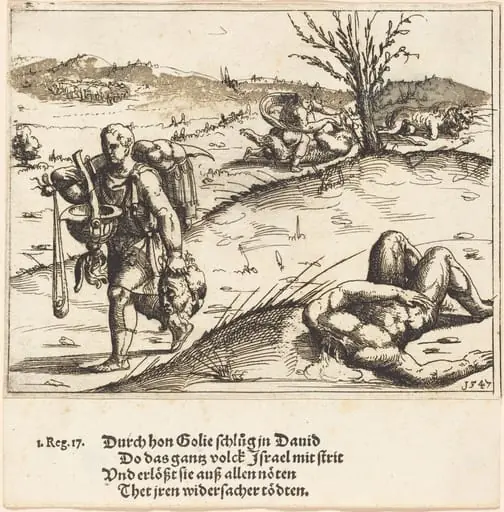 David Beheads Goliath
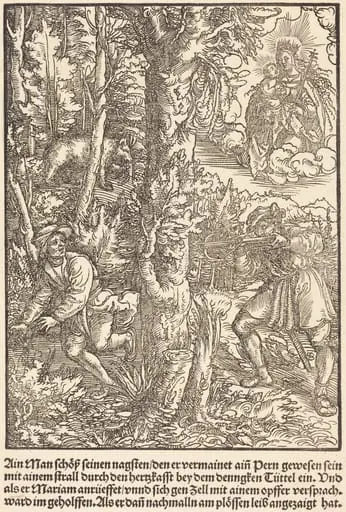 Ain Man Schoss seinen nagsten ...
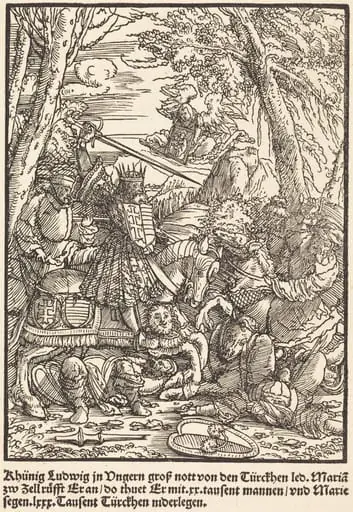 Khunig Ludwig ...
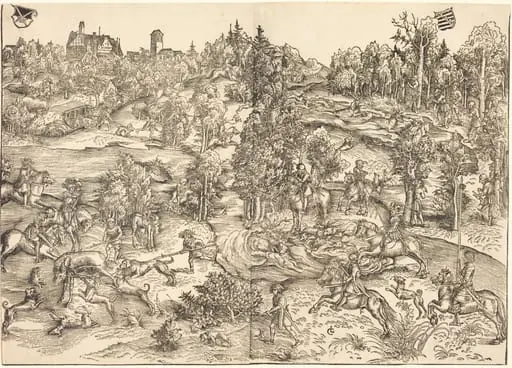 The Stag Hunt
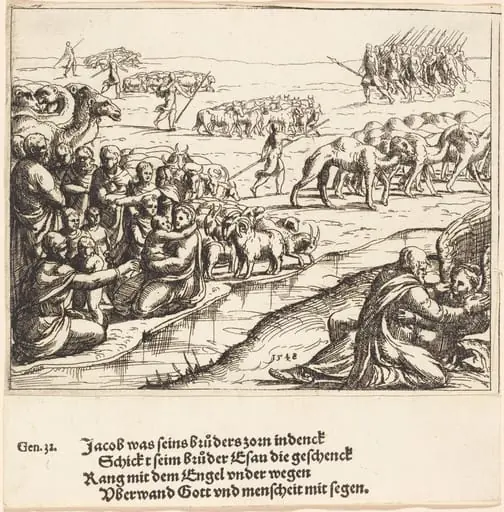 Jacob Wrestling with the Angel
 The Prince at the Bird-Catching
 Der Schatzbehalter: Moses Found by Pharaoh's Daughter (recto); Der Schatzbehalter: Christ before Caiaphas (verso)
 Christ Tells His Disciples of the Last Judgment
 The Murder of the Children of Bethel
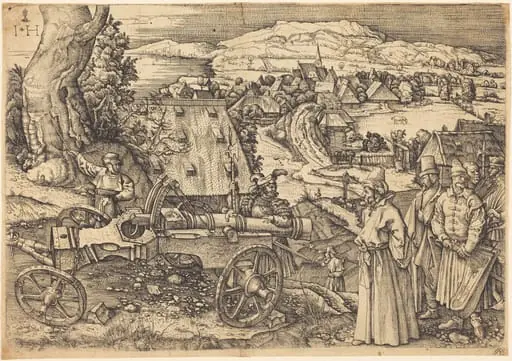
- The Great Cannon