Artwork
Grotesque Strip with Dragon, Shields and Wild Men

Grotesque Strip with Dragon, Shields and Wild Men is an ink print by the Renaissance artist German 15th Century. It dates from 1488 and is held in the collection of the National Gallery of Art. The work is a hand‑coloured woodcut print composed as a continuous strip.
About this work
Overview
Warm hues of gold, red and brown dominate the faded palette against a darker background, while the lines retain a crisp, incised quality.
The work is a hand‑coloured woodcut print composed as a continuous strip. Its composition juxtaposes a crouching lion amid twisting foliage, a central red shield bearing two white bands flanked by two men whose heads are adorned with leaves, and a sinuous dragon that weaves through further tangled motifs. Warm hues of gold, red and brown dominate the faded palette against a darker background, while the lines retain a crisp, incised quality.
Subject & Meaning
The imagery combines natural and fantastical elements: the lion suggests strength, the leafy‑crowned figures evoke a rustic or mythic humanity, and the dragon introduces a serpentine, possibly protective or threatening presence. The shield, marked with contrasting stripes, may symbolize martial identity or heraldic display, linking the human figures to a narrative of conflict or guardianship within the chaotic setting.
Technique & Style
Executed as a woodcut, the design was carved into a wooden block, inked, and pressed onto paper before being hand‑coloured. The incised lines are sharply defined, a hallmark of the medium, and the subsequent application of pigments adds depth while preserving the original wood‑grain texture. The overall style reflects a late medieval or early Renaissance fascination with grotesque, ornamental compositions.
History & Provenance
The piece belongs to a tradition of printed decorative strips used for book illustration or wall hangings, though specific details of its origin, date, or previous owners are not recorded in the supplied information.
Context
Such grotesque woodcuts were popular in Northern Europe as visual supplements to texts, often serving as moral or allegorical illustrations. The combination of animal, human, and mythical motifs aligns with contemporary emblematic practices that blended didactic content with decorative exuberance.
Artist & collection

Artist
This 15th-century German artist carved vivid religious scenes into metal and wood, then hand-painted them in bright, symbolic colors.

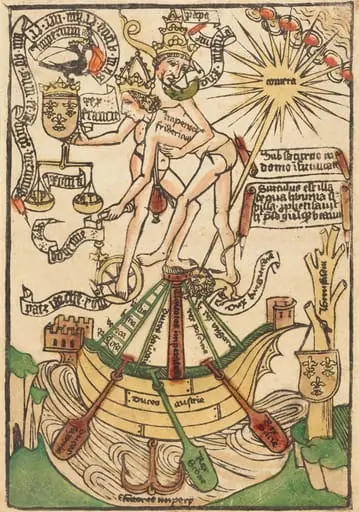 Allegory of the Meeting of Pope Paul II and Emperor Frederick III
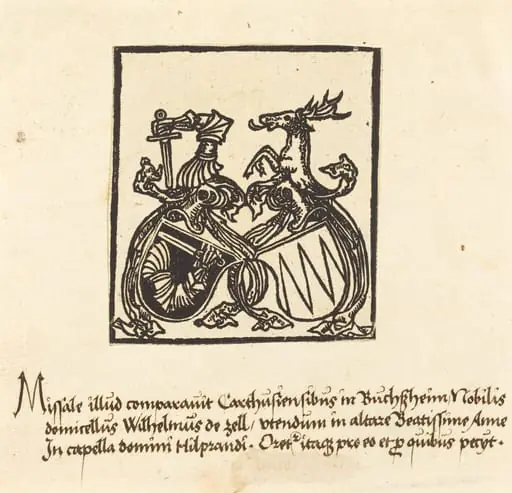 Bookplate of Wilhelm von Zell
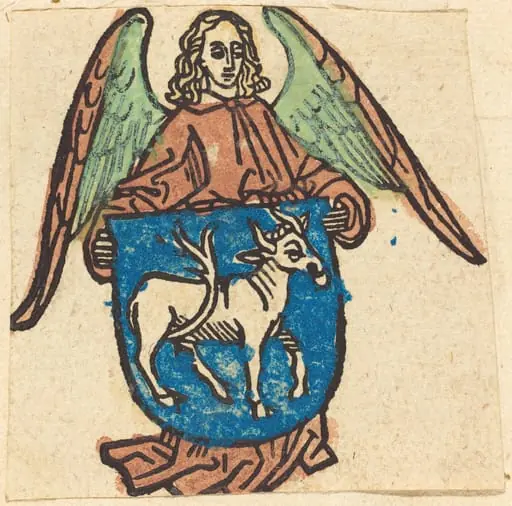 Bookplate of Hilprand Brandenburg of Bibrach
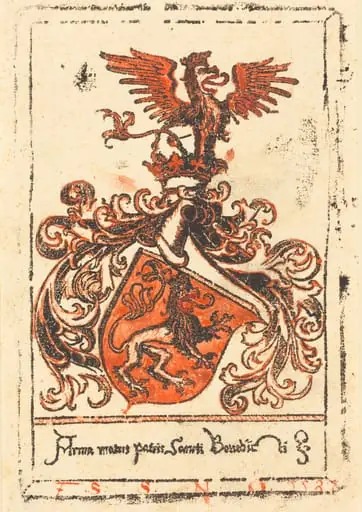 Bookplate of the Abbey of Ottobeuren
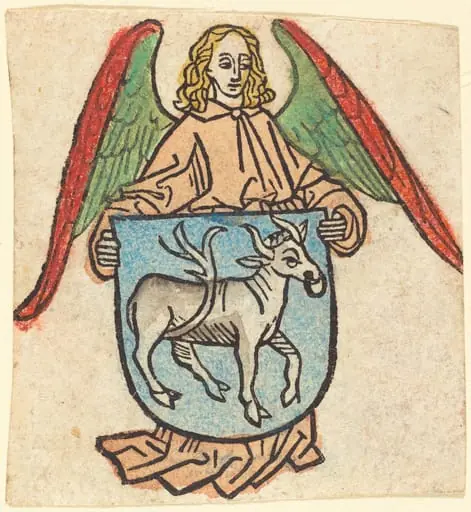 Bookplate of Hilprand Brandenburg of Bibrach
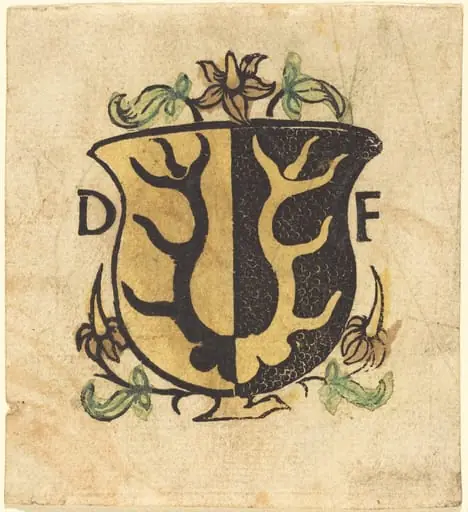 Bookplate of Dominicus Frauenfelder
![Studies for Six Figures (sheet from a model book) [recto], by German 15th Century](https://artifactworldgallery.com/img/german-15th-century--studies-for-six-figures-sheet-from-a-model-book-recto--4837429e0755bc3f-w320.webp) Studies for Six Figures (sheet from a model book) [recto]
Studies for Six Figures (sheet from a model book) [recto]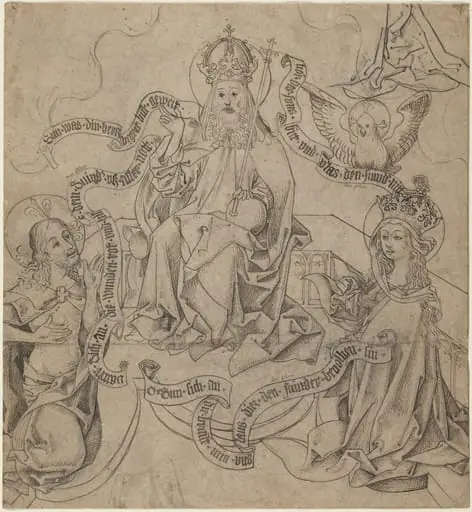 Christ and Mary Interceding with God the Father
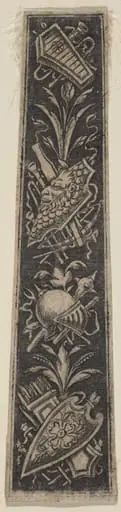 Ornament Plate with Armor and Musical Instruments
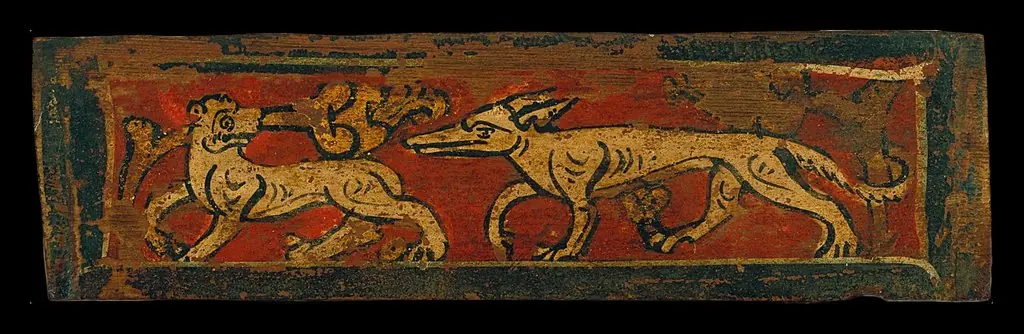 Small coffered ceiling panel with four-legged animals and plant motifs
 Tiger
Tiger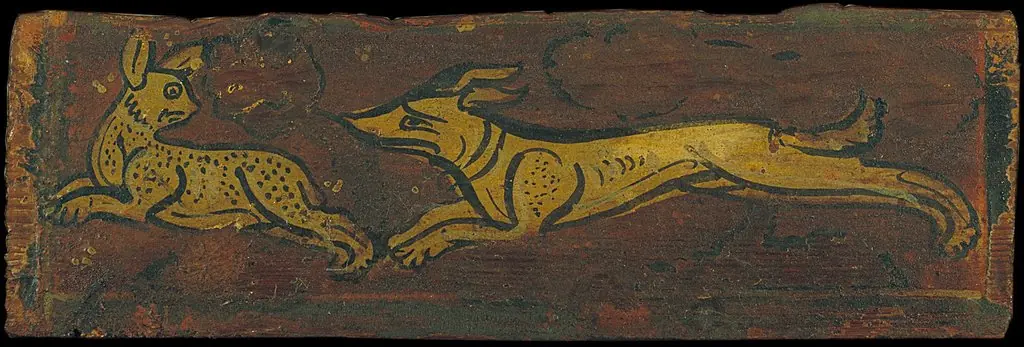 Small coffered ceiling panel with a dog pursuing a hare
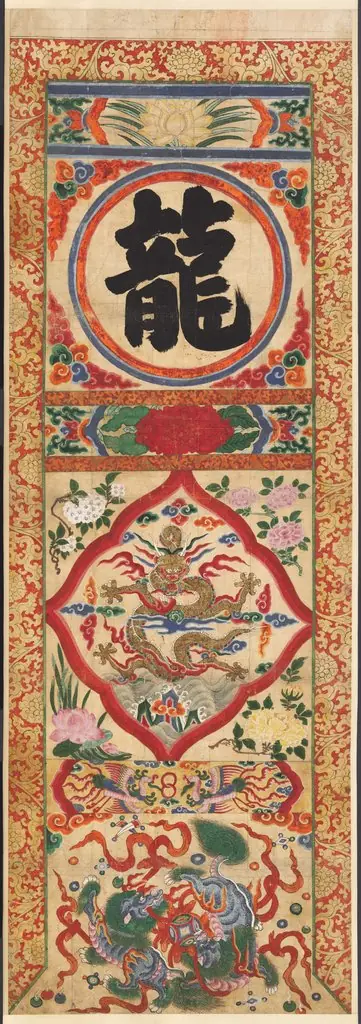
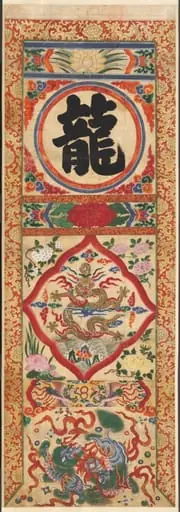 Painted Panel of Character "Dragon"
 Dragon
 Set of Four Painted Characters
 Untitled
 Small coffered ceiling panel with fantastic animals
 Painted Panel of Character "Recite"