Artwork
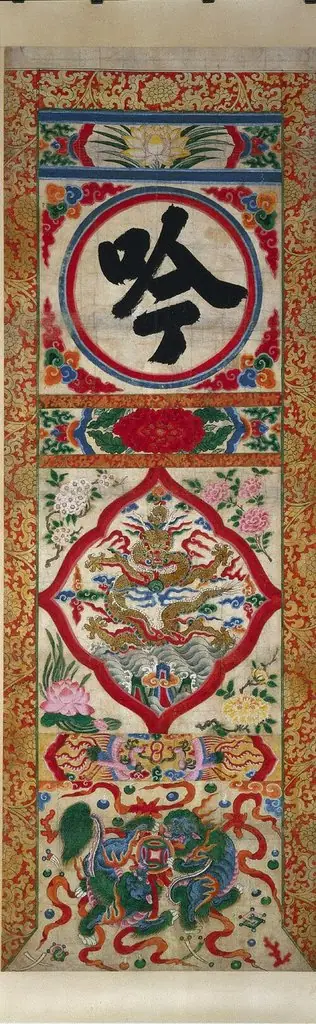
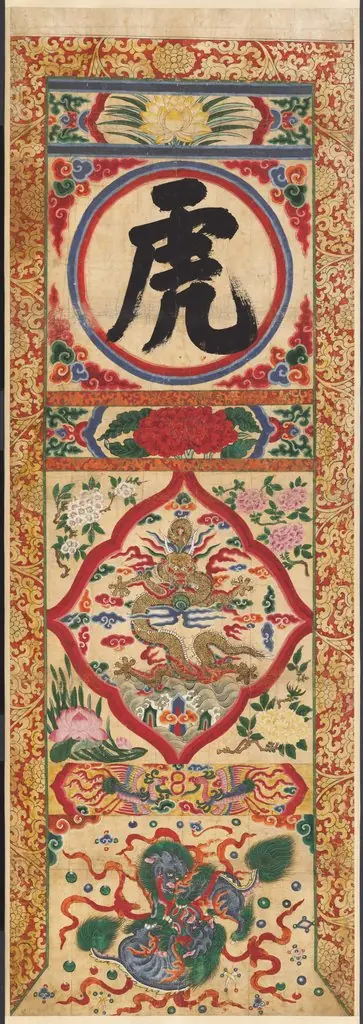
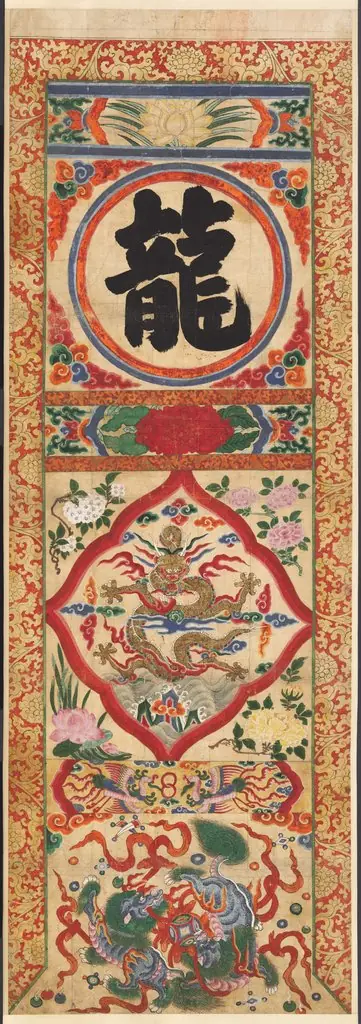
Painted Panel of Character "Recite"
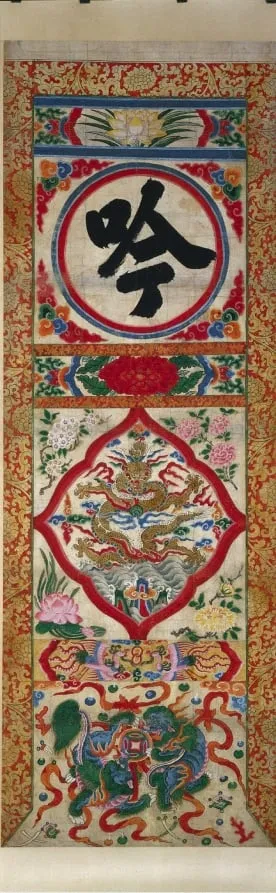
Painted Panel of Character "Recite" is an unspecified painting by the Korean Minhwa artist Unknown. It dates from 1904 and is held in the collection of the Cleveland Museum of Art. The work consists of a bright hanging scroll featuring a single, bold black Chinese character on a white ground.
- Accession no.
- 1998.119.4
About this work
The tiger and dragon in the set stand guard over the west and east, while this one focuses on chanting.
You see a bright hanging scroll with a bold black character on a white background. The character means “recite,” part of a four-panel set used in outdoor rituals.
These scrolls were likely carried in Buddhist ceremonies to call down good fortune. The tiger and dragon in the set stand guard over the west and east, while this one focuses on chanting.
To see more objects like this, look up Korea, Joseon dynasty (1392–1910).
Overview
The work consists of a bright hanging scroll featuring a single, bold black Chinese character on a white ground. The character translates as “recite” and forms one panel of a quartet of scrolls that were likely employed in outdoor Buddhist rites to invoke auspicious blessings.
Subject & Meaning
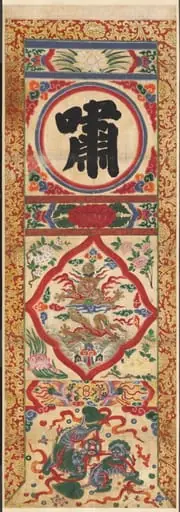
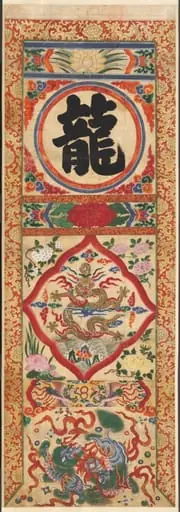
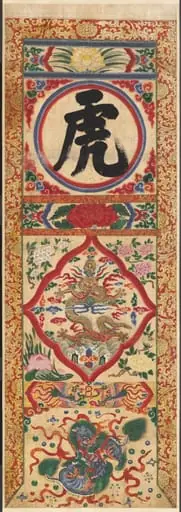
Within the four‑panel set, each scroll displays a distinct emblem: a tiger, a dragon, a whistle, and the reciting character. The tiger and dragon traditionally serve as guardians of the western and eastern directions, while the “recite” panel emphasizes the vocal aspect of the ritual, calling for chanting or mantra.
Technique & Style
Executed as a painted hanging scroll, the piece employs vivid coloration for the background and a stark black ink brushstroke for the central character. The contrast of ink on a light field reflects the aesthetic conventions of Korean court and religious art during the Joseon period.
History & Provenance
The scrolls are associated with the Joseon dynasty of Korea (1392–1910), a time when Buddhist ceremonies often incorporated portable visual aids. Their function as mobile ritual objects suggests they were carried in processions or placed at altars during outdoor observances.
Context
In Korean Buddhist practice, directional guardians such as the tiger and dragon were invoked to protect the ritual space, while the act of recitation was central to invoking divine favor. The four‑panel arrangement thus integrates protective symbolism with the spoken component of worship.
Artist & collection