Artwork
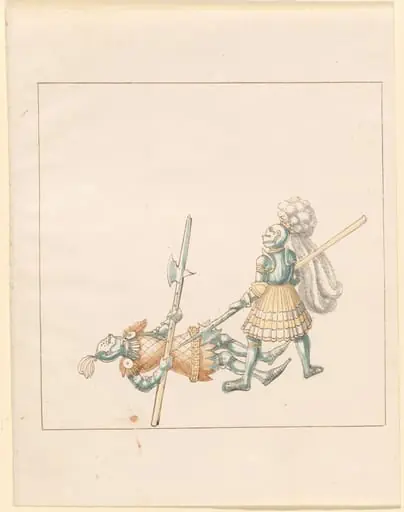
Foot Combat with Falchions
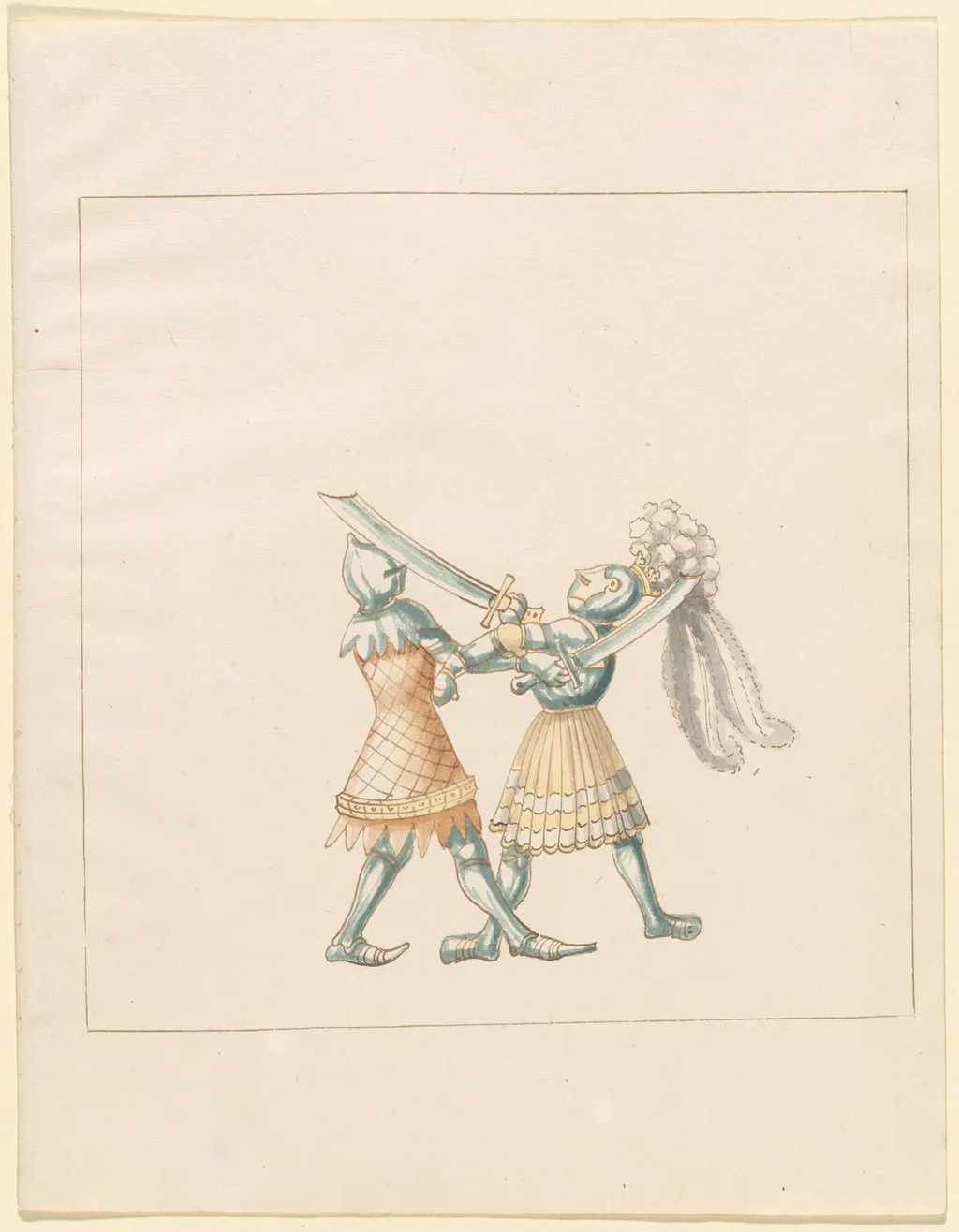
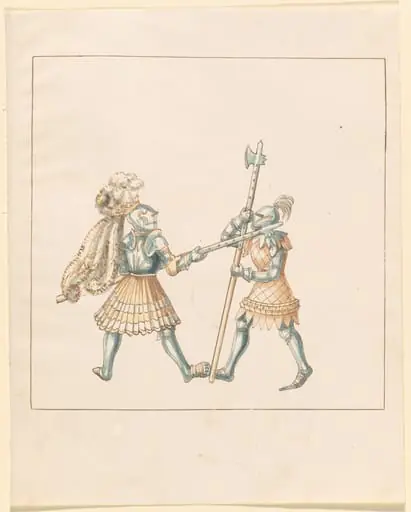
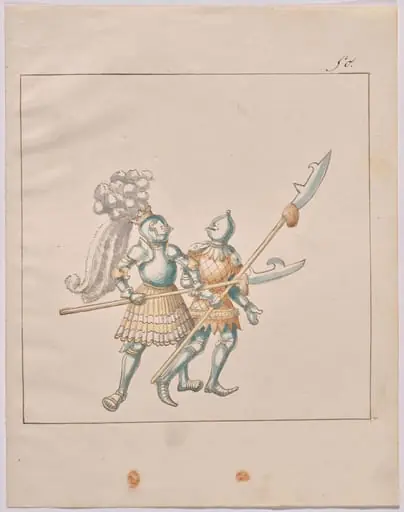
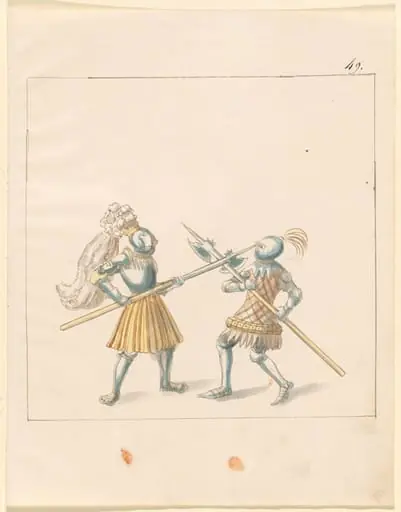
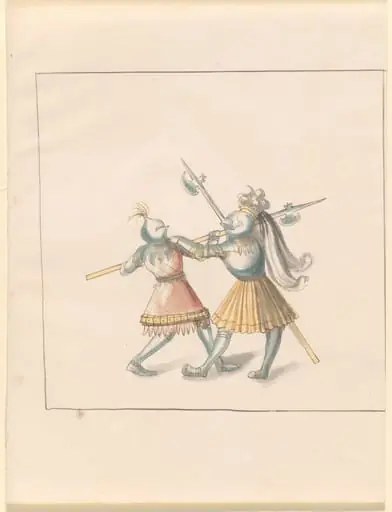
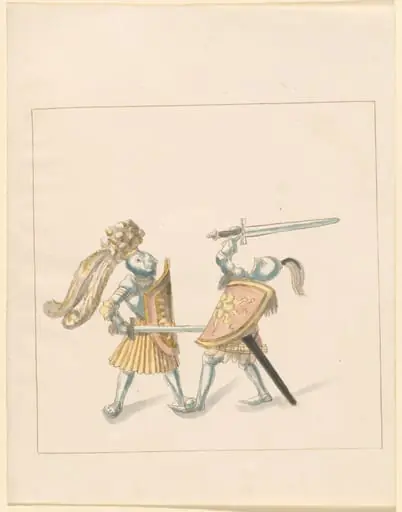
Foot Combat with Falchions is an ink drawing by the Renaissance artist German 16th Century. It dates from 1514 and is held in the collection of the National Gallery of Art. This drawing captures a close-quarters duel between two armored fighters, rendered in pen and black ink with subtle watercolor accents.
- Inscription
- Inscribed:center by unknown hand in graphite: 1; lower left on mount in black ink: 34; lower right on mount in black ink: A 167
About this work
Overview
This drawing captures a close-quarters duel between two armored fighters, rendered in pen and black ink with subtle watercolor accents. Measuring 32.8 by 26.2 centimeters, it is executed on laid paper and dates to the 16th century. The artist remains unidentified, but the work reflects the observational precision common among German artisans of the period who documented martial practices.
Subject & Meaning
The scene portrays two foot soldiers engaged in combat with falchions, single-edged swords used for both cutting and thrusting.
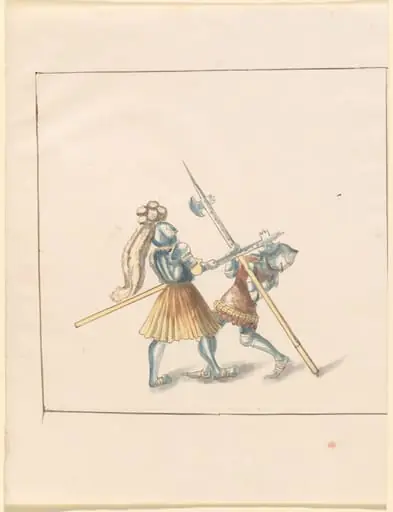
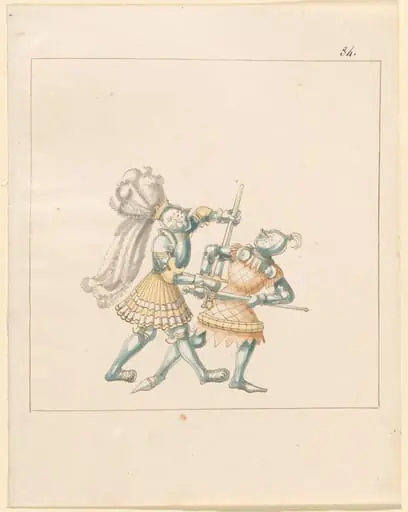
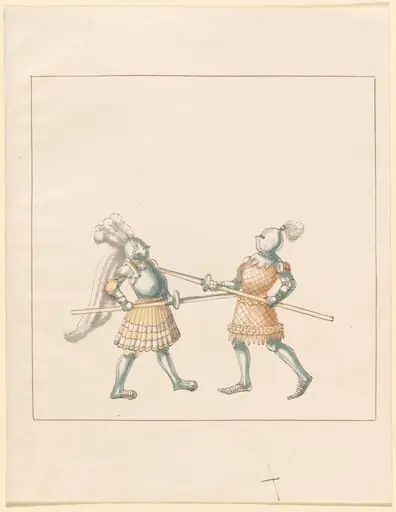
The scene portrays two foot soldiers engaged in combat with falchions, single-edged swords used for both cutting and thrusting. Their armor, typical of German infantry in the 1500s, includes segmented plates and padded garments. The dynamic postures suggest a moment of intense struggle, not choreography, emphasizing the physicality and chaos of hand-to-hand warfare in civilian or mercenary contexts.
Technique & Style
The artist employed fine pen lines to define contours and armor textures, then applied transparent watercolor washes to suggest metal sheen, fabric folds, and shadow. The lack of background focuses attention on the figures, a hallmark of martial studies from this era. The technique balances precision with spontaneity, indicating the drawing may have served as a reference or training aid for fighters or armorers.
History & Provenance
The work’s origin is undocumented, but its style aligns with German martial manuscripts from the mid-1500s, often compiled by fencing masters or military artisans. It likely circulated among professional soldiers or guilds before entering a private or institutional collection. No record of its early ownership survives, though its condition suggests careful preservation over centuries.
Context
In 16th-century Germany, detailed drawings of combat were produced alongside fencing manuals and armor catalogs. These served practical purposes: training, documentation, or commercial display. Falchions, though less prestigious than rapiers, were common among lower-ranking troops. This drawing reflects a broader cultural interest in recording the tools and techniques of everyday warfare.
Legacy
Though unsigned and unattributed, the drawing contributes to the understanding of Renaissance martial culture. It preserves visual details of armor construction and weapon use that textual sources alone cannot convey. As such, it remains a valuable artifact for historians studying the material reality of early modern combat beyond elite dueling traditions.
Artist & collection

Artist
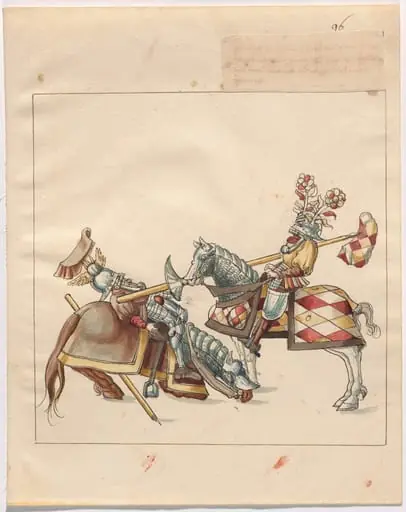
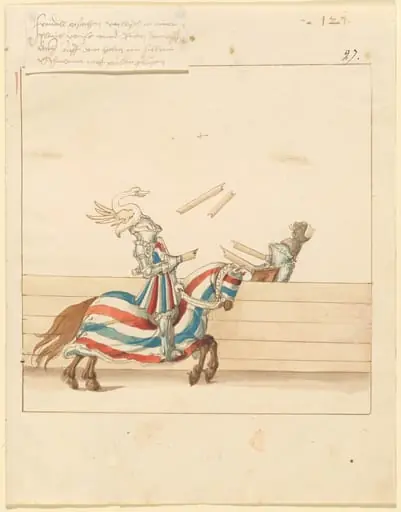
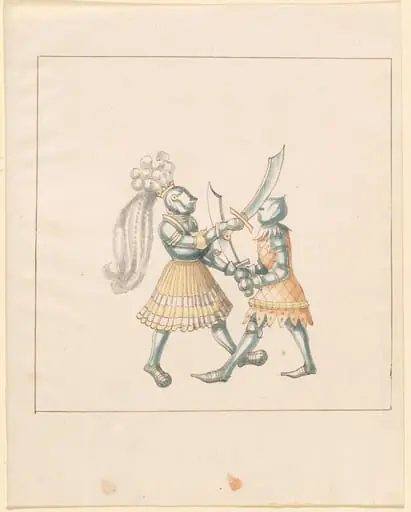
A German artist of the late 1500s drew knights clashing in parades and mock battles, filling sheets with detailed ink colored lightly in watercolor: soldiers mid-joust, shields flying, foot soldiers sparring with spears.

![Abraham Entertaining the Angels [verso], by German 16th Century](https://artifactworldgallery.com/img/german-16th-century--abraham-entertaining-the-angels-verso--69d1b25f4eba0a53-w320.webp)