Artwork
Christ in Limbo
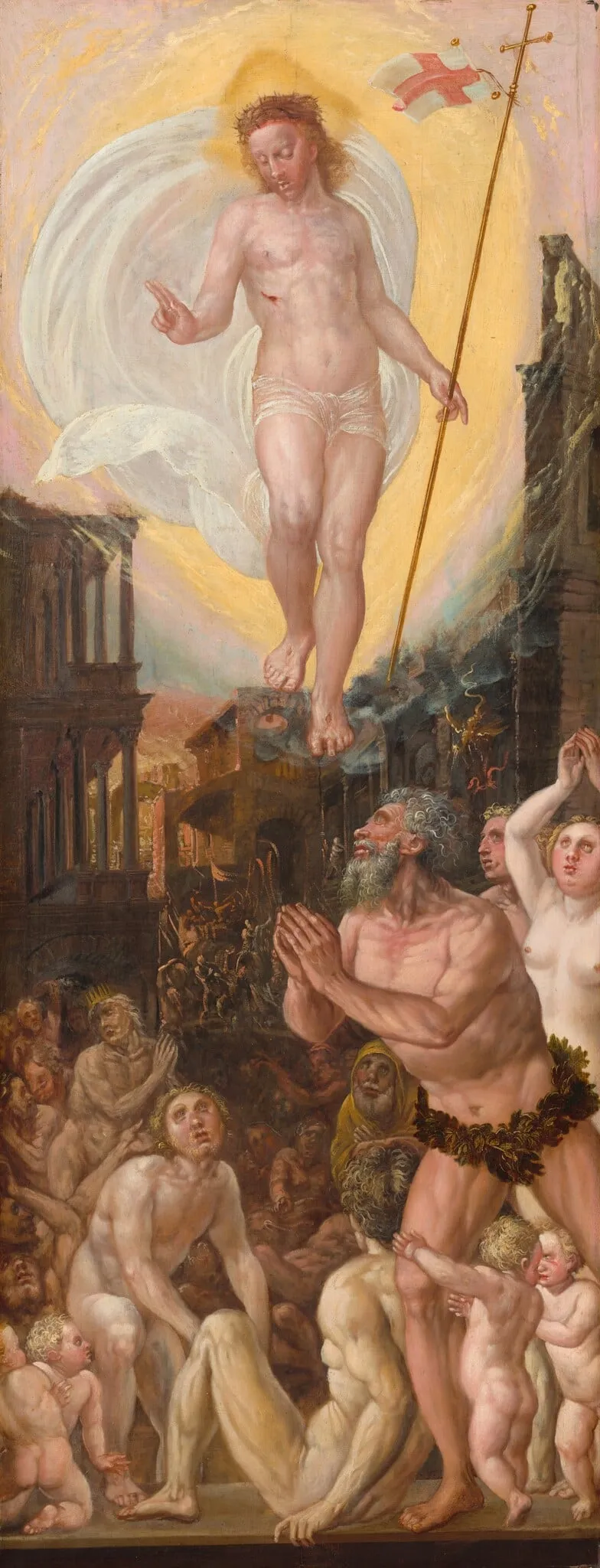
Christ in Limbo is an oil painting. It dates from 1562 and is held in the collection of the National Gallery of Art.
About this work
Subject & Meaning
This iconographic tradition emphasizes Christ's power over the underworld and the extension of grace to figures such as Adam, Eve, and other patriarchs.
The painting depicts the Harrowing of Hell, a central theme in Christian art showing Christ's descent into Limbo or Hell between the Crucifixion and Resurrection to rescue the righteous souls of the Old Testament. The work belongs to the religious genre, executed in oil on panel in 1562 by an anonymous German artist, sometimes associated with Hans Mielich. The Harrowing of Hell represents Christ's triumph over death and the devil, symbolizing salvation and the liberation of souls who awaited redemption before his sacrifice.
This iconographic tradition emphasizes Christ's power over the underworld and the extension of grace to figures such as Adam, Eve, and other patriarchs.
Technique & Style
Christ in Limbo is executed in oil on panel, a medium consistent with mid-sixteenth-century Germanic painting practice. The work is a vertical panel of modest width, measuring 109.7 cm in height by 42.9 cm in width, a narrow format suited to its function as part of a devotional ensemble. Its religious subject, the Harrowing of Hell, is rendered in the manner of a German workshop of around 1562, with the attribution historically linked to Hans Mielich though the corpus record classifies the artist simply as "German 16th Century."
The provenance traces the panel through Viennese and New York dealers before its 1951 acquisition by the Samuel H. Kress Foundation and 1952 transfer to the National Gallery of Art, where it entered the Kress Collection as a religious painting.
History & Provenance
Dated to 1562, this oil-on-panel painting by a sixteenth-century German artist, sometimes associated with Hans Mielich, has an uncertain early history. While records suggest a possible origin in a Breslau museum, correspondence from 1989 indicates no verified documentation exists in local institutions. The work entered the documented market in 1916 when Berlin dealer Charles de Burlet sold it to Dr. Otto Fröhlich of Vienna.
Fröhlich subsequently transferred ownership to the Viennese banker Stefan Auspitz later that year. Unlike much of Auspitz's collection, which was liquidated during the 1931 Austrian financial crisis, this panel was held as security by the firm Fa. Bäume in Vienna.
By 1951, the work was jointly held by New York dealers Rosenberg & Stiebel and Pinakos, Inc., before being purchased by the Samuel H. Kress Foundation. It was gifted to the National Gallery of Art in Washington, D.C., in 1952.
Christ in Limbo is currently held in the collection of the National Gallery of Art in Washington, D.C., as part of the Samuel H. Kress Collection. The work entered the museum in 1952 as a gift by exchange from the Samuel H. Kress Foundation, which had purchased the painting the previous year from Rosenberg & Stiebel, Inc. and Pinakos, Inc. Prior to this acquisition, the panel was owned by the Viennese banker Stefan Auspitz until 1931, having previously belonged to Dr. Otto Fröhlich and Charles de Burlet.
While early provenance suggests a possible origin in a Breslau museum, this connection remains unverified in institutional records. The provided sources detail the ownership lineage but do not list specific public exhibitions for the work.
Overview
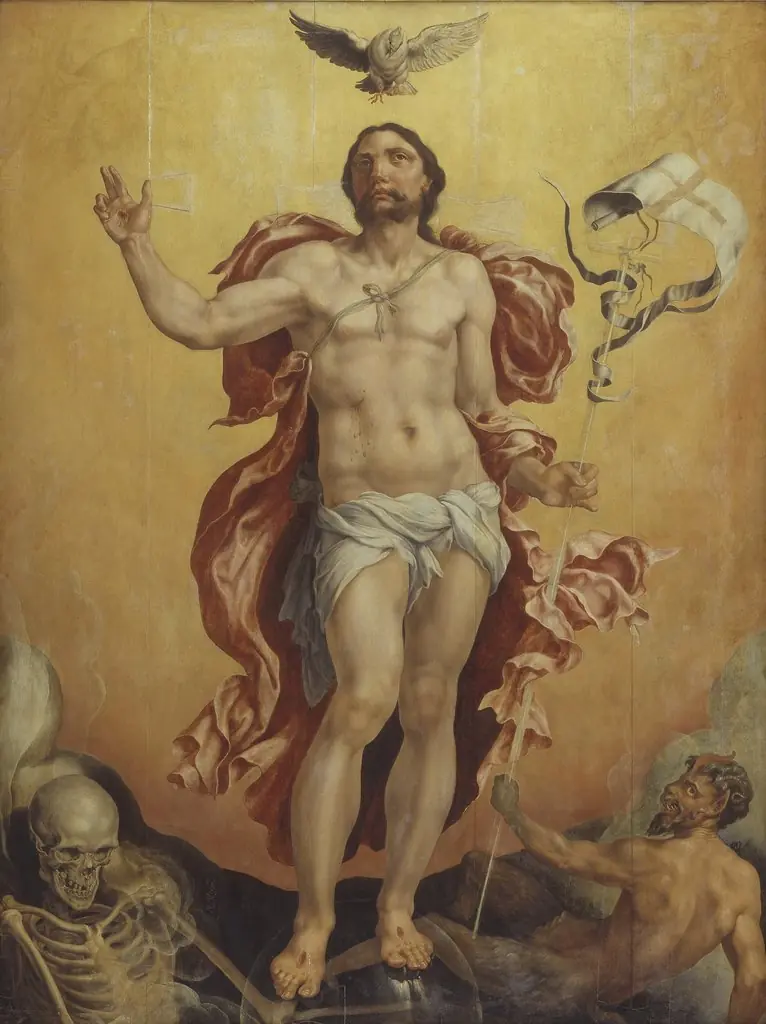
Painted in 1562, this oil on panel work by an anonymous German master from the late 16th century illustrates the Harrowing of Hell, a pivotal moment in Christian theology where Christ descends into Limbo to liberate the righteous souls of the Old Testament. The composition centers on the figure of Christ, distinguished by a radiant halo and a white loincloth, who stands as the focal point of divine light amidst the darkness of the underworld. His right hand is raised in a gesture of benediction, while his left hand typically grasps the cross-staff or reaches toward the figures awaiting salvation.
Surrounding him are the naked forms of the patriarchs and prophets, their postures reflecting a mixture of awe and anticipation as they are led from bondage. The work exemplifies the Northern Renaissance tradition of religious narrative, characterized by a focus on emotional intensity and detailed figural representation. Created during a period of significant religious upheaval in Germany, the painting serves as a visual meditation on redemption and the triumph of Christ over death, adhering to the iconographic conventions of the era while demonstrating the specific stylistic tendencies of German art in the third quarter of the 16th century.
Artist & collection