Artwork
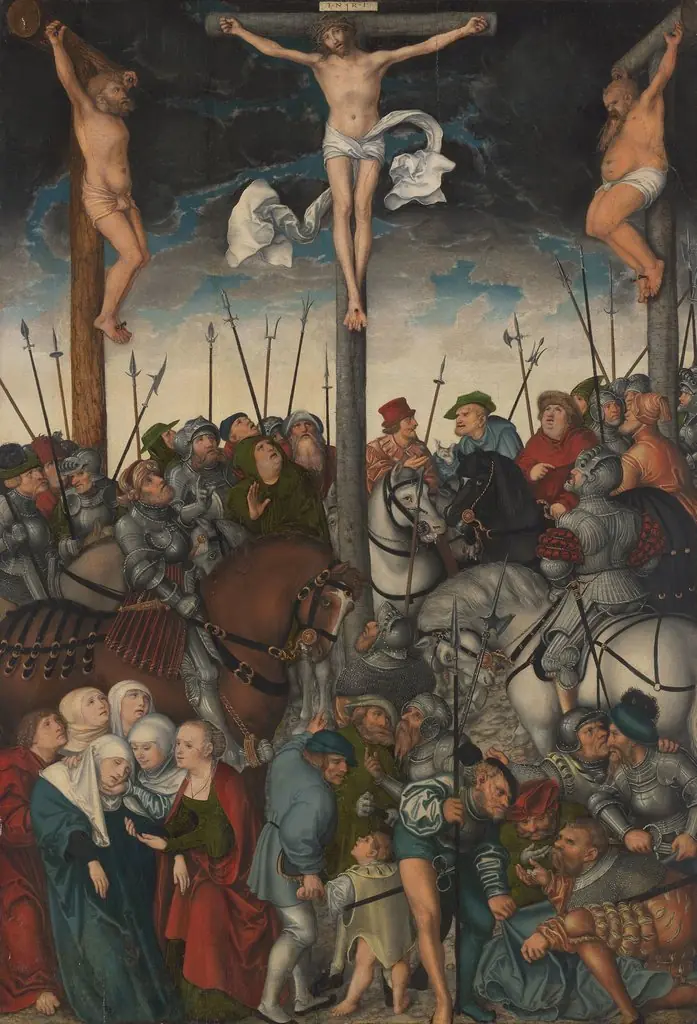
The Crucifixion
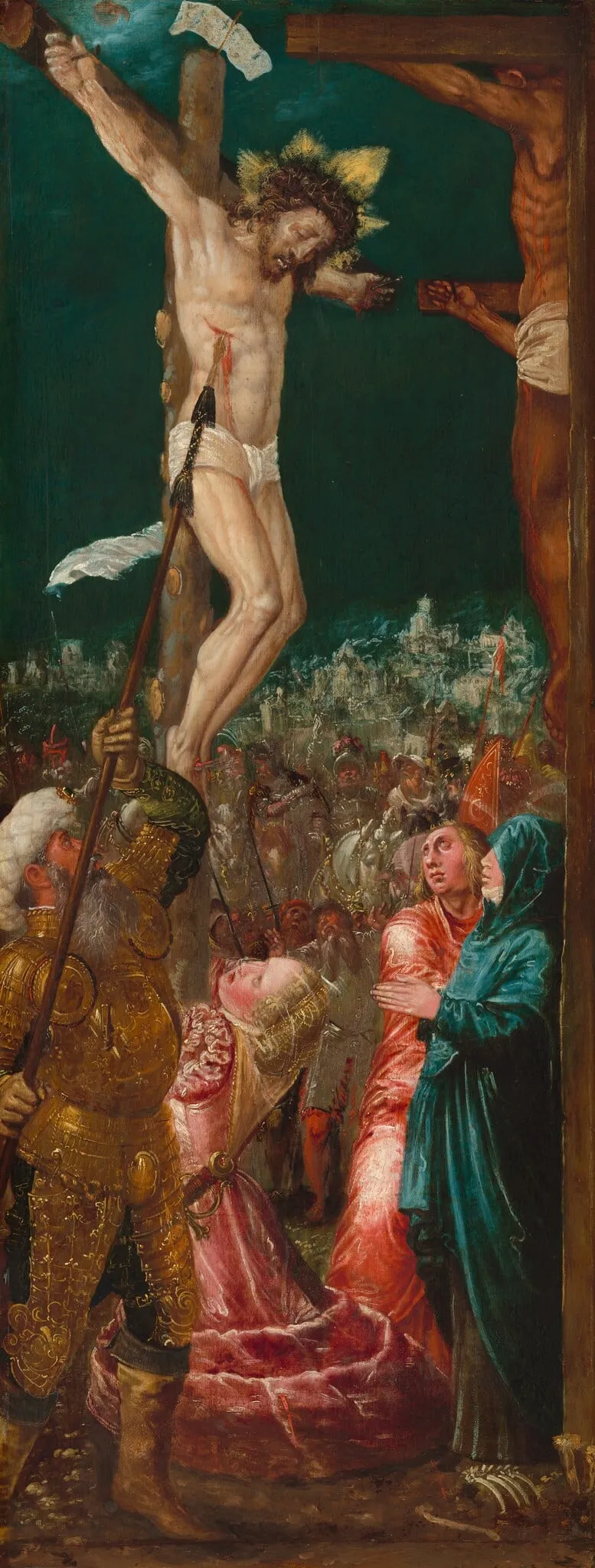
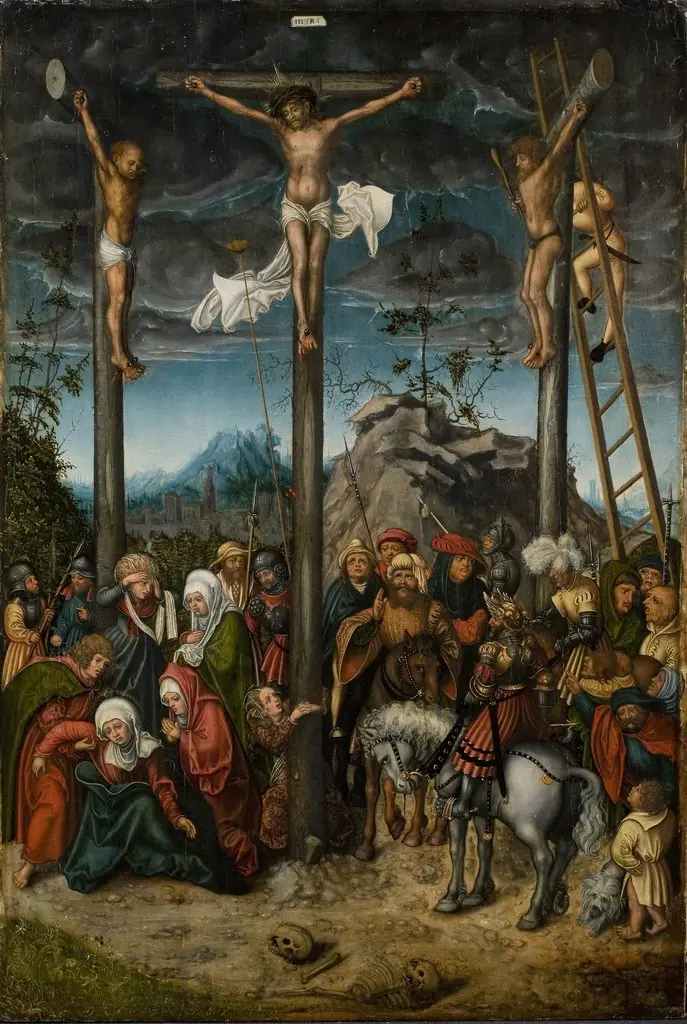
The Crucifixion is an oil painting. It dates from 1562 and is held in the collection of the National Gallery of Art.
About this work
Subject & Meaning
The subject depicted is the Crucifixion of Jesus Christ, a central iconographic theme in Christian art.
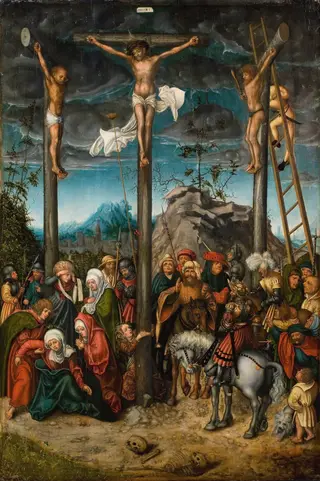
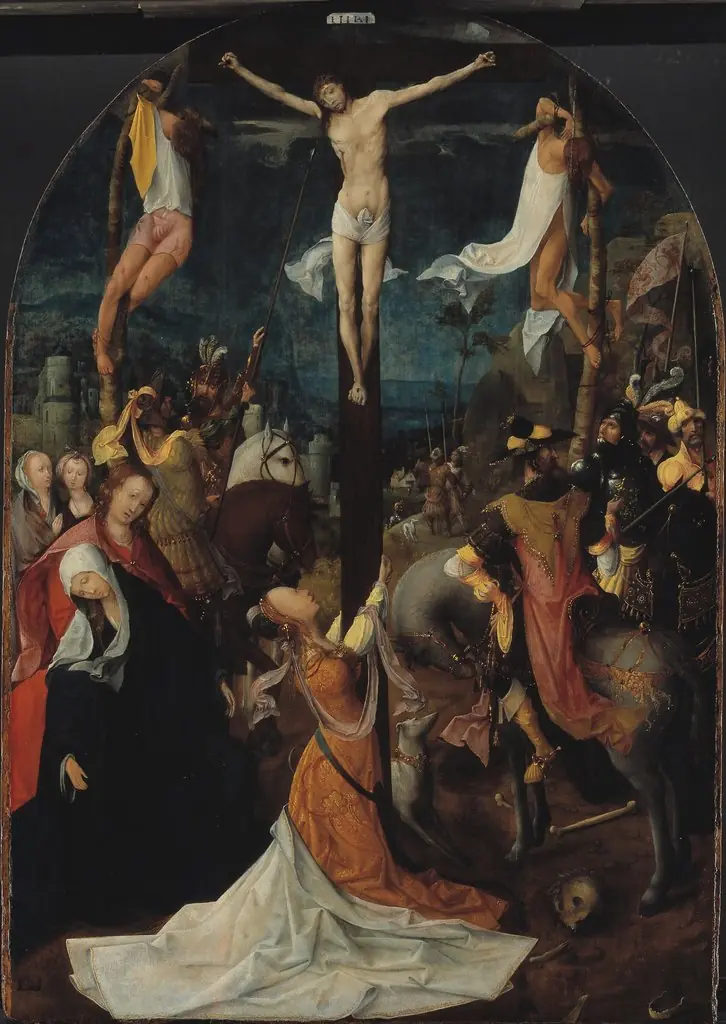
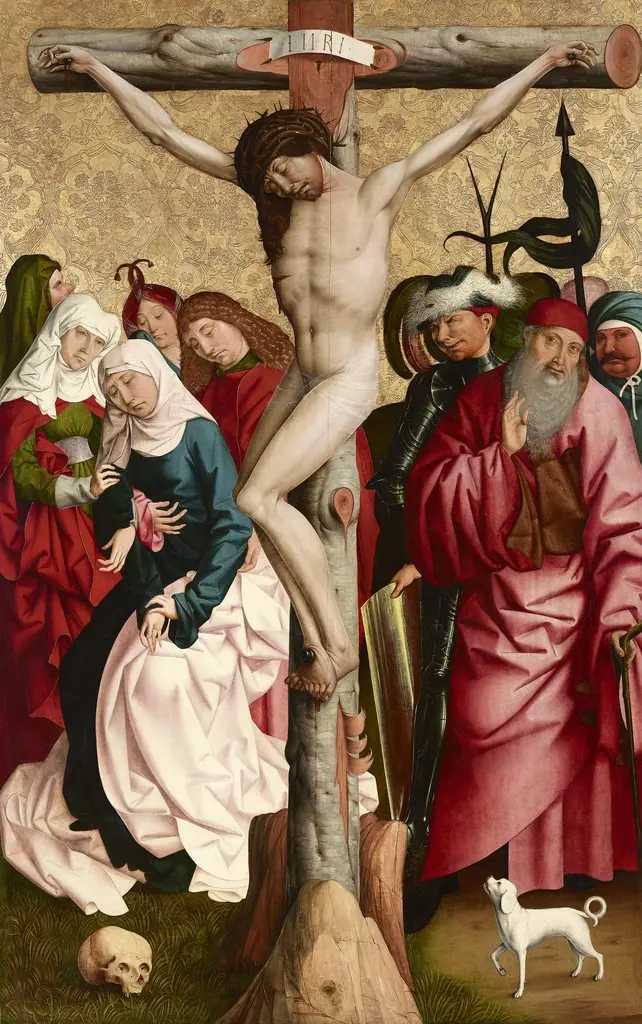
The subject depicted is the Crucifixion of Jesus Christ, a central iconographic theme in Christian art. The composition centers on the figure of Jesus nailed to a cross, typically flanked by the Virgin Mary and Saint John the Evangelist, who stand at the foot of the cross in mourning. This scene symbolizes the fulfillment of divine sacrifice and redemption through Christ's death.
The elongated, emaciated figure of Jesus emphasizes suffering and sacrifice, while the presence of the two figures underscores the human response to divine sacrifice, grief and intercession. The stark verticality of the cross and the placement of the figures create a compositional tension that directs attention to the theological significance of the event: the atonement for humanity's sins.
Technique & Style
The Crucifixion is an oil painting executed on a wooden panel in the mid-16th century by an anonymous German artist. The support is a single panel, and the work measures approximately 109.4 × 41.9 cm. Its composition depicts the crucifixion of Jesus, a subject typical of religious art of the period. Provenance records trace a complex handling history, including ownership by a Viennese banker, security at a Vienna firm, and acquisition by the Samuel H. Kress Foundation.
History & Provenance
The Crucifixion, an oil on panel dated 1562, is first documented in the early twentieth century. According to provenance records, it was possibly held by a museum in Breslau (now Wrocław), though this remains unverified by correspondence from Polish museum officials. In 1916 the work passed through Charles de Burlet in Berlin to Dr. Otto Fröhlich in Vienna, who acquired it that year from the unspecified Breslau institution.
Fröhlich sold it to the Viennese banker Stefan Auspitz, who retained it until 1931. Following the Austrian financial crisis, the panel was held as security at the firm of Fa. Bäume in Vienna rather than entering the broader Auspitz dispersal through the Bachstitz gallery.
By 1951 it was owned jointly by Rosenberg & Stiebel, Inc. and Pinakos, Inc. in New York, was purchased in 1951 by the Samuel H. Kress Foundation, and was given by exchange to the National Gallery of Art in 1952.
The Crucifixion is held by the National Gallery of Art in Washington, D.C., as part of the Samuel H. Kress Collection. It entered the NGA in 1952 as a gift by exchange from the Samuel H. Kress Foundation, which had purchased the panel in 1951 from Rosenberg & Stiebel, Inc., New York, where it was owned jointly with Pinakos, Inc. (Rudolf Heinemann) by 1951.
Earlier, the painting had been held by Stefan Auspitz in Vienna until 1931, and before that by Dr. Otto Fröhlich in Vienna from 1916, having been acquired through Charles de Burlet, Berlin, in 1916. An earlier possible association with a museum in Breslau (now Wrocław) remains unverified, as no records have been found at either the Muzeum Narodowe or the Muzeum Archidiecezjalne.
Overview
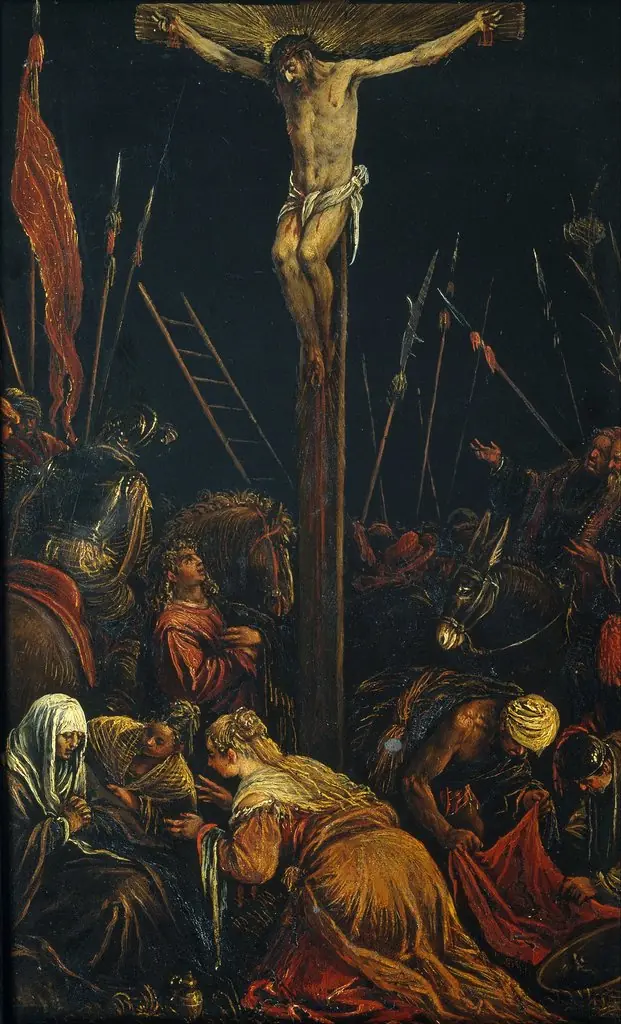
This oil on panel painting, titled "The Crucifixion," depicts Christ on the cross under an almost black sky, surrounded by a somber crowd. The artist employs a dramatically darkened atmosphere, conveying a profound sense of gravity and emotional intensity. The composition emphasizes the central figure, with details like the blood on Christ's side rendered with stark precision.
Context
The dramatic application of shadows and intense contrasts in this work aligns with stylistic tendencies prevalent among German artists during this era. Such techniques were frequently employed to evoke profound emotional responses and underscore the gravity of religious narratives. The deliberate darkening of the background and the stark rendering of figures contribute to a heightened sense of pathos characteristic of the period's artistic expression.
Artist & collection