Artwork
John Frederic the Magnanimous, in Electoral Robes
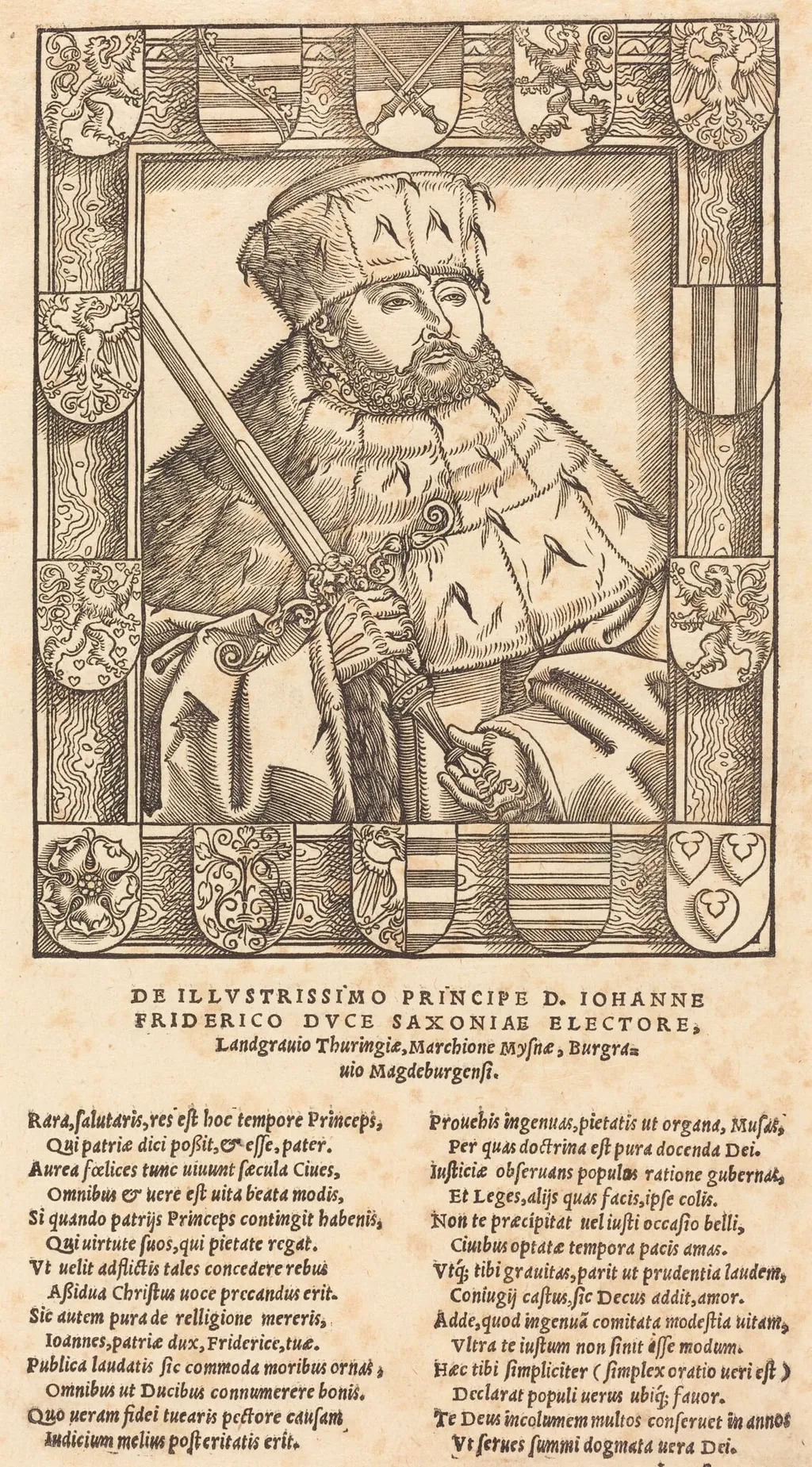
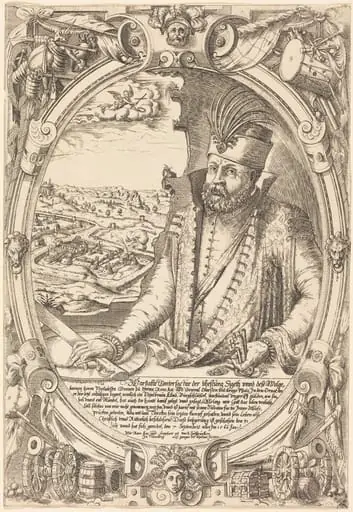
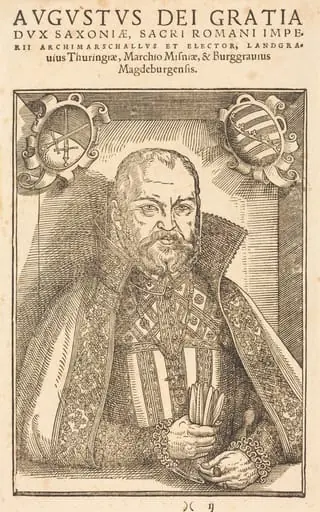
John Frederic the Magnanimous, in Electoral Robes is an ink print by the Renaissance artist German 16th Century. It is held in the collection of the National Gallery of Art. This woodcut portrait depicts John Frederick the Magnanimous, Elector of Saxony, dressed in the ceremonial attire of his office.
About this work
Overview
This woodcut portrait depicts John Frederick the Magnanimous, Elector of Saxony, dressed in the ceremonial attire of his office. Created as a printed image, it relies on the precision of carved woodblocks to render fine details of fabric and ornamentation. The format reflects the growing demand for portable, reproducible imagery of political figures in early 16th-century Germany.
Subject & Meaning
John Frederick, a leading Protestant prince, is shown in full electoral regalia to assert his authority and religious leadership. The elaborate robes, fur trim, and insignia signify his status within the Holy Roman Empire’s electoral college. The image functions as a visual declaration of legitimacy, aligning his personal power with institutional and divine sanction.
Technique & Style
Executed as a woodcut, the image employs fine linear carving to capture intricate textures, brocade patterns, lace collars, and metallic embroidery.
Executed as a woodcut, the image employs fine linear carving to capture intricate textures, brocade patterns, lace collars, and metallic embroidery. The artist exploits the medium’s capacity for sharp contrast and repetitive detail, emphasizing the richness of the attire without relying on color. The stylized rendering of folds and ornament reflects the conventions of Northern Renaissance printmaking.
History & Provenance
Produced during John Frederick’s reign (1532–1554), the print likely circulated among courtiers, clergy, and allied cities to reinforce his political presence. As a Protestant leader, his image was disseminated widely after the Reformation, often in association with reformist texts or official proclamations. Surviving impressions suggest multiple print runs across German-speaking regions.
Context
Woodcuts like this were central to the visual culture of the Reformation, enabling rapid dissemination of religious and political imagery. Unlike painted portraits, prints could be mass-produced and distributed cheaply, making them ideal tools for shaping public perception. John Frederick’s portrait thus served both ceremonial and propagandistic purposes within a rapidly changing religious landscape.
Legacy
The portrait exemplifies how print technology transformed the representation of secular authority in early modern Europe. Its detailed rendering of textiles influenced later portrait prints, and its emphasis on regalia as a symbol of power became a template for depicting rulers across Northern Europe. The image remains a key document in understanding the intersection of art, politics, and print culture in the Reformation era.
![John Frederic the Magnanimous, in Electoral Robes [right]](https://artifactworldgallery.com/img/german-16th-century--john-frederic-the-magnanimous-in-electoral-robes-right--eb7137bb5d2f9f23-w320.webp)
Artist & collection

Artist
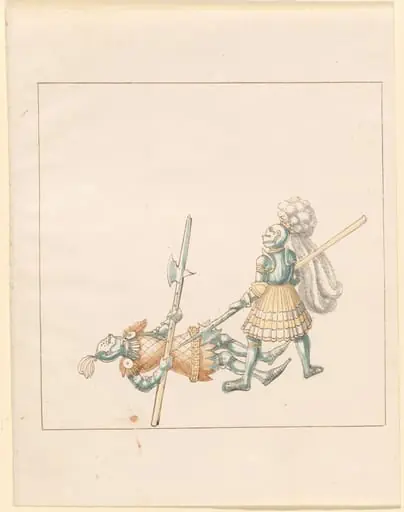
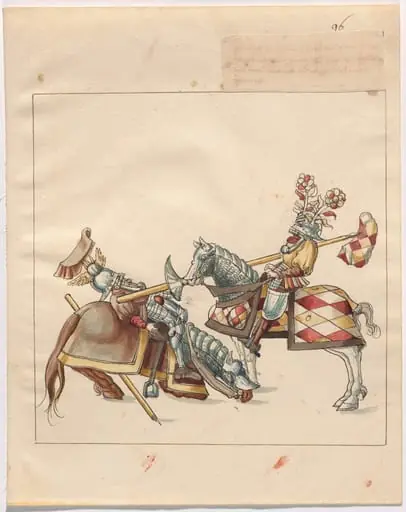
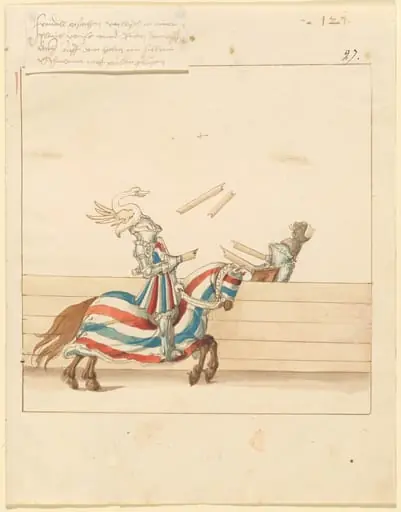
A German artist of the late 1500s drew knights clashing in parades and mock battles, filling sheets with detailed ink colored lightly in watercolor: soldiers mid-joust, shields flying, foot soldiers sparring with spears.

![Abraham Entertaining the Angels [verso], by German 16th Century](https://artifactworldgallery.com/img/german-16th-century--abraham-entertaining-the-angels-verso--69d1b25f4eba0a53-w320.webp)