Artwork
Foot Combat with Swords and Pavesen Shields
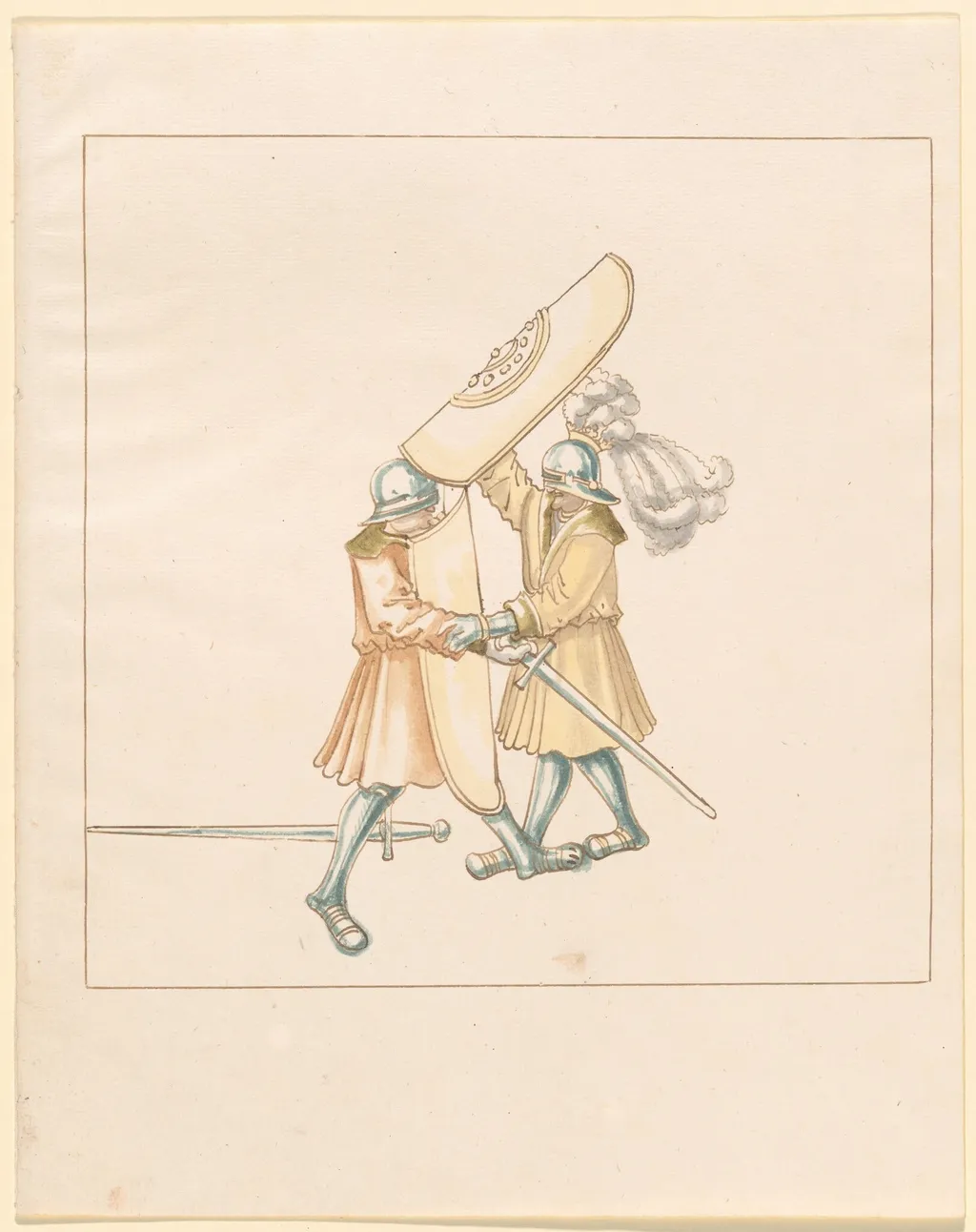
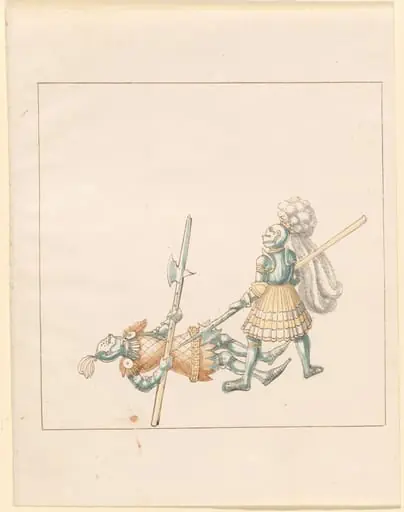
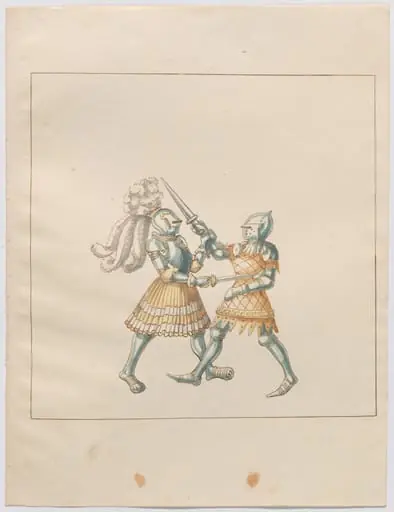
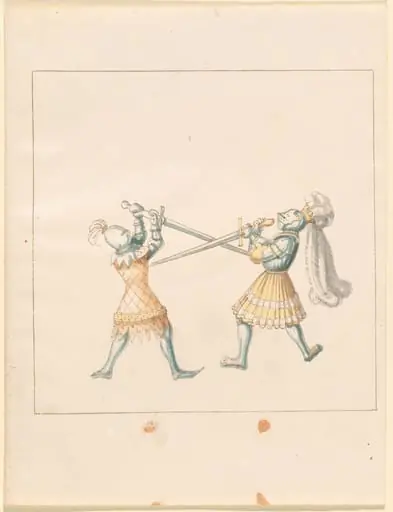
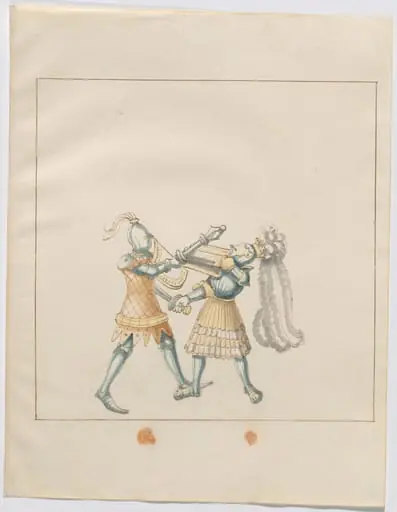
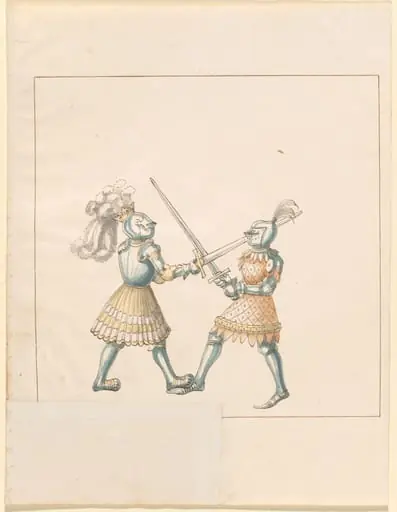
Foot Combat with Swords and Pavesen Shields is an ink drawing by the Renaissance artist German 16th Century. It dates from 1514 and is held in the collection of the National Gallery of Art. This ink and watercolor drawing, created circa 1515, captures two armored German fighters engaged in close combat.
- Inscription
- Inscribed:center by unknown hand in graphite: 5; lower left on mount in black ink: 36; lower right on mount in black ink: A 131
About this work
The level of detail in this drawing is impressive, and to learn more about this style, look at the work of the artist: German 16th Century.
You see two armored German soldiers fighting with swords and big shields. They are fully armored and look like they're in a real battle. The drawing shows a lot of detail in the armor and the shields.
The soldiers are using pavesen shields, which were used for protection. These shields were often used by soldiers in the 16th century.
The level of detail in this drawing is impressive, and to learn more about this style, look at the work of the artist: German 16th Century.
Overview
This ink and watercolor drawing, created circa 1515, captures two armored German fighters engaged in close combat. Rendered on laid paper, the work belongs to a tradition of detailed martial studies from early 16th-century Germany. The figures are depicted with precise attention to their equipment, suggesting the artist’s interest in authentic battlefield dynamics rather than idealized spectacle.
Subject & Meaning
The scene portrays two soldiers wielding swords and large pavesen shields, typical of German infantry in the early Renaissance. These shields, often carried on the ground or held for defense, indicate a tactical, grounded form of combat. The drawing does not depict a mythic or ceremonial moment, but a pragmatic, physical struggle, reflecting the realities of mercenary warfare in the period.
Technique & Style
The artist employed pen and black ink with subtle watercolor washes to define form and texture. Armor plates, rivets, and shield surfaces are rendered with careful linework, emphasizing material weight and surface variation. The composition is tightly focused, eliminating background distraction to heighten the intensity of the duel. The style aligns with contemporary German draftsmanship that valued anatomical and equipment accuracy.
History & Provenance
The drawing originates from a German artistic context around 1515, likely produced by a skilled draftsman connected to military circles or a workshop documenting arms and armor. Its survival suggests it was valued as a reference or study, possibly for training, commission, or personal interest in martial culture. No documented ownership before the modern era is recorded.
Context
In early 16th-century Germany, detailed drawings of combat were common among artisans and military technicians. Pavesen shields were widely used by foot soldiers, especially in Swiss and German mercenary units. This drawing fits within a broader corpus of illustrated manuals and armor studies that sought to record the evolving technology and tactics of infantry warfare.
Legacy
The work contributes to a visual archive of Renaissance martial practice, offering insight into how soldiers were equipped and how combat was observed and recorded. It remains a valuable resource for historians studying the material culture of early modern European warfare, particularly the intersection of art and military documentation in the period.
Artist & collection

Artist
A German artist of the late 1500s drew knights clashing in parades and mock battles, filling sheets with detailed ink colored lightly in watercolor: soldiers mid-joust, shields flying, foot soldiers sparring with spears.

![Abraham Entertaining the Angels [verso], by German 16th Century](https://artifactworldgallery.com/img/german-16th-century--abraham-entertaining-the-angels-verso--69d1b25f4eba0a53-w320.webp)