Artwork
Portrait of an old woman reading
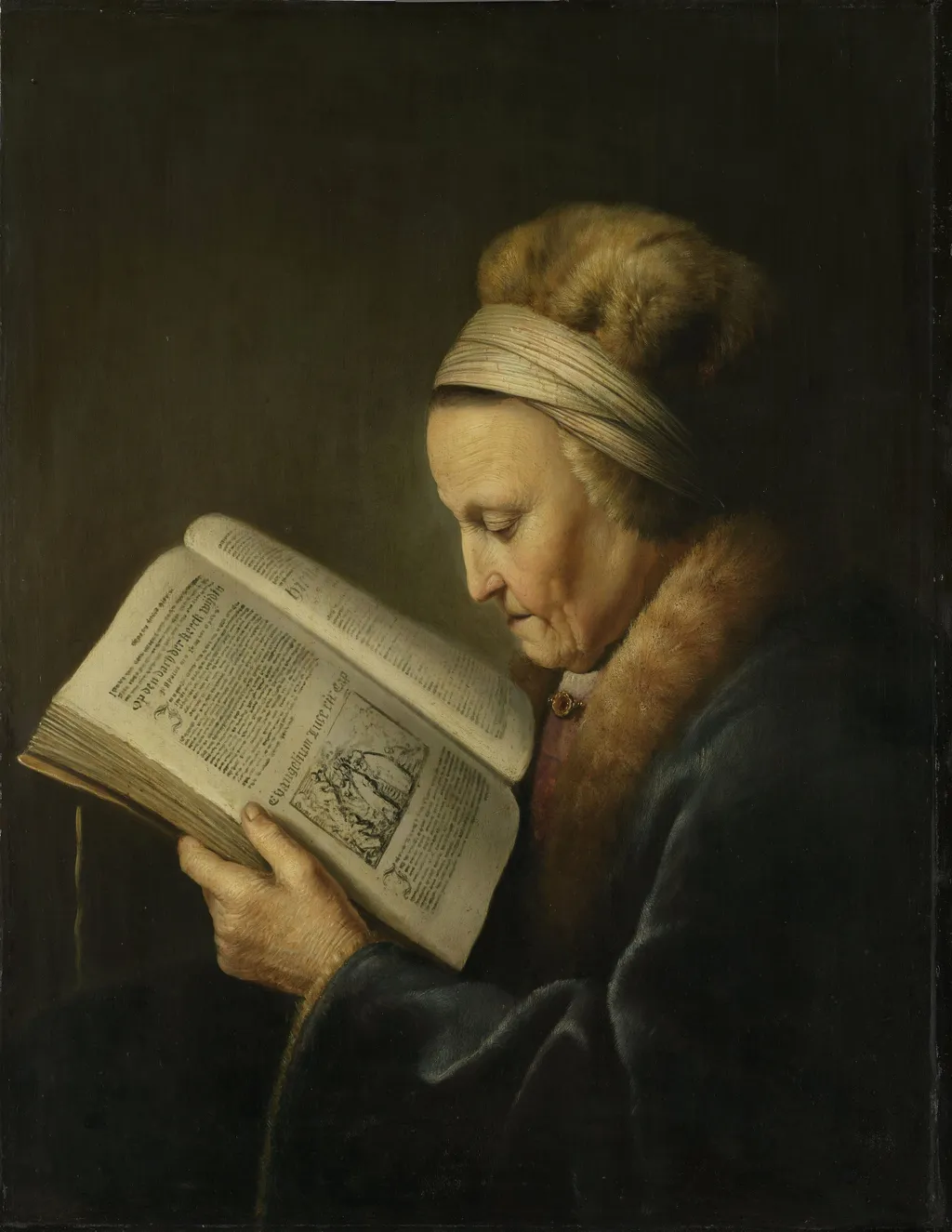
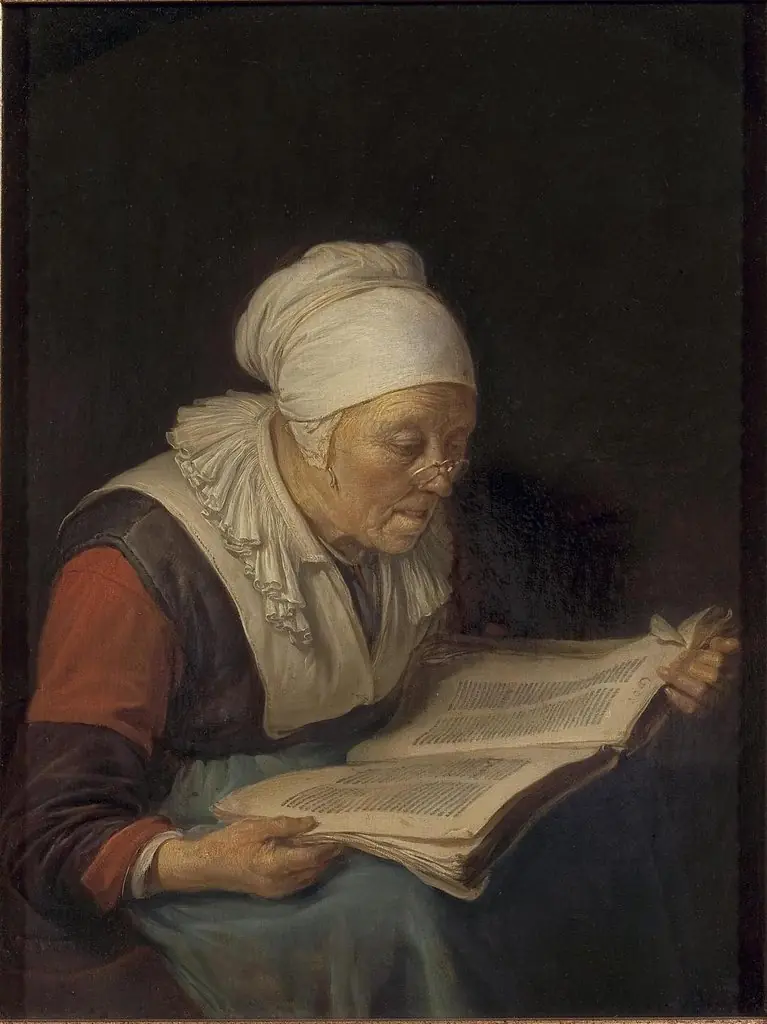
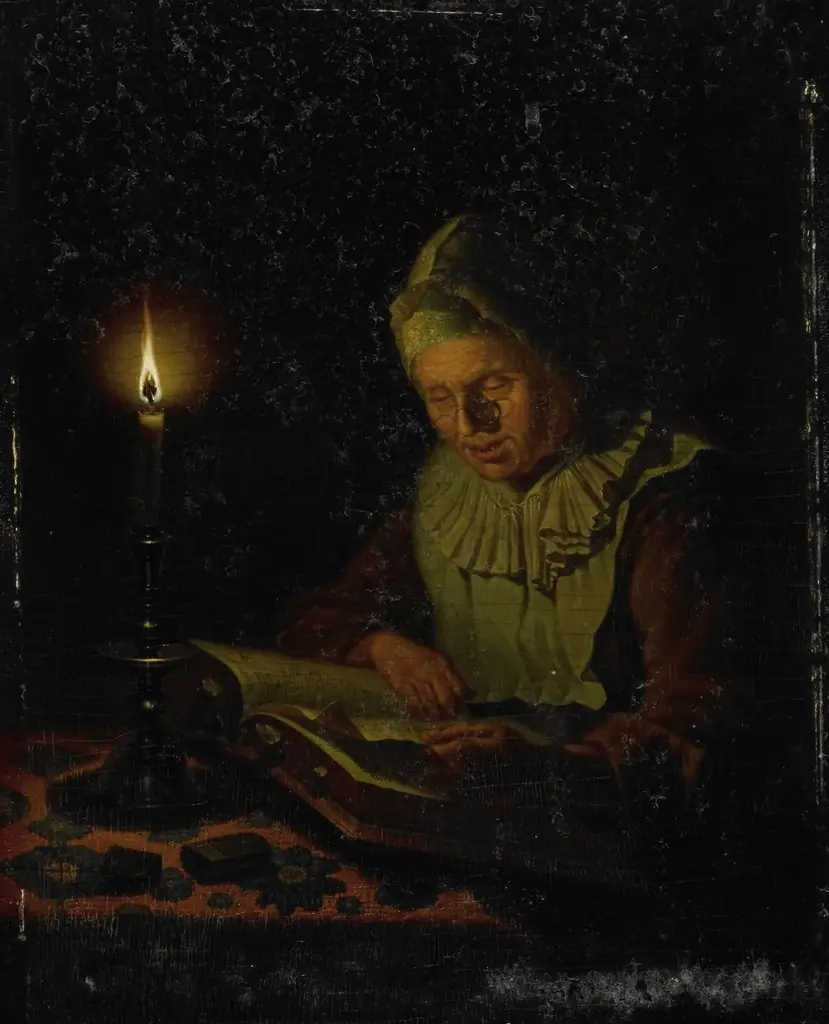
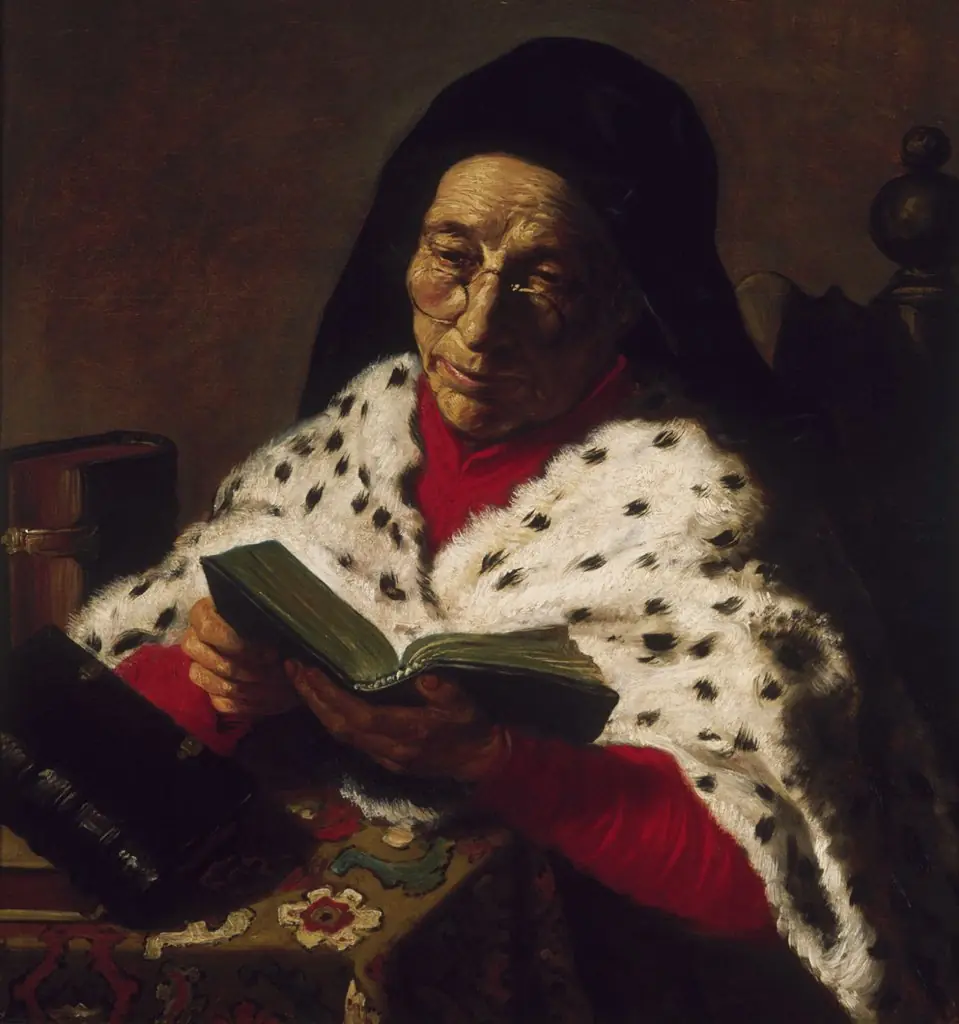
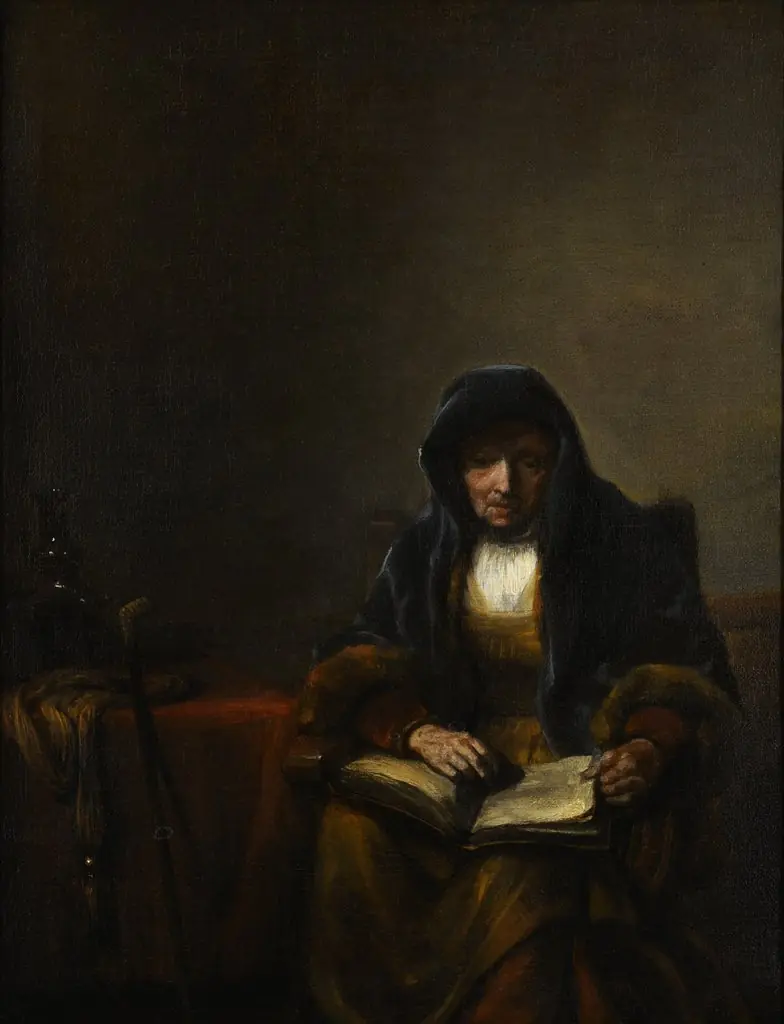
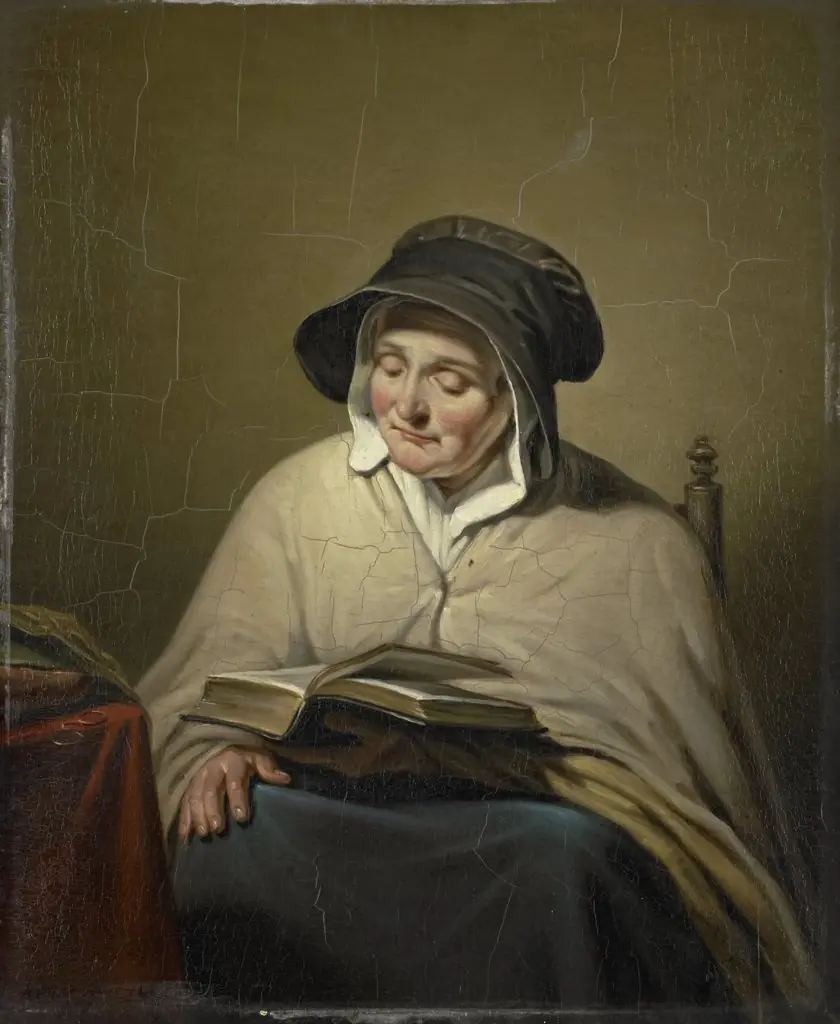
Portrait of an old woman reading is an oil painting by the Dutch Golden Age artist Gerrit Dou. It dates from 1631 and is held in the collection of the Rijksmuseum.
About this work
Gerrit Dou painted a quiet portrait of an old woman reading. The small oil painting dates to about 1631–1632. For years people thought it was by Rembrandt, but experts later linked it to Dou instead.
This painting has been at the Rijksmuseum since 1912. The mix-up shows how careful art history can be.
Look up the artist Gerrit Dou next.
Subject & Meaning
The composition creates a diagonal contrast, drawing the viewer close while the subject remains unaware, reflecting Northern European realism.
Gerrit Dou painted Portrait of an old woman reading around 1631, depicting an elderly woman absorbed in reading a biblical lectionary from Luke 19, her costly attire contrasting with the text's call to generosity. Dou rendered the scene with meticulous detail, including the legible script and accompanying print, using chiaroscuro learned from Rembrandt to emphasize the figure against a sober background. The composition creates a diagonal contrast, drawing the viewer close while the subject remains unaware, reflecting Northern European realism.
The work was long mistaken for a Rembrandt portrait of his mother, a notion popularized in 1898 but disproven by stylistic analysis and shared modeling practices among Dou, Rembrandt, and Lievens. It entered the Rijksmuseum collection in November 1912 and was reattributed to Dou, later featuring in the 2005 exhibition 'Rembrandt's Mother, Myth and Reality' at Museum De Lakenhal.
The painting shows an old woman reading a lectionary, likely the start of Luke 19, which instructs giving possessions to the poor, contrasting with her expensive clothing. Dou's technique includes fine detail in clothing, text, and print, with chiaroscuro highlighting the figure. The background is simple, and composition uses a diagonal contrast. The subject appears in works by Dou, Rembrandt, and Lievens, and Dou painted her multiple times.
Technique & Style
Gerrit Dou painted Portrait of an old woman reading in oil on panel around 1631–1632. The work shows an elderly woman in profile, absorbed in reading a biblical passage from Luke 19, rendered with precise detail in her clothing, the lectionary text, and an accompanying print. Dou employs chiaroscuro learned from Rembrandt to model form and draw focus, while the background remains smooth and unobtrusive, creating a quiet diagonal composition.
The painting was long misattributed to Rembrandt and called Rembrandt's Mother, but stylistic analysis by Wilhelm Martin in 1901 established Dou's authorship, a view now universally accepted. It entered the Rijksmuseum collection in November 1912 and has been exhibited as a key example of fijnschilder technique and Dutch Golden Age portraiture.
History & Provenance
Created circa 1631–1632 by Gerrit Dou, the work emerged during the artist's early apprenticeship under Rembrandt in Leiden. For centuries, the painting was misidentified as a portrait of Rembrandt's mother, bearing the title Rembrandt's Mother. This attribution persisted until 1901, when art historian Wilhelm Martin reattributed the piece to Dou based on stylistic evidence, including the use of chiaroscuro and the identification of the model as one used by Dou, Rembrandt, and Jan Lievens.
Prior to its acquisition by a major public institution, the painting belonged to the collection of A. H. Hoekwater, where it was displayed as a Rembrandt during an 1898 exhibition in Amsterdam. The work entered the permanent collection of the Rijksmuseum in Amsterdam in November 1912 through Hoekwater's bequest, at which point it was officially exhibited under its current title.
The painting is held by the Rijksmuseum, Amsterdam, where it has been part of the collection since November 1912. It entered the museum as part of the bequest of A. H. Hoekwater and is inventoried under the accession associated with that gift. The work was exhibited in the 2005 exhibition Rembrandt’s Mother, Myth and Reality at Museum De Lakenhal, Leiden.
Context
Painted c. 1631–1632, the work belongs to the Dutch Golden Age and occupies a key position in the early career of Gerrit Dou, who in 1628 had become the first pupil of Rembrandt in Leiden, where the master shared a studio with Jan Lievens. Rembrandt's refined early style, with its pronounced chiaroscuro, is visibly absorbed into the painting, yet Dou pushed that polish further, going on to found the Leiden Fijnschilders after Rembrandt's departure for Amsterdam in 1632.
The attribution history is central to the work's scholarly profile. Long catalogued as Rembrandt's Mother and exhibited as such at the 1898 Amsterdam Rembrandt show from the collection of A. H. Hoekwater, the painting was reassigned to Dou in 1901 by art historian Wilhelm Martin, who cited Dou's smoother handling of chiaroscuro and the shared models used by Dou, Rembrandt, and Lievens. The reattribution was confirmed when the canvas entered the Rijksmuseum in November 1912 from Hoekwater's bequest. It later featured prominently in the 2005 Museum De Lakenhal exhibition "Rembrandt's Mother: Myth and Reality."
Legacy
The painting’s legacy stems from its early misattribution to Rembrandt and the subsequent clarification of its authorship as Gerrit Dou’s work. This shift reshaped scholarly views of Dou’s role in the Dutch Golden Age, positioning him as a founder of the Leiden Fijnschilder movement and a pioneer of refined realism. The work influenced later interpretations of genre painting, particularly in its use of chiaroscuro and narrative detail.
Its inclusion in major exhibitions, such as 'Rembrandt's Mother, Myth and Reality' at Museum De Lakenhal in 2005, reinforced its status as a key artifact for understanding artistic attribution and the evolution of Dutch portraiture. The painting remains part of the Rijksmuseum’s collection, accessible since 1912.
Overview
Gerrit Dou’s small oil on canvas, titled Portrait of an Old Woman Reading, was executed around 1631–1632. The work depicts an elderly woman absorbed in a book, rendered with the meticulous detail characteristic of Dou’s early career. Measuring only a few centimeters across, the painting exemplifies the intimate genre scenes popular in Dutch art of the period.
Own this work as a print
Artist & collection

Artist
Gerrit Dou (pronounced; 7 April 1613 – 9 February 1675), also known as Gerard Douw or Dow, was a Dutch Golden Age painter, whose small, highly polished paintings are typical of the Leiden fijnschilders.