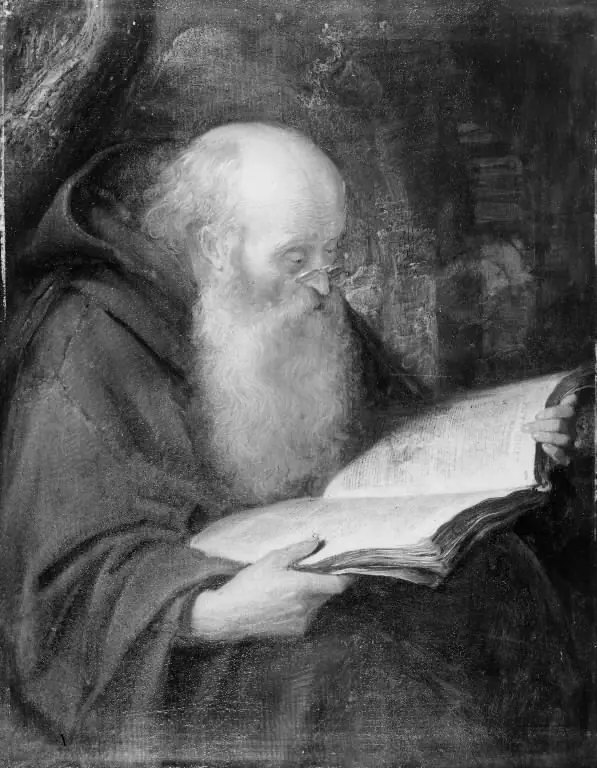
Artwork
The Hermit
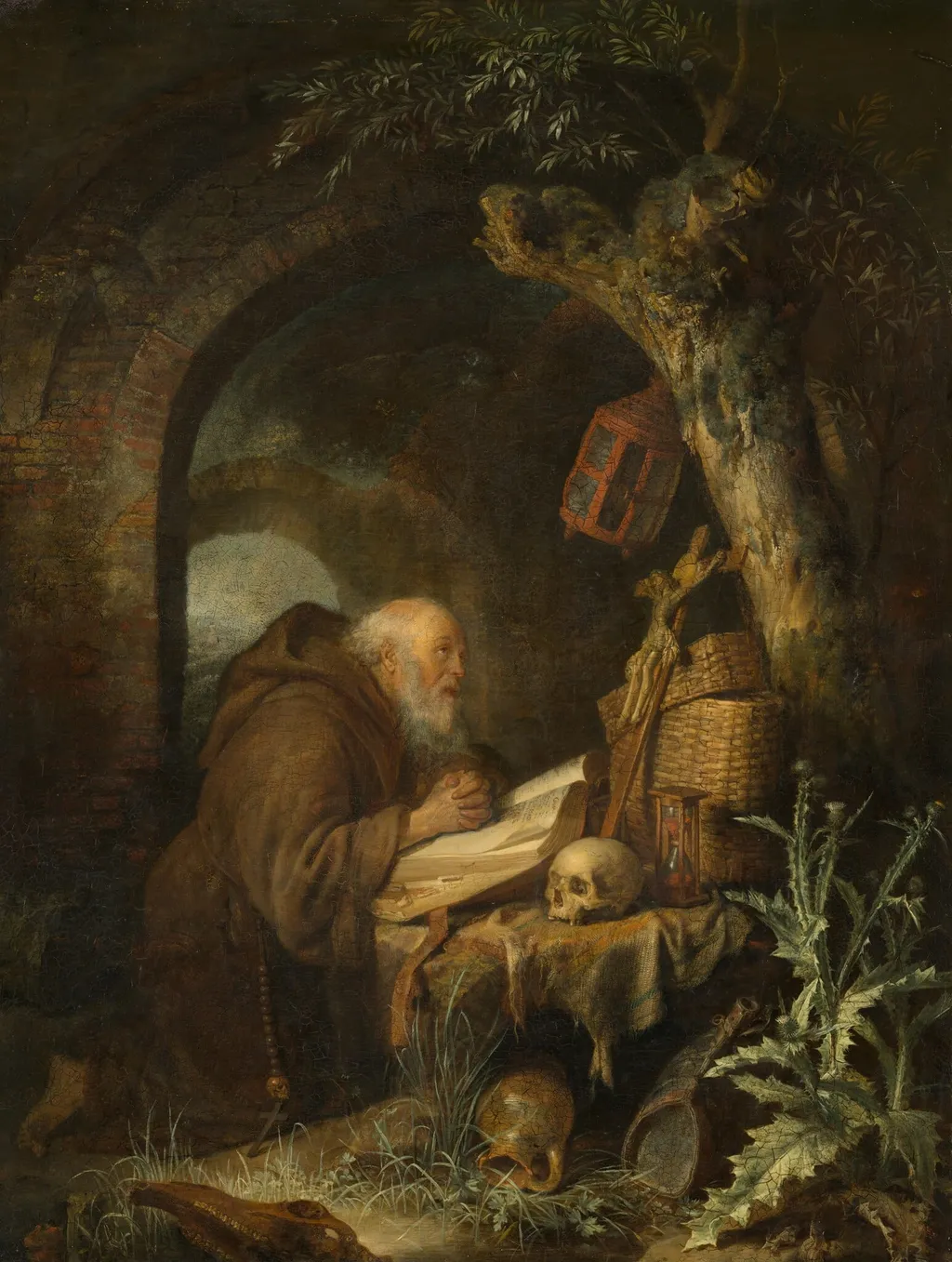
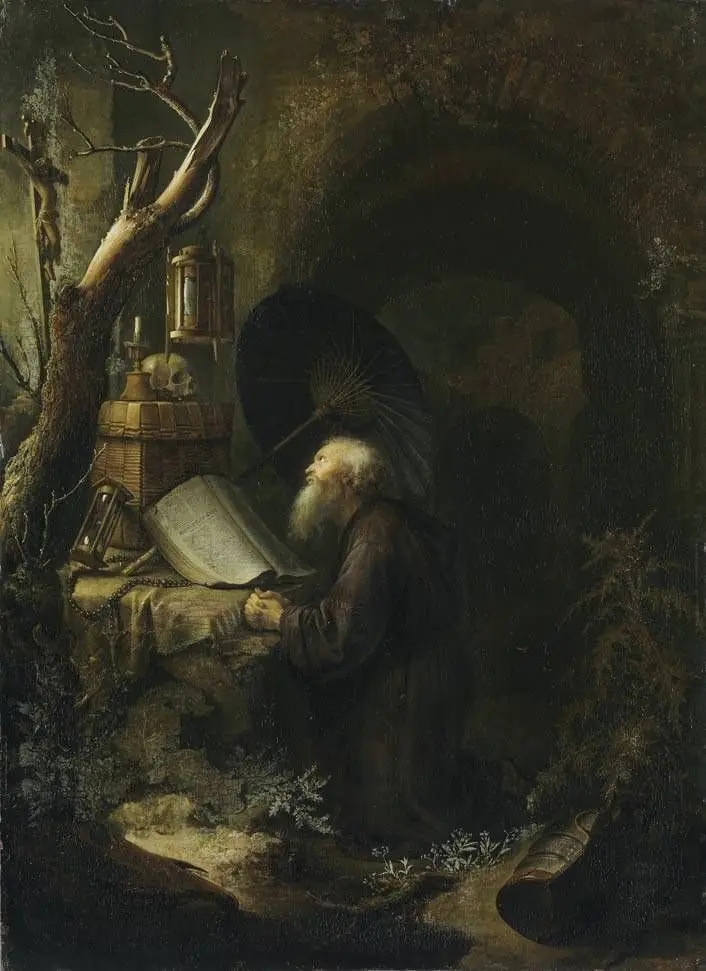
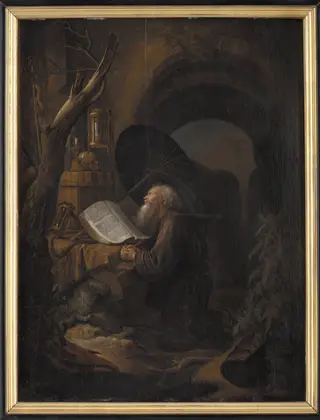
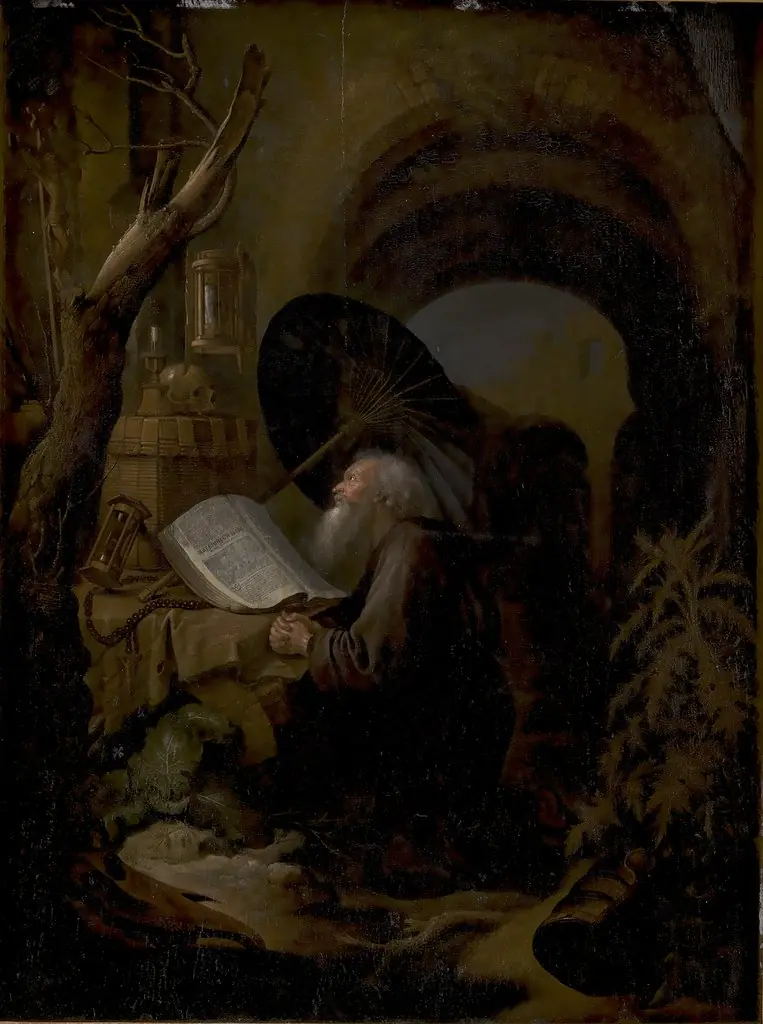
The Hermit is an oil painting by the Baroque artist Gerrit Dou. It dates from 1670 and is held in the collection of the National Gallery of Art.
- Inscription
- Inscribed:lower center on book strap, GD in ligature: GDou 1670; on right page of book, GD in ligature: GDou
About this work
History & Provenance
In 1927 the museum deaccessioned it, selling it through Galerie van Diemen in New York and Berlin.
The Hermit was painted by Gerrit Dou in 1670 on an oak panel. By 1742 the work was probably in the possession of Kurfürst Karl Albrecht of Munich, a dating supported by wax seals on the reverse of the panel, one of which bears his arms and was used until that year. The painting entered the Bavarian electoral collection (Kurfürstliche Galerie) that later formed the Alte Pinakothek in Munich, and it was listed in an 1884 catalogue of the Munich gallery.
In 1927 the museum deaccessioned it, selling it through Galerie van Diemen in New York and Berlin. The work was acquired by the New York collector William R. Timken, and on his death passed to his wife, Lillian S. Guyer Timken, who bequeathed it in 1960 to the National Gallery of Art in Washington, D.C., where it remains. No specific exhibition history is documented in the cited material.
Overview
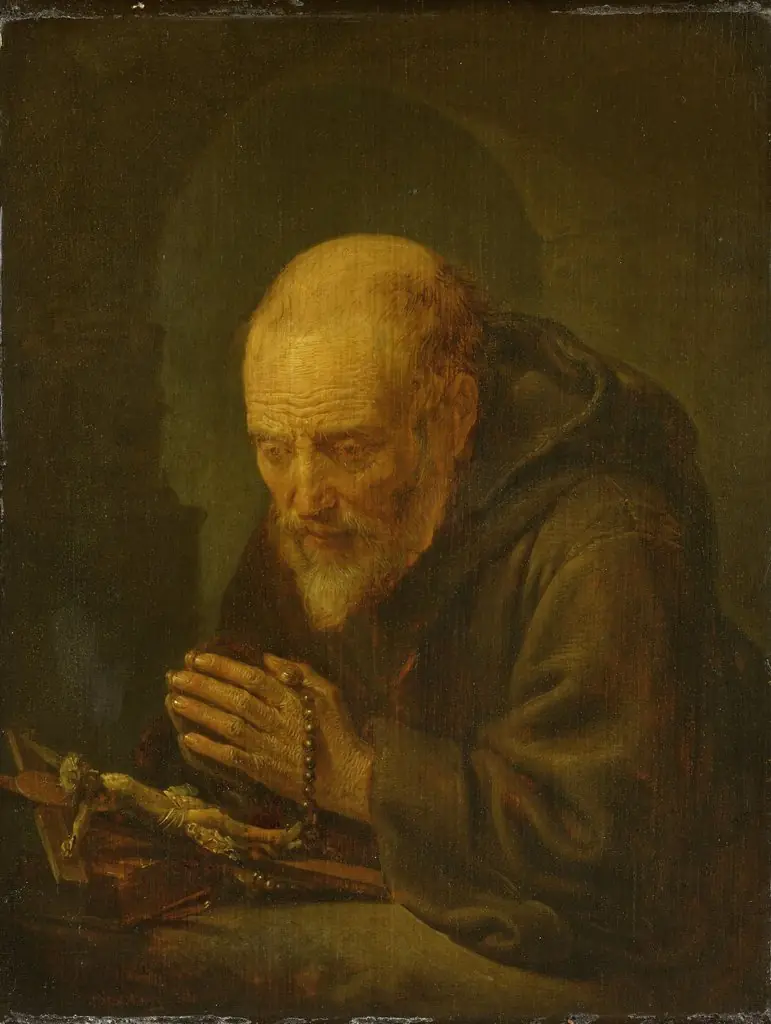
Gerrit Dou's The Hermit, completed in 1670, is an oil painting on an oak panel. This work exemplifies the artist's characteristic precision and refined approach to painting. It portrays a solitary figure engaged in study and reflection, set within a dimly lit interior.
The piece reflects the artistic trends of the Dutch Golden Age, a period when detailed, small-scale works gained significant popularity.
Subject & Meaning
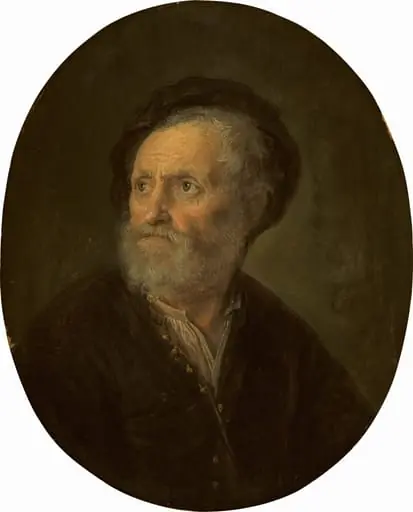
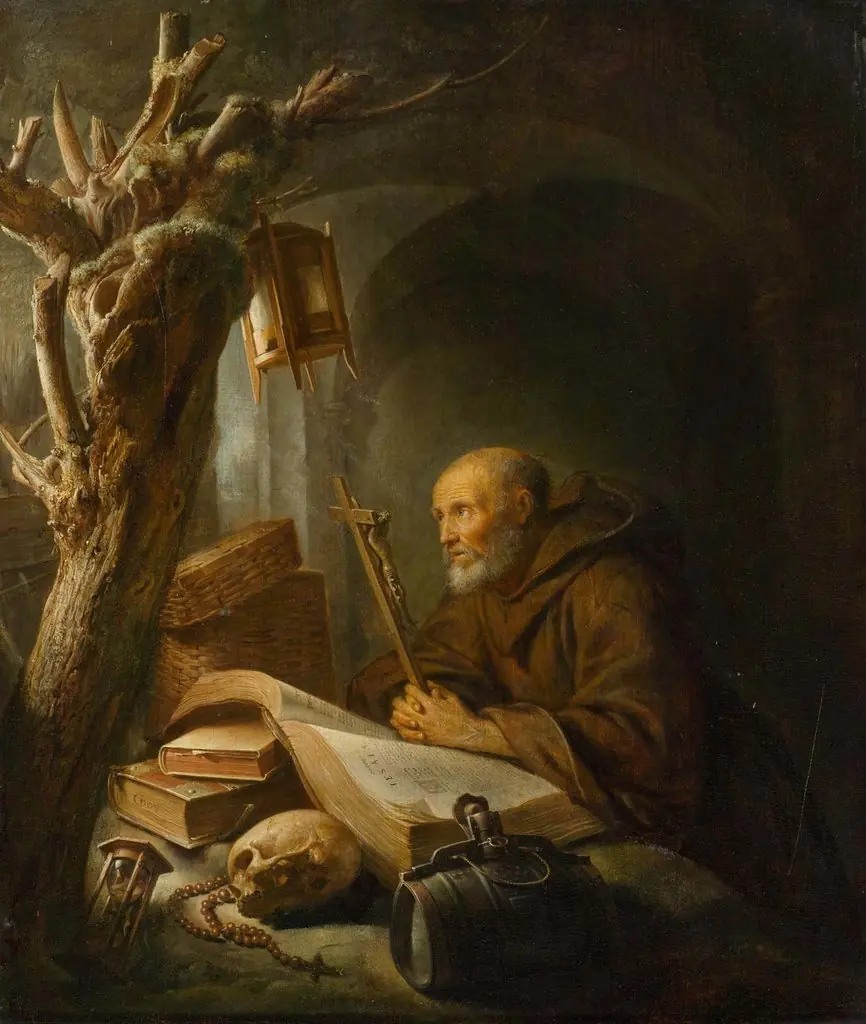
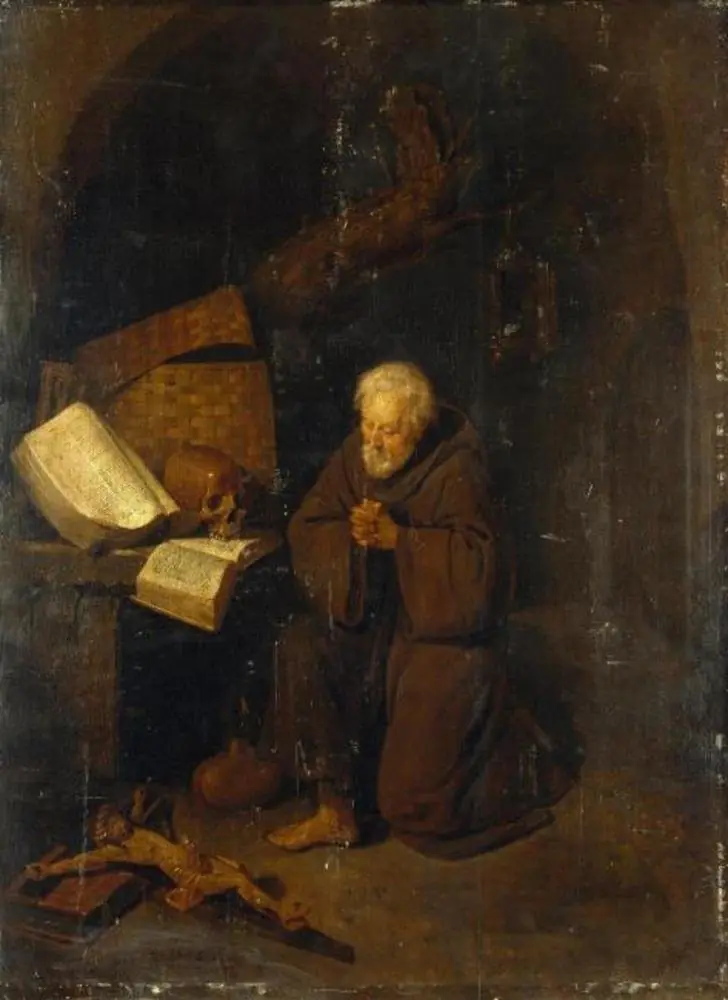
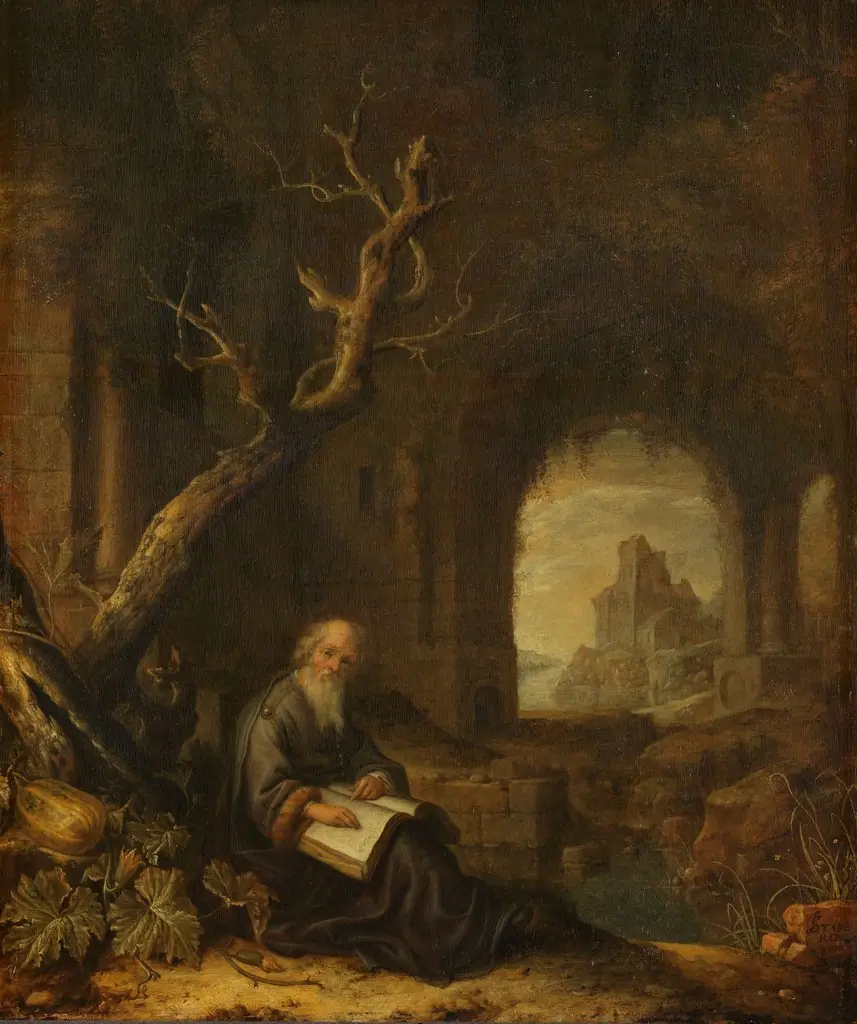
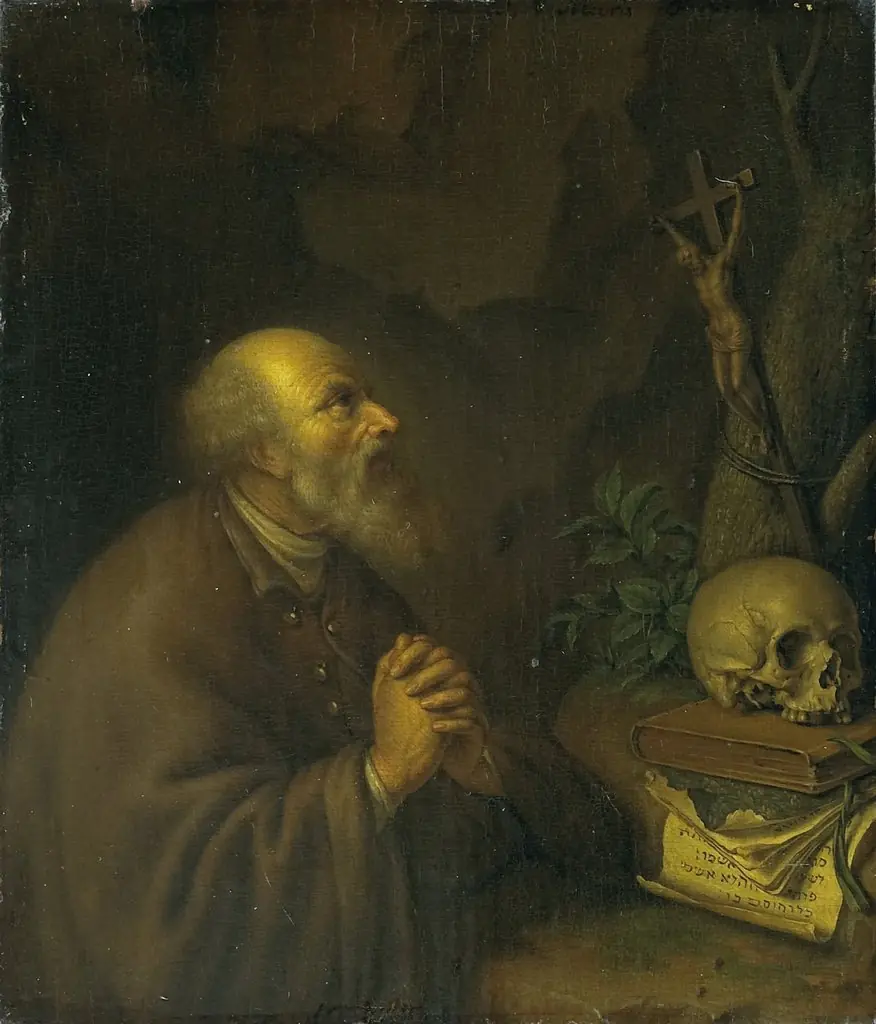
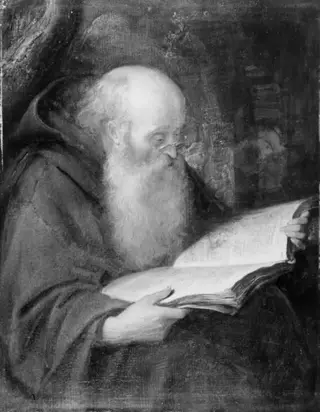
The painting centers on an elderly man with a long white beard, dressed in a simple brown robe, seated at a table. He is depicted reading a book, while holding a human skull, traditional symbols of mortality and spiritual contemplation. A cross, a basket, and a lantern also rest on the table, further emphasizing the ascetic and reflective life of the hermit. The arched opening behind him suggests a secluded dwelling.
Technique & Style
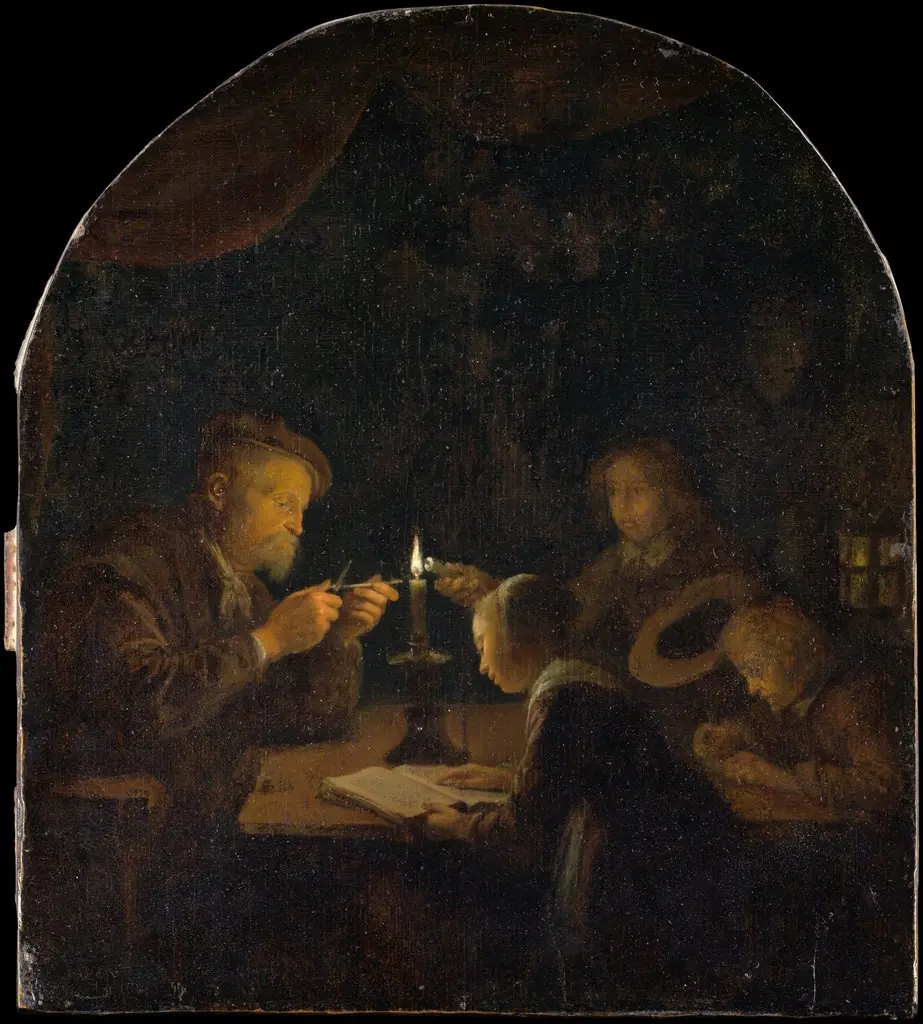
Dou, a prominent member of the Leiden fijnschilders, rendered The Hermit with exceptional meticulousness, a hallmark of this artistic group known for their highly finished, small-format works. The artist masterfully employs subtle variations of light and shadow, illuminating the hermit's face while leaving much of the scene in deep shadow. This dramatic contrast, reminiscent of chiaroscuro, enhances the painting's quiet, introspective mood and highlights the figure's features.
Context
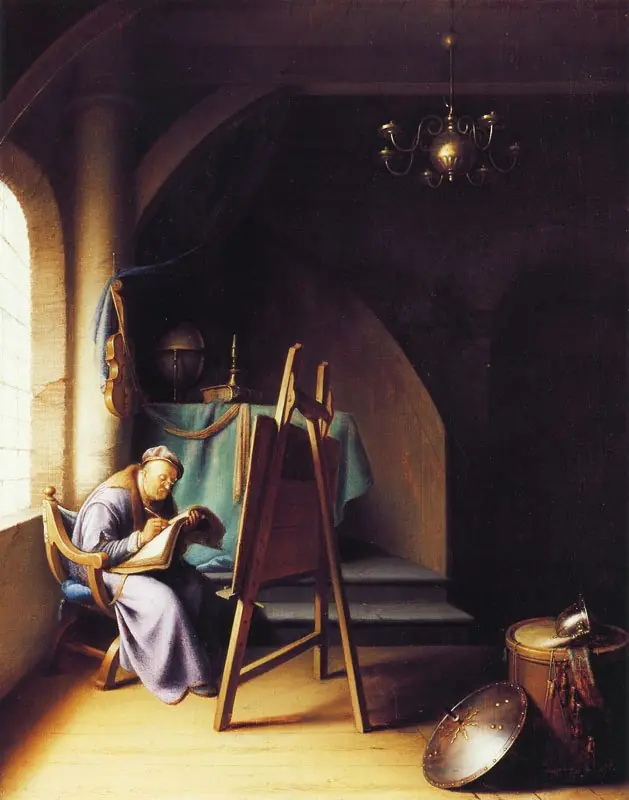
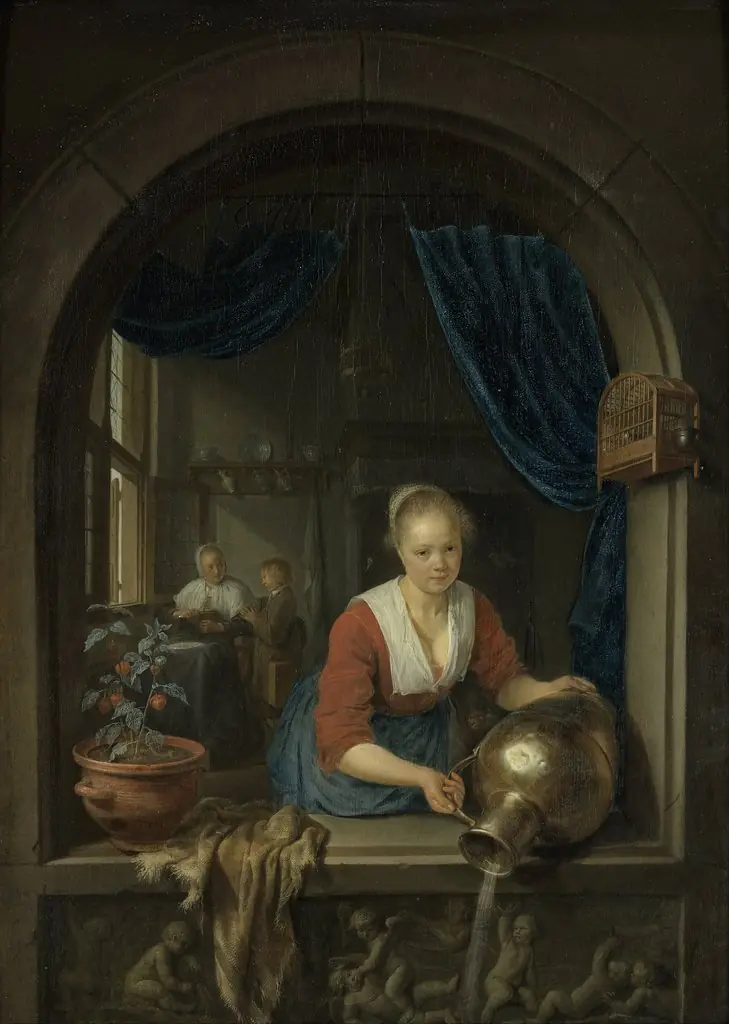
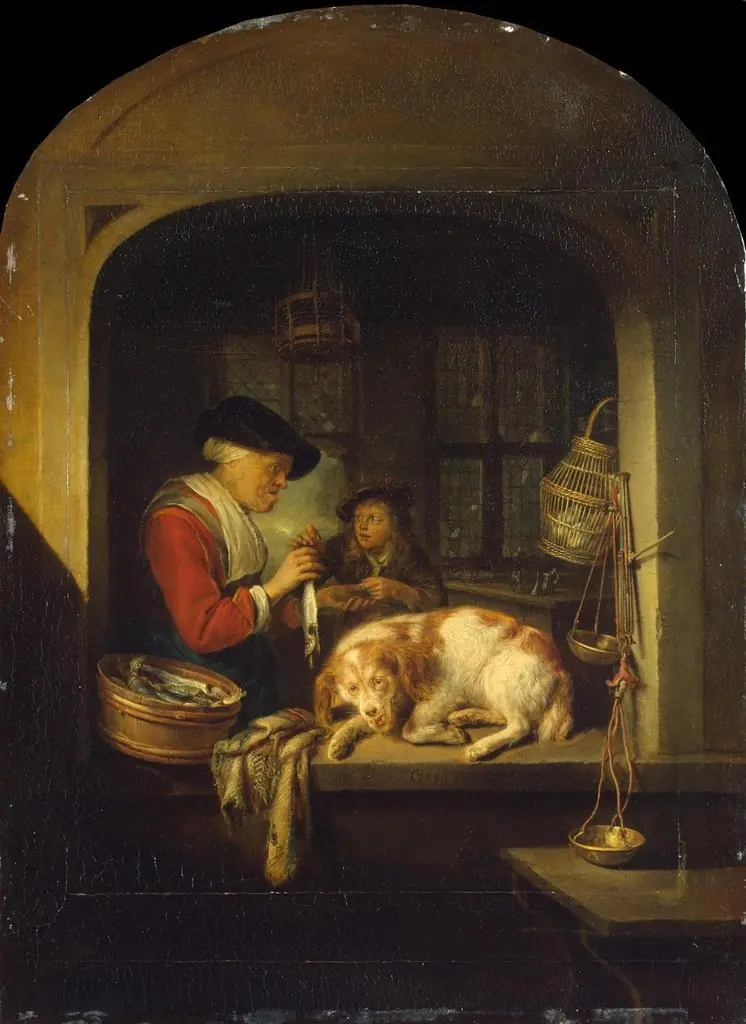
Created during the flourishing Dutch Golden Age, The Hermit showcases the artistic environment of the Netherlands in the 17th century. Gerrit Dou, initially a student of Rembrandt, developed a distinct style characterized by its smooth finish and intricate detail, diverging from his teacher's broader brushwork. His membership in the Leiden fijnschilders group further solidified his reputation for producing highly refined and visually engaging compositions that appealed to collectors of the era.
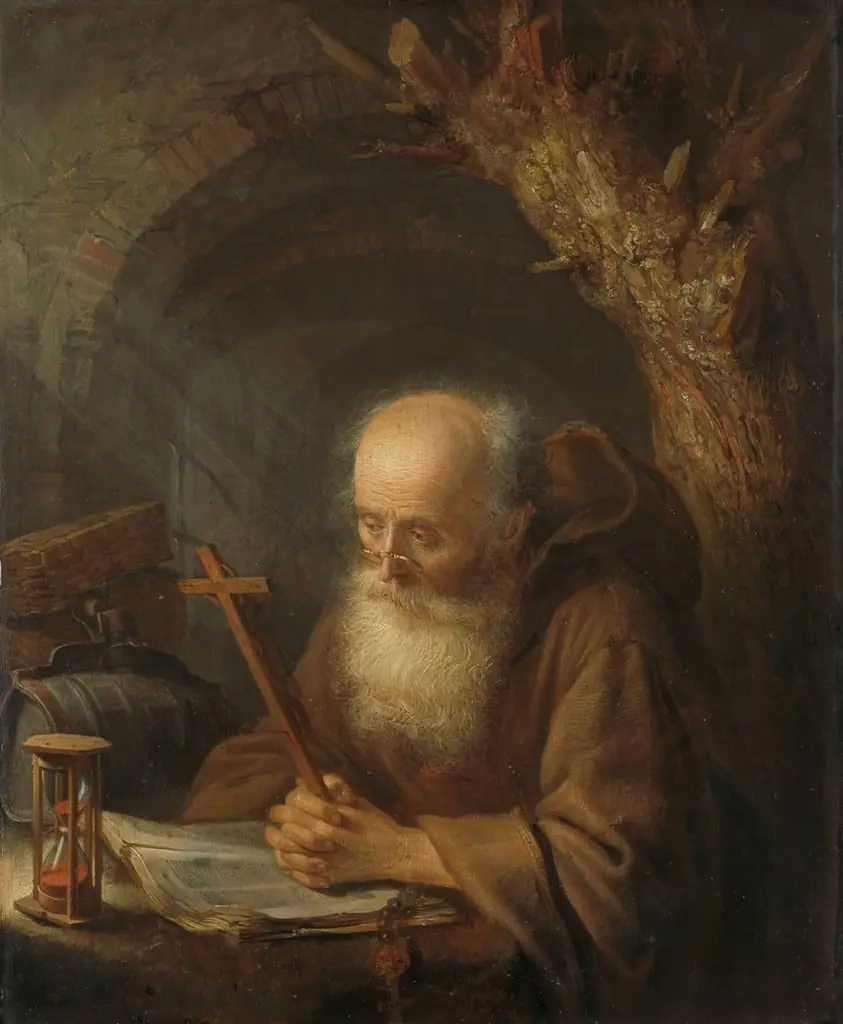
Own this work as a print
Artist & collection
Artist
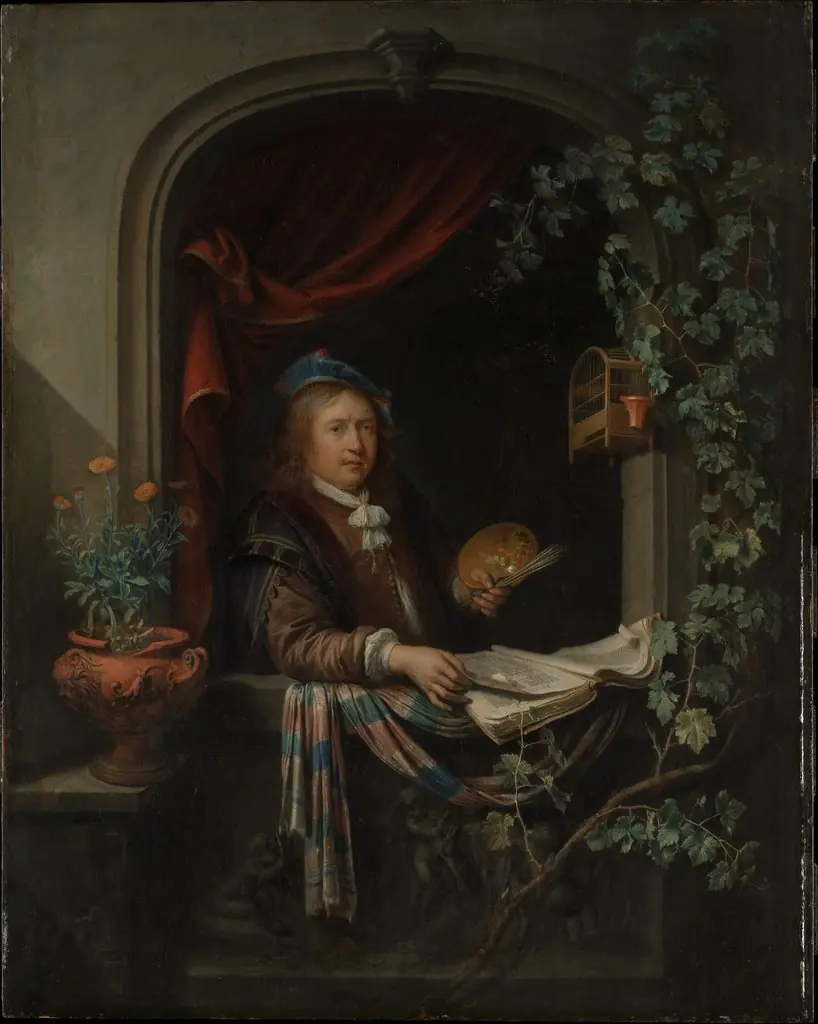
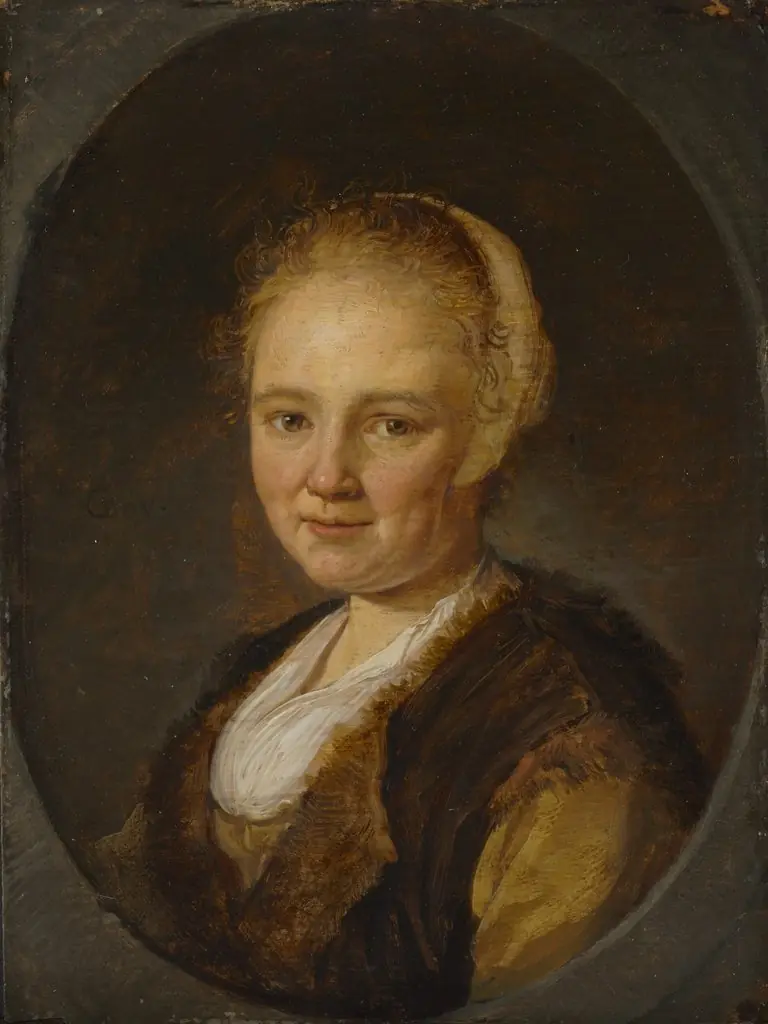
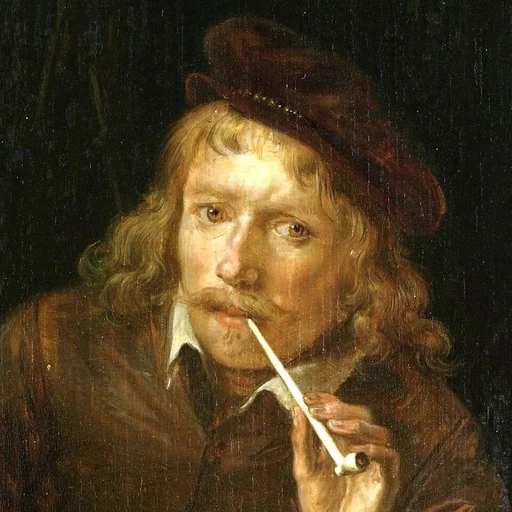
Gerrit Dou (pronounced; 7 April 1613 – 9 February 1675), also known as Gerard Douw or Dow, was a Dutch Golden Age painter, whose small, highly polished paintings are typical of the Leiden fijnschilders.