Artwork
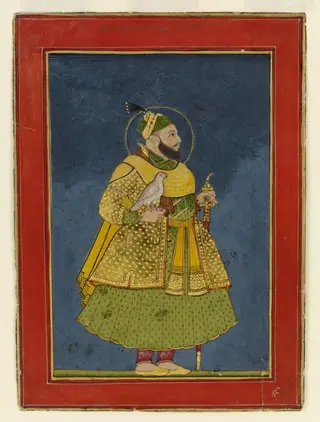
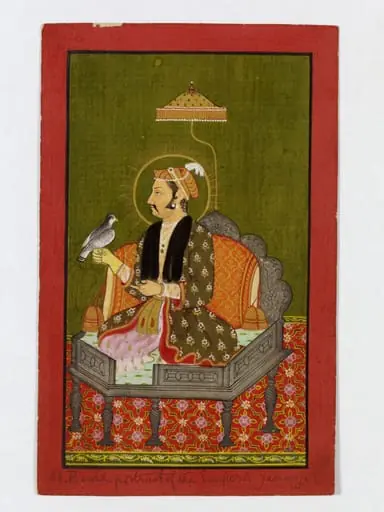
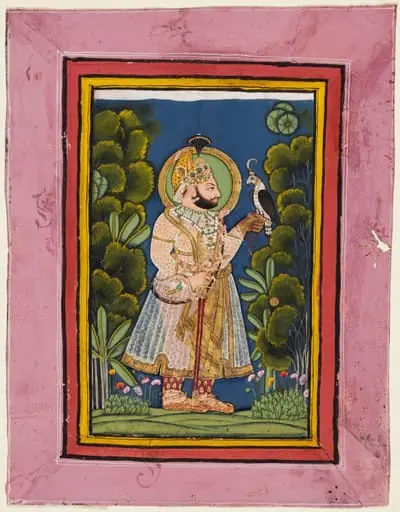
Maharana Jawan Singh of Mewar (r. 1828–38) Holding a Falcon
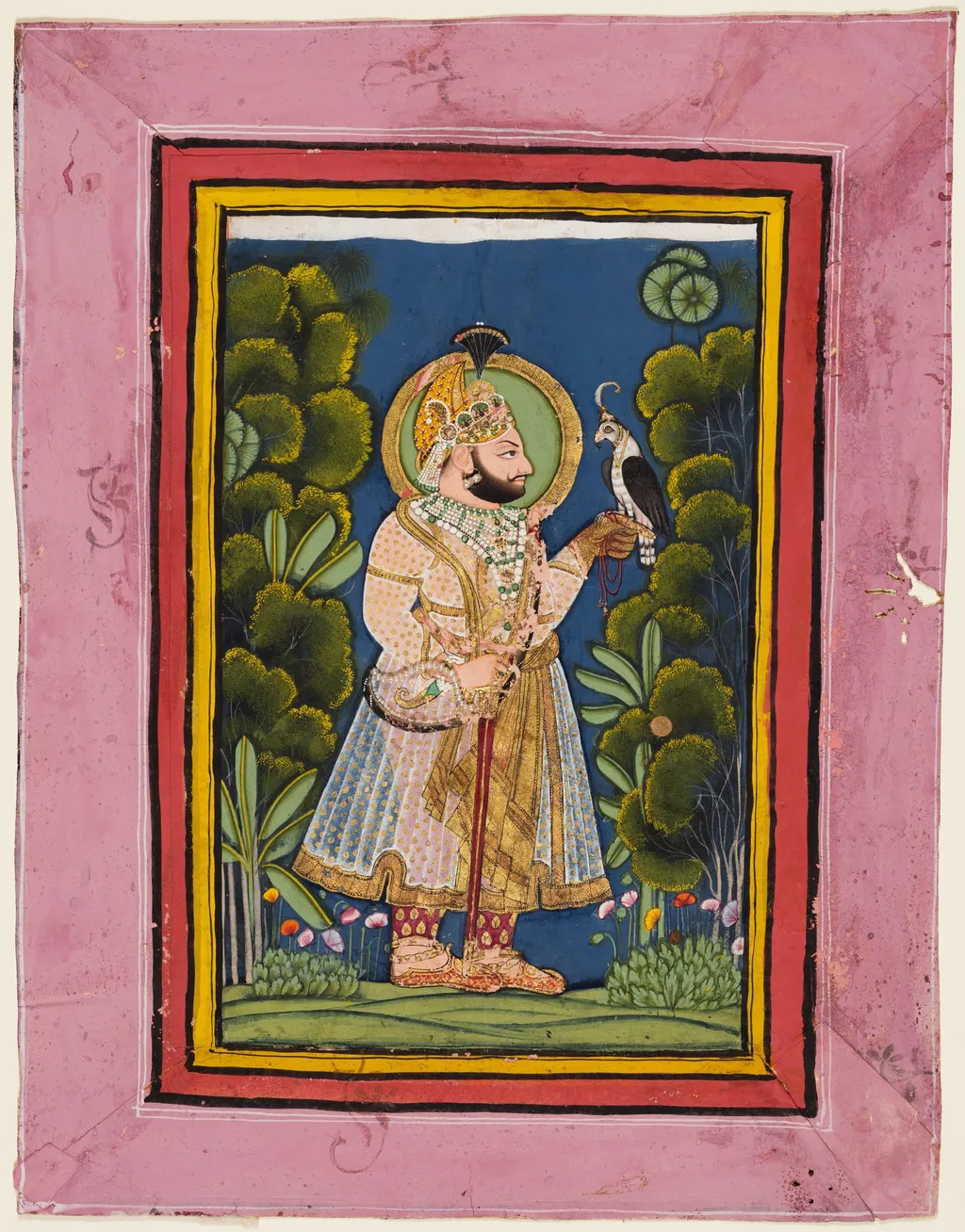
Maharana Jawan Singh of Mewar (r. 1828–38) Holding a Falcon is an unspecified painting by the Mughal Painting artist Ghasi. It dates from 1835 and is held in the collection of the Cleveland Museum of Art.
About this work
Subject & Meaning
Created in 1835 by the artist Ghasi in Mewar, the work presents the ruler engaged in falconry, a traditional aristocratic pursuit.
The painting depicts Maharana Jawan Singh of Mewar, who reigned from 1828 to 1838, holding a falcon. Created in 1835 by the artist Ghasi in Mewar, the work presents the ruler engaged in falconry, a traditional aristocratic pursuit. The inclusion of the bird of prey alongside the sovereign serves as an iconographic element associating the Maharana with the virtues of nobility, control, and the martial prowess expected of a Rajput king. The work functions as a portrait of authority, capturing the ruler during his reign.
History & Provenance
Maharana Jawan Singh of Mewar (r. 1828–38) Holding a Falcon was created in 1835 by the artist Ghasi in Mewar, during the reign of Maharana Jawan Singh, who ruled from 1828 to 1838. The work is held in the collection of the Cleveland Museum of Art, where it is catalogued under accession number 2018.149. No further details regarding its commission or earlier ownership are documented in the available sources.
Overview
Created in 1835 by the artist known as Ghasi, this oil painting portrays Maharana Jawan Singh, the ruler of Mewar from 1828 to 1838, holding a falcon. The work is part of the collection of the Cleveland Museum of Art, where it is displayed as an example of early‑nineteenth‑century Indian court portraiture.
Technique & Style
Ghasi employs a deep blue ground that heightens the vivid reds, golds and greens of the clothing and surrounding foliage. Fine brushwork renders intricate textile patterns and the delicate plumage of the bird, while layered washes give the landscape a sense of depth, creating a textured, three‑dimensional effect.
Context
In the early 1800s, Mewar’s court commissioned portraits that combined indigenous iconography with European painting techniques introduced by colonial artists. This work exemplifies that syncretic style, illustrating how Indian rulers adopted new visual languages while preserving traditional symbols of power such as the falcon.
Own this work as a print
Artist & collection