Artwork
The Penitent Mary Magdalene
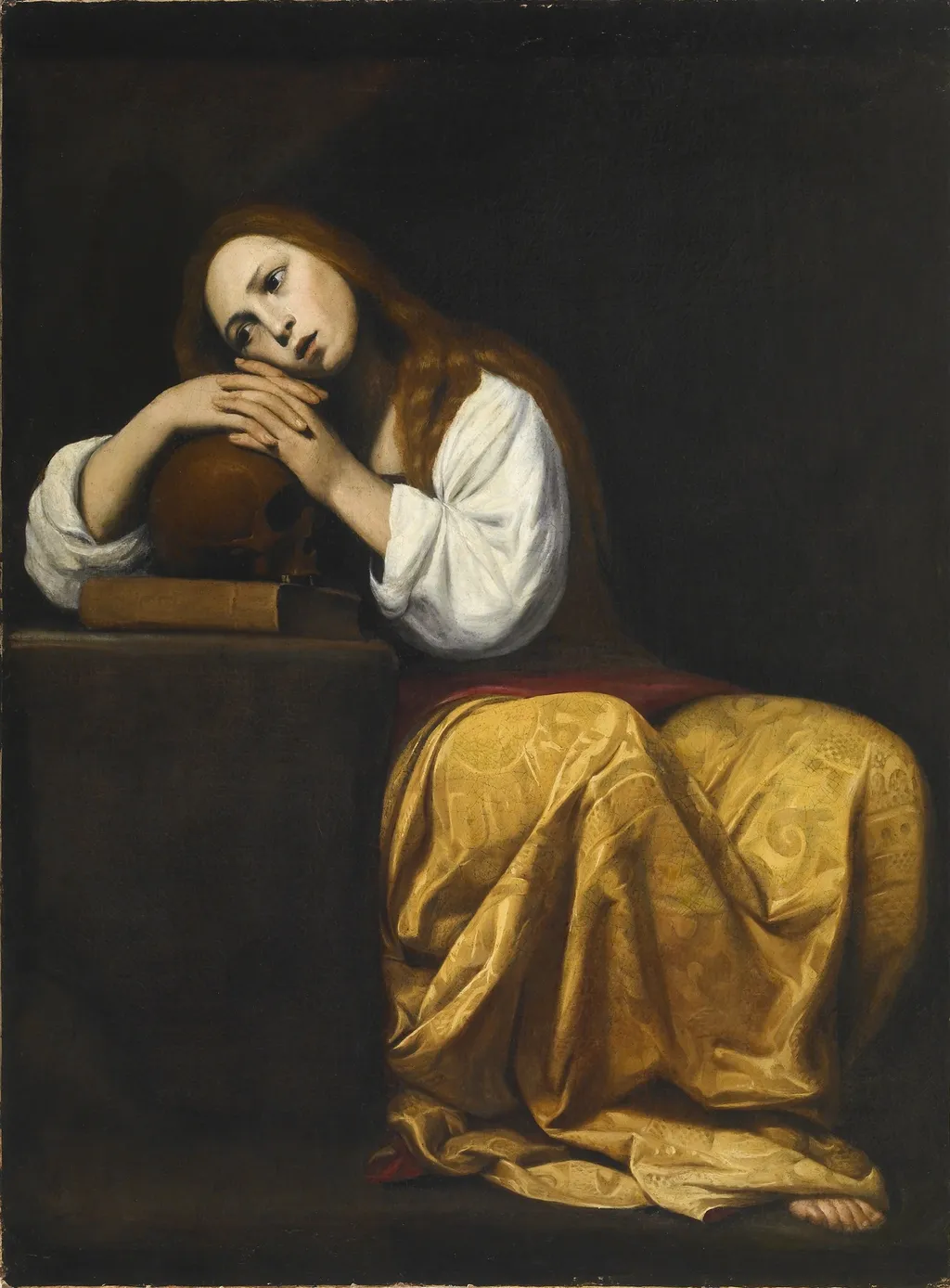
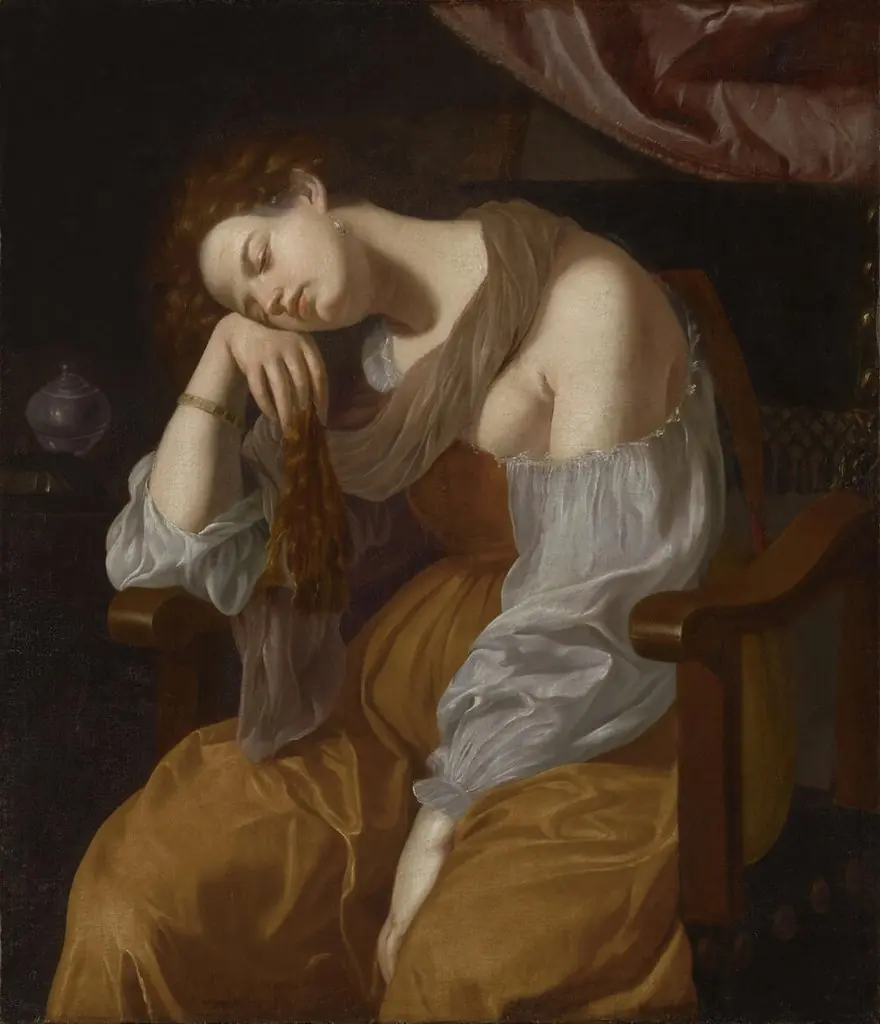
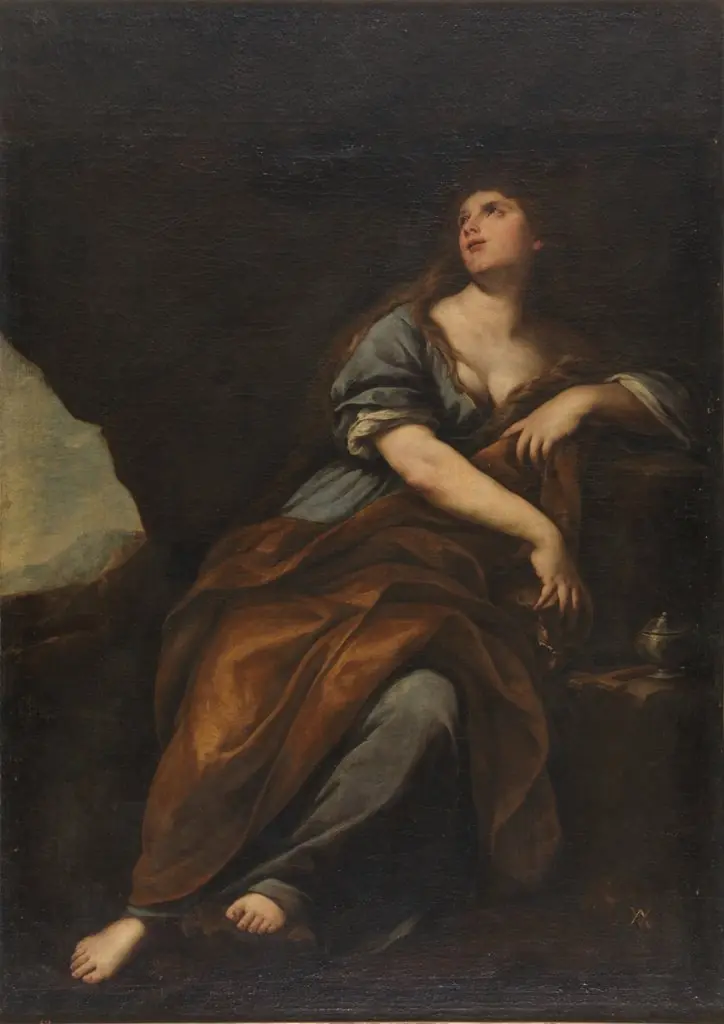
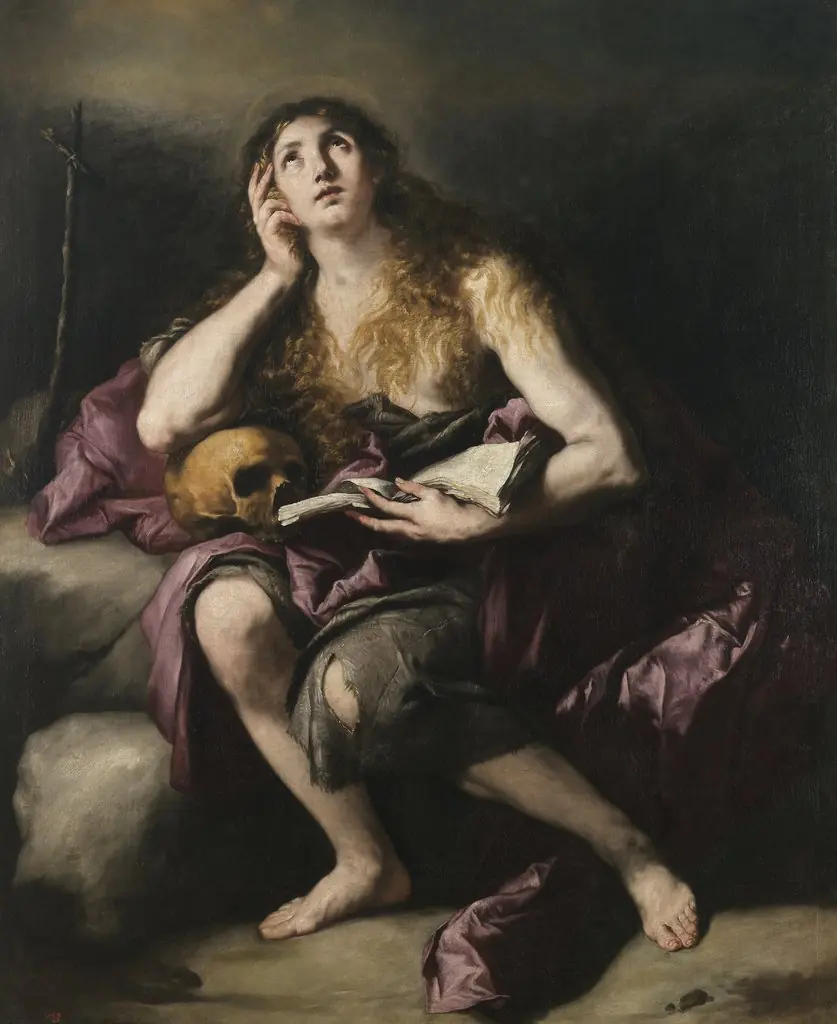
The Penitent Mary Magdalene is an oil painting by the Early Baroque Italian artist Giacomo Galli. It dates from 1630 and is held in the collection of the Walters Art Museum.
About this work
Subject & Meaning
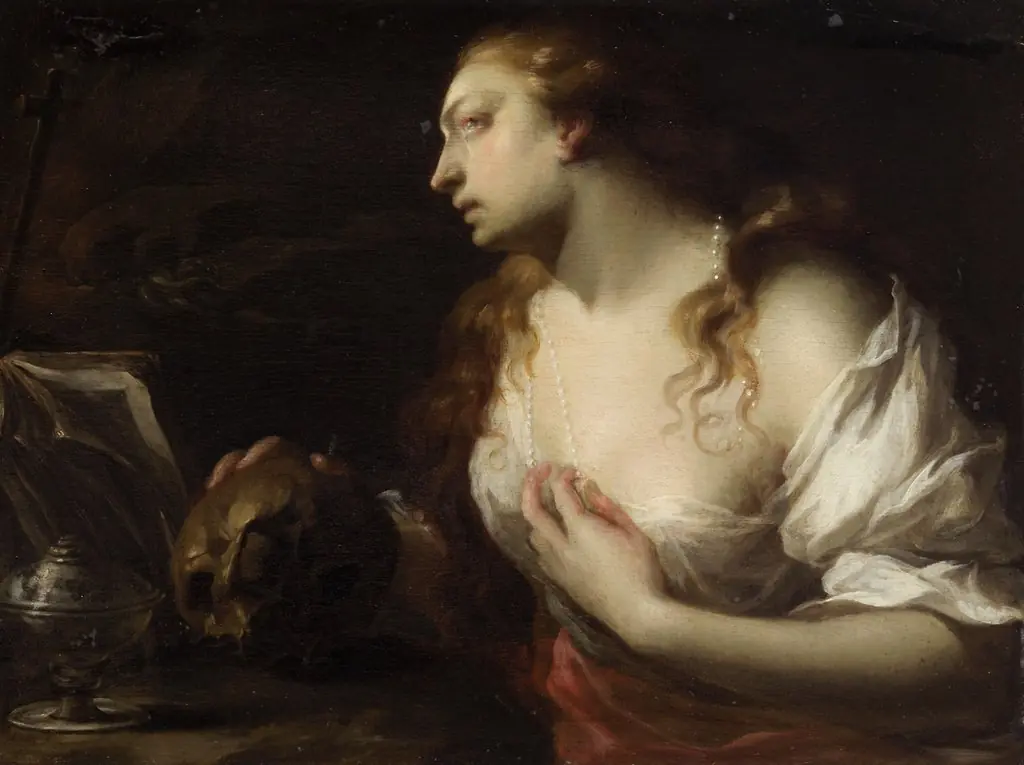
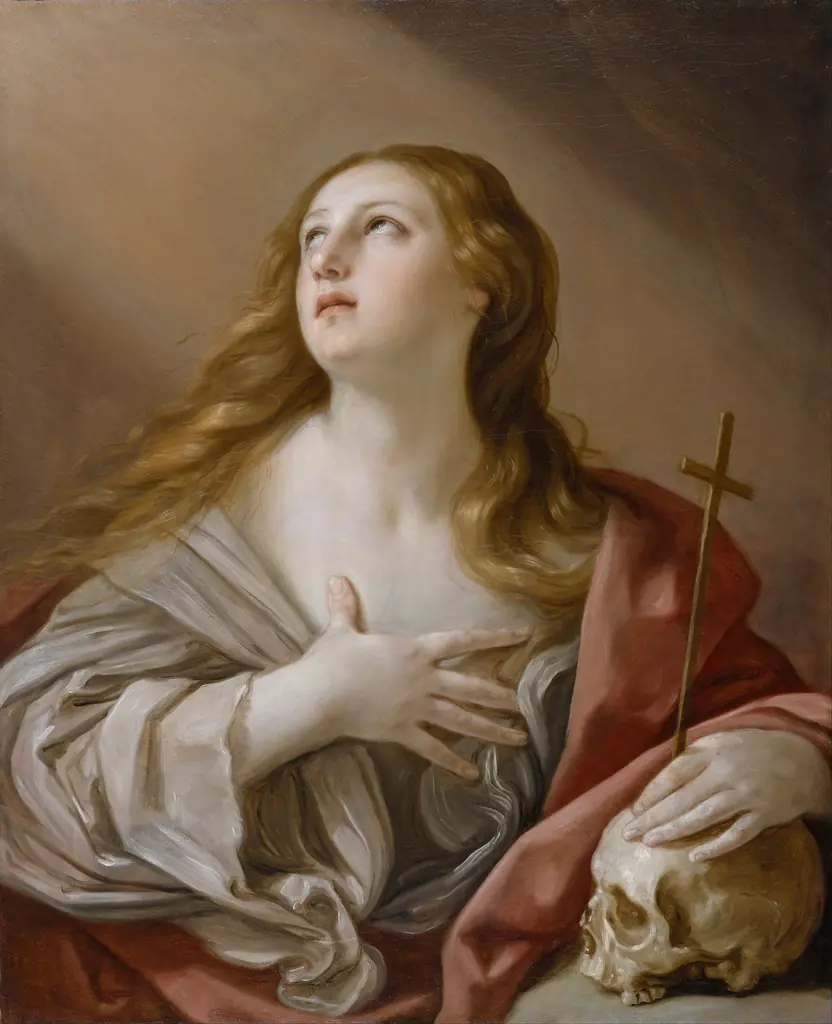
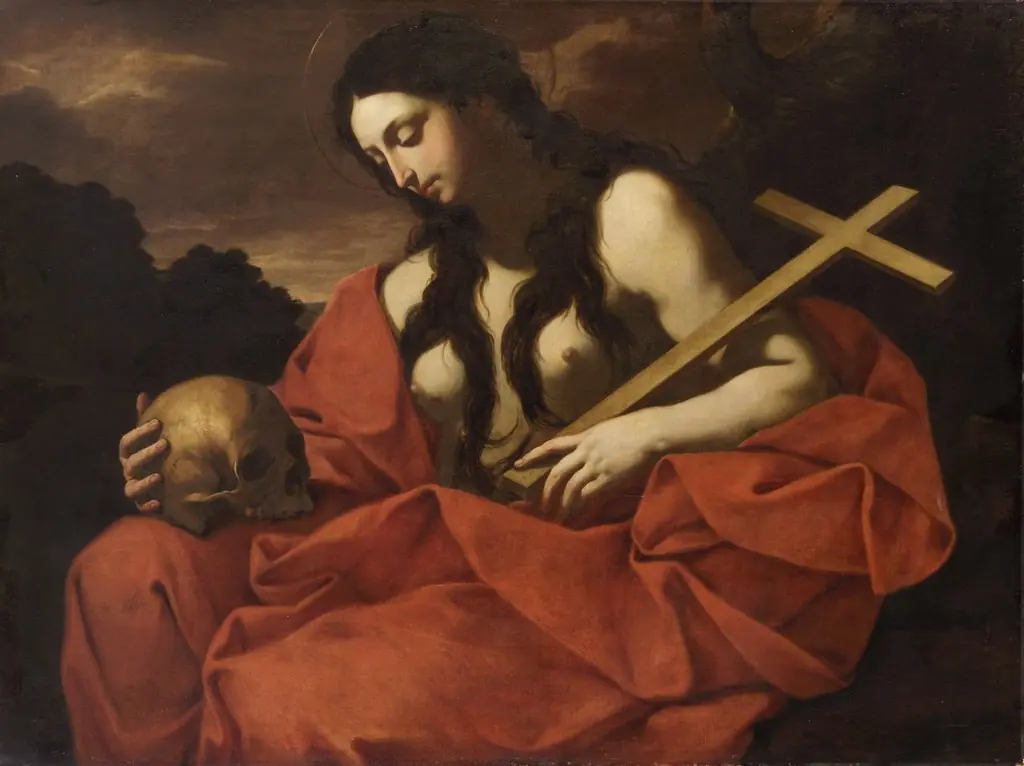
A human skull and open book on the table symbolize mortality and the contemplation of scripture, while the skull’s presence underscores the theme of vanitas.
The painting shows Mary Magdalene in a moment of contemplative penitence, seated and clothed in rich drapery that emphasizes her dual role as penitent and sinful figure. A human skull and open book on the table symbolize mortality and the contemplation of scripture, while the skull’s presence underscores the theme of vanitas. Her long, dark brown hair cascades over her shoulders, and a subtle brow conveys introspection, embodying the transformation from worldly allure to spiritual redemption.
The work thus represents the theological narrative of repentance and the possibility of divine forgiveness within Counter‑Reformation visual culture.
Technique & Style
The work is executed in oil paint on canvas, a support noted in the provenance. Galli’s handling of the medium emphasizes the Penitent Magdalene’s contemplative posture and the stark symbolism of the skull and book, underscoring themes of repentance and the mortification of the flesh. The composition balances intimate detail with a restrained palette, directing focus to the figure’s downcast gaze and the tactile rendering of drapery and brocade.
History & Provenance
Giacomo Galli painted The Penitent Mary Magdalene in 1630 as an oil on canvas work. The painting entered the collection of the Walters Art Museum, where it remains on display. Its subject draws from the Penitent Magdalene motif, reflecting Counter-Reformation themes of penitence and contemplation.
The painting is held in the Walters Art Museum, as recorded in its collection data. It forms part of the museum's holdings of religious paintings and is catalogued as an oil-on-canvas work by Giacomo Galli dated 1630.
The Wikidata record identifies the Walters Art Museum as both the current collection and location of the work, with dimensions of 133 cm in height and 98.7 cm in width. No specific accession number is provided in the available sources, and no exhibition history is documented.
Overview
Created around 1630 by the Roman painter Giacomo Galli, known as Lo Spadarino, this oil painting presents a contemplative Mary Magdalene. The figure is seated before a dark brown backdrop, her head bowed and hand supporting her cheek, while a skull rests on a nearby ledge. The composition emphasizes the contrast between illuminated flesh and deep shadow, characteristic of early Baroque devotional works.
Own this work as a print
Artist & collection
Artist
Giacomo Galli, commonly known as "Lo Spadarino" (1597–1649) was an Italian painter and engraver of the Papal city of Rome in the early seventeenth century.