Artwork
Penitent Mary Magdalene
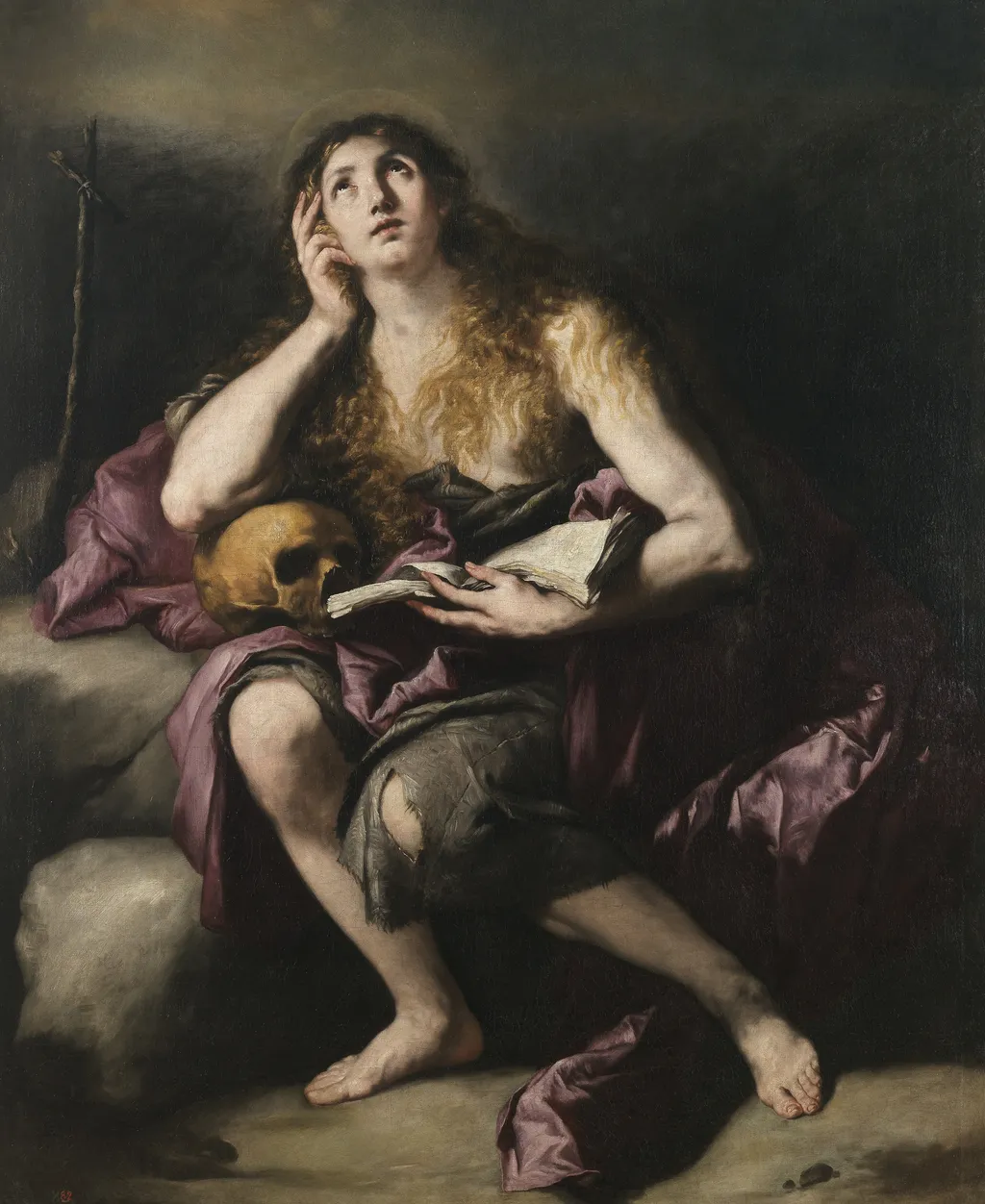
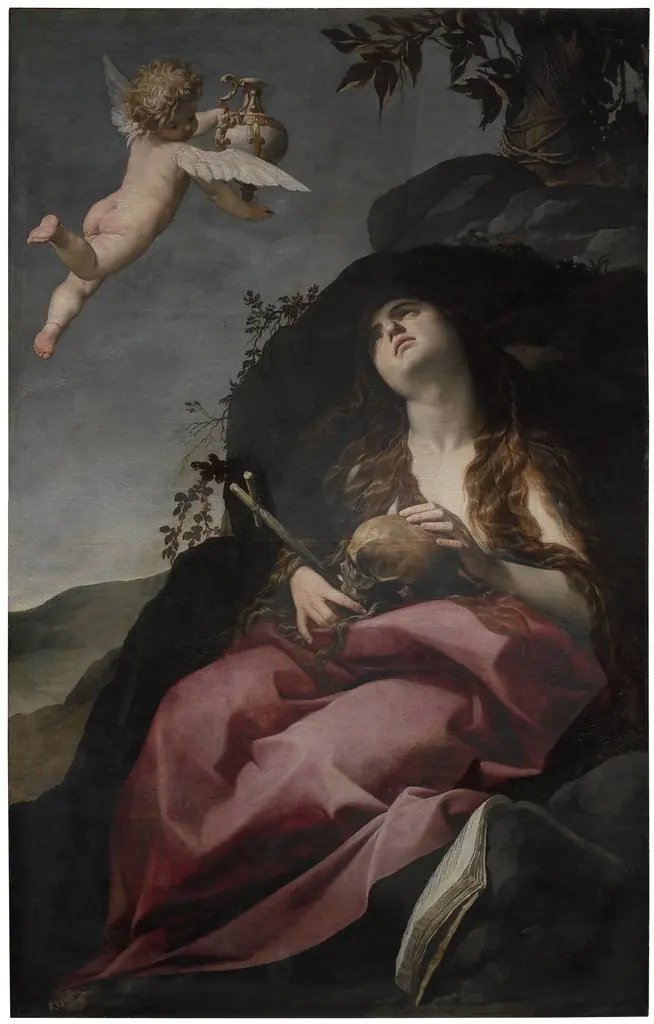
Penitent Mary Magdalene is an oil painting by the Early Baroque Italian artist Luca Giordano. It dates from 1660 and is held in the collection of the Museo del Prado.
About this work
Subject & Meaning
This iconographic type was a frequent subject for Luca Giordano, who returned to it across his career.
The painting depicts Mary Magdalene as a penitent, a recurring subject in Christian iconography that portrays the saint in a moment of spiritual reflection and renunciation of worldly life. According to the catalogue entry, the figure is shown with waist-length hair and is accompanied by a human skull, a book, and elements associated with the mortification of the flesh, traditional attributes that symbolize the transience of earthly existence, meditation on mortality, and devotional reading of scripture.
This iconographic type was a frequent subject for Luca Giordano, who returned to it across his career. The work draws on the Penitent Magdalene tradition established by Venetian painters, recalling compositions by Titian and Veronese, while its rugged setting and earthy palette also reflect the influence of Spanish tenebrist painting.
The subject represents the theme of conversion and penitential withdrawal from the material world, central to the saint's identity in Counter-Reformation religious art.
Technique & Style
Luca Giordano executed Penitent Mary Magdalene as an oil painting on canvas, measuring 153 by 124 cm. The work is characterized by a strong realism and a rocky, earthy setting that reflects the early influence of Jusepe de Ribera on the artist's style. Stylistic elements include the depiction of tattered garments and a dramatic use of pink drapery against grey and brown tones, alongside a scabrous landscape typical of Ribera's compositions. The handling also demonstrates Giordano's command of Venetian painting techniques acquired during his stay in Venice, drawing parallels to the Magdalene depictions of Titian and Veronese.
History & Provenance
Luca Giordano created the oil-on-canvas painting Penitent Mary Magdalene between 1660 and 1665. The work measures 153 cm in height and 124 cm in width and is held in the collection of the Museo del Prado in Madrid under inventory number P001803. While the specific original commission or first owner is not detailed in the available records, the painting is recognized as a significant example of Giordano's early style, heavily influenced by Jusepe de Ribera and by Venetian masters such as Titian and Veronese. It is displayed as part of the museum's holdings of Italian Baroque painting.
Context
Scholars regard this canvas as a work of excellent craftsmanship that illustrates the pivotal transition in Luca Giordano's stylistic development. The composition retains a profound Ribera influence, evident in the tattered garments, stark realism, and earthy, grey-toned rocky setting, which echo the artist's early training and recall Jusepe de Ribera's own depictions of saints and philosophers.
Simultaneously, the painting demonstrates Giordano's assimilation of Venetian techniques acquired during his residency in Venice, inviting comparison to the Magdalene traditions of Titian and Veronese. This synthesis of Neapolitan realism and Venetian colorism situates the work within a broader iconographic tradition, as the Penitent Magdalene remained a recurrent and significant subject throughout Giordano's career.
Legacy
The work is recognized for combining Neapolitan realism with Venetian colorito, a synthesis highlighted in art-historical accounts. Its composition of a penitent Magdalene with a skull and torn garments reflects a long Baroque tradition of depicting the saint in penitence. The painting has been part of the Museo del Prado collection since the late seventeenth century, contributing to Giordano's reputation as a master who bridged regional styles.
Overview
Luca Giordano's oil painting, Penitent Mary Magdalene, dates from 1660. This work portrays the biblical figure of Mary Magdalene in a moment of profound reflection and spiritual contemplation. Rendered in oil, the artwork is currently housed within the collection of the Museo del Prado, offering a characteristic example of Baroque religious painting from the period.
Own this work as a print
Artist & collection

Artist
Luca Giordano was an Italian late-Baroque painter and printmaker in etching. Giordano was one of the most celebrated artists of the Neapolitan Baroque, whose vast output included altarpieces, mythological paintings and…