Artwork
Saint Catherine of Alexandria
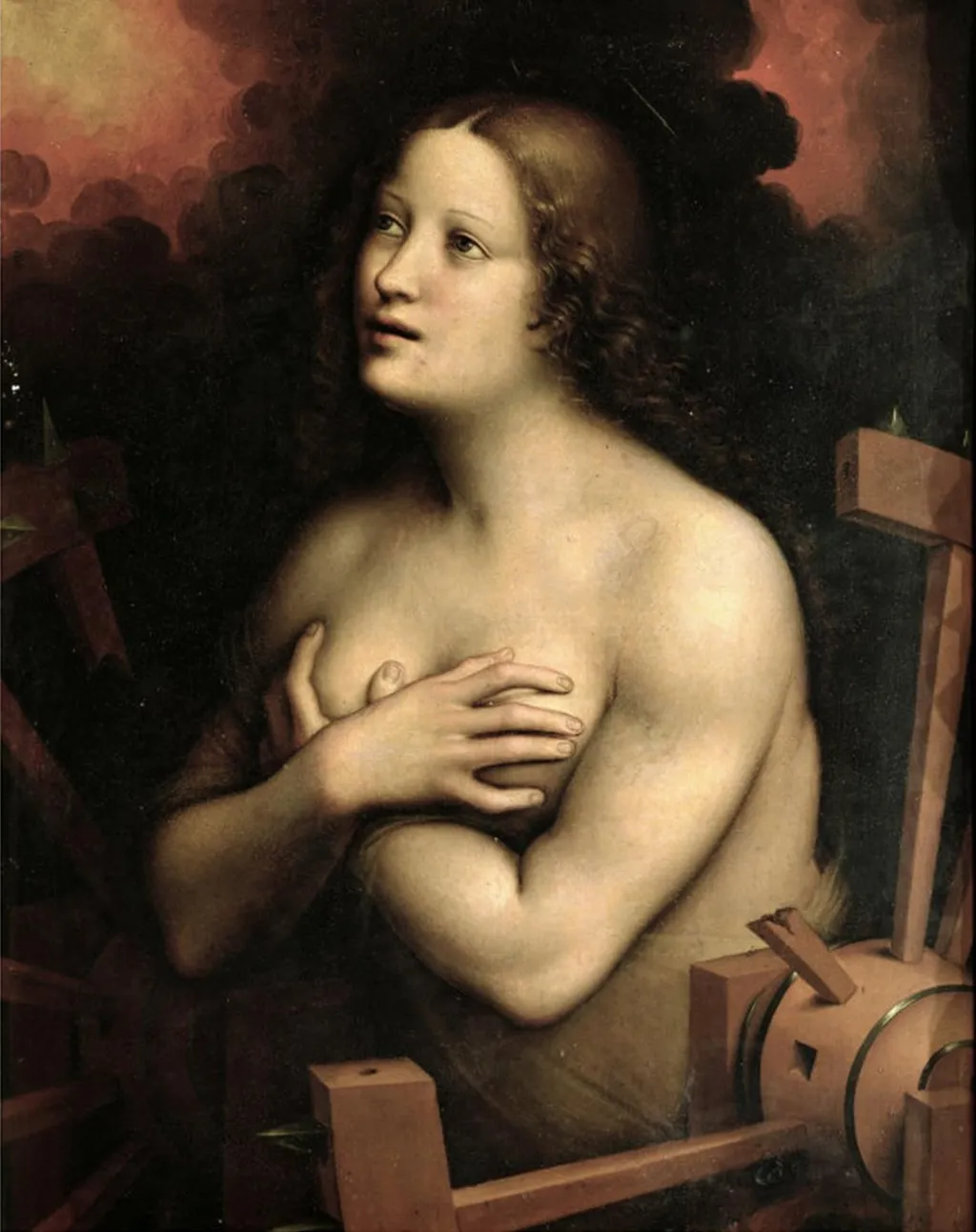
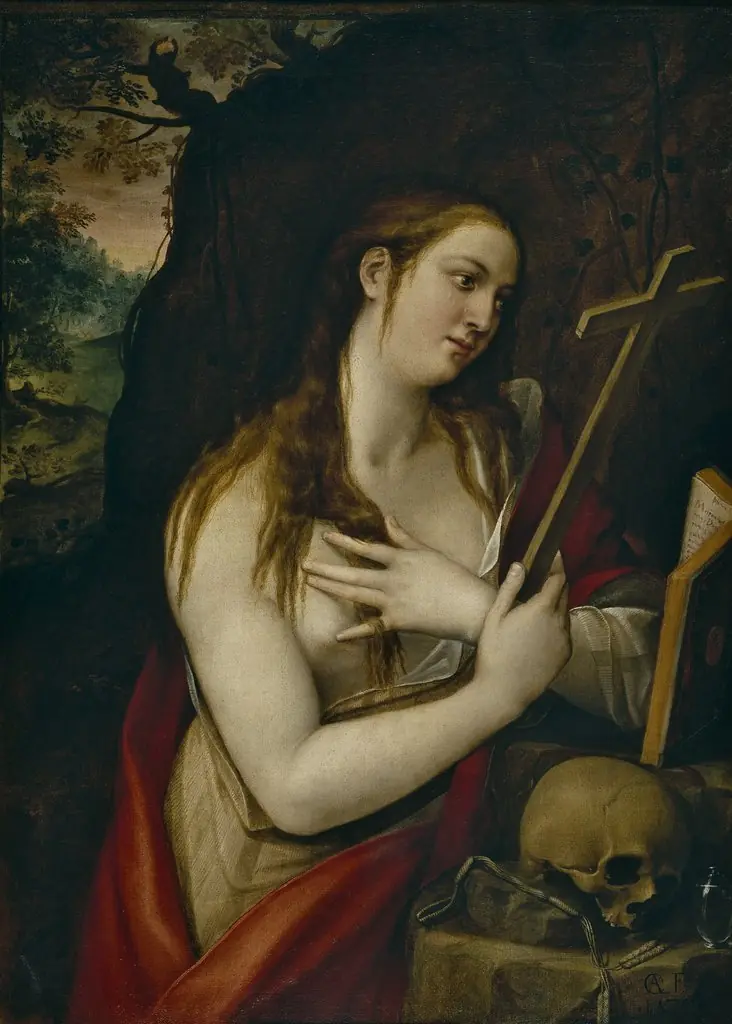
Saint Catherine of Alexandria is an oil painting by the Mannerist artist Giampietrino. It dates from 1530 and is held in the collection of the Uffizi Gallery.
About this work
Subject & Meaning
She is portrayed with waist-length chestnut hair and a hand covering her chest, emphasizing a nude form that highlights the erotic connotations of the subject.
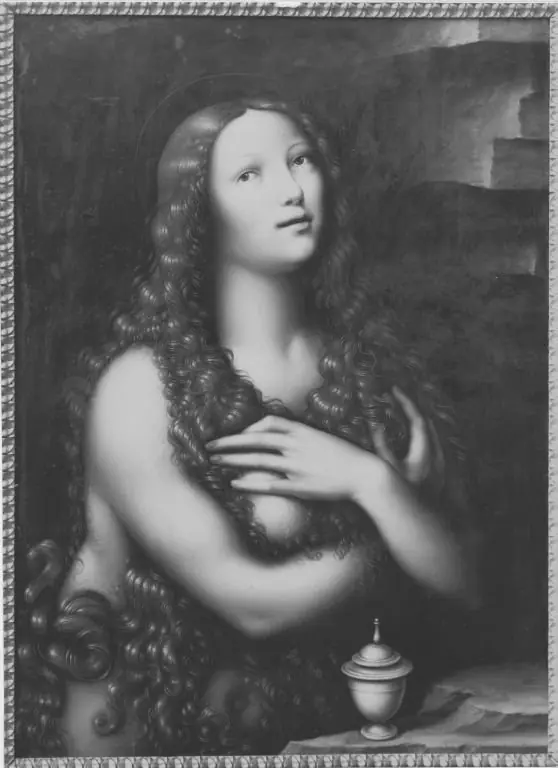
The painting depicts Saint Catherine of Alexandria as a half-length figure turned three-quarters to the left, framed by the broken wheel of her martyrdom. She is portrayed with waist-length chestnut hair and a hand covering her chest, emphasizing a nude form that highlights the erotic connotations of the subject. The composition uses dark smoke and flames to contrast with the pallor of her skin, creating a dramatic backdrop for the saint.
While the work employs a Leonardesque style of sfumato, the execution is described as somewhat superficial, prioritizing the sensual representation of the female figure over deep spiritual symbolism. The image represents the saint in the context of her torture, yet the visual focus remains heavily on her physical beauty and the dramatic interplay of light and shadow.
Technique & Style
The painting is executed in oil on panel, measuring 64 × 50 cm. It depicts Saint Catherine at half-length, turned three-quarters toward the left, positioned between the wheels of her martyrdom. Black smoke and flames frame the figure, creating a dramatic contrast that heightens the pallor of her skin.
Stylistically, the work shows superficial borrowings from Leonardo's sfumato and leonardesque figure types. The handling of these elements is described as somewhat shallow, with eroticized overtones emphasized in the depiction.
History & Provenance
The work is documented as dating to 1530 and is recorded as entering the Medici collection through the inheritance of Cardinal Leopoldo de’ Medici, who held it at Palazzo Pitti in Florence with an attribution to Bernardino Luini. It remained in the Palazzo Pitti until its transfer to the Galleria degli Uffizi in 1925, where it has been conserved since.
The painting’s early attribution history shows it initially linked to Luini’s workshop before Giovanni Morelli reassigned it to Giampietrino, a judgment later supported by scholars such as Berenson and Suida.
The painting is held in the Galleria degli Uffizi, Florence, inventoried as inv. 1890 (formerly Palazzo Pitti, inv. 1799).
It entered the Uffizi in 1925 from the inheritance of Cardinal Leopoldo de’ Medici, who had it at Palazzo Pitti. The work was initially attributed to Bernardino Luini before being reattributed to Giampietrino by Giovanni Morelli.
Context
Critical reception of Giampietrino’s Saint Catherine of Alexandria has long been shaped by its contested attribution. Early modern inventories listed it under Bernardino Luini, but Giovanni Morelli first assigned it to Giampietrino, later refining the attribution to the master himself rather than his workshop. Subsequent scholars, including Bernard Berenson and William Suida, followed this reattribution, situating the work within Giampietrino’s oeuvre of religious subjects indebted to Leonardo’s sfumato.
The painting’s place in art history reflects the period’s taste for half-length devotional images with heightened erotic charge. Its composition, Catherine framed by the broken wheels of her martyrdom and swirling black smoke, emphasizes sensuality over strict hagiography, aligning with Counter-Reformation trends that favored affective, visually striking religious imagery.
Overview
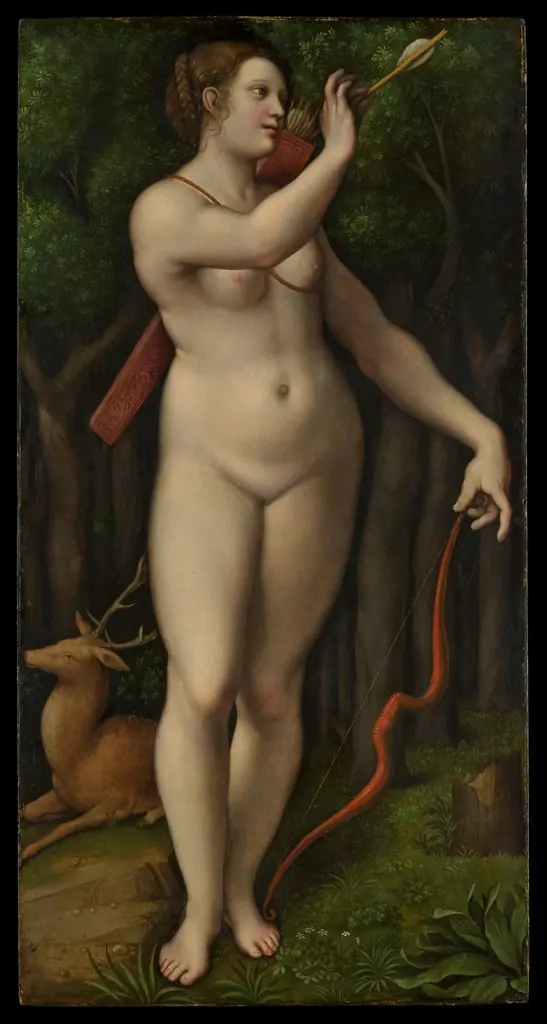
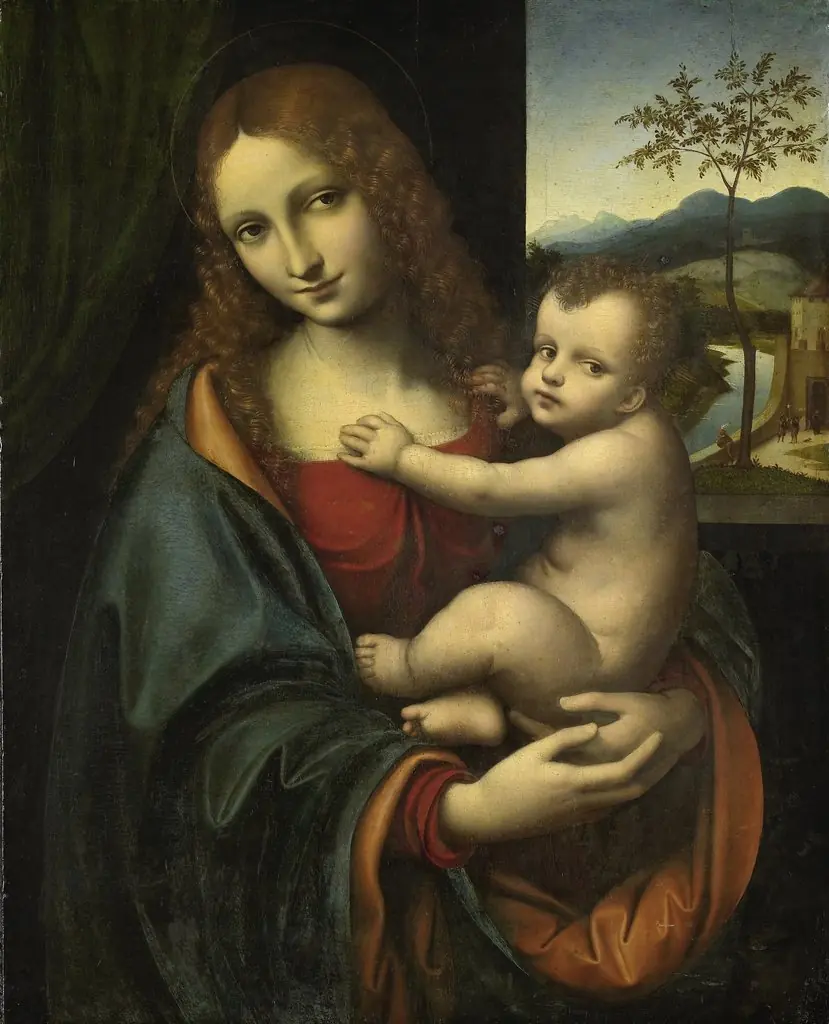
Created around 1530, this oil painting portrays Saint Catherine of Alexandria and is part of the Uffizi Gallery’s collection. The work is attributed to Giampietrino, the name commonly used for Giovanni Pietro Rizzoli, a northern Italian painter who worked in the first half of the sixteenth century and was linked to Leonardo da Vinci’s artistic circle.
Artist & collection
Artist
Giampietrino, probably Giovanni Pietro Rizzoli (active 1495–1549), was a north Italian painter of the Lombard school and Leonardo's circle, succinctly characterized by S. J. Freedberg as an "exploiter of Leonardo's repertory."