Artwork
Diana the Huntress
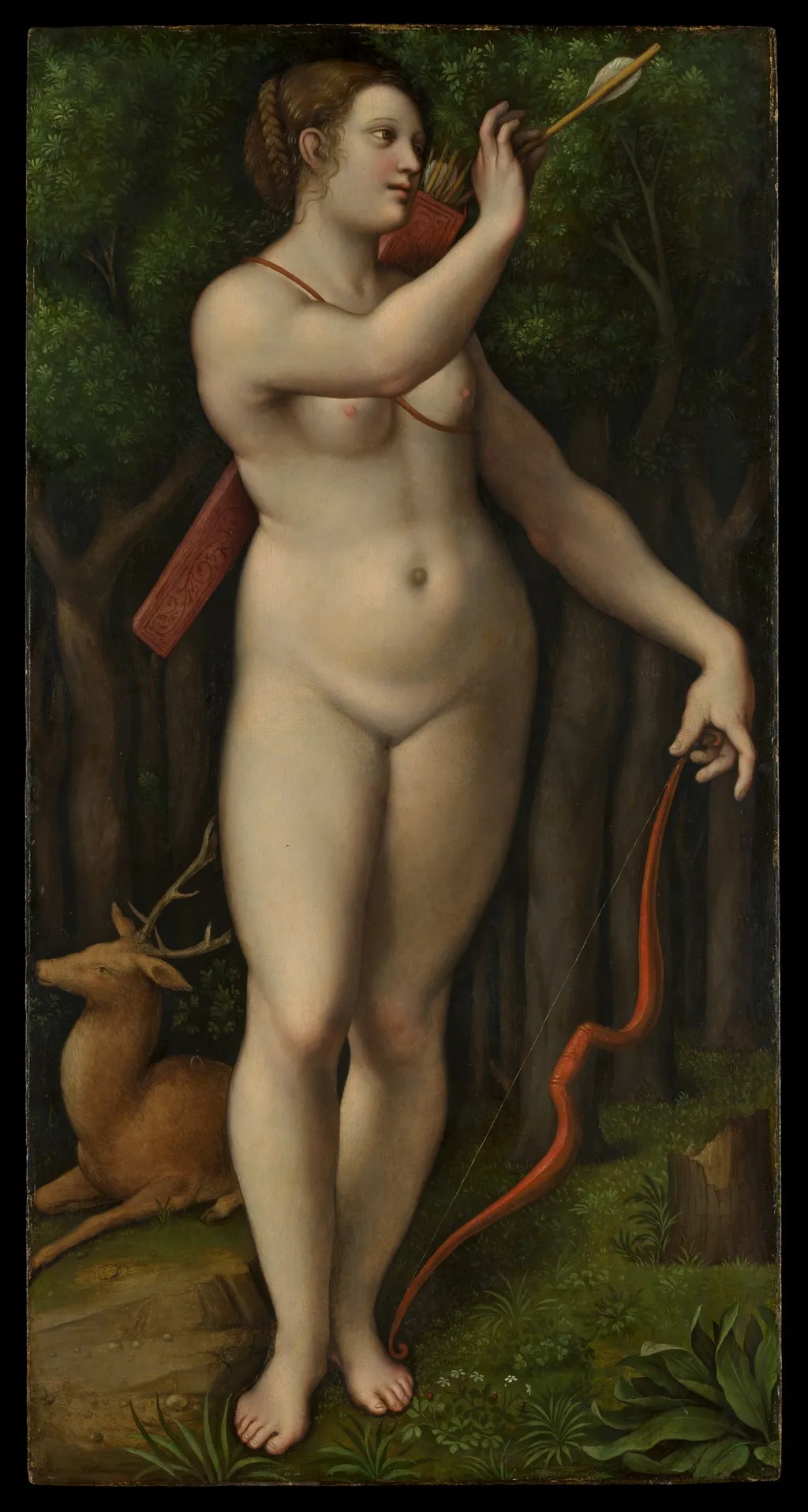
Diana the Huntress is an oil painting by the Mannerist artist Giampietrino. It dates from 1526 and is held in the collection of the Metropolitan Museum of Art.
About this work
Subject & Meaning
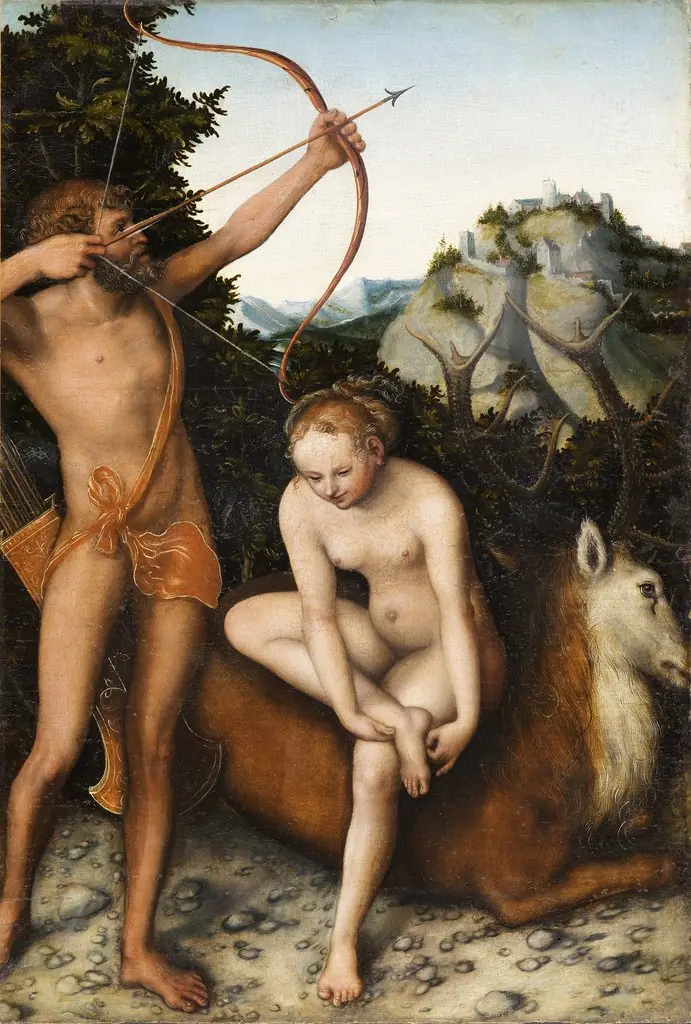
Executed in 1526 by Giampietrino, this mythological panel depicts Diana, the Roman goddess of the hunt, as its primary subject.
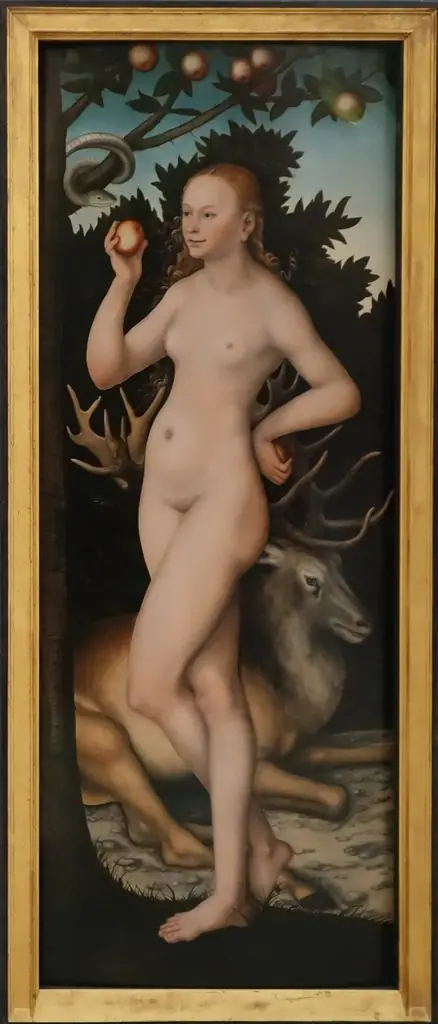
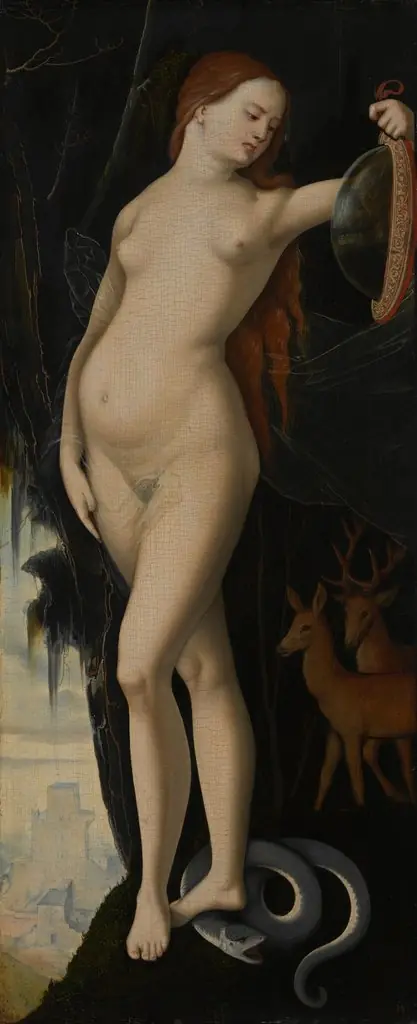
Executed in 1526 by Giampietrino, this mythological panel depicts Diana, the Roman goddess of the hunt, as its primary subject. The iconography centers on the deity's traditional attributes, specifically featuring a bow and arrow alongside a deer, which serve as immediate identifiers of her role. Consistent with the genre of mythological nudity, the work presents the figure in a nude state, emphasizing the classical idealization of the female form within a divine context.
The painting functions as a representation of Diana's dual nature as both a protector of wildlife and a skilled huntress, synthesizing natural elements with divine power. By isolating the goddess with her essential symbols, the artwork encapsulates the Renaissance interpretation of ancient mythology, focusing on the visual language of the hunt and the sanctity of the natural world governed by the deity.
History & Provenance
Giampietrino's oil painting Diana the Huntress, created in 1526, is held in the collection of the Metropolitan Museum of Art in New York. The work, executed in oil on panel, measures 114 cm in height and 59.1 cm in width. While the provided sources confirm its current location and physical dimensions, they do not specify a unique inventory or accession number for the piece.
Furthermore, the available documentation does not contain details regarding the painting's exhibition history or specific display history within the museum. The artwork depicts the mythological figure Diana with a bow, arrow, and deer, consistent with the artist's mythological genre.
Overview
Giampietrino's 'Diana the Huntress,' executed in 1526, is a mythological oil painting depicting the Roman goddess of the hunt in a forest setting. The composition centers on the nude figure of Diana, who stands atop a rocky outcropping, holding a bow while a quiver rests on her back. A distinctive red strap crosses her chest, contrasting with her pale skin and the surrounding verdant landscape.
At her feet lies a slain deer, signifying her successful hunt. The artist renders the figure with a realistic attention to anatomical detail and soft modeling, characteristic of the Lombard school's interest in naturalism and sensuality. This work reflects Giampietrino's role as a key follower of Leonardo da Vinci, adapting the High Renaissance focus on human form and atmospheric depth to a mythological narrative.
The painting exemplifies the artist's ability to blend classical subject matter with a distinctively intimate and tactile approach to the female nude, distinguishing his output within the early sixteenth-century Italian tradition.
Technique & Style
The artist employed a realistic approach to render the central figure, meticulously detailing the musculature and texture of the skin. The surrounding forest is depicted with rich, green foliage, contributing to a vibrant backdrop. The strategic use of chiaroscuro, a strong contrast between light and shadow, enhances the painting's depth and three-dimensionality, guiding the viewer's gaze towards the figure and her immediate setting.
Artist & collection
Artist
Giampietrino, probably Giovanni Pietro Rizzoli (active 1495–1549), was a north Italian painter of the Lombard school and Leonardo's circle, succinctly characterized by S. J. Freedberg as an "exploiter of Leonardo's repertory."