Artwork
Nude Woman
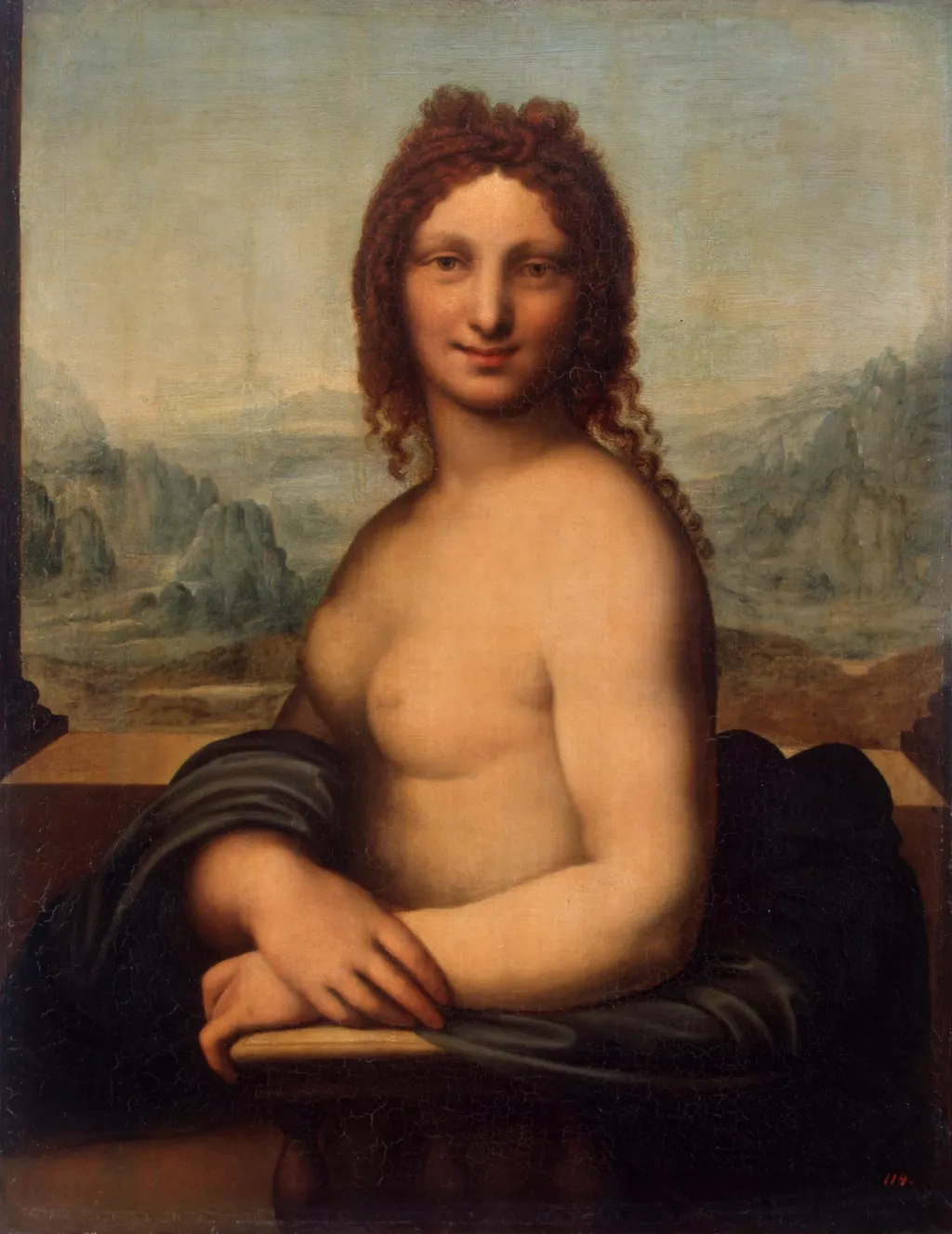
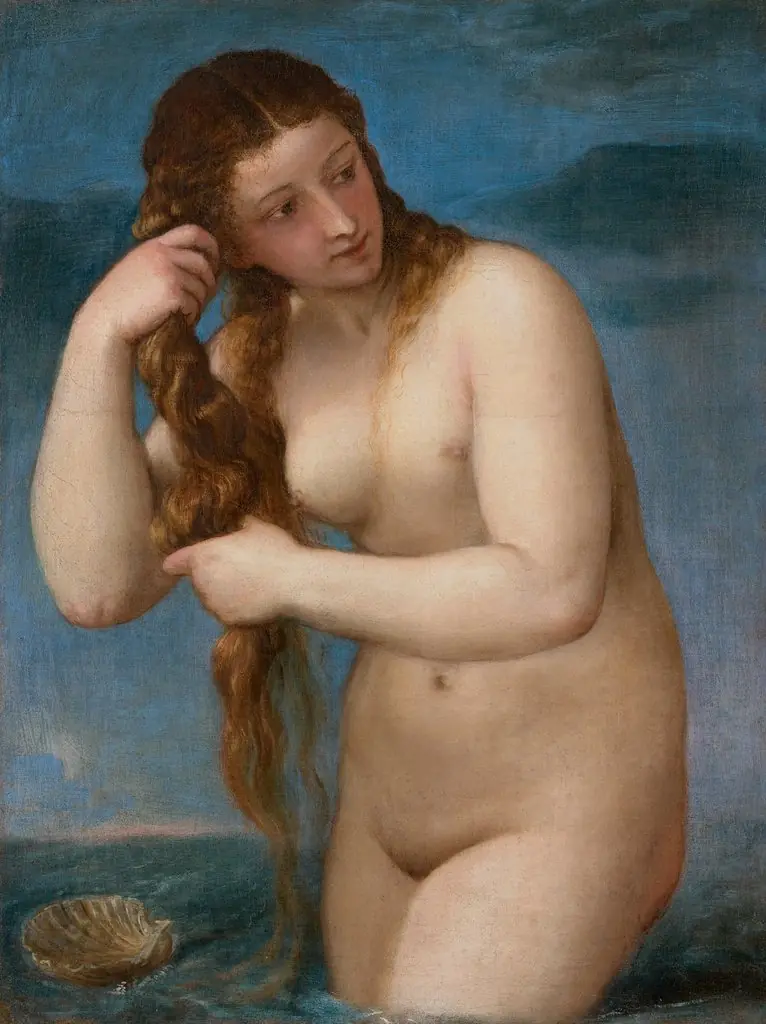
Nude Woman is an oil painting. It dates from 1550 and is held in the collection of the Hermitage Museum. The work presents a seated female figure against a distant landscape of mountains, water and clouded sky.
About this work
Subject & Meaning
The painting depicts a nude woman in a landscape setting, accompanied by a column and draped fabric, embodying themes of femininity and classical idealism.
The painting depicts a nude woman in a landscape setting, accompanied by a column and draped fabric, embodying themes of femininity and classical idealism. Its iconography draws from the Nude Mona Lisa, linking it to Leonardo da Vinci's influence and Renaissance artistic traditions. The work is classified as a nude genre painting, emphasizing anatomical realism and symbolic representation of the human form.
The subject reflects Renaissance ideals of beauty and sensuality, with the figure's pose and accessories suggesting both vulnerability and poise. The column and landscape elements contribute to a harmonious composition, reinforcing the interplay between the human figure and natural surroundings.
The depiction of toplessness and subtle drapery underscores contemporary interpretations of modesty and eroticism, while the use of oil paint on canvas highlights the technical mastery of the period. These elements collectively convey layered meanings related to art, mythology, and societal norms of the 16th century.
Technique & Style
Nude Woman is an oil painting executed on canvas, with the work measuring 86.5 cm in height by 66.5 cm in width. The composition depicts a woman alongside a column, landscape, drapery, and toplessness, situating the figure within a structured architectural and natural setting. Stylistically, the work is attributed to the school of Leonardo da Vinci and is based on the Nude Mona Lisa, indicating a direct formal and conceptual relationship with that earlier composition.
The painting was produced in Italy in 1550, consistent with the late Leonardesque tradition of oil on canvas. The canvas support and oil medium align with established sixteenth-century Italian practice for figural works of this scale.
History & Provenance
The painting titled Nude Woman, attributed to the School of Leonardo da Vinci, was created in 1550 in Italy. Executed in oil paint on canvas, the work depicts a topless woman accompanied by a column and a landscape, and is considered based on the Nude Mona Lisa. The piece is currently held in the collection of the Hermitage Museum.
No specific details regarding the original commission, the initial owner, or the detailed chain of ownership prior to its arrival at the Hermitage are provided in the available records.
Overview
The work presents a seated female figure against a distant landscape of mountains, water and clouded sky. Rendered in oil, the composition balances the intimate pose of the woman, her torso turned toward the viewer, head inclined left, with the expansive natural backdrop, creating a dialogue between figure and environment.
Context
The juxtaposition of a partially clothed nude with a natural vista reflects a longstanding tradition in Western art of integrating the human figure within idealized landscapes. The use of a solitary, contemplative pose aligns with 19th‑century academic conventions, while the vivid red hair and informal drapery hint at a more personal, perhaps Romantic, sensibility.
Artist & collection



![Ginevra de' Benci [obverse], by Leonardo da Vinci](https://artifactworldgallery.com/img/leonardo-da-vinci--ginevra-de-benci-obverse--afb6ec3a3e65f392-w320.webp)