Artwork
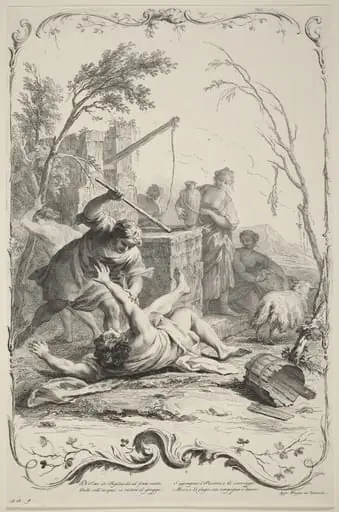
Moses defends the daughters of Jethro
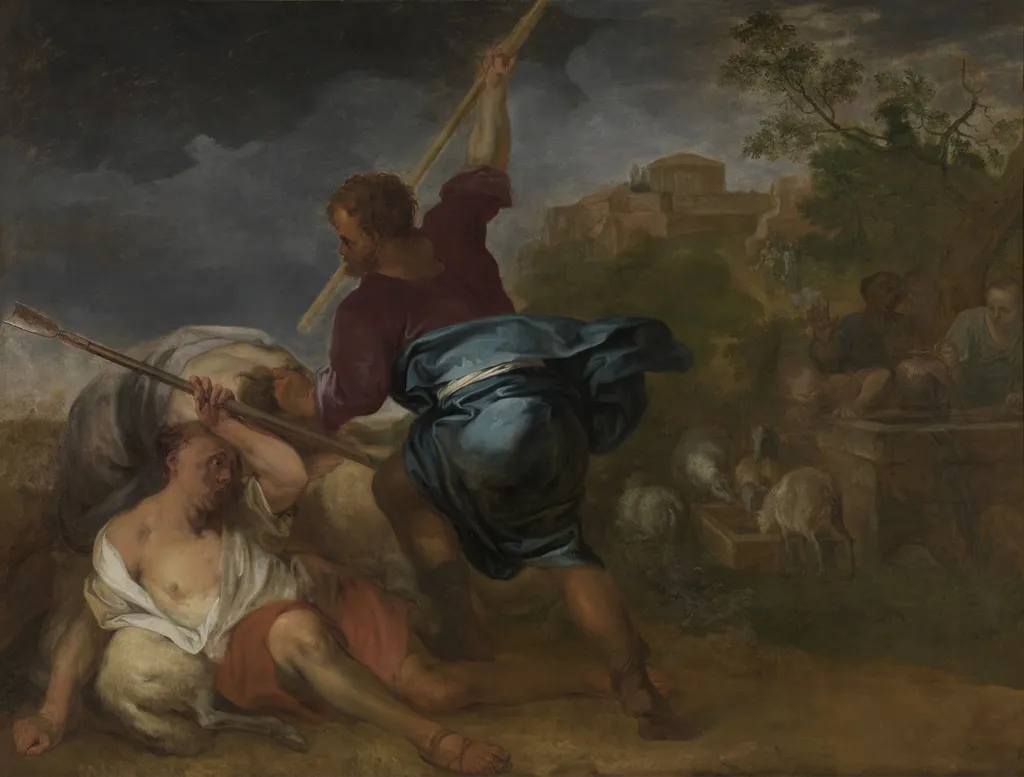
Moses defends the daughters of Jethro is an oil painting by the Flemish Baroque painting artist Lodewijk de Deyster. It dates from 1690 and is held in the collection of the Groeningemuseum.
About this work
Overview
Moses defends the daughters of Jethro is an oil on canvas painting by the Dutch artist Lodewijk de Deyster, dated 1680.
Moses defends the daughters of Jethro is an oil on canvas painting by the Dutch artist Lodewijk de Deyster, dated 1680. Measuring 156 by 205 centimeters, the work depicts the biblical episode from Exodus 2:16-22 in which Moses protects Jethro's seven daughters from hostile shepherds at a well in Midian. The painting is held in the collection of the Groeningemuseum in Bruges, as part of the Vlaamse Kunstcollectie. While less widely known than treatments of the same subject by major Italian and French masters, de Deyster's canvas represents a significant example of Dutch Golden Age religious painting and contributes to the rich pictorial tradition of this Old Testament narrative.
Subject & Meaning
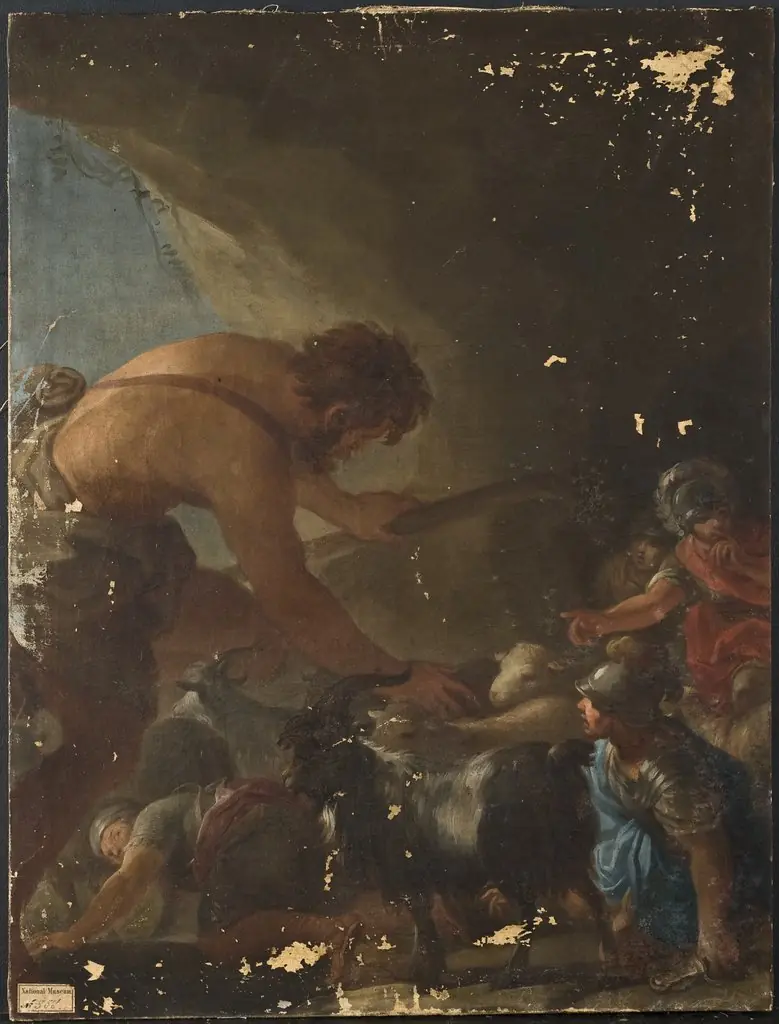
The painting illustrates the biblical episode in which Moses, having fled Egypt after killing an Egyptian taskmaster, encounters the seven daughters of Jethro (also called Reuel), a priest of Midian. The daughters come to draw water for their father's flock, but shepherds arrive and attemptappropriates the scene. The visual composition places two male figures in the foreground: one standing, raising a wooden staff overhead with both hands, wearing a maroon tunic with a blue cloth around his waist, and another seated on the ground leaning back on a white sack, gripping a long spear with a metal tip. Behind them, a pastoral landscape stretches toward a hilltop settlement with classical buildings, while to the right several figures gather near a stone structure with sheep nearby. The iconography follows the established narrative tradition, though de Deyster's treatment emphasizes the moment of confrontation rather than the subsequent meeting with Zipporah. The dark, turbulent sky and dramatic lighting from the left create an atmosphere of tension appropriate to the theme of righteous defense against oppression.
Technique & Style
The work is executed in oil on canvas, a support that by 1680 had become standard for large-scale Dutch painting. The handling shows smooth modeling on the bodies of the foreground figures, with particular attention to the fall of light and the creation of strong shadows. The palette consists of earthy browns and greens, deep blues, and muted reds, with the maroon tunic and red-orange lower garments of the central figures providing chromatic anchors against the more subdued landscape. The brushwork becomes noticeably looser in the landscape background, where the hilltop settlement and classical buildings are rendered with broader, more suggestive strokes. This differentiation between figure and ground handling is characteristic of Dutch Golden Age practice, where detailed figural rendering was often juxtaposed with atmospheric, less finished backgrounds. The dramatic lighting from the left, creating pronounced chiaroscuro effects, reflects the influence of Italianate and Flemish Baroque traditions on Dutch painting of this period.
History & Provenance
The painting is dated 1680, placing it firmly within the Dutch Golden Age, though specific details of its commission and early ownership remain unrecorded in the available sources. The work is currently located in the Groeningemuseum in Bruges, where it is held as part of the Vlaamse Kunstcollectie, the Flemish Art Collection. Its accession history and the circumstances of its acquisition by the museum are not specified in the provided documentation. No exhibition history is recorded in the available sources.
Context
Lodewijk de Deyster worked within the Dutch Golden Age, a period of extraordinary flourishing in the arts, though he remains a relatively obscure figure compared to contemporaries working in more celebrated centers. His treatment of this subject places him within a broader European tradition of depicting the Moses and Jethro's daughters narrative, which attracted major artists across several centuries. The subject held particular appeal in humanistic circles because of Philo of Alexandria's first-century 'Life of Moses,' which offered moralizing and philosophical interpretations of the episode. Most notably, the Italian Mannerist Rosso Fiorentino painted a celebrated version around 1523-1524, now in the Uffizi, which Vasari described and which influenced subsequent treatments through its dynamic, anti-classical energy and emphasis on nude figures in violent action. The French master Nicolas Poussin also treated the subject around 1645, though his final canvas is now lost and known only through preparatory drawings and reproductive prints such as Antoine Trouvain's engraving of circa 1680. De Deyster's more restrained, Dutch approach to the narrative, with its clothed figures and landscape setting, represents a distinct regional variant within this international tradition, one that prioritizes narrative clarity and atmospheric effect over the muscular dynamism of the Italian or the classical equilibrium of the French interpretations.
Legacy
The legacy of de Deyster's Moses defends the daughters of Jethro is modest but not insignificant within the context of Flemish and Dutch religious painting. As a work held in the Groeningemuseum, it contributes to the institutional narrative of Bruges as a center of artistic production and collection. The painting's afterlife is perhaps best understood comparatively: while it did not achieve the canonical status of Rosso Fiorentino's version, with its documented influence on Florentine Mannerism and its place in Vasari's foundational text, nor the scholarly attention accorded to Poussin's lost composition, de Deyster's canvas nonetheless preserves a distinct Dutch approach to a subject more commonly associated with Italian and French art. Its very existence testifies to the international circulation of biblical narratives and the adaptability of such subjects across regional styles. The work remains available for study and public viewing in Bruges, where it continues to serve as a point of comparison for scholars tracing the varied pictorial treatments of this enduring Old Testament episode across European art history.
Own this work as a print
Artist & collection
Artist
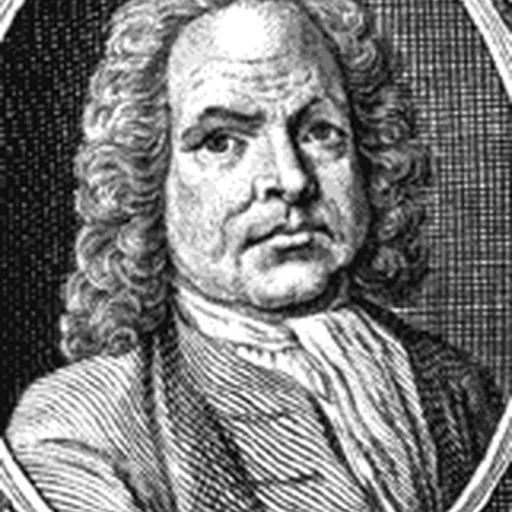
Lodewijk de Deyster (c. 1656 – 18 December 1711) was a Flemish draftsman, etcher, engraver, musical instrument maker and instrument maker. He painted biblical subjects and portraits. His Baroque paintings show a clear…

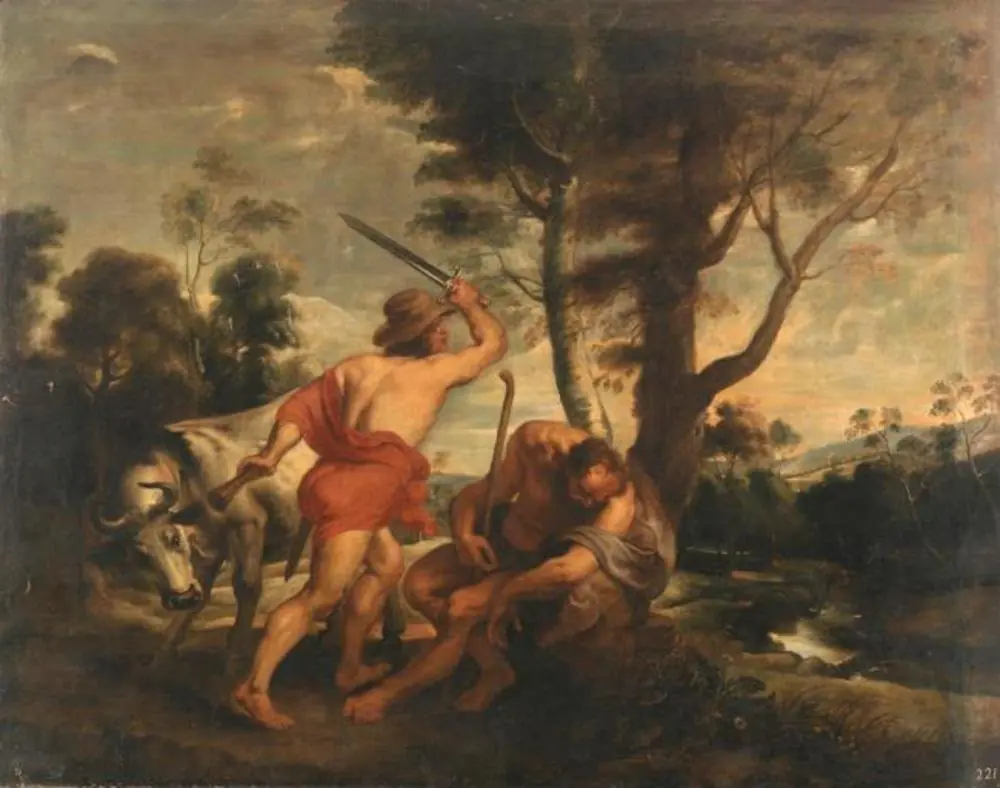 Mercury and Argus
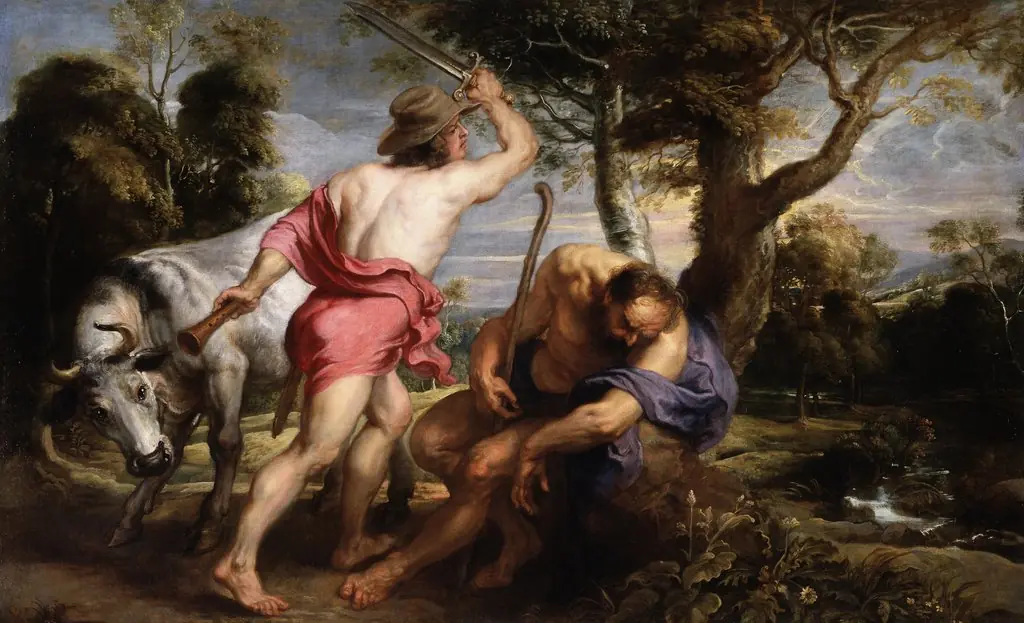 Mercury and Argus
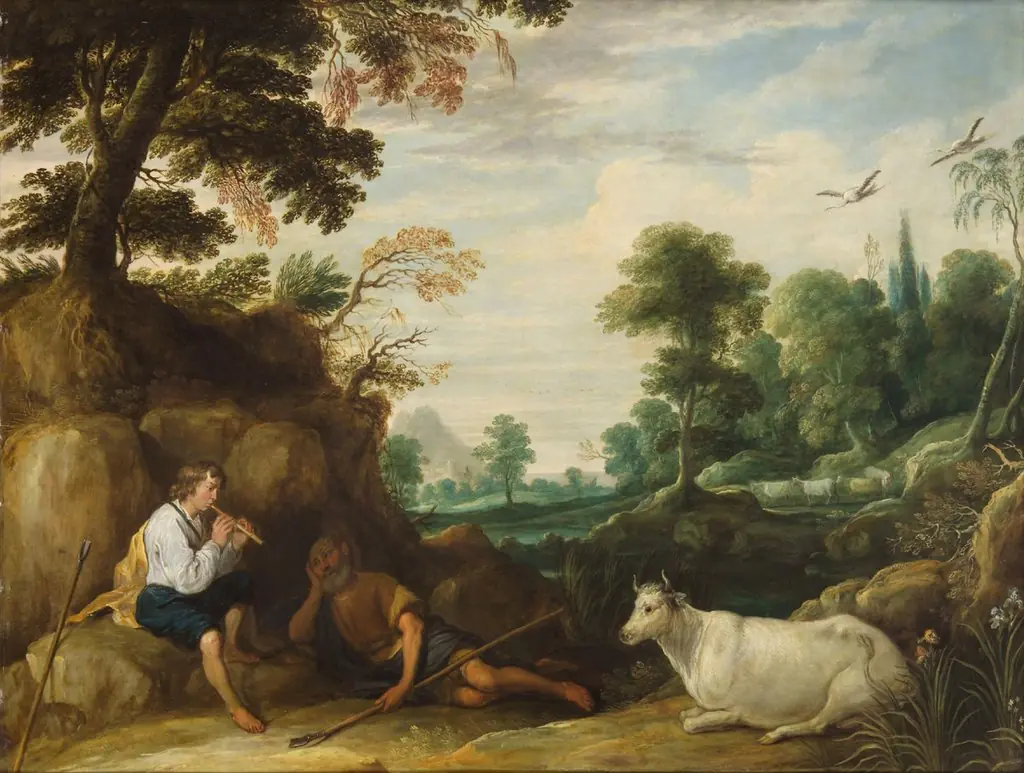 Mercury playing the flute for Argus
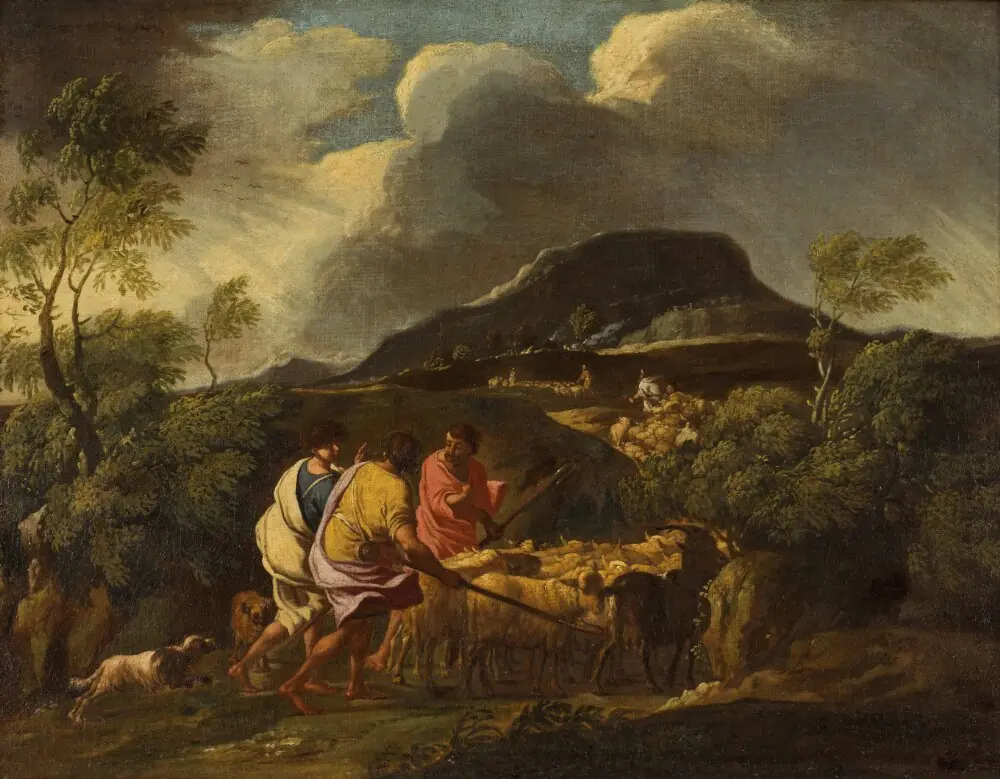 Landscape in a Storm with Shepherds and Cattle
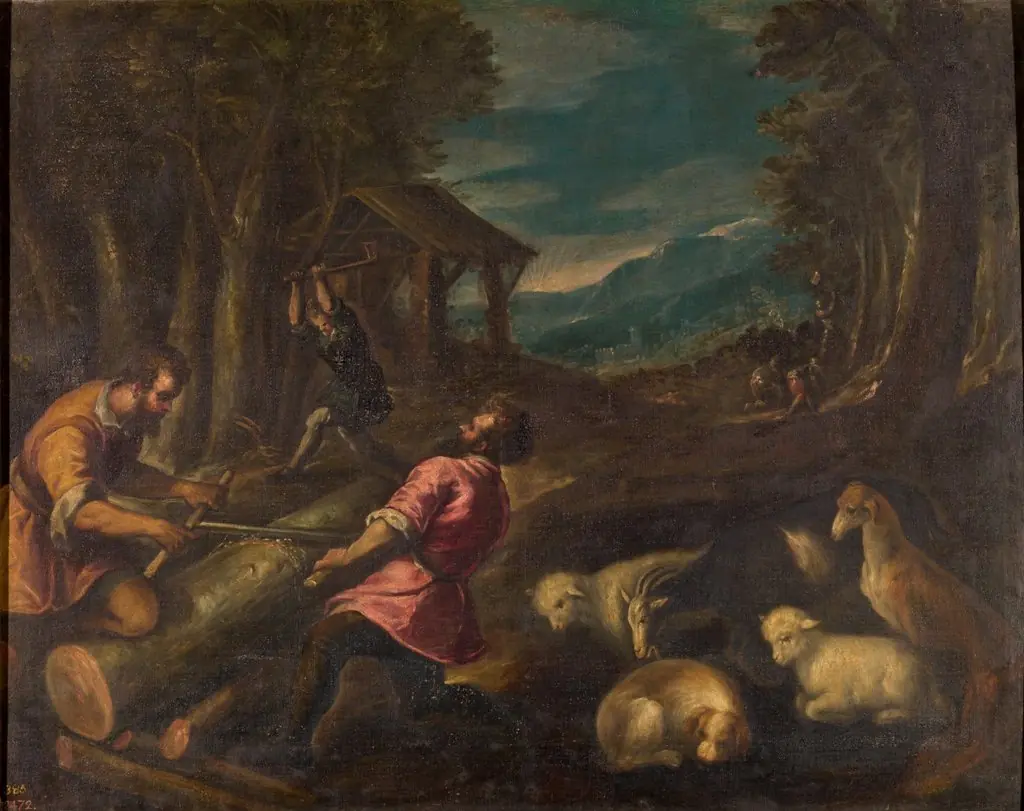 Woodcutters or Winter
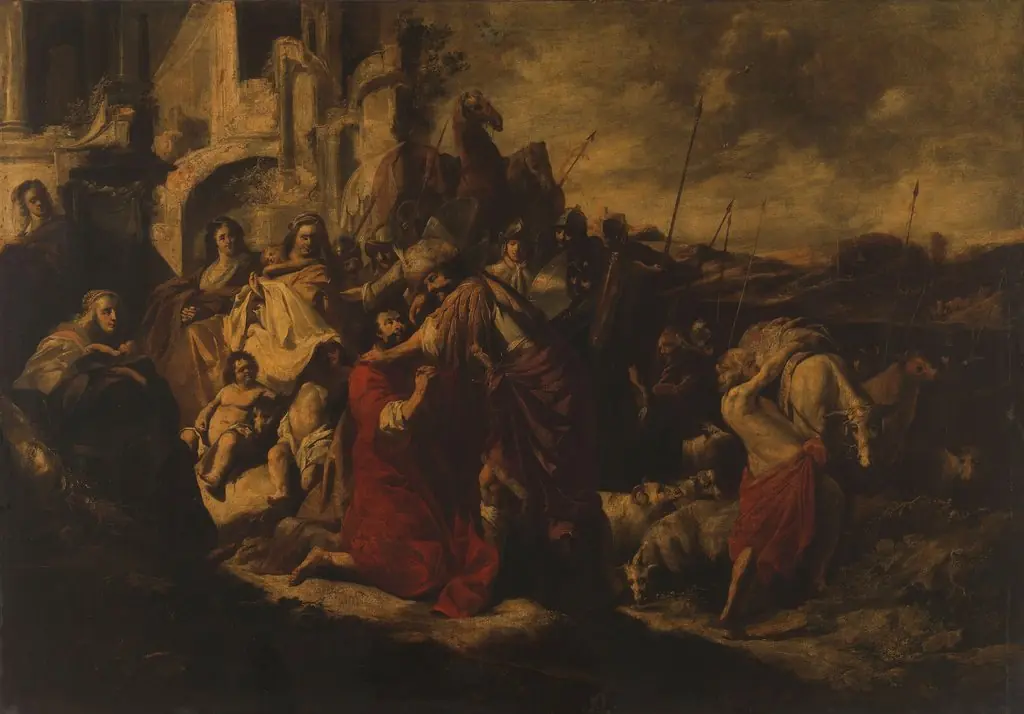 The meeting of Jacob and Esau
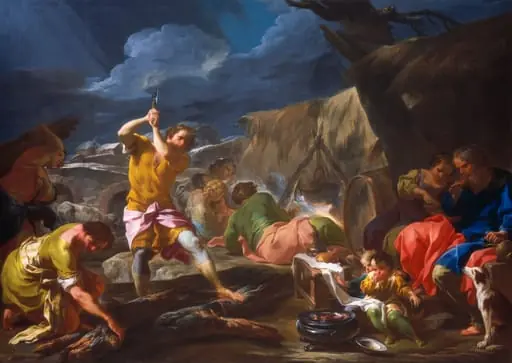 Winter
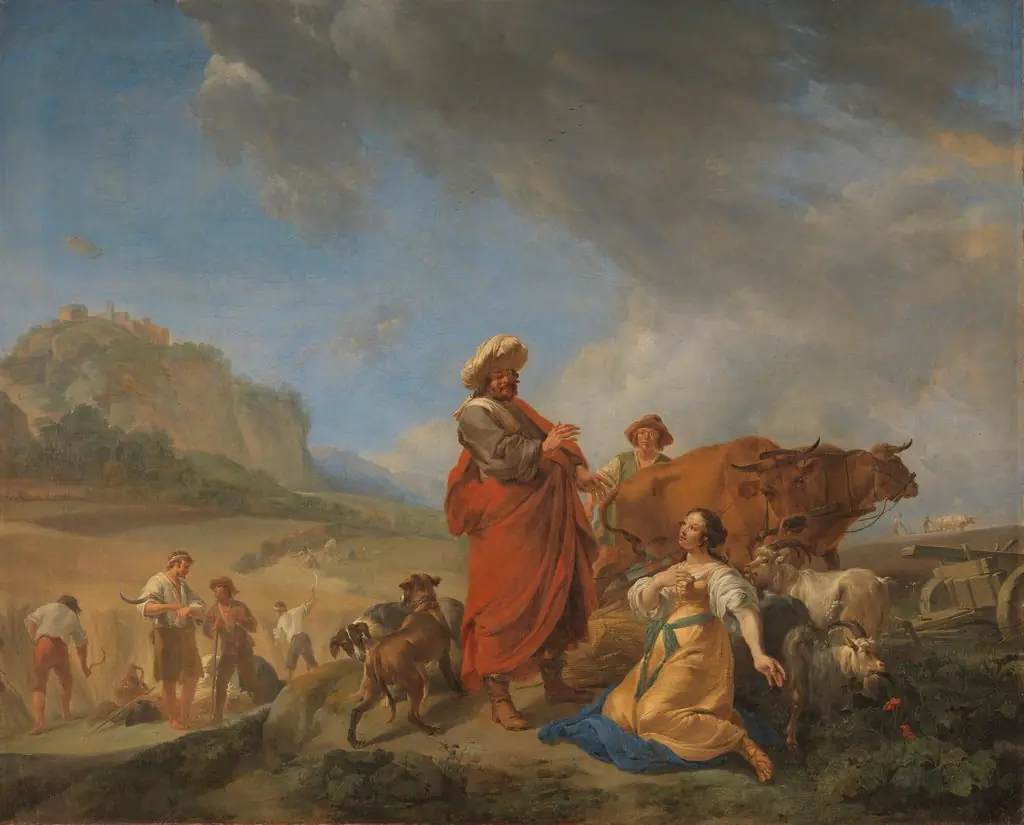 Ruth and Boas
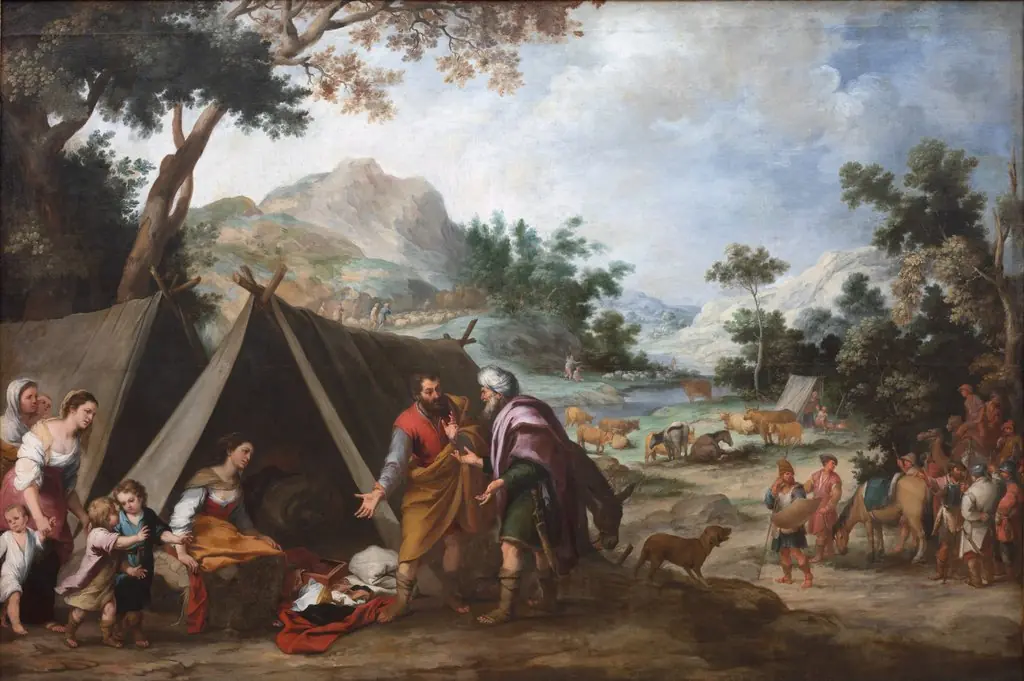 Laban Searching for his Stolen Household Gods
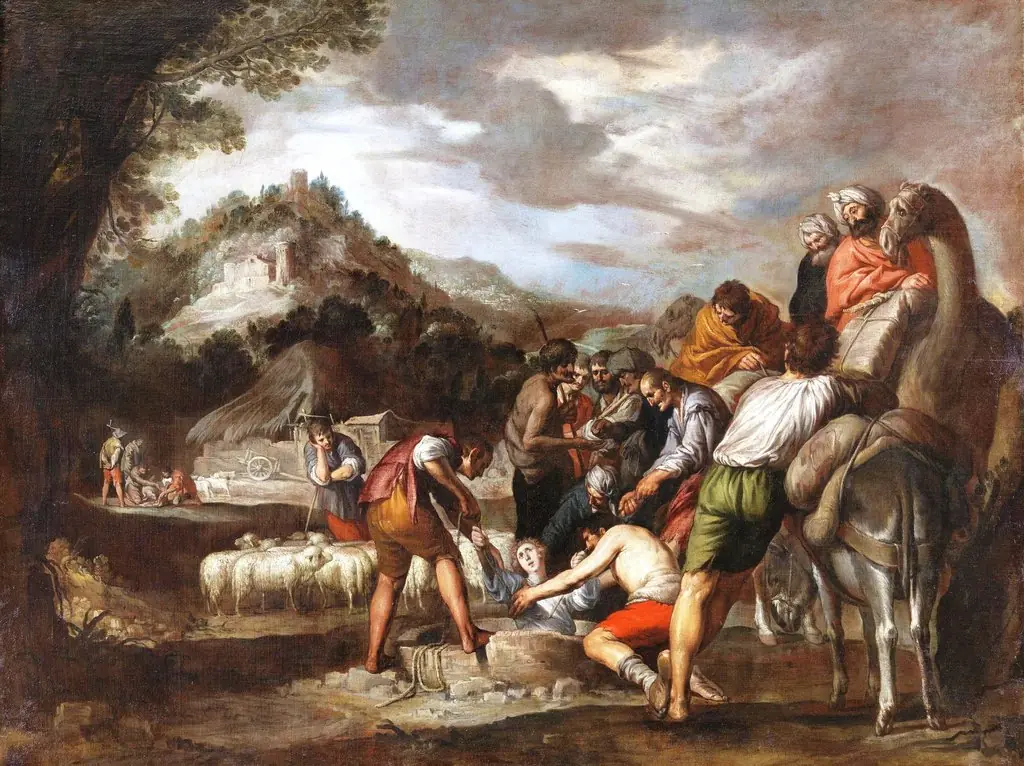 Joseph Sold by His Brothers
 Odysseus i cyklopen Polyfemos grotta
- Moses Striking a Shepherd