Artwork
Athenaeum Portrait
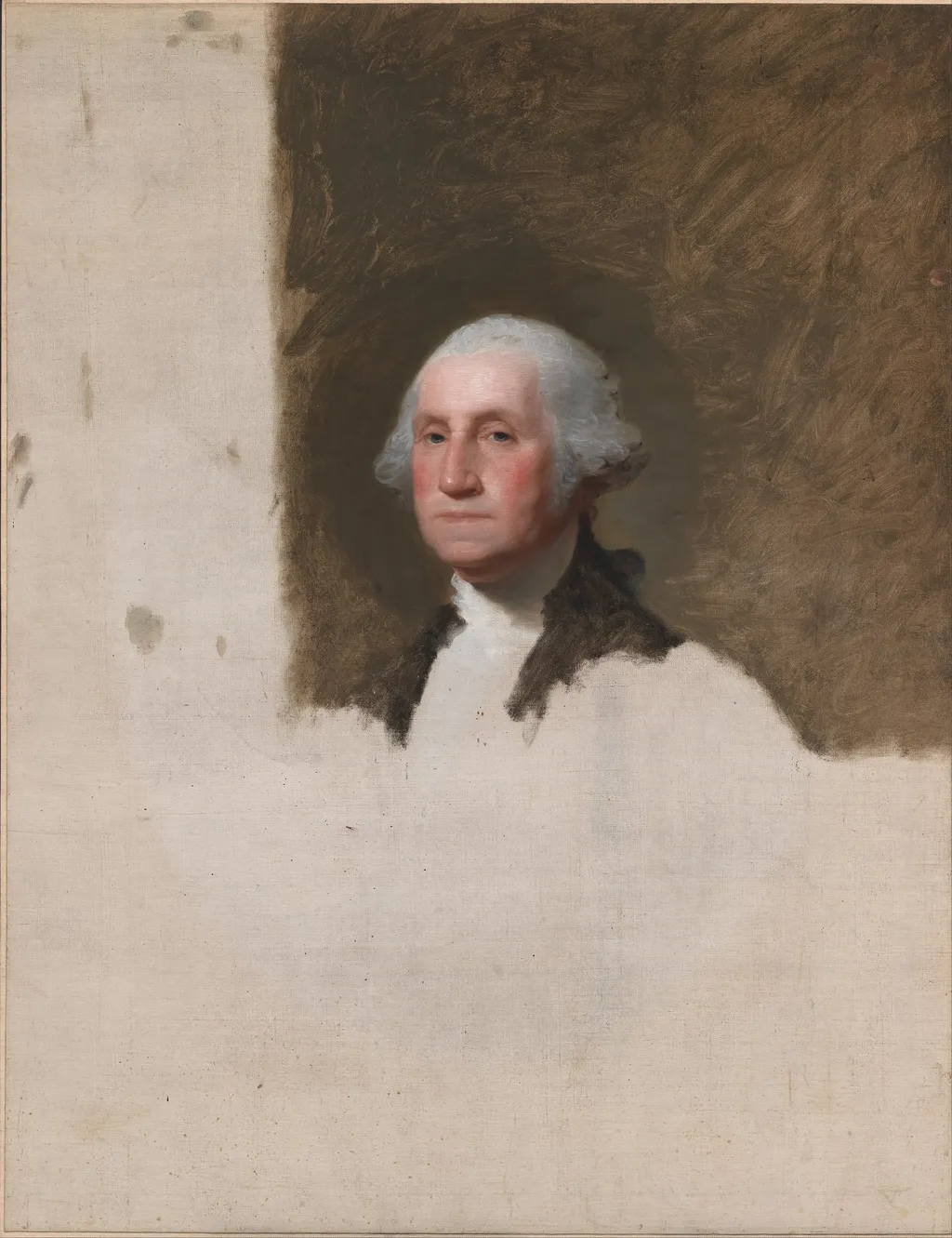
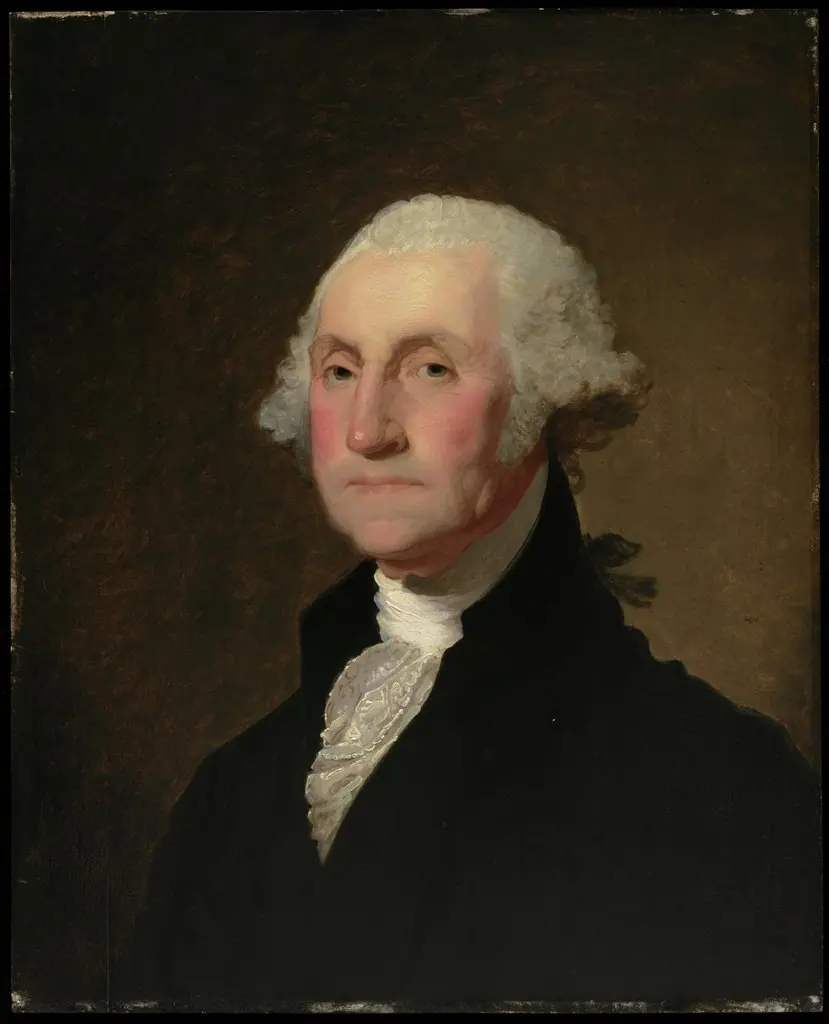
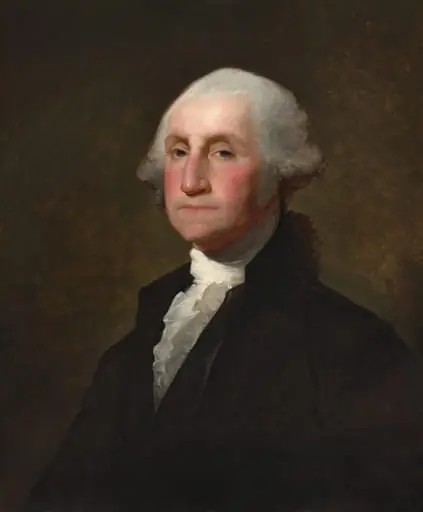
Athenaeum Portrait is an oil painting by the American Impressionist artist Gilbert Stuart. It dates from 1798 and is held in the collection of the Museum of Fine Arts Boston.
About this work
Overview
9 by 88 centimeters, the work is Stuart's most celebrated painting and one of the most recognizable images in American visual culture.
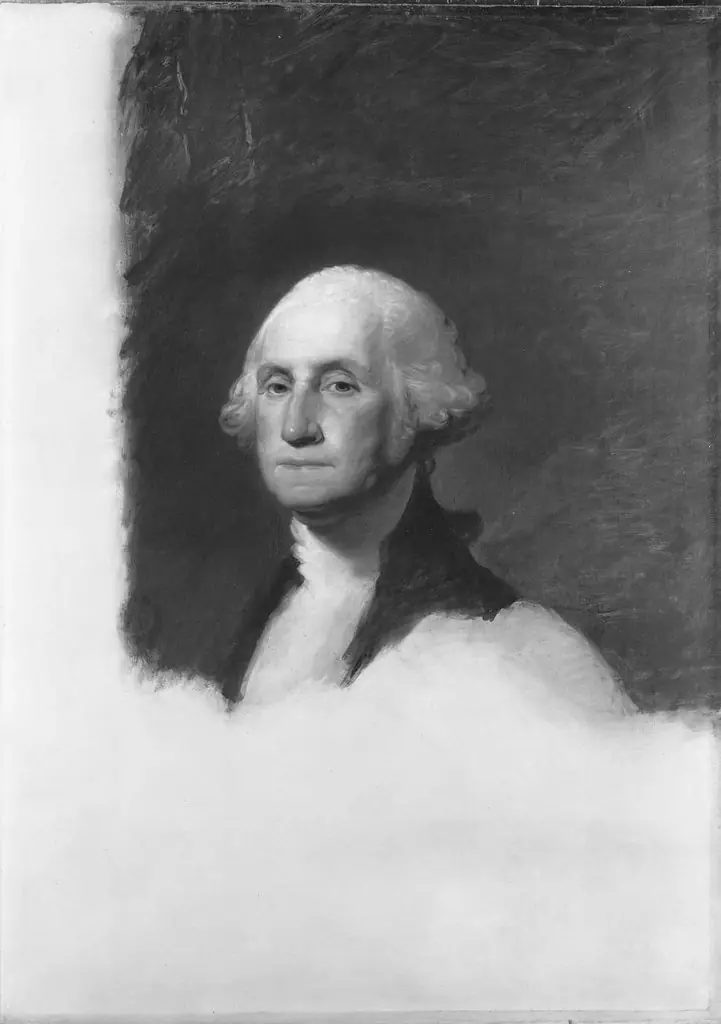
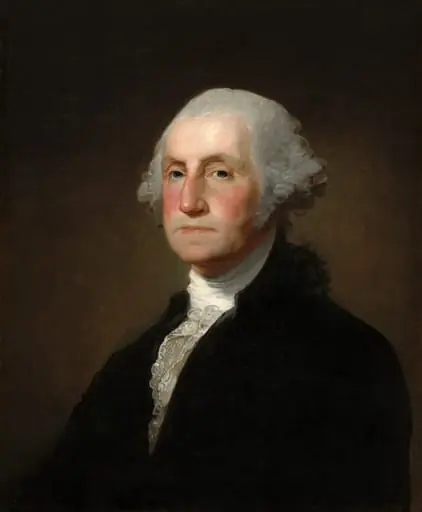
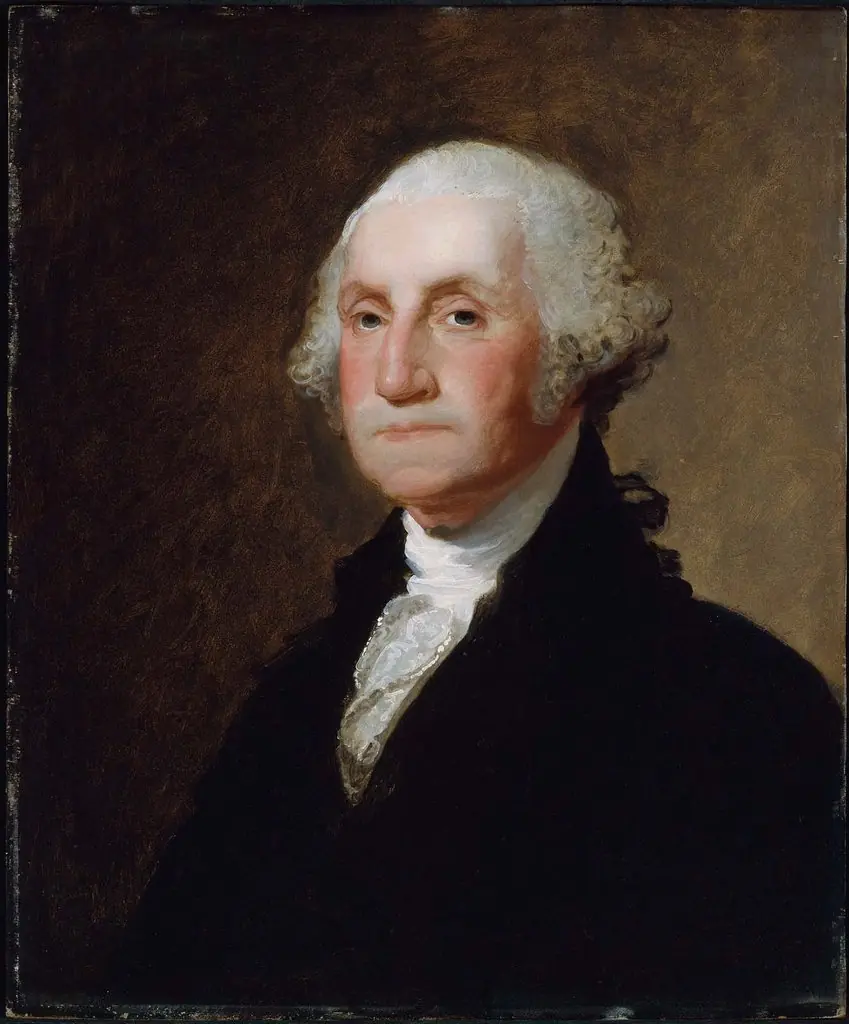
The Athenaeum Portrait is an unfinished oil-on-canvas painting by the American portraitist Gilbert Stuart, created in 1796 in Germantown, Pennsylvania (now part of Philadelphia). It depicts George Washington, the first President of the United States, at age 64, approximately three years before his death. Measuring 121.9 by 88 centimeters, the work is Stuart's most celebrated painting and one of the most recognizable images in American visual culture. Today it is jointly owned by the Museum of Fine Arts, Boston, and the National Portrait Gallery in Washington, D.C., dividing its time between the two institutions. Its fame rests not only on its artistic merit but on its afterlife as the model for the engraving used on the United States one-dollar bill, making it arguably the most reproduced portrait in American history.
Subject & Meaning
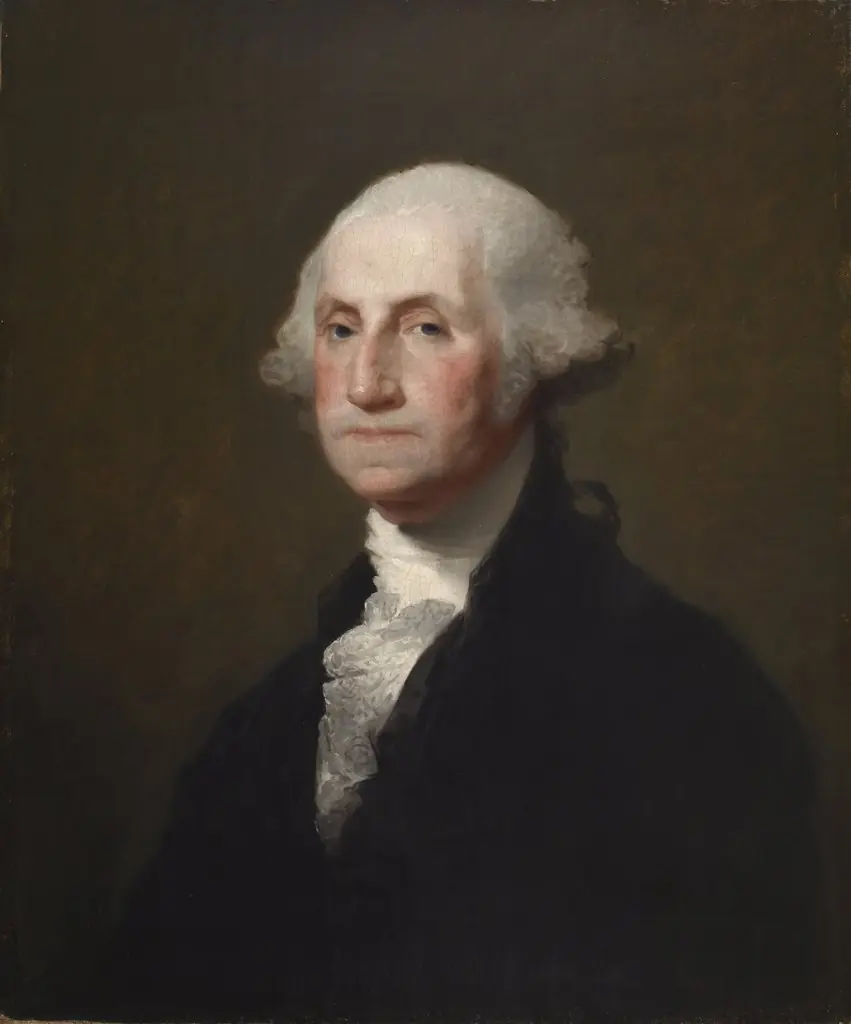
The painting presents George Washington from the chest up, positioned slightly off-center against a dark brown background. He faces three-quarters toward the viewer, his blue eyes meeting the gaze with a composed expression, his powdered white wig tied back in the fashion of the era. The fully rendered face shows flushed cheeks and pale skin, modeled by even light falling from the left. Stuart's portrayal emphasizes Washington's dignified restraint and republican virtue rather than military grandeur. The unfinished state of the canvas, with bare primed areas and loose sketchy strokes dissolving below the neck, paradoxically heightens the work's power, focusing all attention on the living presence of the face. The iconography is deliberately simple, eschewing the allegorical apparatus of contemporary state portraits to present Washington as a citizen-leader rather than a monarch. The brown background, built up with layered visible brushstrokes in deep umber tones, creates a soft halo of lighter paint around the head that isolates and elevates the subject.
Technique & Style
The Athenaeum Portrait is executed in oil paint on canvas. Stuart's technique reveals a striking dichotomy between finish and incompleteness. The facial features are rendered with smooth, meticulous brushwork that demonstrates Stuart's mastery of English-influenced portraiture, learned during his studies in London with Benjamin West. By contrast, the clothing dissolves into rapid, sketchy strokes below the neck, and the left side and lower portion of the canvas remain bare primed surface with visible stains and marks. The background is constructed with layered, visible brushwork in deep umber and brown tones, the lighter paint around the head creating atmospheric depth. This handling reflects Stuart's fluid, painterly style, rooted in contemporary English portraiture yet adapted to American subjects. The frame was made by John Doggett, a frame maker, picture dealer, and entrepreneur. The current condition preserves this interrupted status, with the contrast between finished face and rough surrounding areas serving as a visible record of the work's arrested creation.
History & Provenance
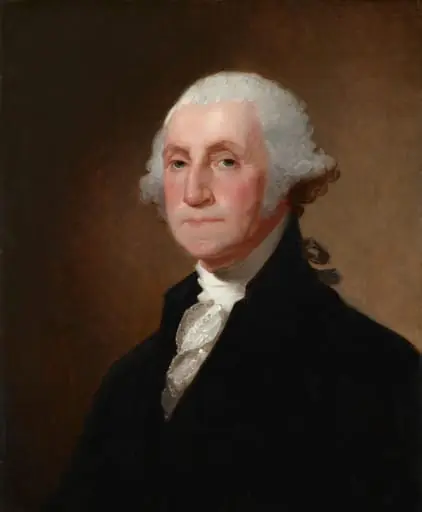
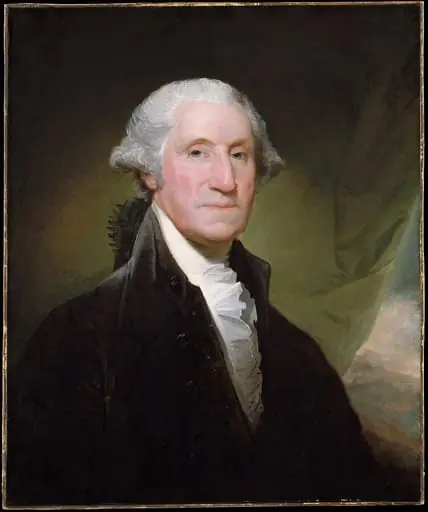
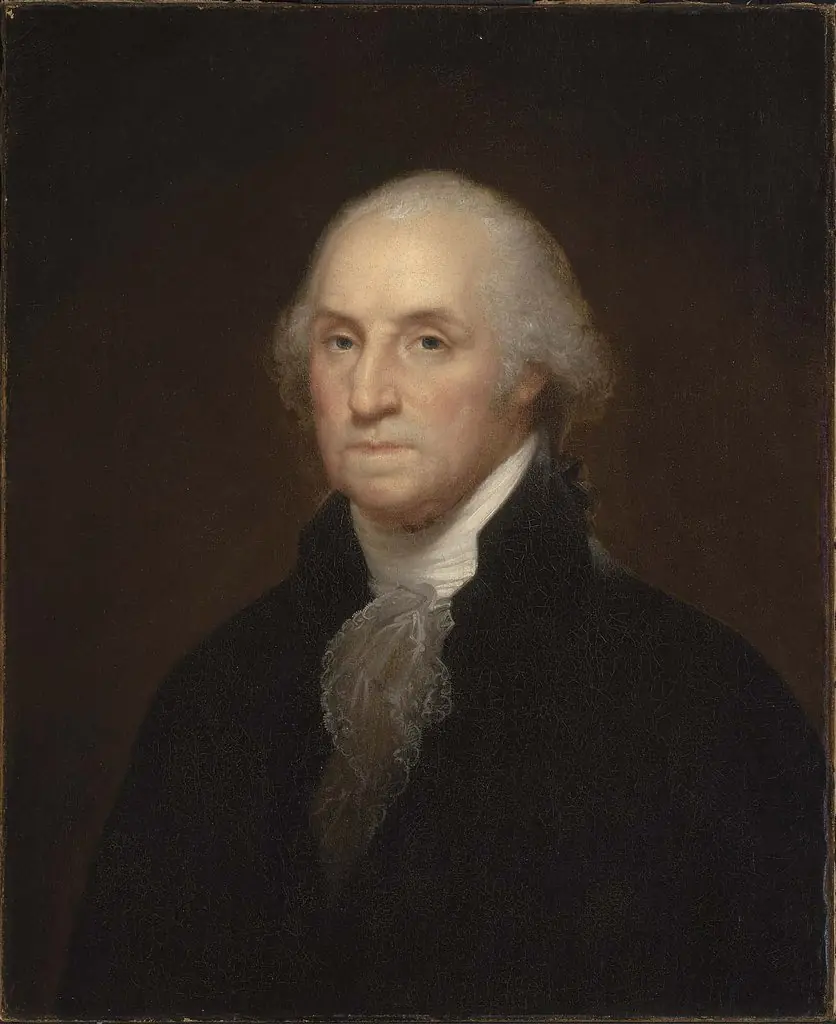
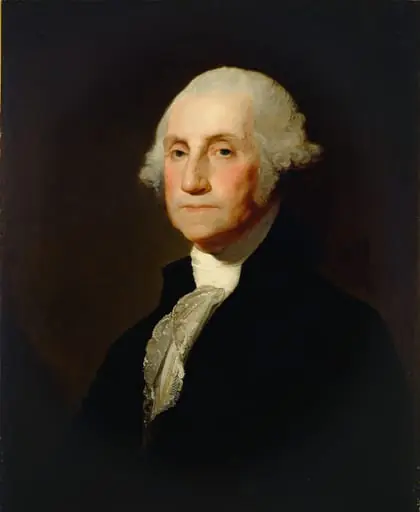
The portrait was commissioned by Martha Washington, along with a pendant portrait of herself, shortly before the president's retirement from public life. Both were painted at Germantown in 1796. Stuart, however, never delivered the painting to the Washingtons. Recognizing the commercial potential in Washington's fame, he retained the unfinished canvas as a model for replicas. After Washington's death in 1799, Stuart painted more than 130 copies, selling them for $100 each; over 60 of these copies still survive. Stuart owned the painting until his death in 1828, after which it passed to his daughter Jane. In May 1831, the Trustees of the Boston Athenaeum purchased it for $1,500, funds raised by subscription from the Washington Monument Association and 22 other subscribers. The painting acquired its familiar name from this institution. In 1876, the Boston Athenaeum deposited it at the Museum of Fine Arts, Boston. In 1980, the Museum of Fine Arts, Boston, and the National Portrait Gallery acquired it jointly from the Boston Athenaeum. Since then it has divided its time between the two institutions on a rotating basis, typically three years at each location.
Context
Gilbert Stuart was the preeminent portraitist of the early American republic, having returned to the United States in 1792 after training in London and establishing studios in Philadelphia and Washington, D.C., before settling permanently in Boston in 1805. His position as unofficial painter to the new nation placed him in a unique role in shaping visual memory of the founding generation. The Athenaeum Portrait emerged from a culture hungry for images of Washington as national hero, a demand that intensified dramatically after his death. Stuart's decision to withhold the original and exploit its commercial potential reflects both entrepreneurial acumen and the emerging market for reproducible national icons in the young republic. The work has been exhibited extensively, though specific exhibition histories are not detailed in the available sources. Its scholarly significance lies in its demonstration of how portraiture functioned as political currency and how an unfinished work could achieve greater cultural authority than completed state portraits.
Legacy
The Athenaeum Portrait's influence extends far beyond the museum walls through its pervasive reproduction. It served as the model for numerous nineteenth- and early twentieth-century U.S. postage stamps, and most consequentially for the engraving (in mirror image) used on the United States one-dollar bill. This monetary afterlife has made Stuart's image of Washington the most widely circulated portrait in the world, seen daily by millions. Stuart himself reportedly called the painting his 'hundred-dollar bill,' acknowledging its function as a reliable source of income. The work's cultural afterlife also includes its use on postcards and other commemorative materials. Its unfinished state, rather than diminishing its authority, became integral to its mystique, suggesting a moment of direct encounter with the living Washington that finished portraits could not convey. The pendant portrait of Martha Washington, also known as the Athenaeum Portrait, shares the name and is exhibited near its counterpart, creating a diptych of national first couplehood. Together these works represent the foundational image of American political identity, one that continues to mediate how citizens visualize their first president more than two centuries after its creation.
Own this work as a print
Artist & collection

Artist
Gilbert Stuart (né Stewart; December 3, 1755 – July 9, 1828) was an American painter born in the Rhode Island Colony who is widely considered one of America's foremost portraitists.