Artwork
George Washington
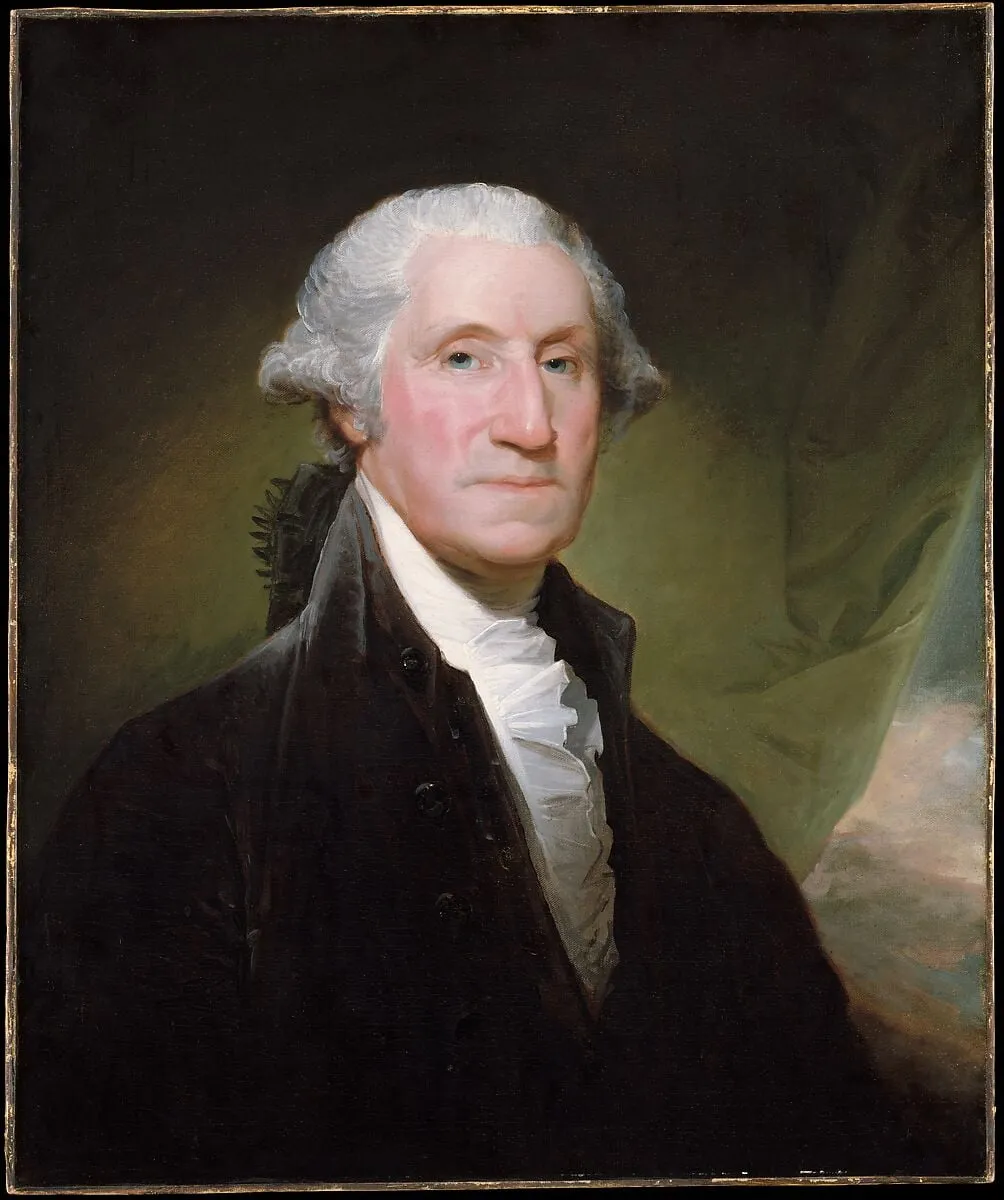
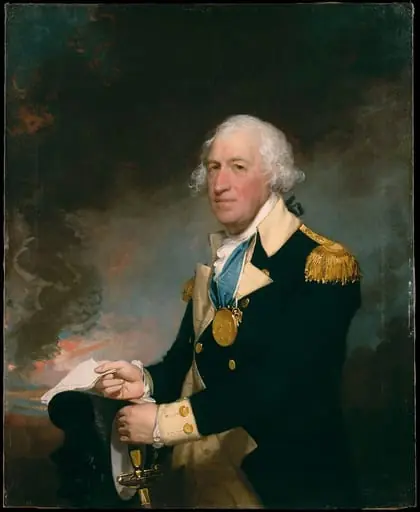
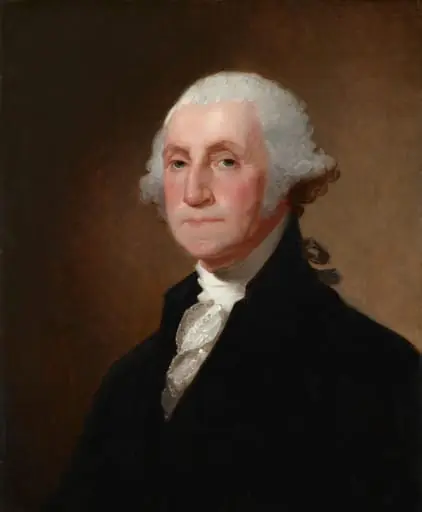
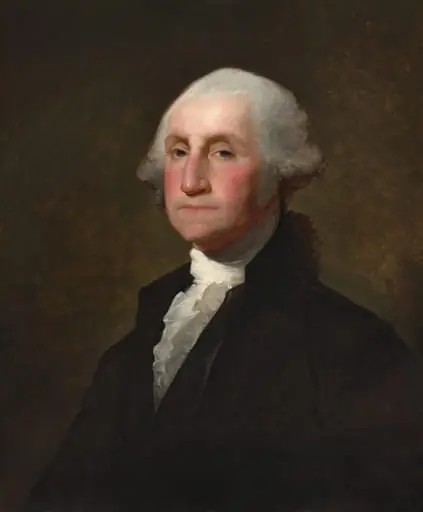
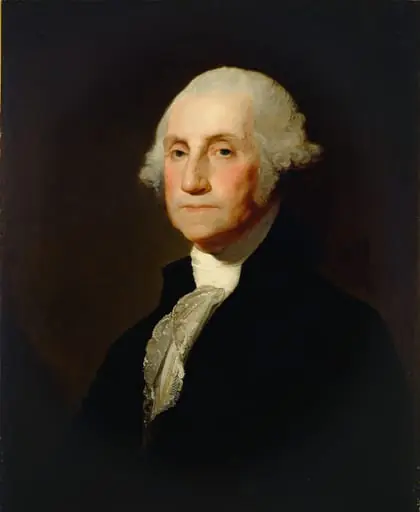
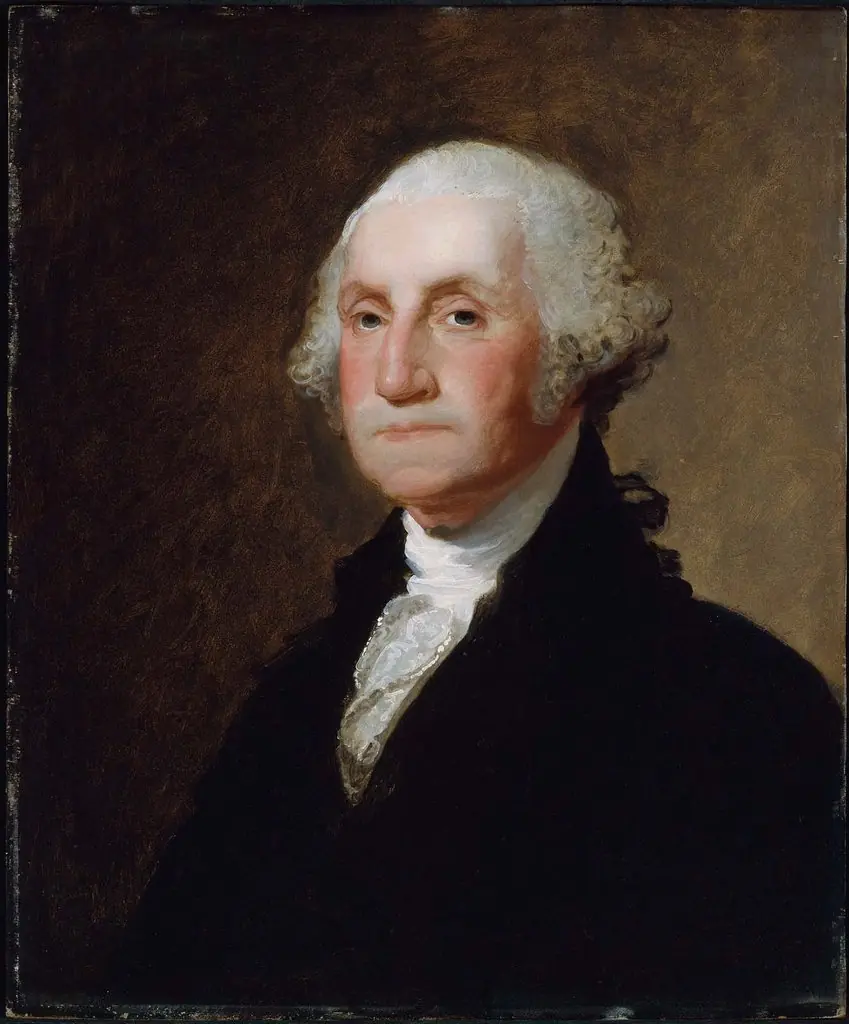
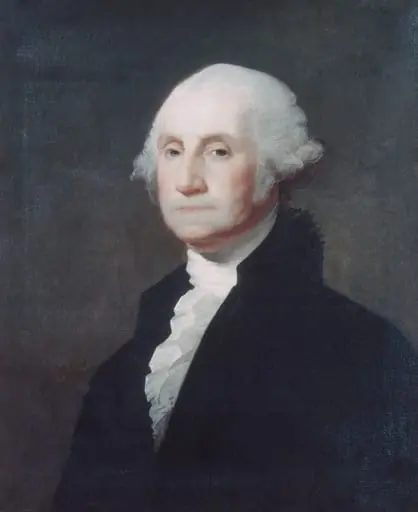
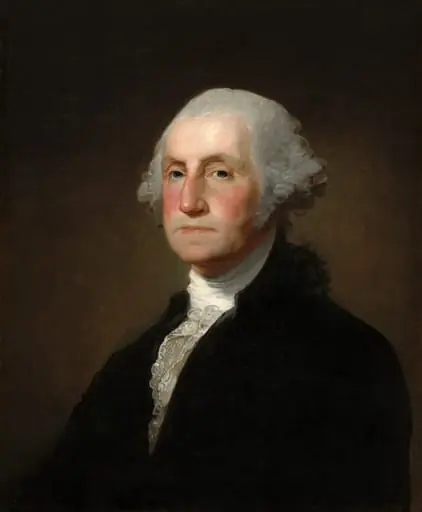
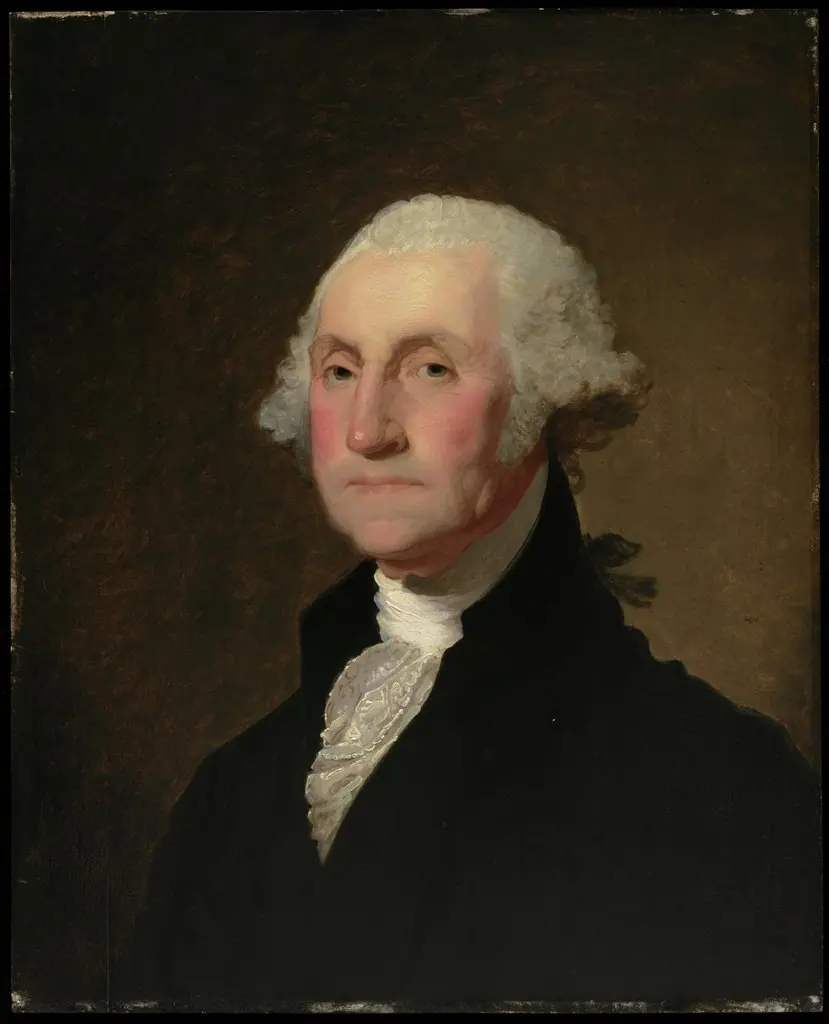
George Washington is an oil painting by the American Impressionist artist Gilbert Stuart. It dates from 1795 and is held in the collection of the Metropolitan Museum of Art.
About this work
Subject & Meaning
The painting depicts George Washington, the first president of the United States and one of the country's Founding Fathers, rendered as a formal oil-on-canvas portrait by Gilbert Stuart in 1795. Classified within the genre of portraiture and catalogued as depicting a man, the work centers Washington as its main subject, presenting him in the dignified, statesmanlike mode characteristic of Stuart's presidential likenesses. As a member of the so-called Vaughan Group, the canvas derives from the original 1795 sitting that informed Stuart's broader series of Washington portraits, situating the image within the visual tradition that shaped the canonical likeness of the first president.
The portrait thus functions both as an individual study of Washington and as part of the iconographic effort to define an authoritative visual identity for the new nation's leader.
Technique & Style
The portrait is executed in oil paint on canvas, a standard support for Stuart's portrait practice.
The portrait is executed in oil paint on canvas, a standard support for Stuart's portrait practice. The unstretched canvas measures 76.8 by 64.1 centimeters, indicating a relatively intimate scale suited to a bust- or half-length composition. Painted in 1795 as part of the Vaughan Group, the work is identified as one of the earliest and highest-quality replicas Stuart produced directly from the original Washington sitting, suggesting a careful, controlled handling consistent with his established studio method of transferring likenesses from life studies.
The canvas is held in the collection of the Metropolitan Museum of Art's American Wing. Specific condition notes, surface treatment, palette, or stylistic descriptors beyond its classification as a portrait oil painting are not documented in the available sources.
History & Provenance
The Gibbs-Channing-Avery portrait, an oil-on-canvas depiction of George Washington by Gilbert Stuart, was created in 1795. This work originated as a derivative of the earlier Vaughan Portrait, forming part of the group known as the "Vaughan Group." It is recognized as one of the earliest and highest-quality replicas Stuart produced directly from the original sitting with the subject.
The painting is currently held in the collection of the Metropolitan Museum of Art in New York, where it resides in The American Wing. While specific details regarding the initial commission or the subsequent chain of private ownership prior to its museum acquisition are not detailed in the provided records, its creation date and relationship to the Vaughan Group are well-established within the context of Stuart's 1795 output.
The portrait of George Washington painted by Gilbert Stuart in 1795 is held in the collection of the Metropolitan Museum of Art in New York, where it is catalogued as part of the American Wing's holdings. It is listed in the museum's records as an oil on canvas work accessioned within the museum's portrait collection, though the precise accession number is not disclosed in the available documentation. The work has been on display in the museum's American Wing galleries, allowing public viewings as part of the institution's permanent exhibition schedule.
Overview
The Gibbs-Channing-Avery portrait is an oil on canvas painting of George Washington created by Gilbert Stuart in 1795. Depicting the first U.S. president, the work captures Washington in a dark coat with his face partially illuminated against a turbulent, stormy sky. Unlike Stuart's more formal and finished portraits, this specific canvas remains unfinished, a characteristic that lends the subject an immediate, unpolished presence.
Washington's hair is depicted loose rather than powdered, and the brushwork retains a sketch-like quality that suggests a fleeting moment of observation. Stuart painted this image directly from life, utilizing the sitter's actual appearance to convey a sense of accessibility and human vitality. Executed during a period when Stuart was establishing his reputation for capturing the likenesses of American leaders, this work represents a distinct approach within his extensive series of Washington portraits.
The unfinished state distinguishes it from the polished Athenaeum portrait, offering a rawer interpretation of the president's character. The painting stands as a significant example of Stuart's ability to blend psychological depth with a dynamic, atmospheric composition.
Context
Gilbert Stuart was renowned for his portraits of George Washington, producing over one hundred variations of the president's likeness throughout his career. Among these, the Gibbs-Channing-Avery portrait is recognized for its particularly straightforward and unembellished depiction. This extensive body of work played a significant role in shaping the public image of the nation's first president, establishing a visual legacy that endures.
Artist & collection

Artist
Gilbert Stuart (né Stewart; December 3, 1755 – July 9, 1828) was an American painter born in the Rhode Island Colony who is widely considered one of America's foremost portraitists.