Artwork
Watermill by a Wooded Outcrop
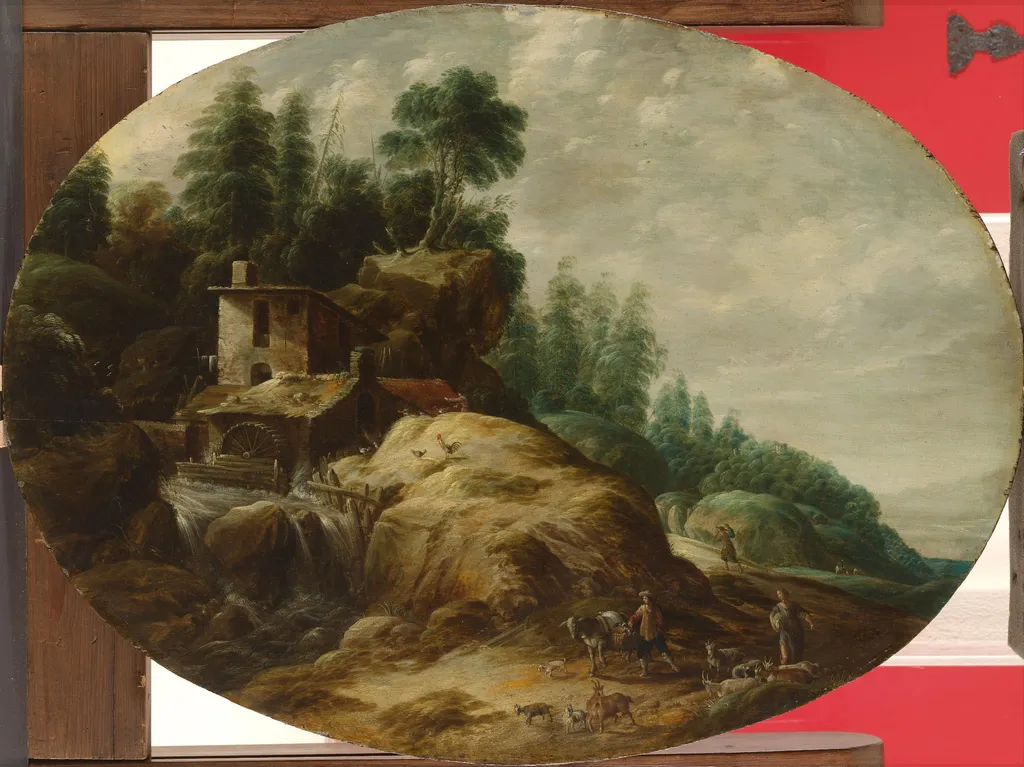
Watermill by a Wooded Outcrop is an unspecified painting by the Dutch Golden Age artist Gillis Peeters. It dates from 1633 and is held in the collection of the Rijksmuseum. The canvas presents a compact, oval‑shaped landscape dominated by a rocky outcrop.
About this work
Subject & Meaning
The painting depicts a watermill set beside a wooded outcrop, a rural motif characteristic of Flemish landscape tradition.
The painting depicts a watermill set beside a wooded outcrop, a rural motif characteristic of Flemish landscape tradition. According to the sources, this work is among Peeters's earliest recorded pieces, dated 1633 and held by the Rijksmuseum. Its blue-green tonal palette and small-scale composition align it with the contemporary Flemish landscape style of Lucas van Uden, and with the imaginary "southern" travel landscapes of Paul Bril rather than the bright, clear-light Baroque of Rubens.
Unlike contemporary Dutch landscapes that pursued topographical realism, Peeters's landscapes were artificial and contrived, intended as a form of poetry rather than a realistic document. With their candy-like colours, picturesque buildings, and feathery trees, such scenes function as poetic evocations of the countryside rather than literal records, anticipating the Rococo idyllic visions of François Boucher a century later.
Technique & Style
Watermill by a Wooded Outcrop is an oil painting on panel created in 1633 by Flemish artist Gillis Peeters. The work exemplifies his mature landscape technique, characterized by a restrained palette of blue-green tones, feathery trees, and picturesque architectural details that function as poetic rather than topographical devices. Peeters employed a small-scale working method, using delicate brushwork to render foliage and water with an artificial, contrived composition that anticipates Rococo sensibilities.
The painting’s handling demonstrates his background as an etcher, translating linear precision into subtle tonal transitions across the panel surface.
History & Provenance
The painting Watermill by a Wooded Outcrop was created in 1633 by Flemish artist Gillis Peeters, as documented in his catalogued output. It belongs to his early landscape series, reflecting influences from contemporaries like Lucas van Uden and Paul Bril rather than Baroque styles, and exemplifies his characteristic poetic artificiality through candy-like colors and contrived compositions. The work was produced during his Antwerp period before his documented travels to Brazil in 1636–1637 and 1640, where he created topographical studies later adapted into paintings.
No specific commissioning details or ownership history are recorded in the sources, and the painting remains part of the artist's established oeuvre as a marine and landscape specialist.
The work measures [dimensions not specified in sources] and is attributed to Peeters' 1633 output, confirmed through his documented dating patterns and stylistic analysis within his landscape corpus.
Context
The critical reception of Watermill by a Wooded Outcrop, painted by Gillis Peeters in 1633, is rooted in its synthesis of landscape tradition and poetic artificiality. Scholarship situates the work within Peeters' broader development of Flemish landscape painting, where he balanced tonal restraint with imaginative composition, diverging from Baroque realism and anticipating Rococo aesthetics. The painting exemplifies his engagement with marine and landscape genres, reflecting his family's artistic milieu and collaborations, such as with David Teniers the Younger.
Its topographical precision, informed by Peeters' documented travels to Brazil, underscores its significance in the evolution of 17th-century European landscape art
The work belongs to the oeuvre of Gillis Peeters the Elder, a Flemish Baroque painter active in Antwerp who specialized in marine scenes and landscape painting. Born in 1612, Peeters emerged from a prolific artistic family and contributed to the genre of Flemish landscape art, often blending naturalistic detail with stylized, poetic visions. His early works, including this 1633 landscape, reflect influences from contemporaries like Lucas van Uden and Paul Bril, while his use of artificial scenery and rich coloration prefigured later Rococo sensibilities.
The painting is part of a corpus that includes works held in institutions such as the Rijksmuseum and Christie's auction records, and it exemplifies his role in shaping Flemish landscape painting through both technical innovation and genre hybridization
Overview
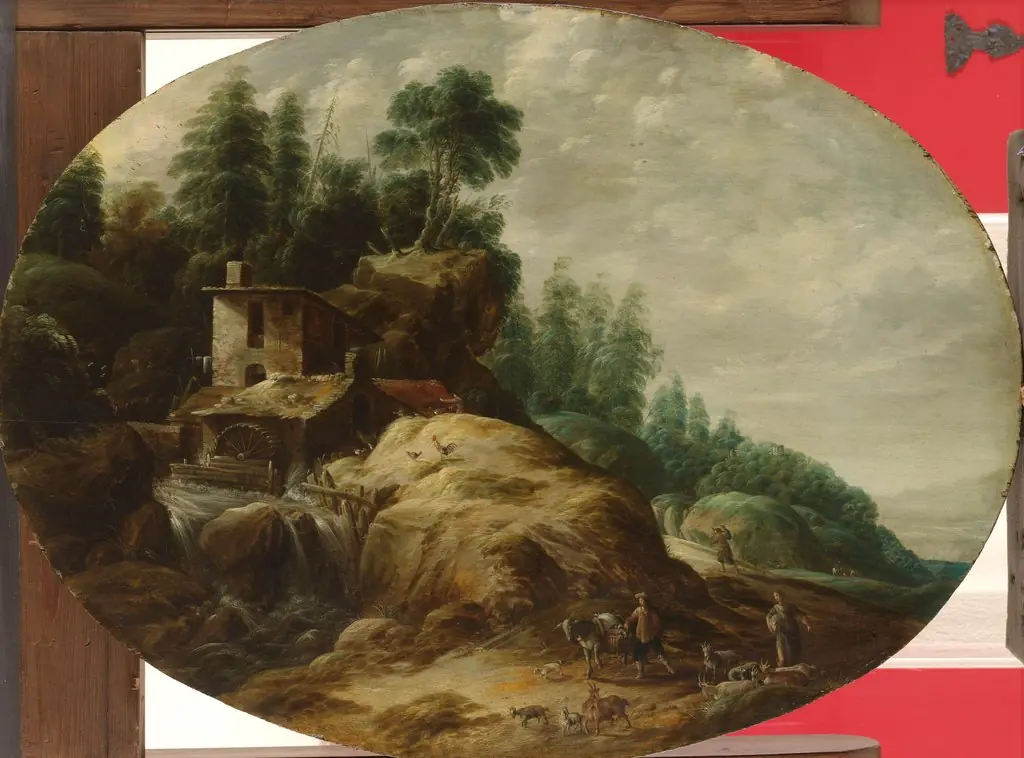
The canvas presents a compact, oval‑shaped landscape dominated by a rocky outcrop. A modest watermill is set against the slope, its wheel turned by a swift mountain stream. In the foreground a shepherdess guides a herd of goats while a man walks a mule along a narrow path, framing the scene on either side.
Own this work as a print
Artist & collection
Artist
Gillis Peeters (1612–1653), was a Flemish painter, draughtsman and engraver who contributed to the development of marine art and landscape painting in Flanders.

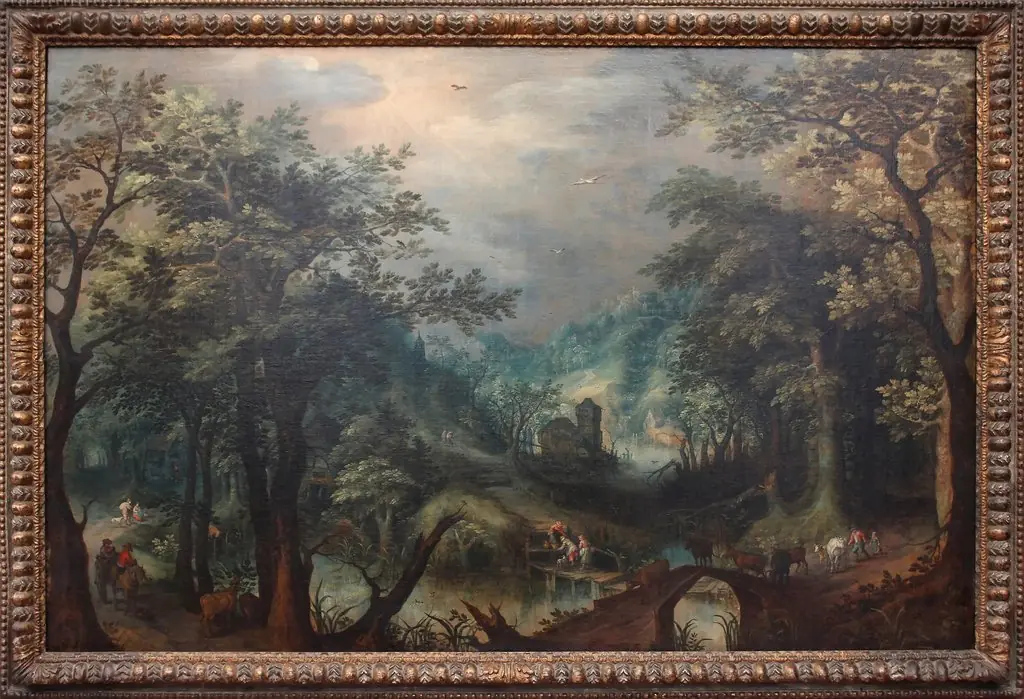 Wooded landscape with a river and cows on a bridge
 Landschaft mit Reiter
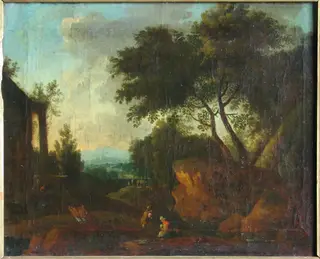 Peisaj cu copaci și ruine antice ; pandant: Peisaj cu copaci și pod
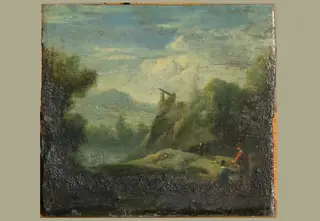 Mic peisaj cu cetate. Pandant: Mic peisaj cu pod
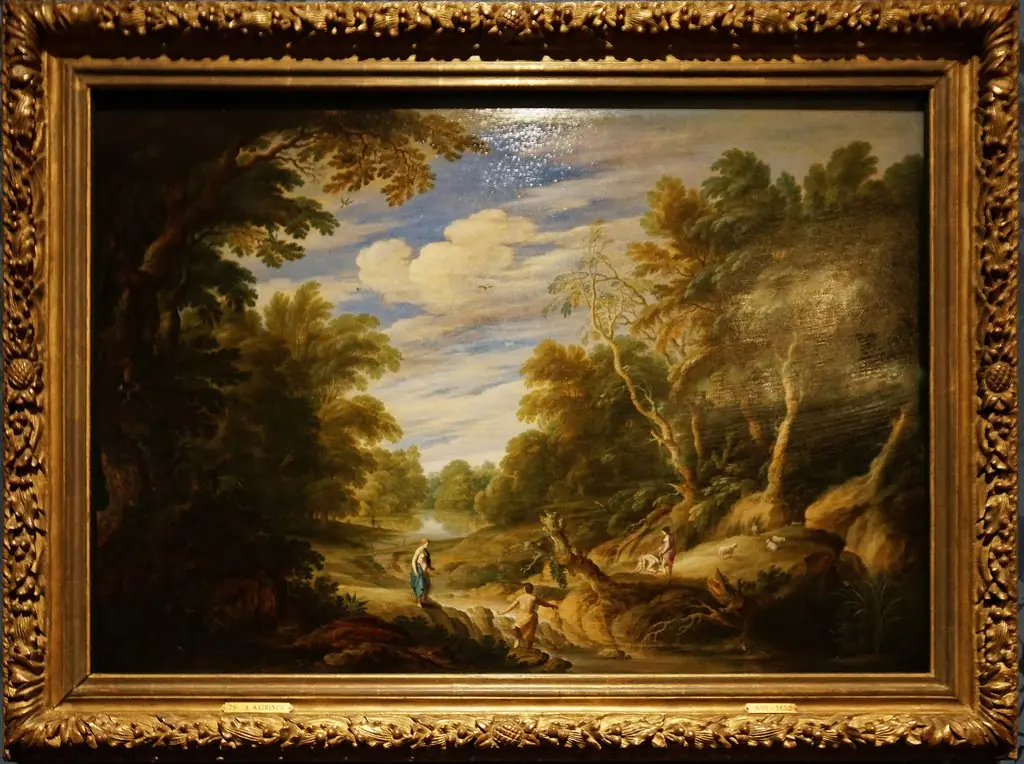 Forest landscape with figures
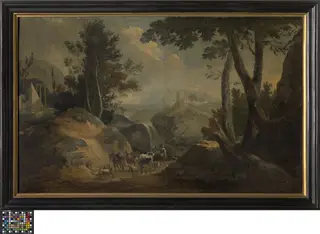 Italiaans landschap
 view on the river Dee with anglers
 Italienische Landschaft
 Scene in front of a tavern
 Landscape at a waterfall