Artwork
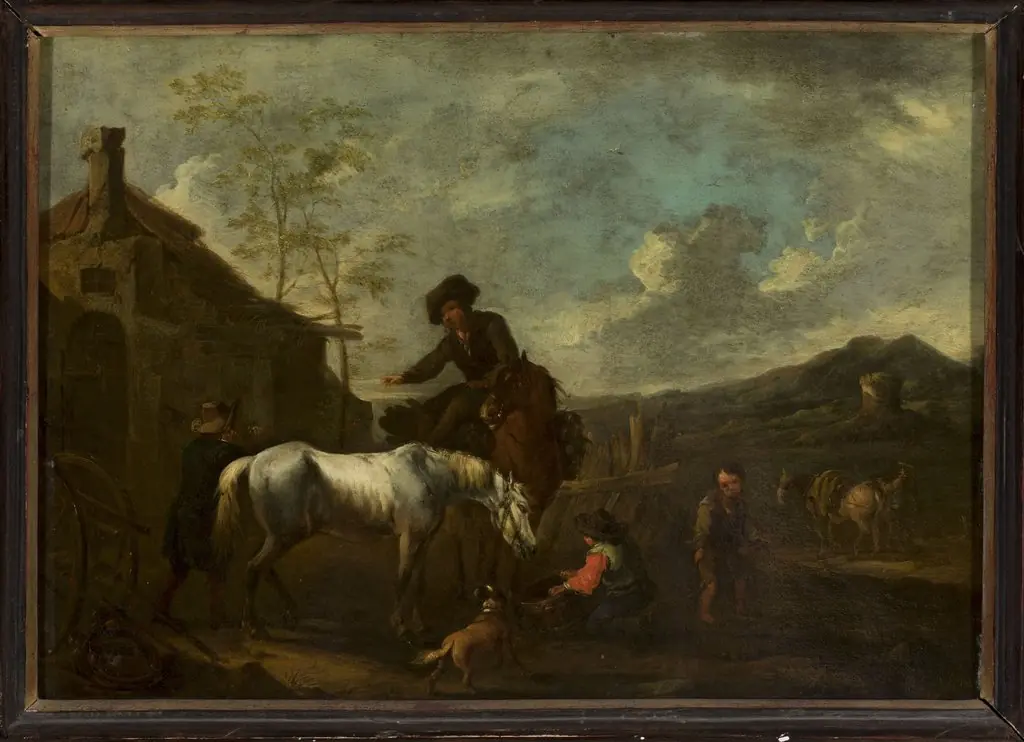
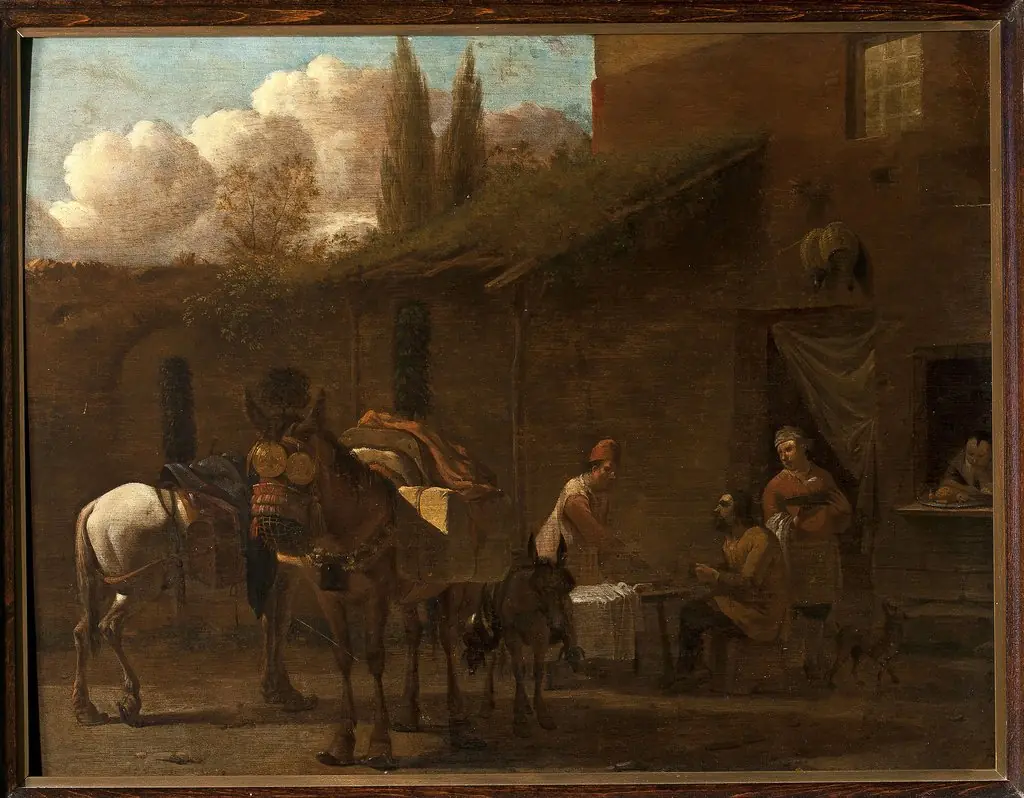
Scene in front of a tavern
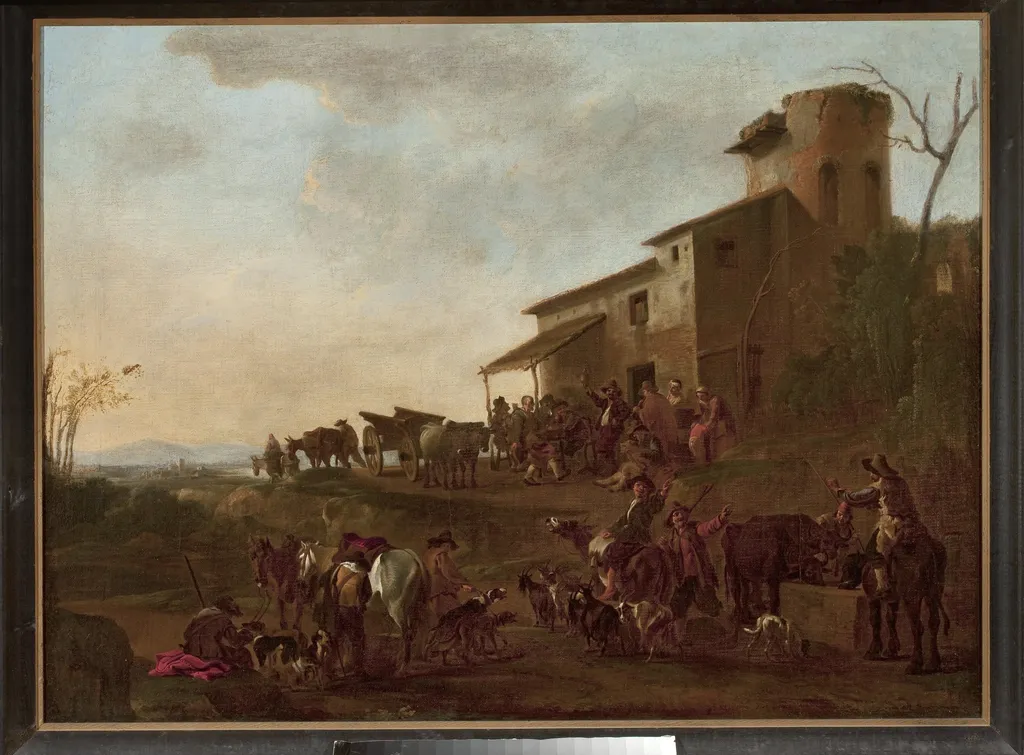
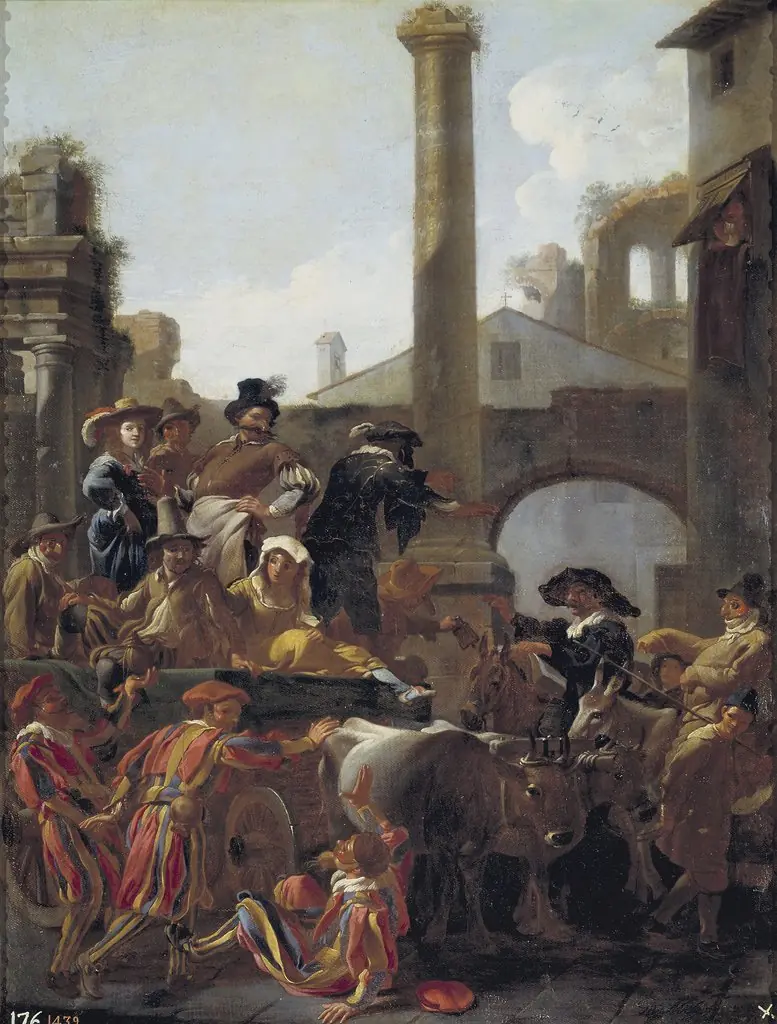
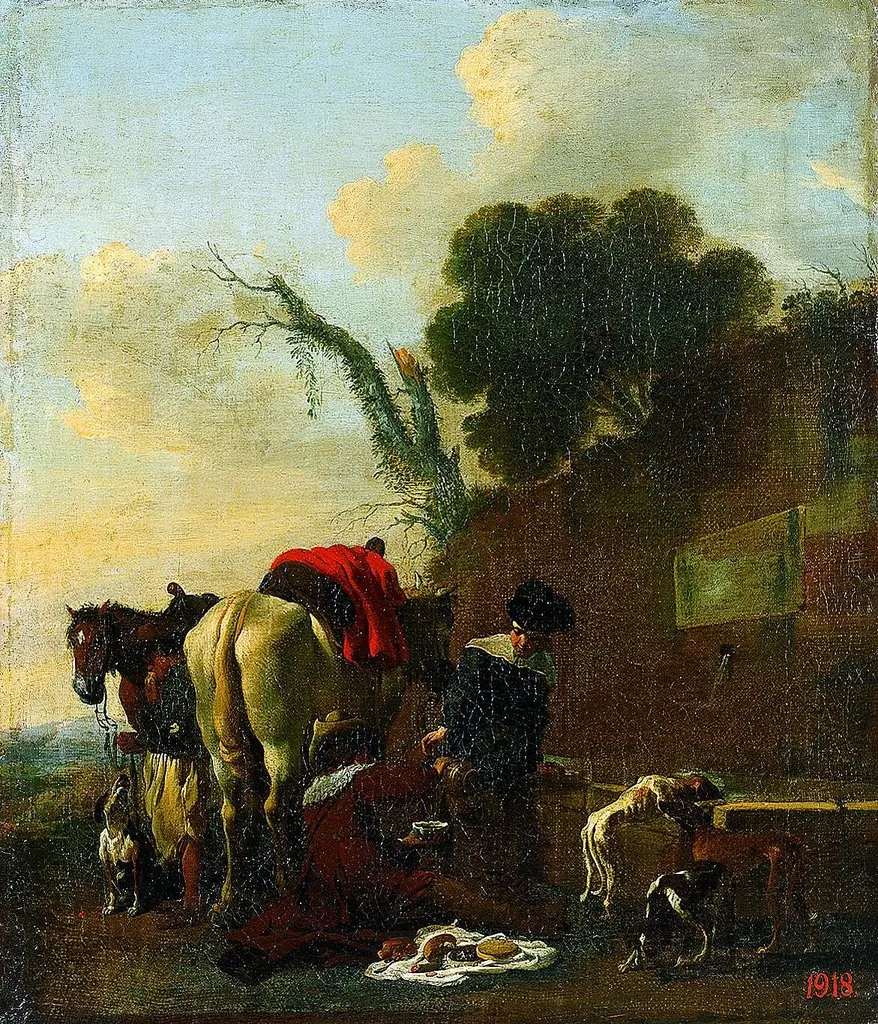
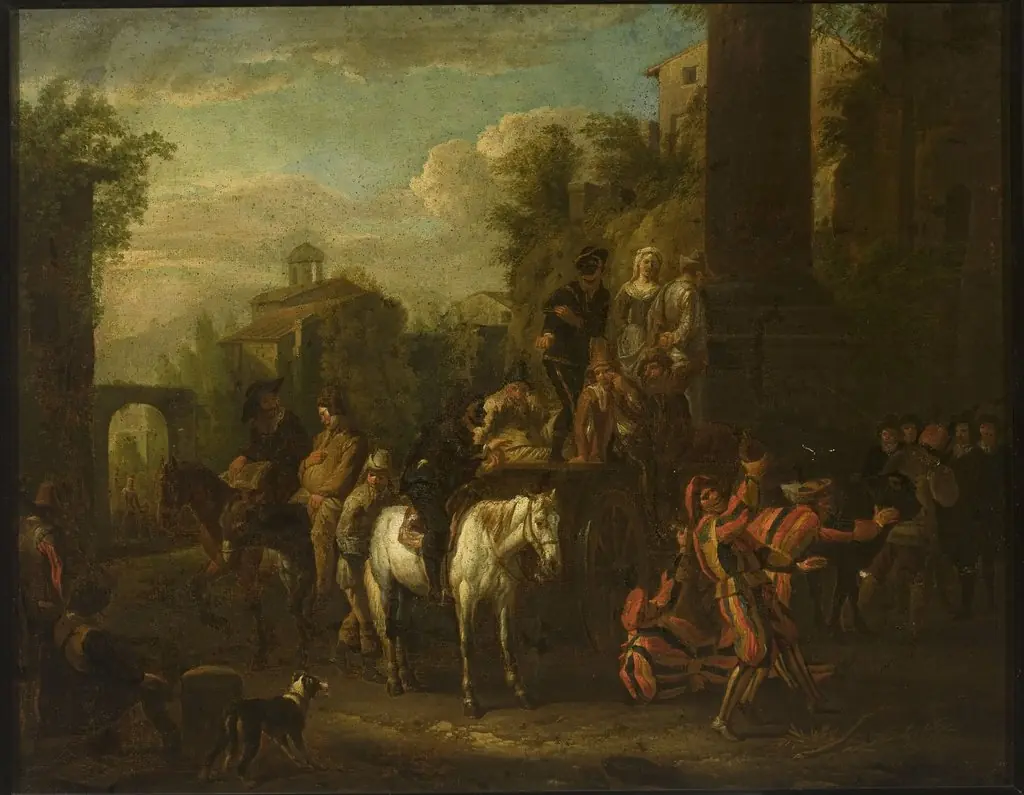
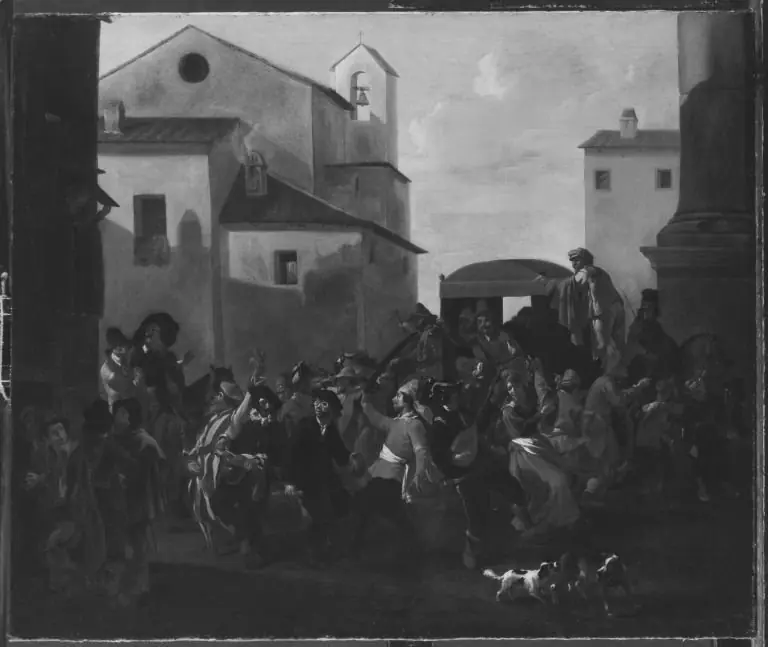
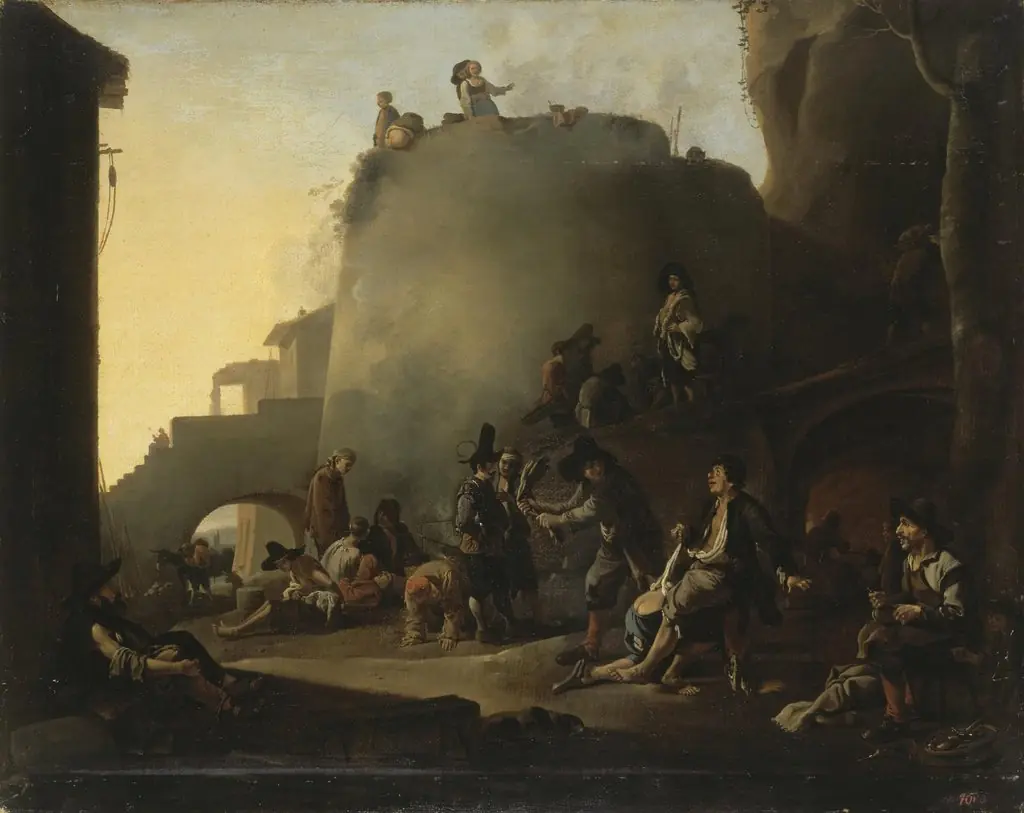
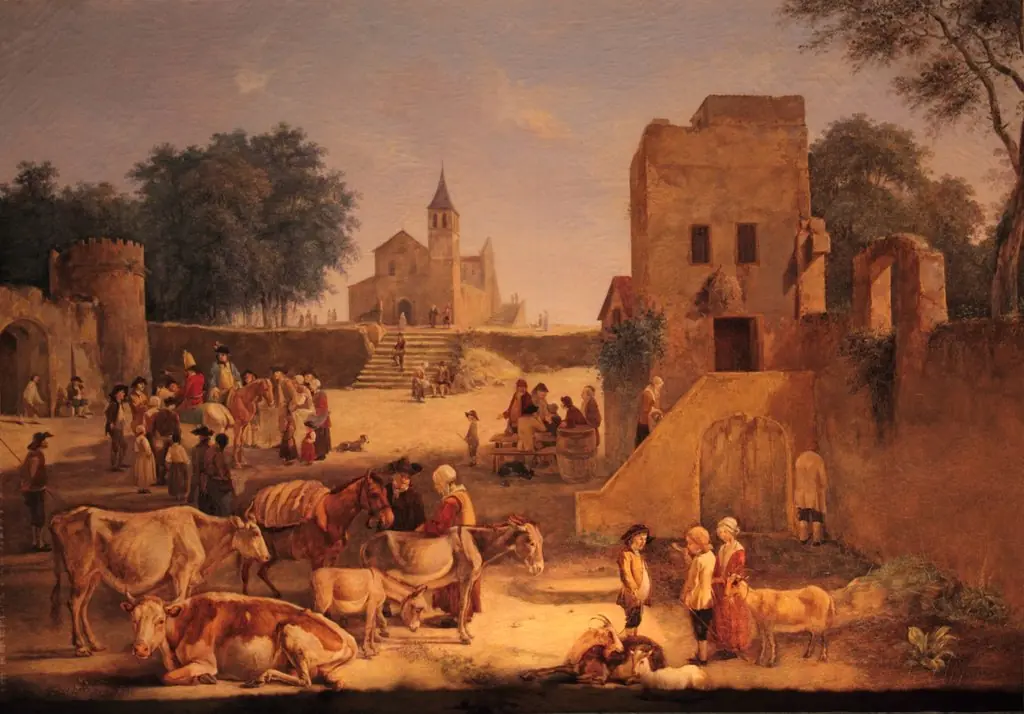
Scene in front of a tavern is an oil painting by the Caravaggisti artist Jan Miel. It dates from 1638 and is held in the collection of the National Museum in Warsaw.
About this work
Overview
Miel, a Flemish artist who spent much of his career in Italy, was initially drawn to scenes of everyday life among the urban poor.
Painted in 1638 by Jan Miel, this oil-on-canvas work captures a bustling moment outside a Roman tavern. Miel, a Flemish artist who spent much of his career in Italy, was initially drawn to scenes of everyday life among the urban poor. This piece reflects his early engagement with the Bamboccianti, a group known for their unidealized depictions of common people, before he later turned toward more formal historical subjects.
Subject & Meaning
The painting portrays a casual gathering of laborers, soldiers, and townspeople in front of a modest building with a prominent tower. Figures engage in conversation, drinking, and idle movement, suggesting a moment of respite from daily toil. There is no narrative climax or moralizing tone, instead, the scene offers a quiet observation of social rhythms, grounded in the physical presence of its subjects rather than symbolic allegory.
Technique & Style
Miel employs bold, loose brushwork to convey movement and texture, particularly in clothing and architectural surfaces. Warm ochres and earth tones dominate the building and figures, contrasting with the cooler, muted blues of the sky, enhancing spatial depth. The lighting is naturalistic, without dramatic chiaroscuro, aligning with the Bamboccianti’s preference for subdued, observational realism over Caravaggio’s theatricality.
History & Provenance
Created during Miel’s formative years in Rome, the painting predates his later appointment as court painter to Charles Emmanuel II of Savoy in Turin. While the work’s early ownership is undocumented, its style and date place it firmly within his Roman period, when he was closely aligned with Dutch and Flemish expatriates painting genre scenes. It represents a transitional phase before his stylistic shift toward classical themes.
Context
In mid-17th century Rome, a growing market for small-scale genre paintings emerged among collectors seeking relatable, non-religious imagery. The Bamboccianti, including Miel, responded to this demand by depicting the city’s lower classes with empathy and detail. Unlike grand historical or religious works, these scenes offered a counterpoint to official art, valuing observation over idealization in a city saturated with monumental traditions.
Legacy
Miel’s early genre works, including this tavern scene, helped define the visual language of Roman low-life painting. Though he later abandoned such subjects for courtly history painting, these early pieces influenced later Dutch and Flemish genre artists. His ability to capture fleeting moments of urban life without sentimentality remains a quiet but significant contribution to the development of European secular painting.
Own this work as a print
Artist & collection
Artist
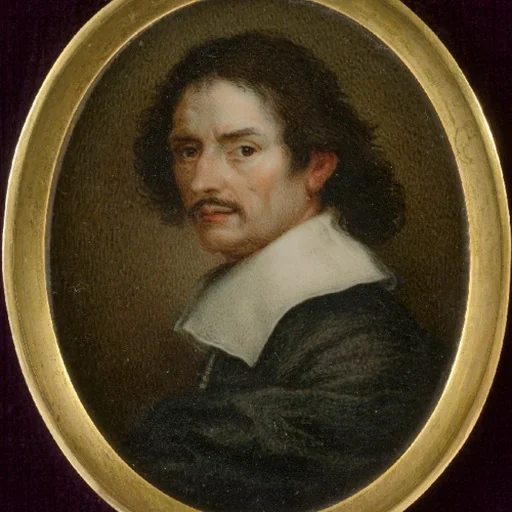
Jan Miel (1599 – April 1664) was a Flemish painter and engraver who was active in Italy.